Artwork
The Mystic Marriage of Saint Catherine
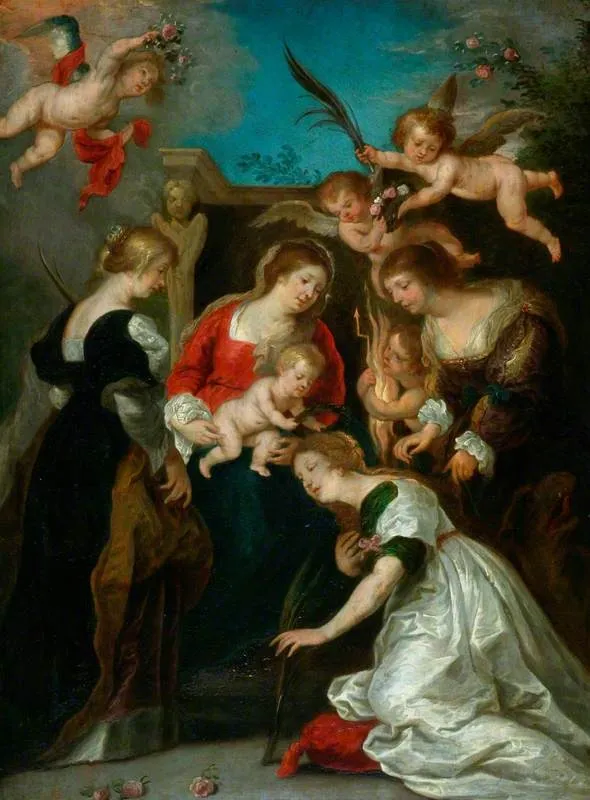
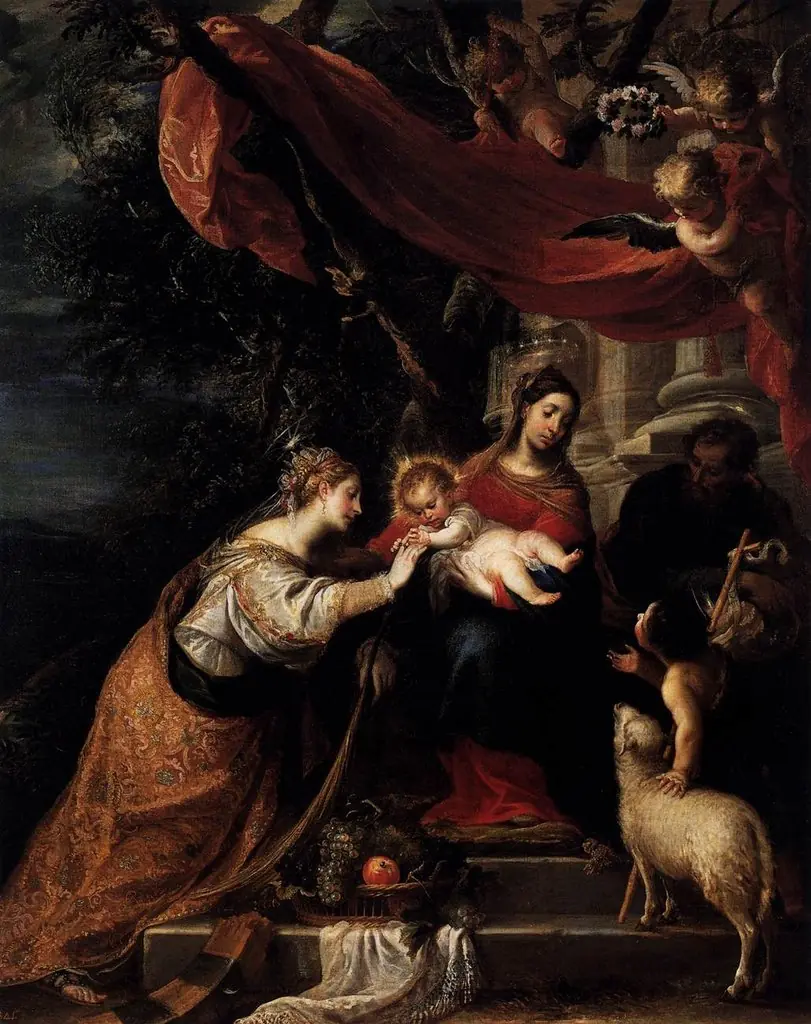
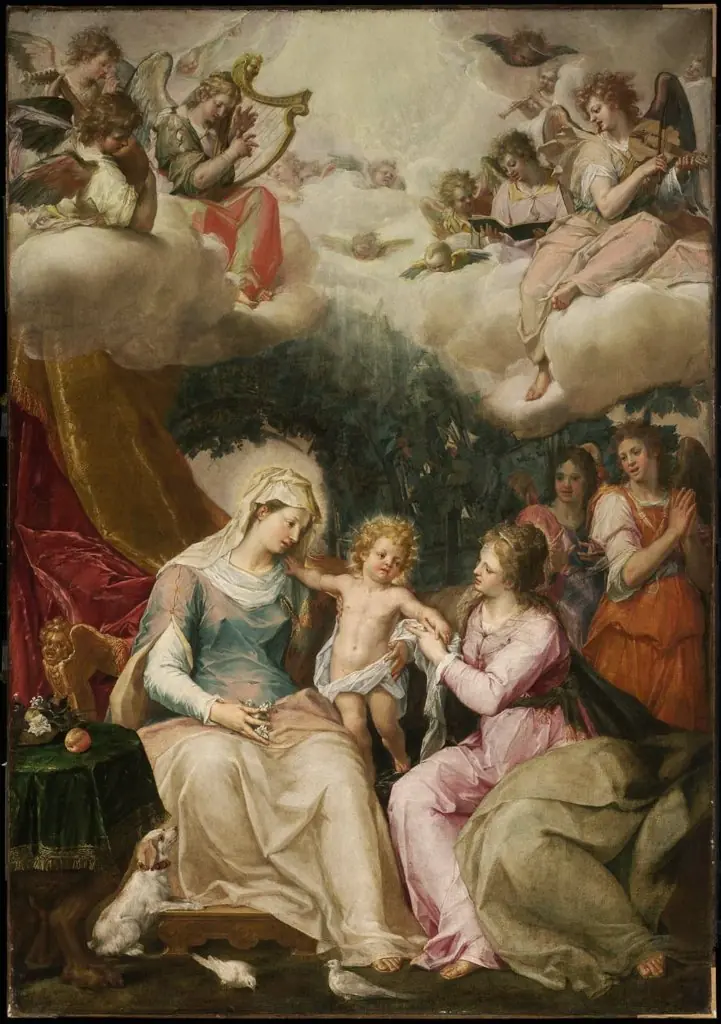
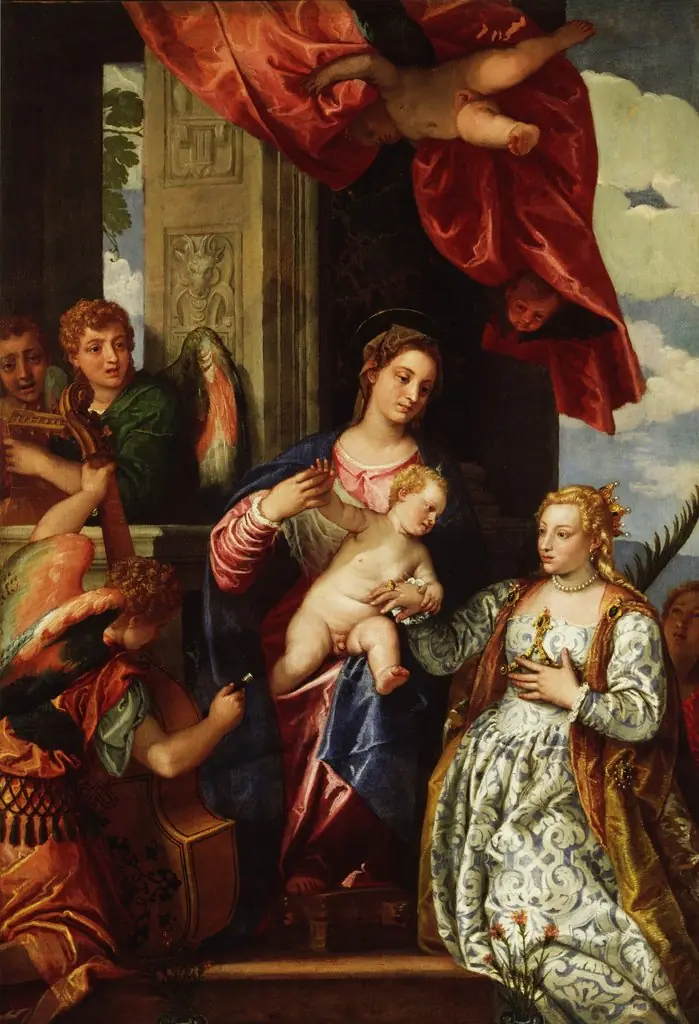
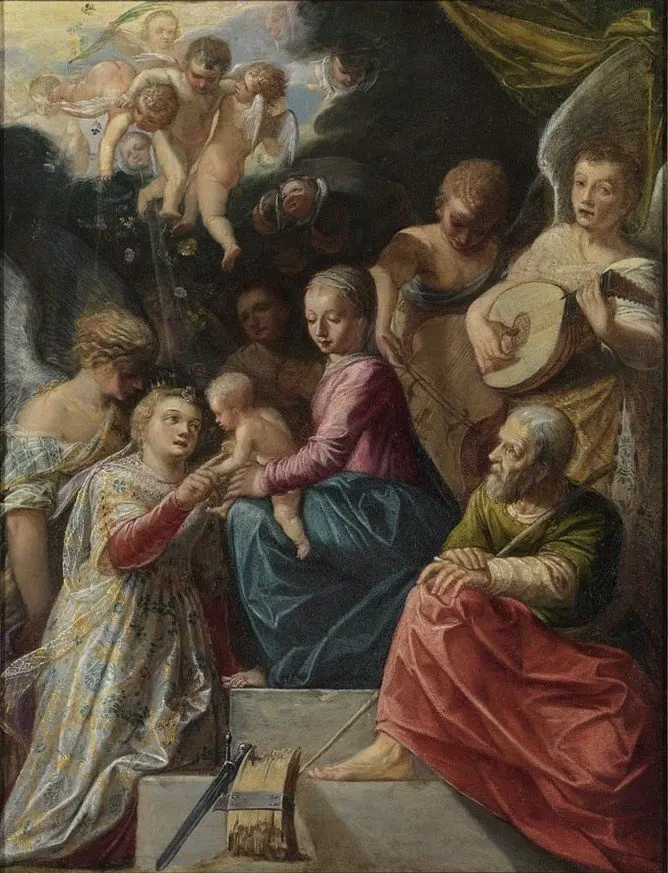
The Mystic Marriage of Saint Catherine is an oil painting by the Flemish Baroque painting artist Peter Paul Rubens. It dates from 1618 and is held in the collection of the Victoria and Albert Museum.
About this work
Overview
The use of copper as a support allowed for fine detail and luminous color, characteristics typical of Rubens’s smaller religious panels from this period.
Painted around 1618 on copper, *The Mystic Marriage of Saint Catherine* is a small-scale devotional work by Peter Paul Rubens. Executed in the Flemish Baroque style, it reflects the artist’s engagement with religious themes during the Counter-Reformation. The use of copper as a support allowed for fine detail and luminous color, characteristics typical of Rubens’s smaller religious panels from this period.
Subject & Meaning
The scene illustrates the mystical union between Saint Catherine of Alexandria and the infant Christ, a symbolic event in which Christ places a ring on her finger as a sign of spiritual betrothal. Surrounding figures include angels and attendants, reinforcing the sacred nature of the moment. The composition conveys divine intimacy, aligning with Counter-Reformation ideals that sought to inspire personal devotion through emotionally resonant imagery.
Technique & Style
Rubens employed fine brushwork and layered glazes on a copper panel to achieve rich, luminous tones and smooth transitions of light. The figures are rendered with soft modeling and fluid drapery, characteristic of his Baroque sensibility. The sky is lightly brushed with clouds, while cherubs hover delicately above, adding a celestial dimension without overwhelming the quiet solemnity of the scene.
History & Provenance
The painting entered the collection of the Victoria and Albert Museum in the 19th century, having previously been in private hands in Europe. Its small size and devotional subject suggest it was intended for private worship rather than public altarpiece display. The copper support and preservation of its original frame indicate careful handling over centuries.
Context
Created during Rubens’s mature period in Antwerp, the work responds to the Catholic Church’s push for emotionally engaging religious art following the Council of Trent. While larger altarpieces dominated public spaces, smaller works like this catered to private piety among the devout elite. The inclusion of classical allusions and refined elegance reflects Rubens’s humanist education and his synthesis of Italian and Northern traditions.
Legacy
Though less known than Rubens’s grand historical paintings, this piece exemplifies his ability to convey spiritual depth in intimate formats. Its preservation in a major museum ensures continued study of how Baroque artists adapted religious narratives for personal devotion. The work remains a quiet testament to the role of small-scale art in shaping individual faith during the early 17th century.
Artist & collection
Artist
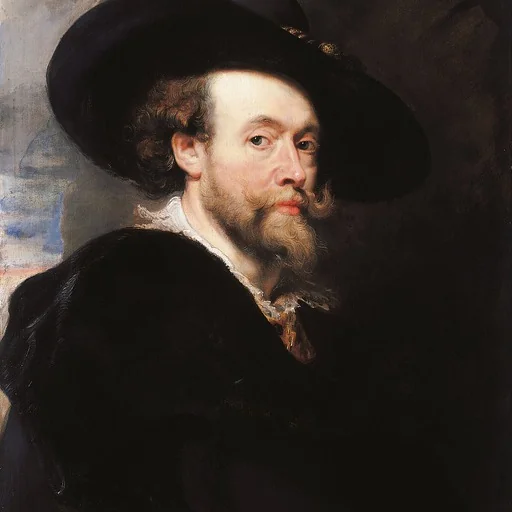
Sir Peter Paul Rubens ( ROO-bənz; Dutch: ; 28 June 1577 – 30 May 1640) was a Flemish artist and diplomat.