Artwork
Corner of the Church of San Stae, Venice
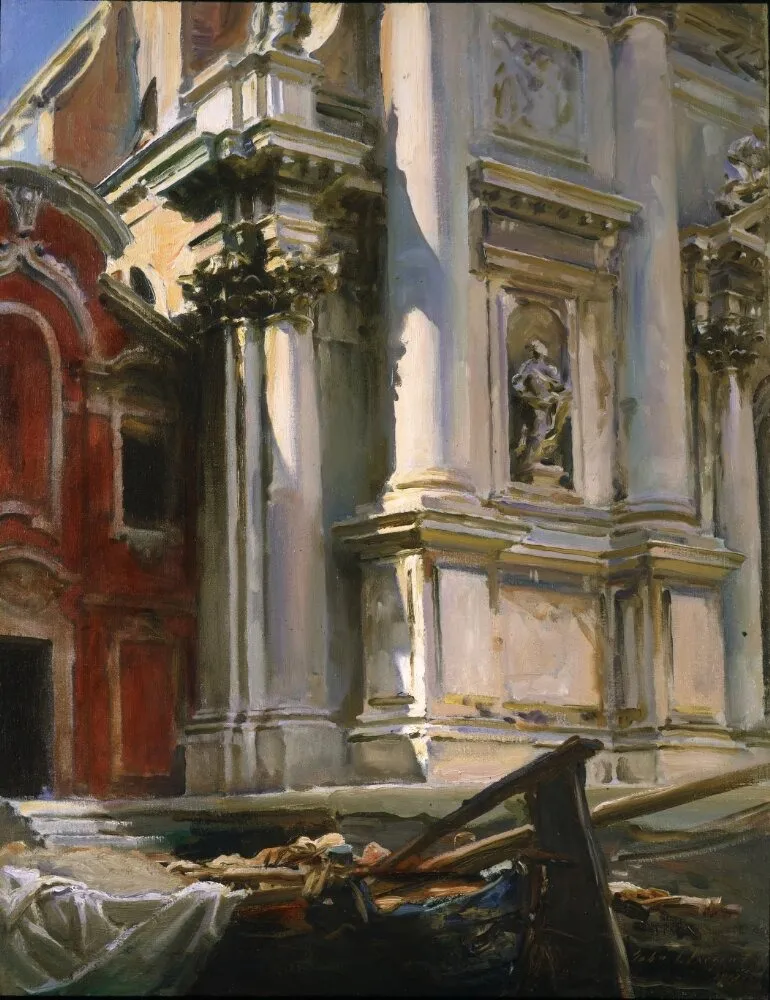
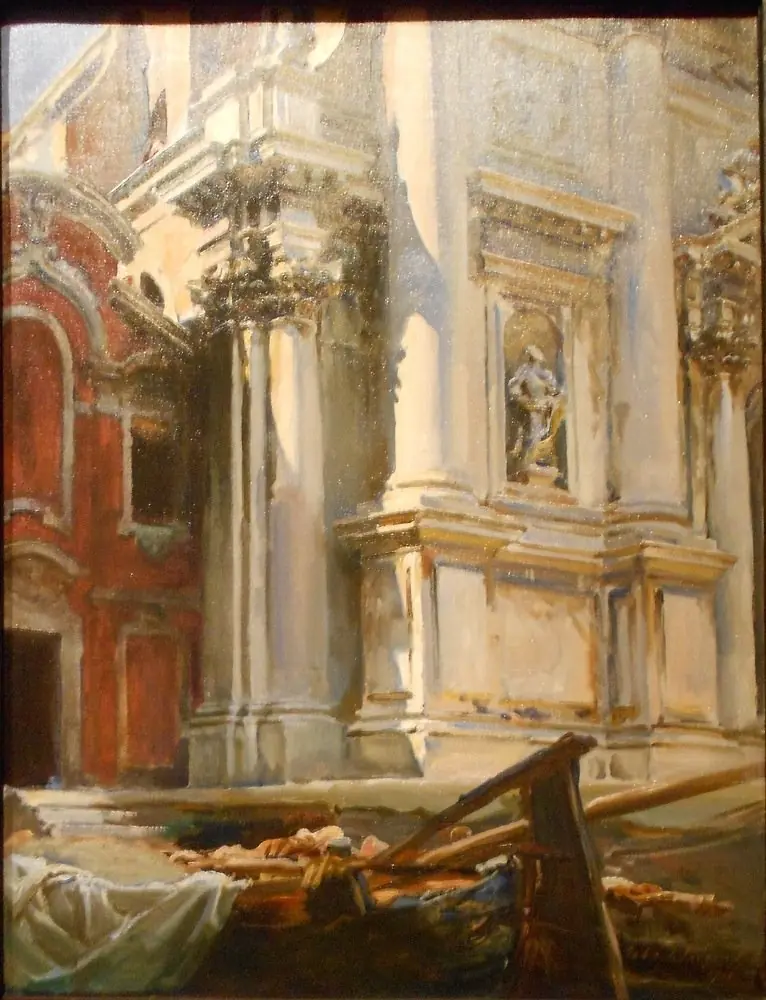
Corner of the Church of San Stae, Venice is an oil painting by the Impressionist artist John Singer Sargent. It dates from 1913 and is held in the collection of the Nationalmuseum.
About this work
Overview
The painting is part of the Nationalmuseum’s collection and exemplifies his late-career engagement with light and architectural form in outdoor settings.
Painted in 1913 by American artist John Singer Sargent, this oil on canvas depicts a quiet corner of the Church of San Stae in Venice. Created during one of his many European journeys, the work reflects his sustained interest in urban landscapes beyond portraiture. The painting is part of the Nationalmuseum’s collection and exemplifies his late-career engagement with light and architectural form in outdoor settings.
Subject & Meaning
The scene captures the western flank of the church, where a pale stone façade meets a reddish brick structure, framing a narrow canal. A small gondola, laden with goods, rests near the water’s edge, suggesting daily life unfolding without intrusion. The absence of figures amplifies a sense of stillness, inviting contemplation of time, place, and the quiet rhythm of Venetian architecture.
Technique & Style
Sargent employed loose, fluid brushwork to convey the effects of natural light on stone and brick surfaces. His handling of highlights and shadows avoids rigid definition, instead suggesting atmosphere through tonal shifts. While not strictly Impressionist, the painting shares the movement’s sensitivity to transient light, using subtle color variations to render the warmth of midday sun without overt detail.
History & Provenance
Sargent painted this view during a period of extensive travel in Italy, where he sought subjects beyond commissioned portraits. The work remained in his personal collection until it was acquired by the Nationalmuseum in Stockholm, likely through a private sale or donation in the early 20th century. Its presence in Sweden reflects broader European interest in American artists’ interpretations of Italian scenes.
Context
In 1913, Sargent was increasingly drawn to landscapes and architectural studies, moving away from the social portraiture that defined his earlier fame. Venice, with its layered facades and interplay of water and light, offered a compelling subject for artists exploring perception and environment. This painting aligns with a broader trend among contemporaries who found inspiration in the city’s quiet corners rather than its grand monuments.
Legacy
Though less celebrated than his portraits, this work contributes to understanding Sargent’s versatility and his evolving approach to light and space. It stands as a quiet testament to his ability to find poetic resonance in ordinary urban vistas. The painting continues to be studied for its nuanced handling of texture and atmosphere, influencing later generations interested in plein air realism.
Artist & collection

Artist
John Singer Sargent (; January 12, 1856 – April 15, 1925) was an American expatriate artist, considered the "leading portrait painter of his generation" for his evocations of Belle Époque and Edwardian-era luxury.


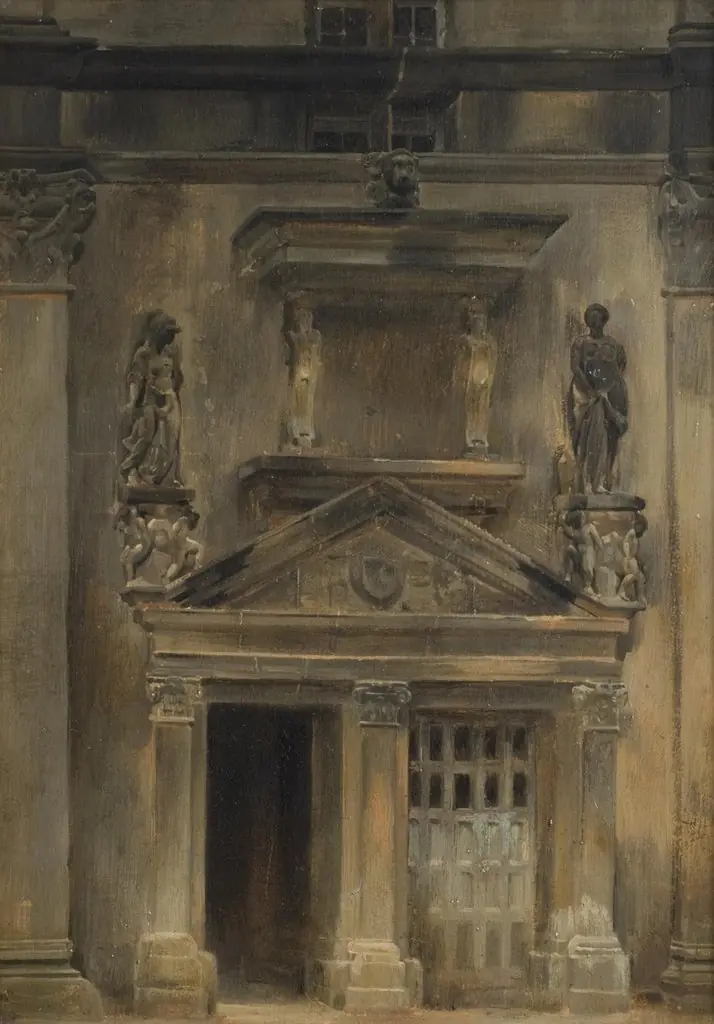 Architectural Study (Door of the Francis I Staircase, Oval Court, Fontainebleau)
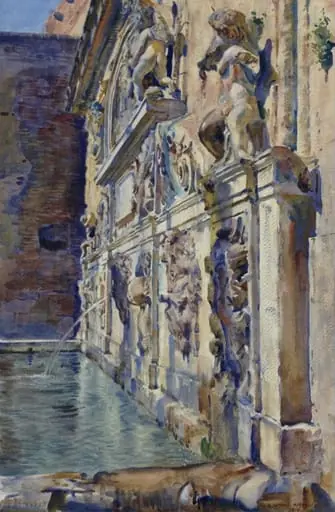 A Fountain at Granada
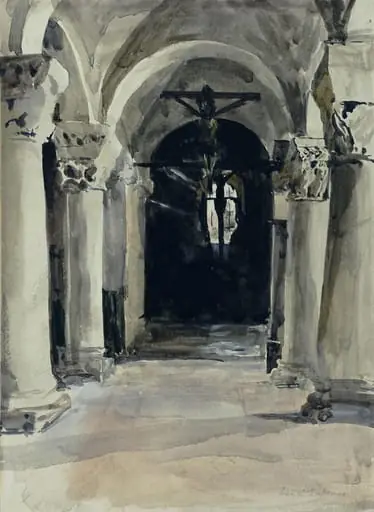 The Kaiserkapelle, Nuremburg
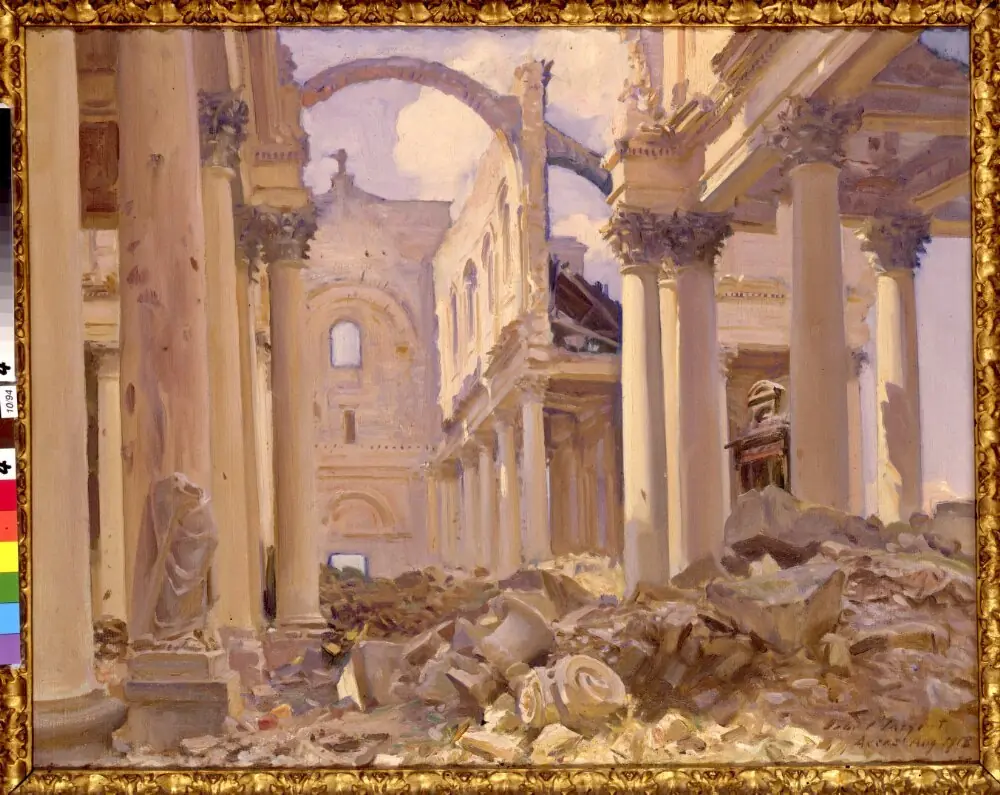 Cathedral of Arras, August 1918
 Roomalaisia raunioita, harjoitelma
 Church interior
 Venice
 Interior of the Parish Church in Krosno
 Wevala, geef tuvel
 Cathedral in Sienna
 Vatican, St. Peter's Basilica
 Corner of the Church of San Stae, Venice