Artwork
The Kaiserkapelle, Nuremburg
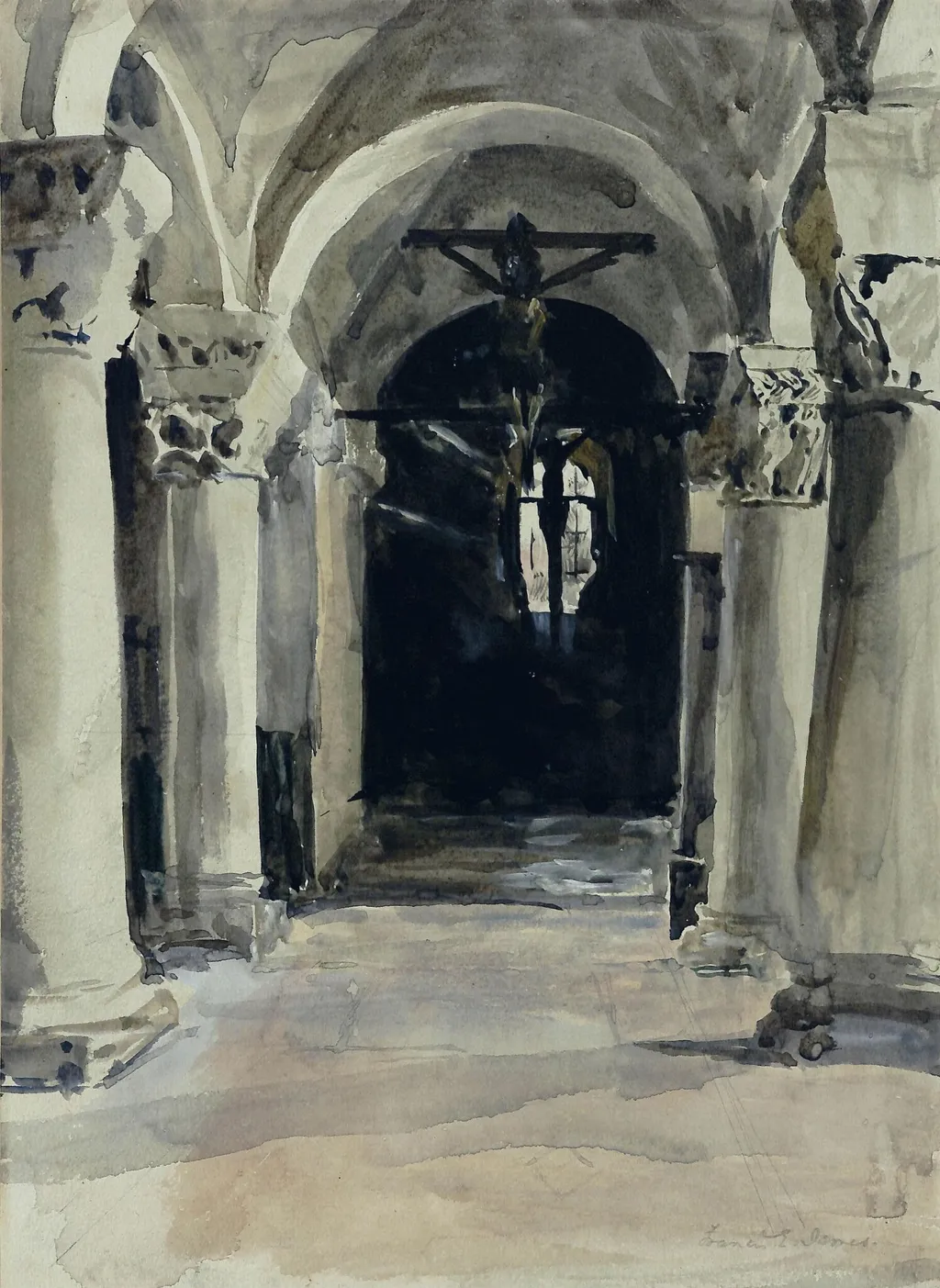
The Kaiserkapelle, Nuremburg is a watercolor work on paper by Francis Edward James. It dates from 1850 and is held in the collection of the Victoria and Albert Museum.
About this work
Overview
Executed in delicate washes, the work captures the chapel’s architectural form with restrained precision.
Created around 1850, this watercolour by Francis Edward James depicts the Kaiserkapelle in Nuremberg. Executed in delicate washes, the work captures the chapel’s architectural form with restrained precision. It is part of the Victoria and Albert Museum’s collection, where it stands as an example of 19th-century topographical watercolour practice, reflecting a quiet interest in historic German ecclesiastical structures.
Subject & Meaning
The painting focuses on the interior of the Kaiserkapelle, a chapel associated with imperial tradition in Nuremberg. A crucifix anchors the composition, suggesting spiritual solemnity. The empty space and unpopulated interior emphasize stillness rather than ritual, inviting reflection on the passage of time and the endurance of sacred architecture beyond active worship.
Technique & Style
James employed transparent watercolour washes to build subtle tonal gradations, avoiding heavy outlines. Fine brushwork defines the carved stonework and arches, while soft edges blur shadows and ambient light. The palette is muted—ochres, greys, and pale blues—enhancing the chapel’s quiet atmosphere. His method aligns with the Royal Watercolour Society’s emphasis on clarity and observational accuracy.
History & Provenance
The painting entered the Victoria and Albert Museum’s collection in the 19th century, likely through acquisition or donation tied to the museum’s growing holdings of British watercolours. Its provenance traces back to James’s travels in southern Germany, where he documented architectural sites during a period of renewed interest in medieval heritage among British artists and antiquarians.
Context
In the mid-19th century, British artists increasingly traveled to continental Europe to record historic buildings, often as part of a broader cultural fascination with Gothic and imperial architecture. James’s work reflects this trend, aligning with contemporaries who sought to preserve visual records of sites perceived as culturally significant, even as they fell into disuse or neglect.
Legacy
Though not widely exhibited today, the painting contributes to a body of work that documents German ecclesiastical architecture through British eyes. It remains a quiet example of how watercolour served as both artistic expression and historical record, preserving the appearance of spaces that have since undergone restoration or change.
Artist & collection

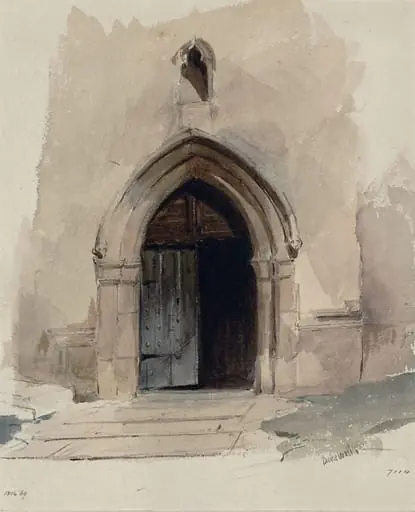 Church door, Bakewell
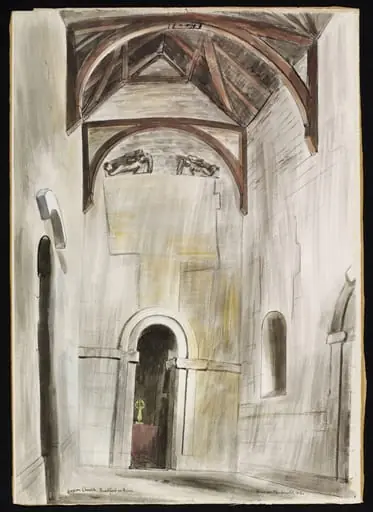 Saxon Church, Bradford-on-Avon
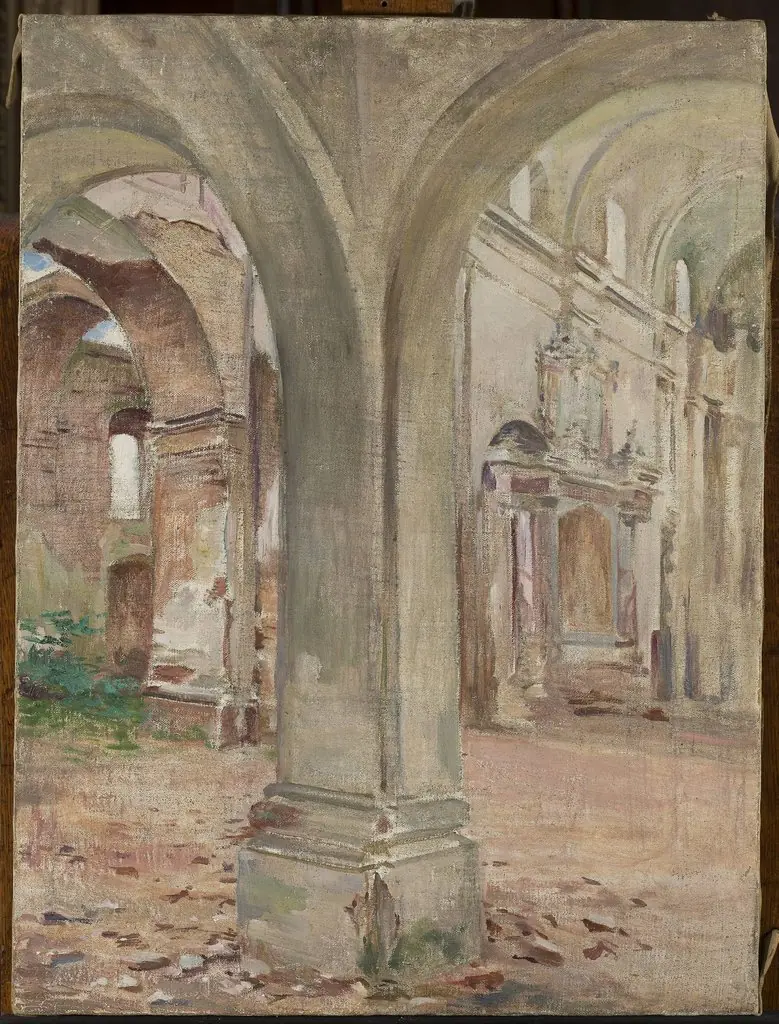 Church interior
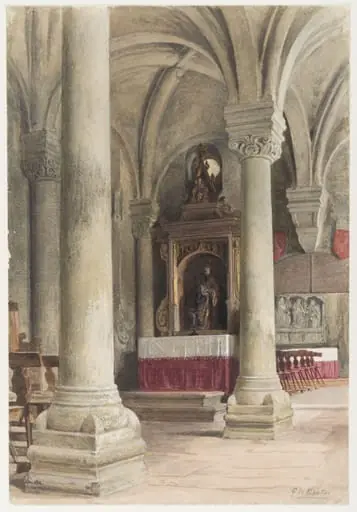 The Chapel of St Eucharius, Nuremberg
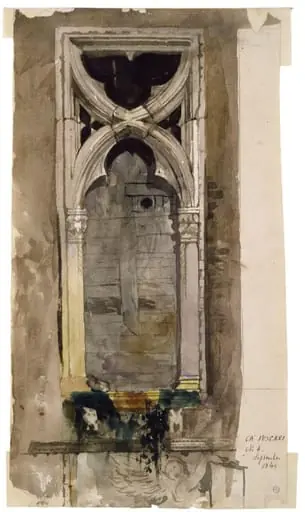 Window in the Foscari Palace, Venice
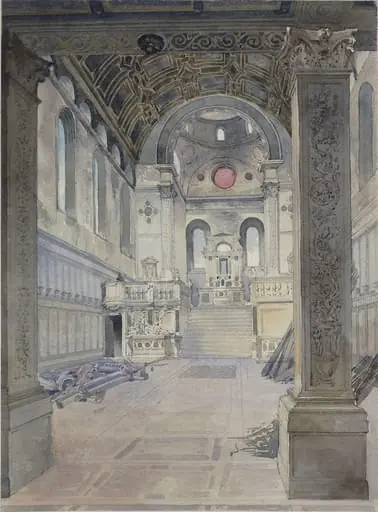 Interior of Santa Maria dei Miracoli, Venice
 Venice
 Crusader's Vigil
 Interior of the Golden Gate Jerusalem
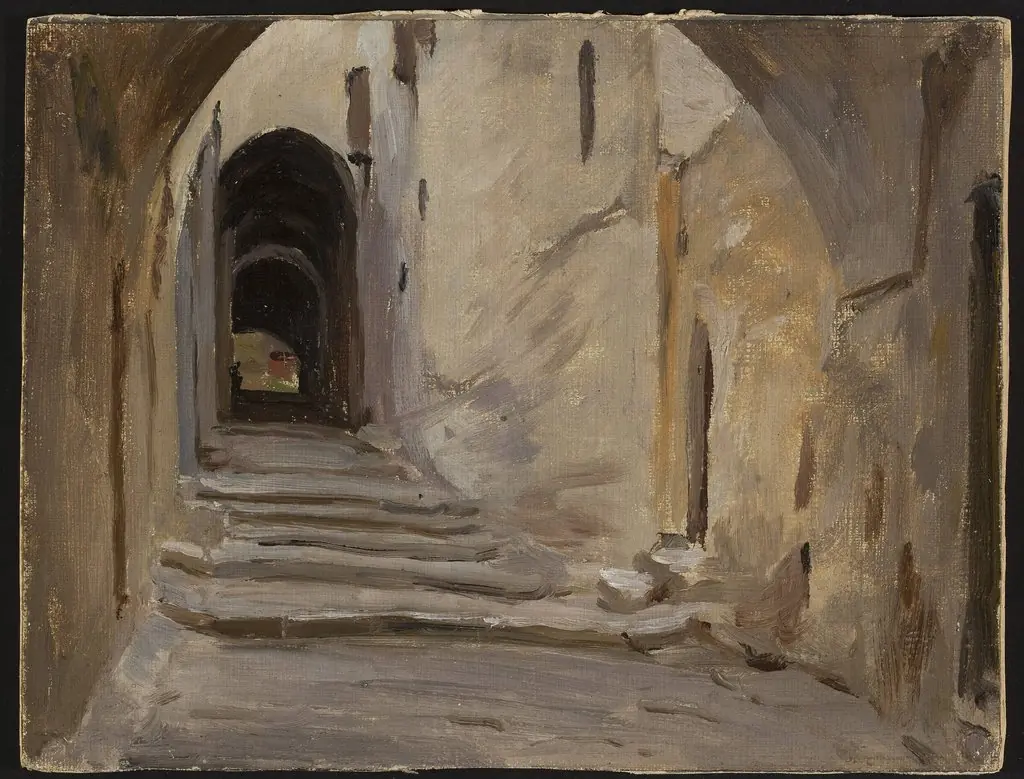 Jerusalem. From the journey to Palestine
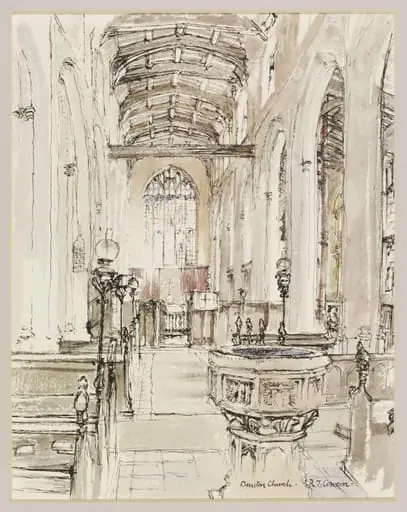 St. Nicholas Church, Denston
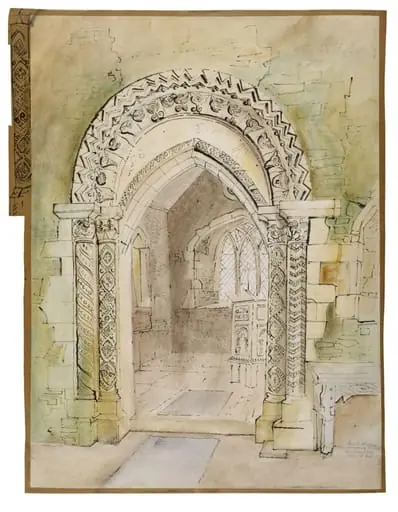 Chancel Arch, St. Peter's, Stanton Low, Buckinghamshire