Artwork
Untitled
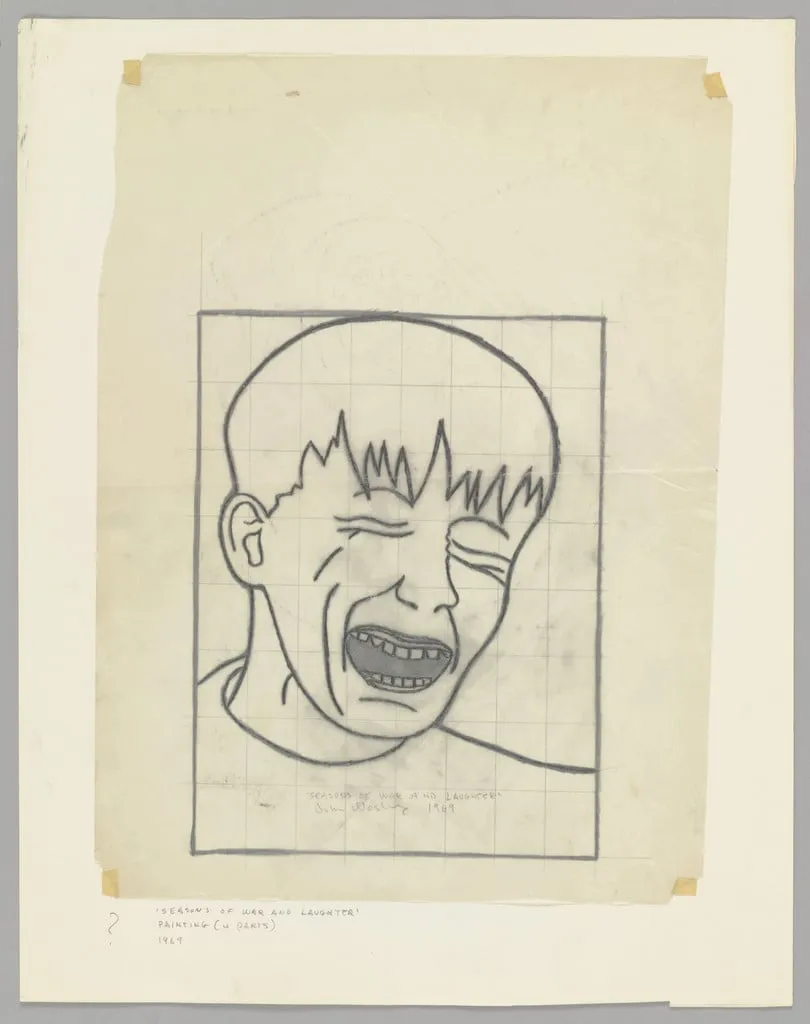
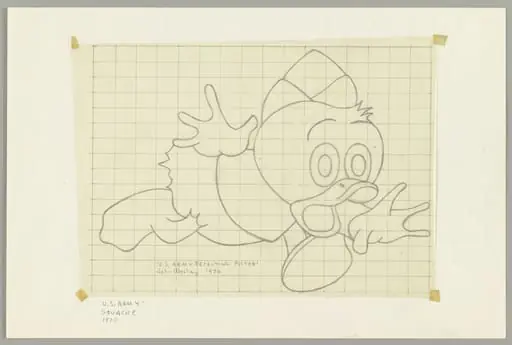
Untitled is a graphite drawing by John Wesley. It dates from 1969 and is held in the collection of the Museum of Modern Art.
About this work
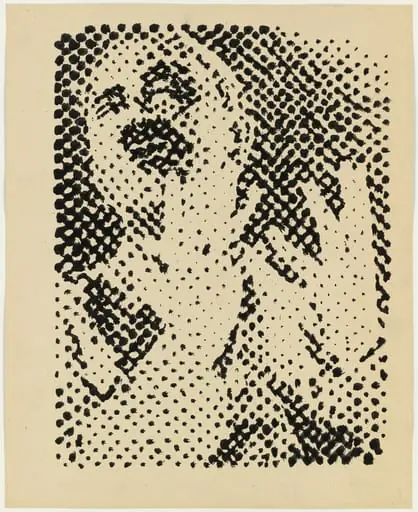
This drawing shows a bald head tilted slightly back, with wild, spiky hair and a wide-open mouth like someone laughing hard.
This drawing shows a bald head tilted slightly back, with wild, spiky hair and a wide-open mouth like someone laughing hard. The eyes are squeezed shut, and the face looks simple but full of energy. The lines are thick and confident, with a grid of faint pencil marks behind it.
The artist used masking tape to hold the paper together, and the whole thing looks like a quick, bold sketch. It’s from 1969, and the title is just *Untitled*—no extra story needed.
If you like this style, check out John Wesley.
Overview
Created in 1969, this drawing by John Wesley is executed in pencil on transparentized paper, mounted with masking tape onto a larger sheet. The work is held in the collection of The Museum of Modern Art. Its raw, unframed presentation and lack of a formal title reflect an intentional simplicity, emphasizing process over narrative. The composition is immediate, capturing a single expressive gesture without embellishment.
Subject & Meaning
The image depicts a bald head tilted upward, mouth agape and eyes tightly shut, suggesting a moment of unrestrained laughter or vocal release. The face is rendered with minimal detail, yet conveys strong emotional energy. There is no indication of gender, context, or identity—only the physicality of expression. The absence of a title reinforces the focus on the act of expression itself rather than any symbolic meaning.
Technique & Style
Thick, decisive pencil lines define the facial features, contrasting with a faint underlying grid of sketch marks that suggest preparatory planning. The artist used masking tape to secure the transparent paper to its backing, leaving visible edges and a sense of provisional assembly. The style is direct and unrefined, prioritizing spontaneity and physicality over polish, aligning with a post-minimalist approach to drawing.
History & Provenance
The work entered The Museum of Modern Art’s collection following its creation in 1969, during a period when Wesley was exploring figuration through reductive, almost cartoonish forms. Its preservation in its original, taped state reflects the artist’s interest in the materiality of the drawing process. No documented exhibition history precedes its acquisition, suggesting it was retained by the artist before institutional recognition.
Context
Made during a time when many artists were rejecting traditional composition and narrative, Wesley’s work engaged with the vernacular of comics and advertising while retaining psychological depth. This piece aligns with contemporaneous experiments in drawing that valued immediacy and emotional resonance over technical finish. It exists in dialogue with the broader shift toward personal, intimate mark-making in late 1960s American art.
Legacy
The drawing exemplifies Wesley’s sustained interest in the human face as a vessel for unfiltered emotion, rendered without idealization. Its preservation in a major institution underscores its significance within the evolution of postwar American drawing. The work continues to be referenced for its bold economy and its challenge to conventional notions of finish and permanence in art.
Artist & collection

Artist
John Wesley was an English cleric, theologian, and evangelist who was a principal leader of a revival movement within the Church of England known as Methodism.


![Boy's Face; Two Sheep [verso], by Paul Gauguin](https://artifactworldgallery.com/img/paul-gauguin--boy-s-face-two-sheep-verso--dc41a7e795977a82-w320.webp)