Artwork
Mountain landscape with fir trunks in a stream
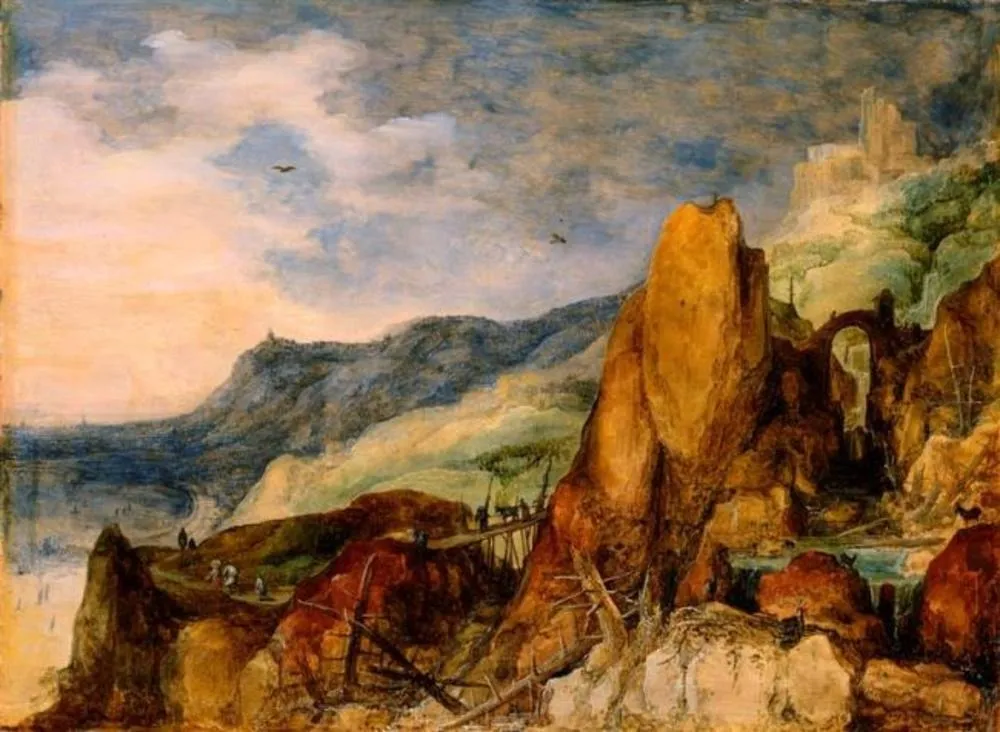
Mountain landscape with fir trunks in a stream is an oil painting by the Barbizon school artist Joos de Momper the Younger. It dates from 1600 and is held in the collection of the Staatliche Kunstsammlungen Dresden.
About this work
Overview
The painting reflects early 17th-century shifts in Northern European art, moving from stylized Mannerist compositions toward more observed naturalism.
Painted in 1600 by Joos de Momper the Younger, this oil-on-panel work presents a tranquil alpine scene with fir logs lodged in a mountain stream. Though often associated with Flemish landscape traditions, it predates the Barbizon school by over two centuries. The painting reflects early 17th-century shifts in Northern European art, moving from stylized Mannerist compositions toward more observed naturalism.
Subject & Meaning
The scene centers on a rocky streambed where fallen fir trunks rest amid flowing water, surrounded by distant peaks and a hazy sky. Figures near the water’s edge—likely travelers or laborers—engage in quiet, unromanticized activities, grounding the landscape in daily life. No mythological or allegorical elements are present; the focus is on the quiet interaction between nature and human presence.
Technique & Style
Momper employs subtle chiaroscuro to model forms, using soft gradations of light and shadow to suggest volume in rocks and tree trunks. The palette is restrained, dominated by earthy greens, browns, and grays, with minimal contrast. Brushwork is detailed yet unobtrusive, favoring atmospheric cohesion over dramatic effect, a hallmark of his transition from Mannerist conventions toward naturalistic observation.
History & Provenance
The painting entered the collection of the Gemäldegalerie Alte Meister in Dresden, where it remains today. Its early provenance is not fully documented, but its style aligns with works produced in Antwerp during Momper’s active years. It was likely acquired by a collector or institution in the 17th or 18th century, reflecting growing interest in Flemish landscape painting.
Context
Momper worked during a period when Flemish artists were increasingly turning from fantastical, crowded landscapes to more grounded, topographically plausible scenes. Influenced by Pieter Bruegel the Elder’s observational approach, he helped pave the way for later Dutch and German landscape traditions. This painting exemplifies the move away from symbolic grandeur toward quiet, empirical representation of the natural world.
Legacy
Though not widely known outside specialist circles, Momper’s work contributed to the evolution of landscape painting in Northern Europe. His emphasis on natural detail and subdued tonality influenced subsequent generations of regional painters. This painting stands as a modest but significant example of early 17th-century landscape development, bridging Mannerist convention and emerging realism.
Artist & collection
Artist
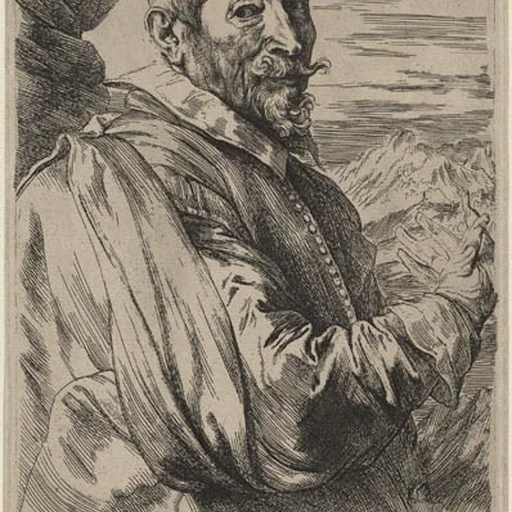
Joos de Momper the Younger or Joost de Momper the Younger (c. 1564 – 5 February 1635) was a Flemish landscape painter active in Antwerp between the late 16th century and the early 17th century. Brueghel's influence is…

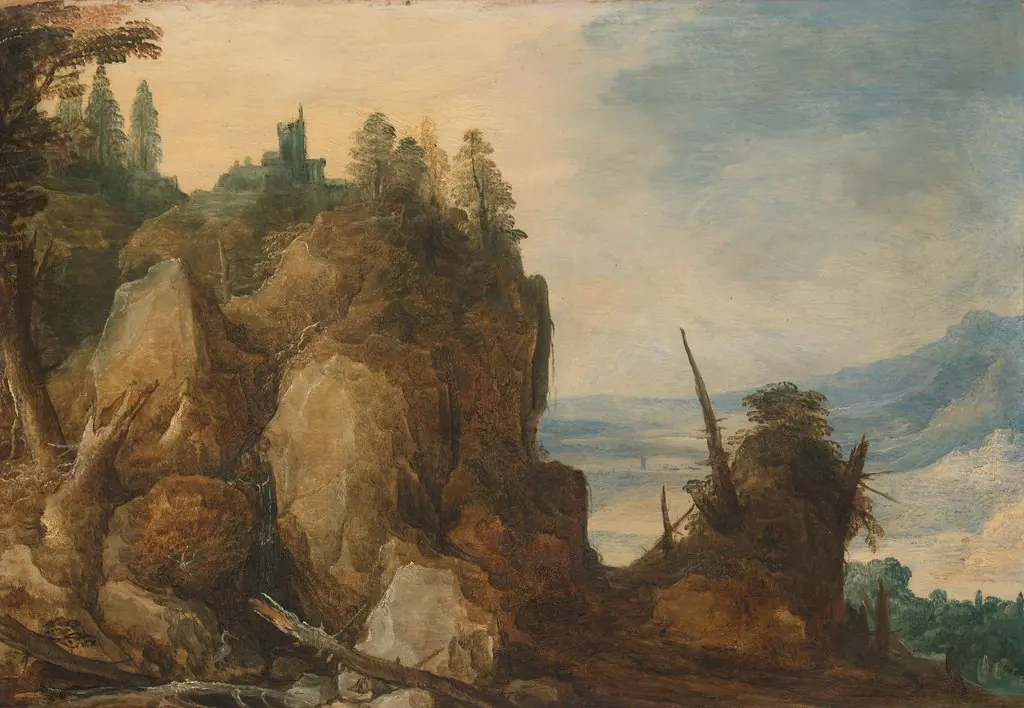
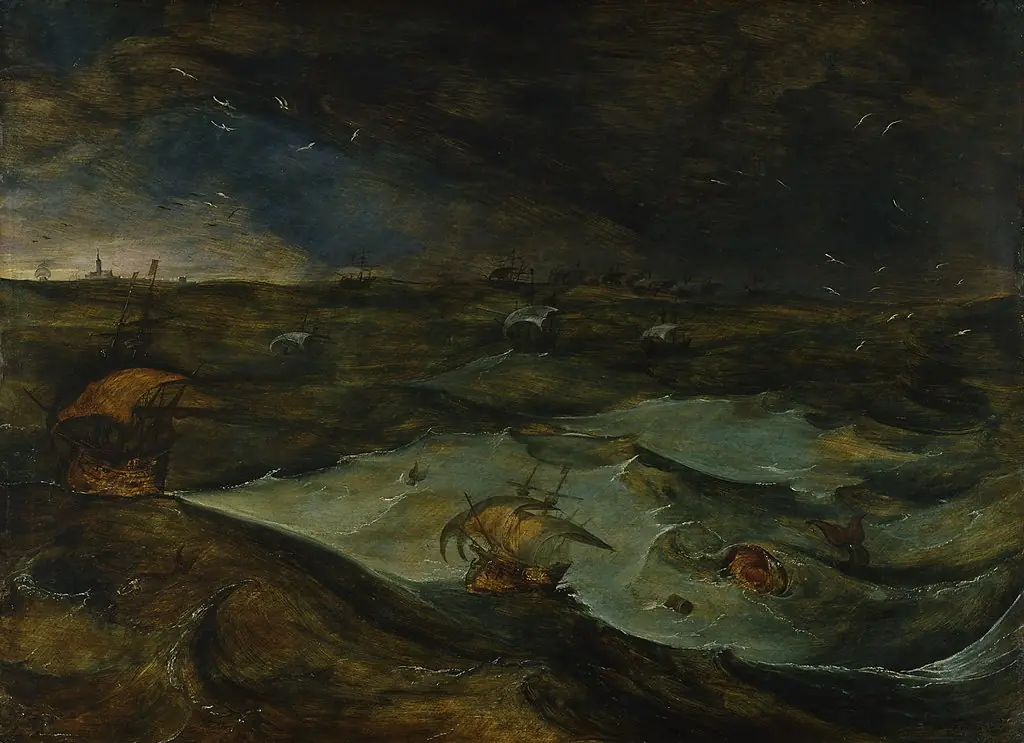
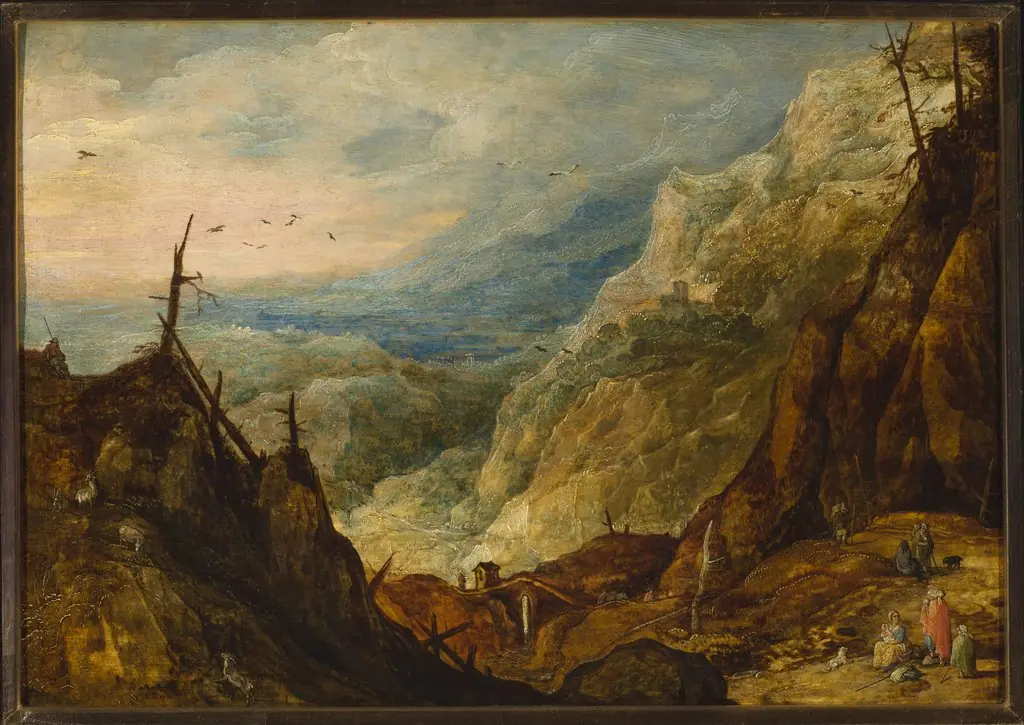 Mountain landscape with a broken tree
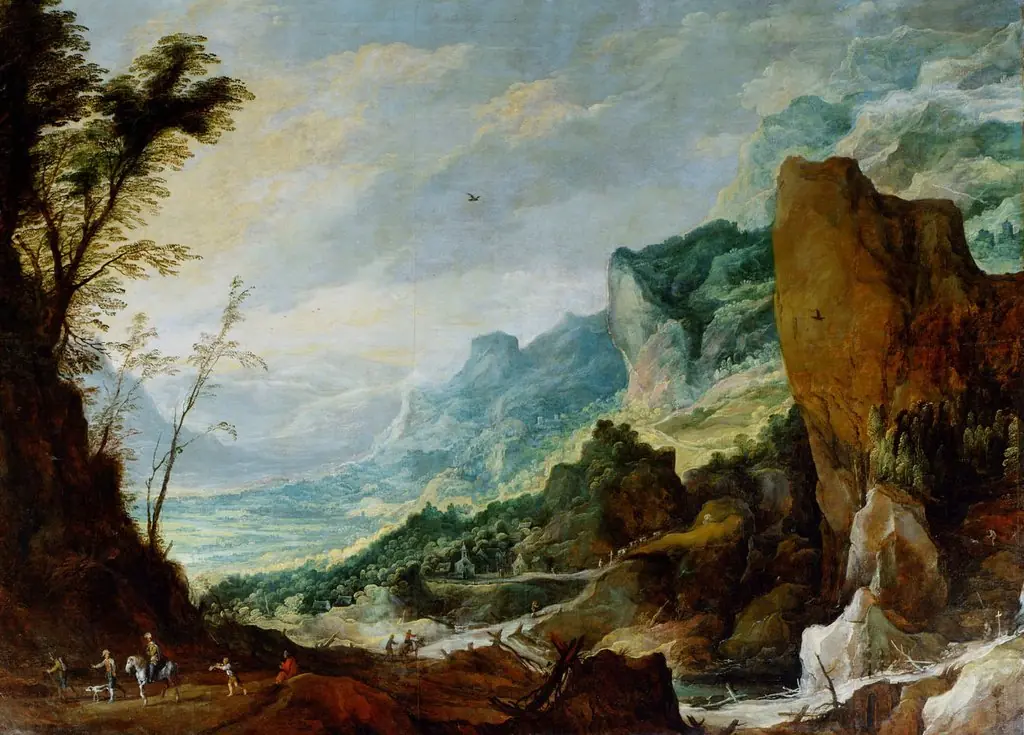 Mountain Landscape
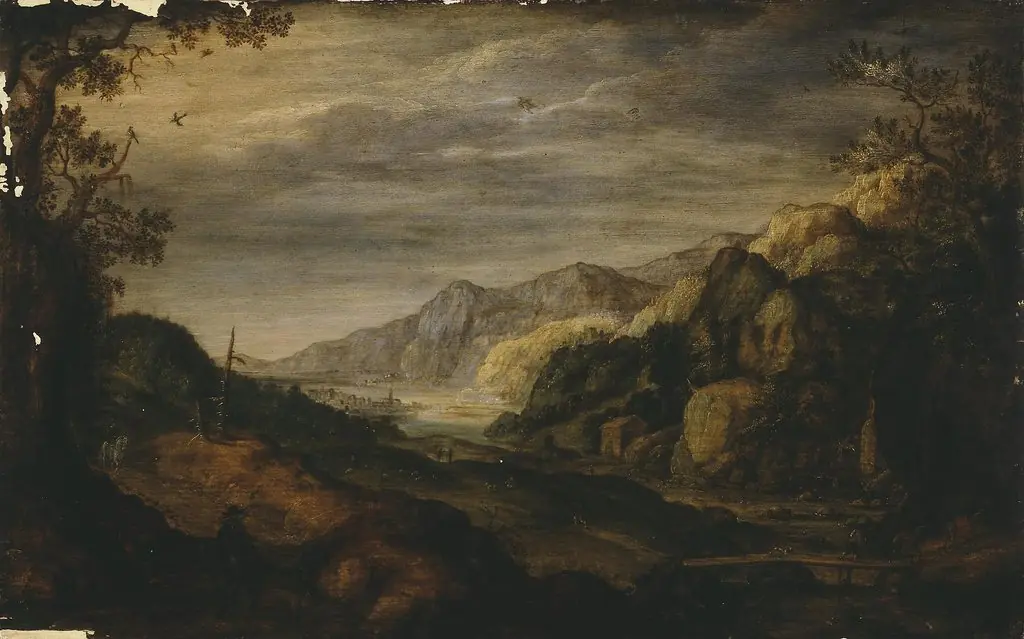 Mountainous Landscape
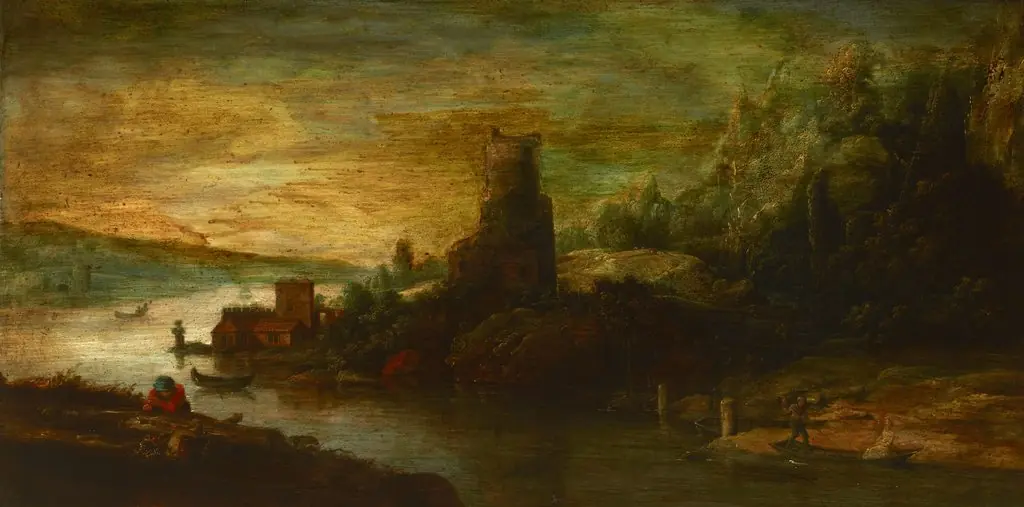 Landscape with a Tower by the Lake
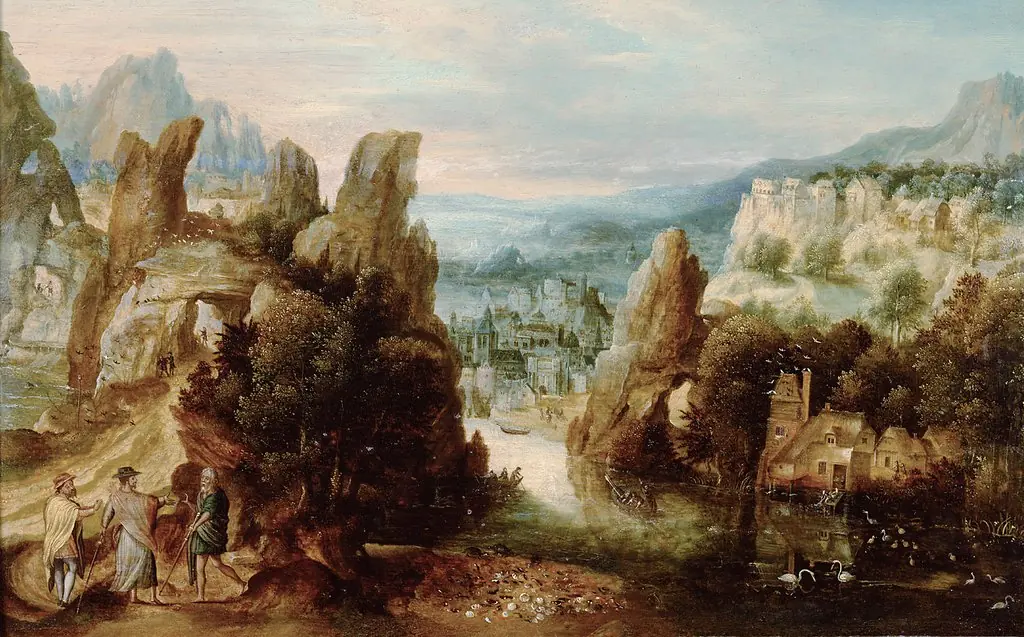 Landschaft mit dem Gang nach Emmaus
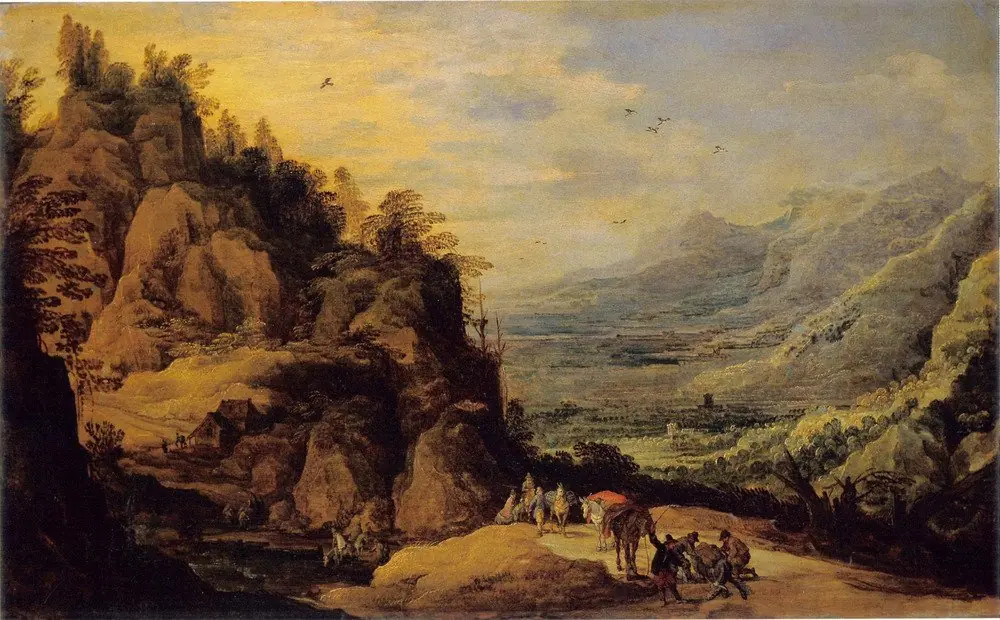 Mountainous Landscape with Figures and a Donkey
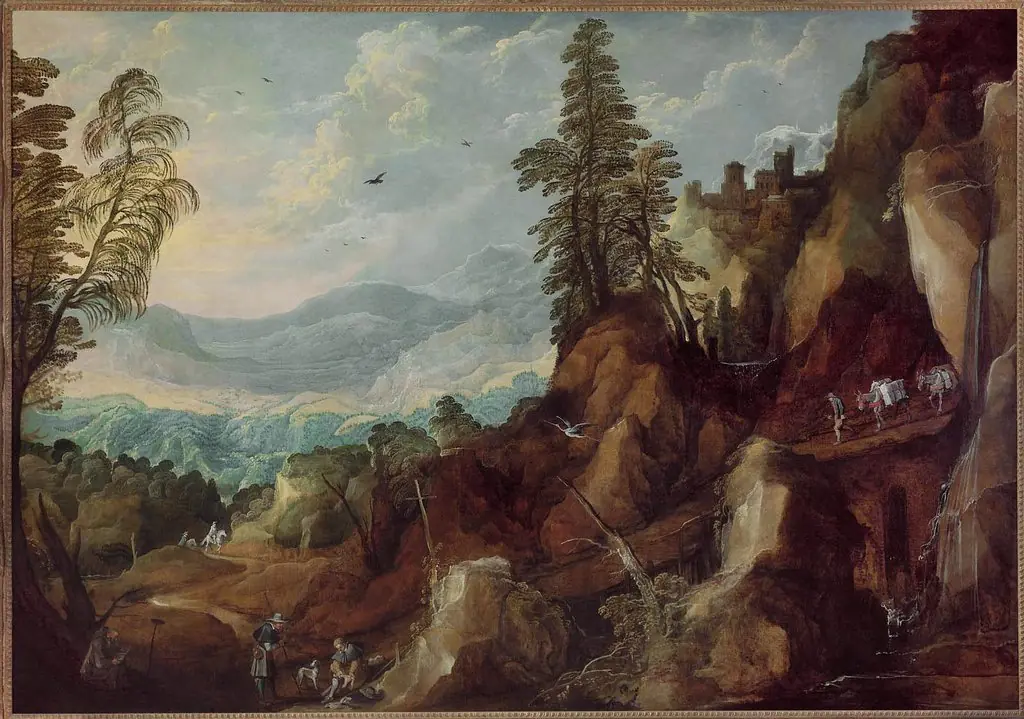 Mountain Landscape with Travelers
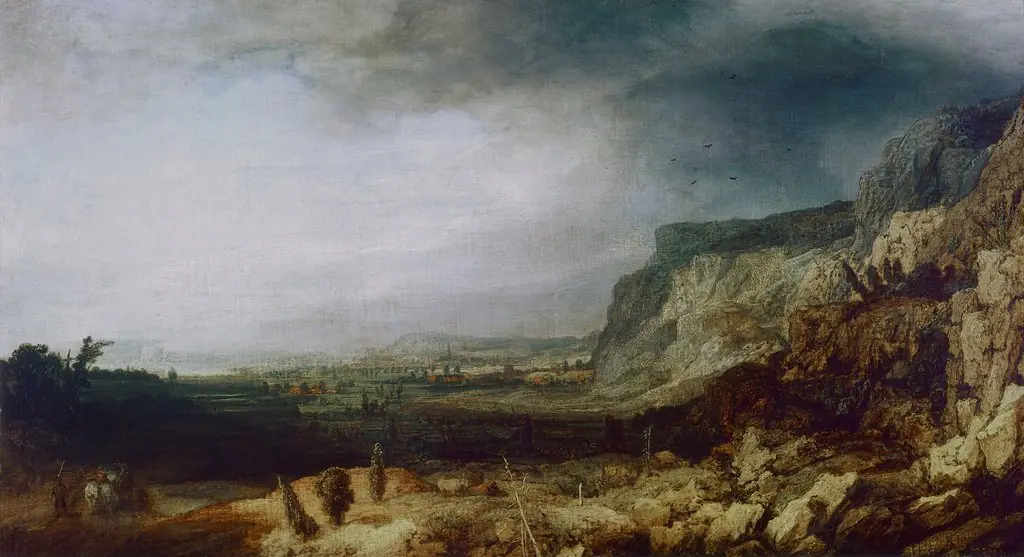 Rocky landscape
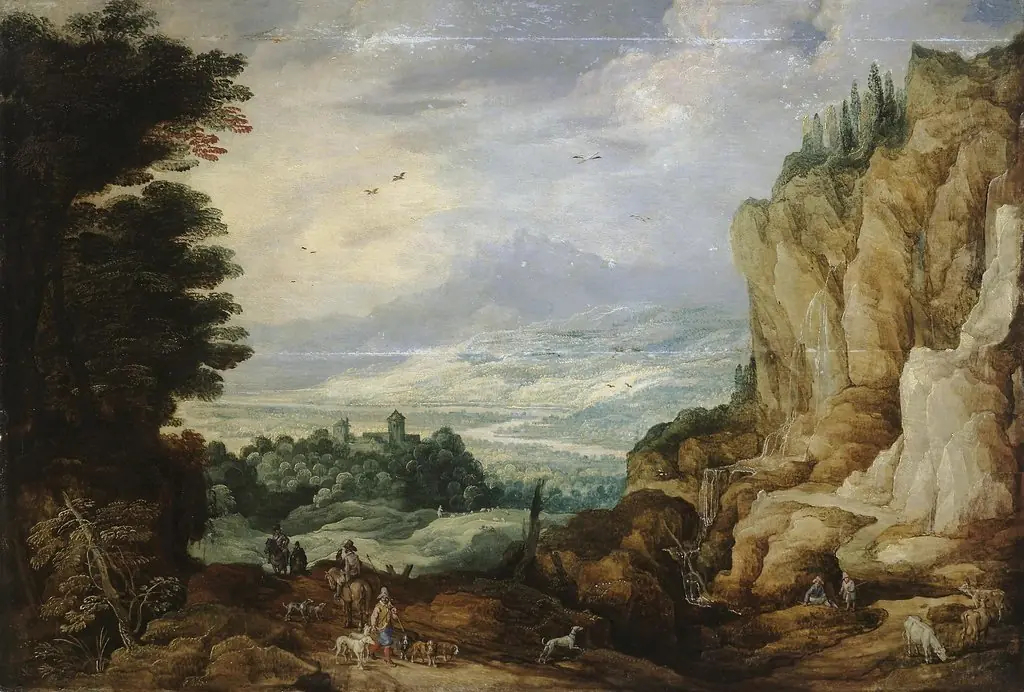 Rock Landscape with a Waterfall
 River Valley
 Paisagem com figuras
 Coast Landscape with the so-called Temple of Sibyl at Tivoli