Artwork
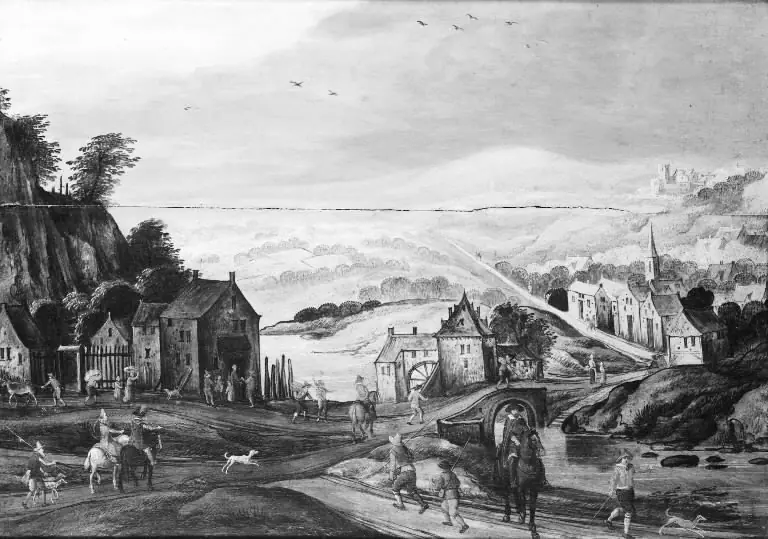
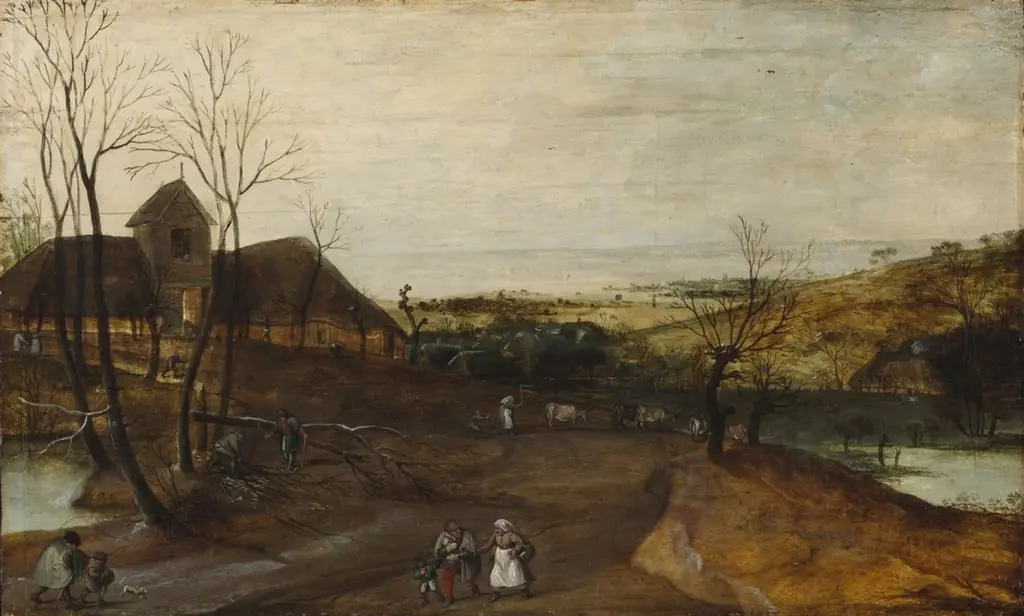
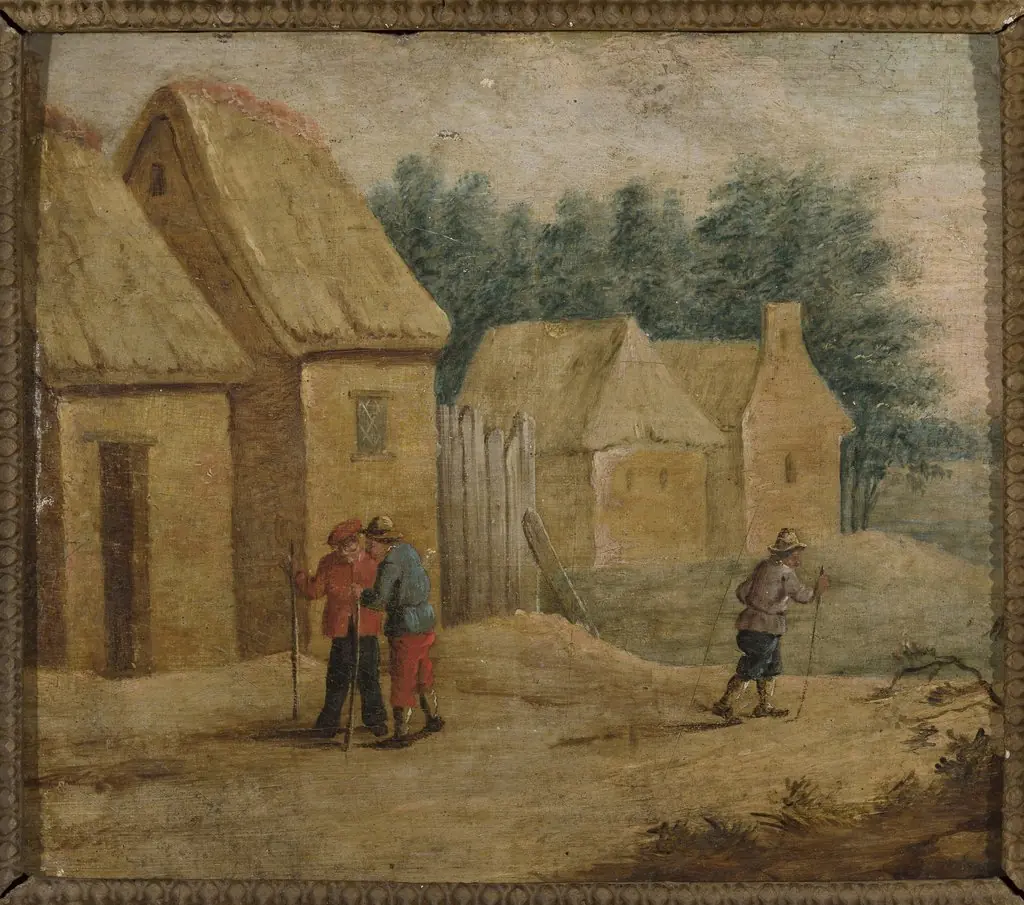
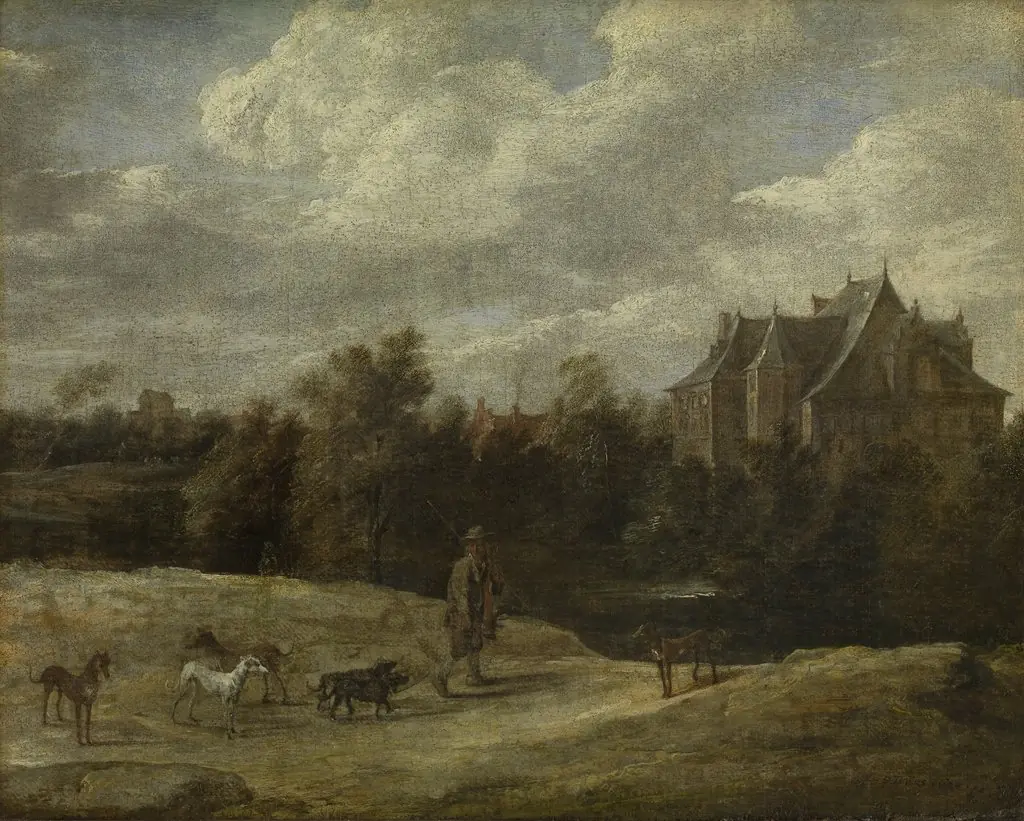
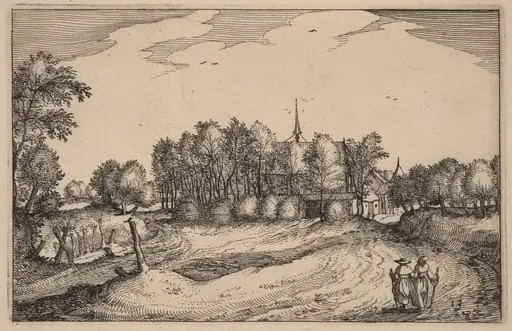
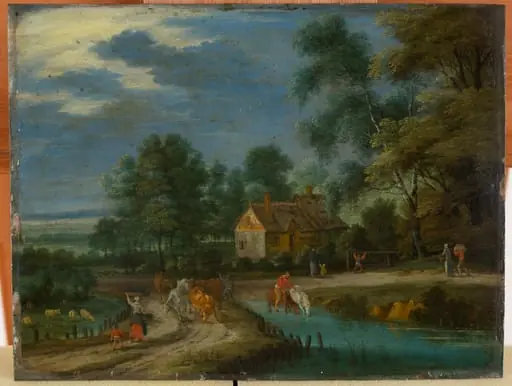
Winter landscape in the countryside with a building
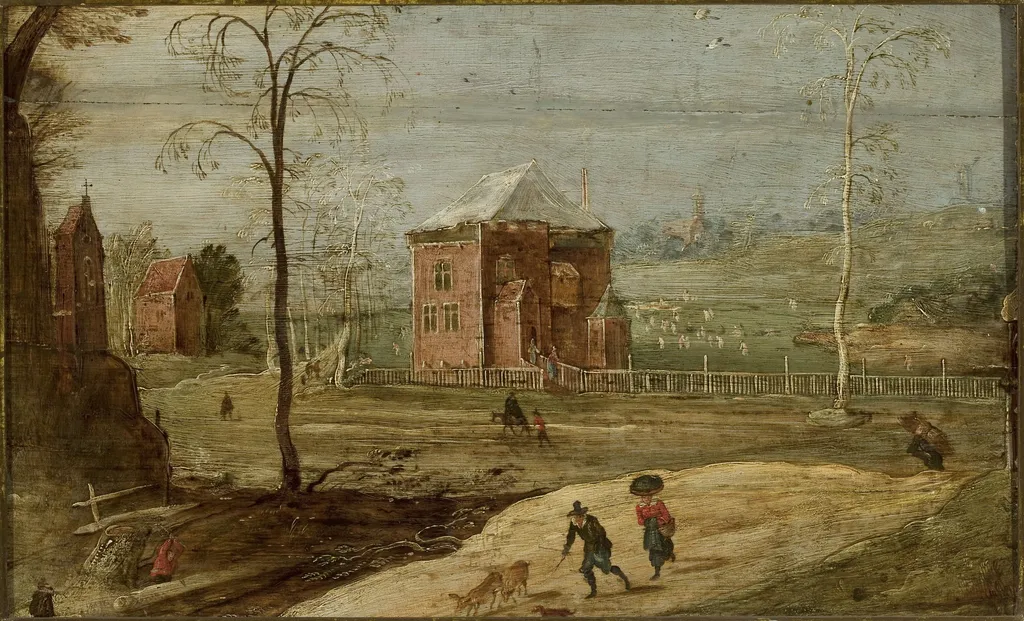
Winter landscape in the countryside with a building is an oil painting by the Flemish Baroque painting artist Joos de Momper the Younger. It dates from 1609 and is held in the collection of the National Museum in Warsaw.
About this work
Overview
It reflects the artist’s engagement with emerging naturalism in landscape painting, moving away from the stylized forms of Mannerism.
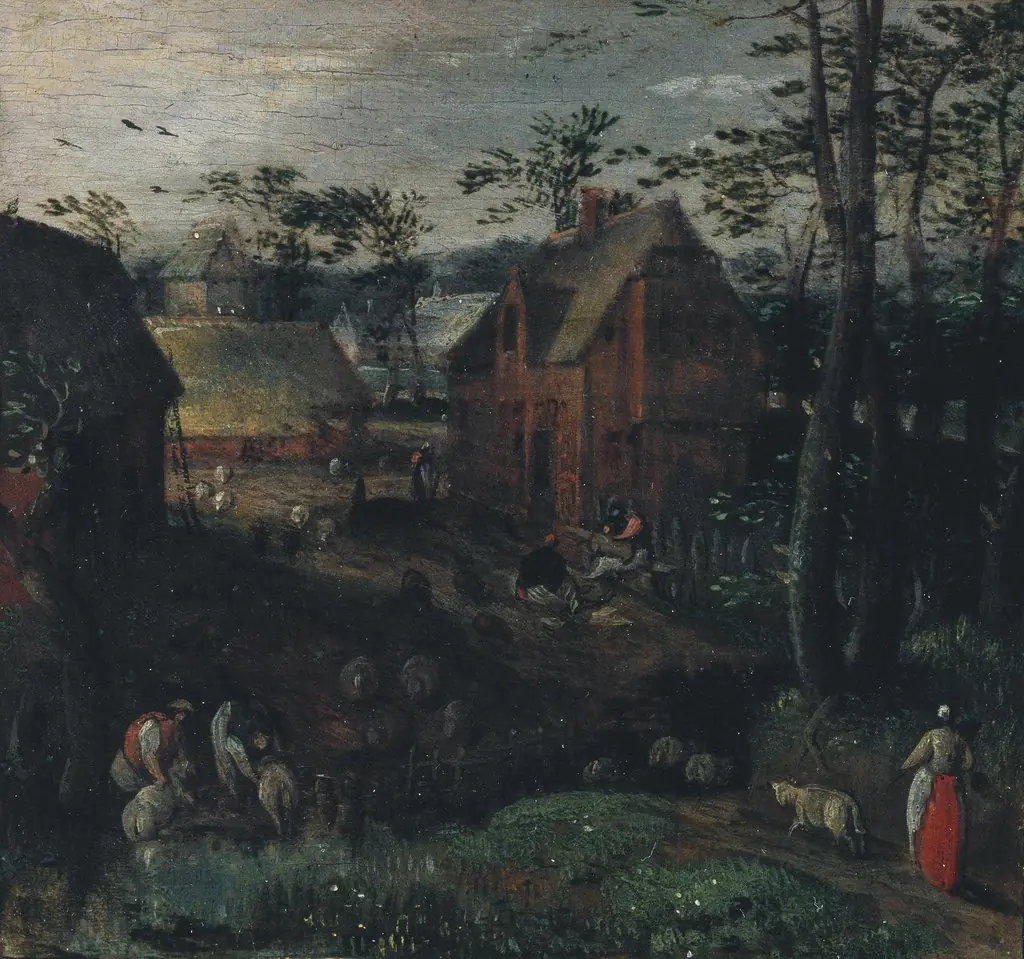
Painted around 1609 by Joos de Momper the Younger, this oil-on-panel work captures a quiet winter scene in the Flemish countryside. It reflects the artist’s engagement with emerging naturalism in landscape painting, moving away from the stylized forms of Mannerism. The composition centers on a substantial rural structure surrounded by snow-covered ground and sparse vegetation, suggesting a modest, everyday setting rather than an idealized vista.
Subject & Meaning
The painting portrays ordinary rural life in winter: figures trudge along a path, some bearing loads on their backs or heads, accompanied by dogs. A distant church and a fenced compound hint at community and domesticity. There is no overt narrative or allegory; instead, the scene conveys the quiet endurance of daily routines amid seasonal hardship, grounding the viewer in the tangible rhythms of peasant existence.
Technique & Style
De Momper employed fine brushwork to render textures—rough bark, snow-laden roofs, woven baskets, and woolen garments—with careful attention to detail. The palette is restrained, dominated by muted browns, grays, and greens, enhancing the wintry atmosphere. Atmospheric perspective is subtly used to recede the church and distant trees, while the foreground remains sharply defined, drawing the eye into the scene’s quiet activity.
History & Provenance
The painting entered the collection of the National Museum in Warsaw, where it remains today. Its journey from Antwerp to Poland is undocumented, but its presence in the museum’s holdings reflects broader 19th- and early 20th-century European efforts to assemble representative collections of Netherlandish art. It is one of several works by de Momper preserved in public institutions across Central Europe.
Context
Created during the early Baroque period, the painting aligns with a growing interest in secular landscape subjects among Flemish artists. De Momper built upon the tradition of Pieter Bruegel the Elder, adapting his detailed, populous scenes into more subdued, atmospheric compositions. This shift mirrored broader cultural trends toward observation of nature and daily life, away from religious or mythological themes.
Legacy
Though not widely known today, de Momper’s work contributed to the evolution of landscape painting in the Low Countries. His careful rendering of winter environments and rural activity influenced later Dutch and Flemish painters who sought to depict nature with quiet authenticity. This painting stands as a modest but enduring example of early 17th-century observational realism in Flemish art.
Own this work as a print
Artist & collection
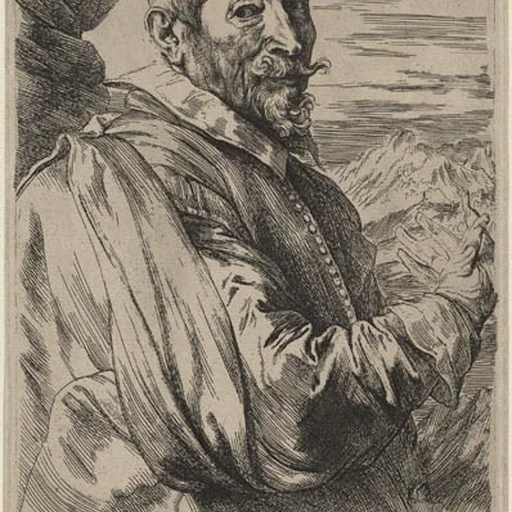
Artist
Joos de Momper the Younger or Joost de Momper the Younger (c. 1564 – 5 February 1635) was a Flemish landscape painter active in Antwerp between the late 16th century and the early 17th century. Brueghel's influence is…