Artwork
A Convent
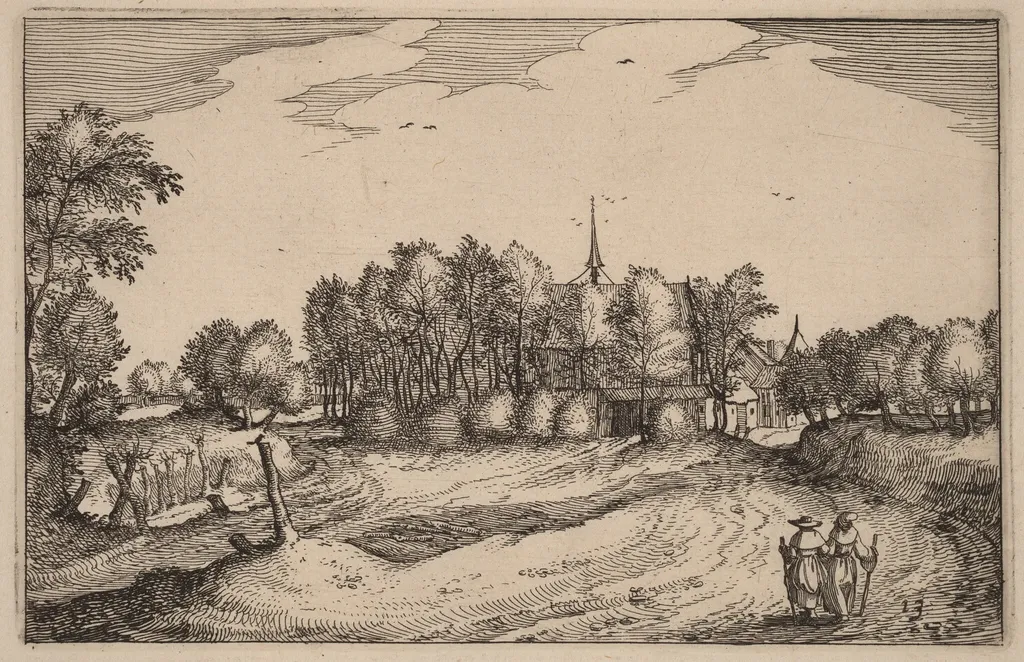
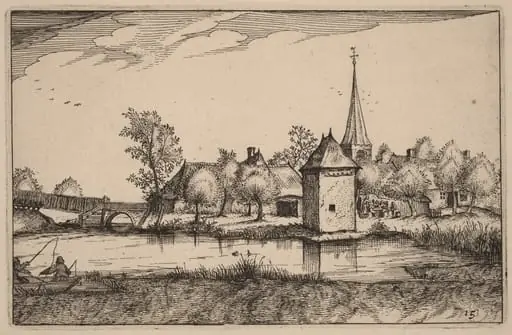
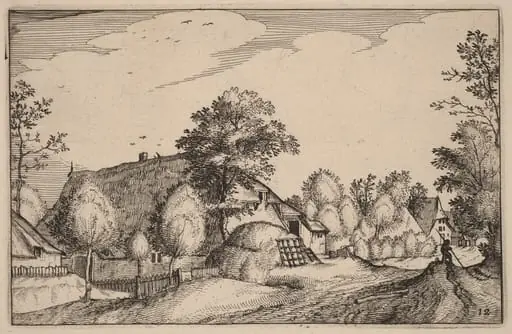
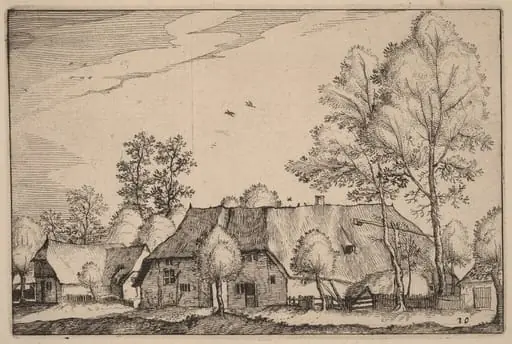
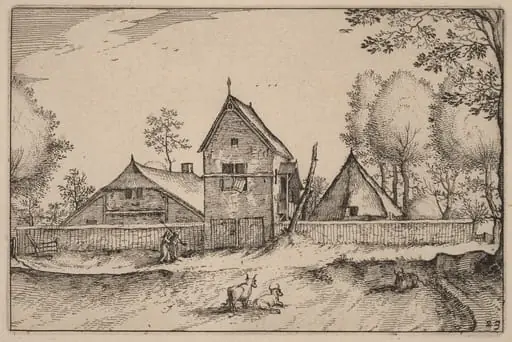
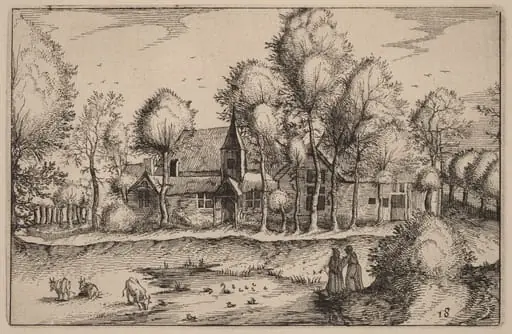
A Convent is an ink print by the Baroque artist Claes Jansz Visscher. It dates from 1612 and is held in the collection of the National Gallery of Art. Claes Janszoon Visscher produced this 1612 etching as part of his broader engagement with Dutch graphic culture.
About this work
Overview
Known primarily for cartography, he applied his precision in line and composition to secular and religious subjects.
Claes Janszoon Visscher produced this 1612 etching as part of his broader engagement with Dutch graphic culture. Known primarily for cartography, he applied his precision in line and composition to secular and religious subjects. The print captures a quiet moment in the countryside, blending architectural observation with landscape elements, characteristic of early 17th-century Northern European printmaking traditions.
Subject & Meaning
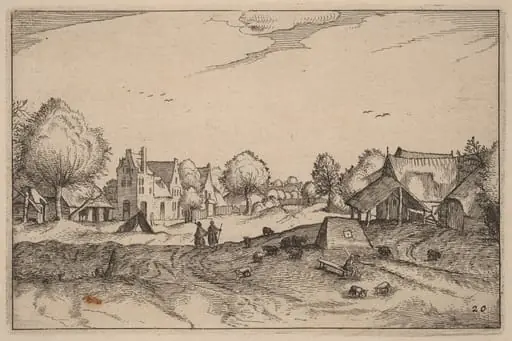
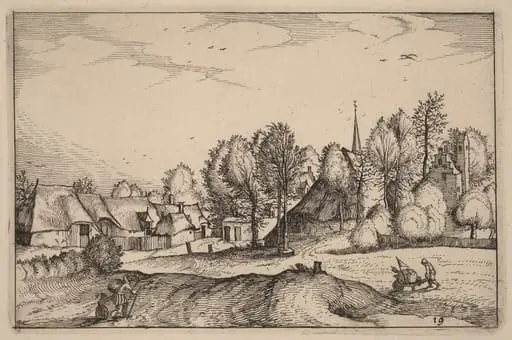
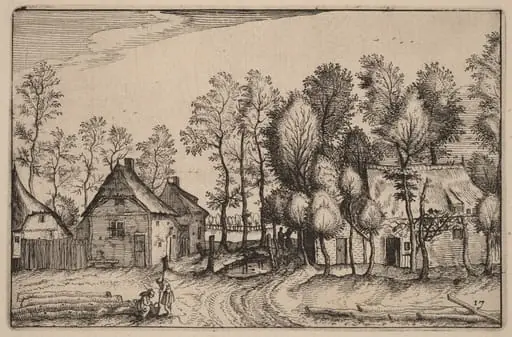
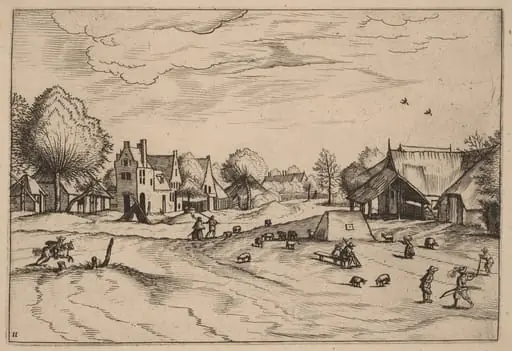
The scene centers on a convent nestled among trees, its steeple rising above the canopy. Two figures walk along a winding path, their presence suggesting contemplation or pilgrimage. The convent is not depicted as a place of ritual but as a quiet fixture in the landscape, reflecting a broader Dutch interest in the integration of religious institutions into everyday rural life, without overt theological emphasis.
Technique & Style
Visscher employed etching to achieve fine gradations of tone and texture, using delicate lines to render foliage, stone, and distance. The composition guides the eye from the foreground figures toward the distant steeple, creating depth through atmospheric perspective. His handling of light and shadow is restrained, favoring naturalism over dramatic contrast, aligning with the subdued aesthetic of Dutch graphic art of the period.
History & Provenance
Created during the height of Visscher’s publishing career in Amsterdam, the etching likely circulated as a standalone print or within a thematic collection. While no specific early ownership records are documented, its production aligns with the commercial print market of the time, where landscapes and architectural views appealed to middle-class collectors interested in domestic and devotional scenes.
Context
In early 17th-century Holland, religious institutions remained visible in the landscape despite the Reformation’s decline in public worship. Artists like Visscher depicted convents not as symbols of Catholicism but as architectural landmarks, reflecting a cultural shift toward secularized observation. This print contributes to a broader trend of landscape prints that emphasized place over doctrine.
Legacy
Though Visscher is better remembered for his maps, this etching exemplifies his versatility and the permeability of genres in Dutch printmaking. It stands as a quiet example of how religious architecture was absorbed into the visual language of everyday life, influencing later generations of landscape printmakers who prioritized atmosphere and spatial harmony over narrative or symbolism.
Artist & collection

Artist
Claes Janszoon Visscher (1587 – 19 June 1652) was a Dutch Golden Age draughtsman, engraver, mapmaker, and publisher.