Artwork
Design for a Wall Decoration [recto]
![Design for a Wall Decoration [recto], by Jacob Jordaens, ink, 1642](https://artifactworldgallery.com/img/jacob-jordaens--design-for-a-wall-decoration-recto--87261d5e2477eba6-w1024.webp)
Design for a Wall Decoration [recto] is an ink drawing by the Baroque artist Jacob Jordaens. It dates from 1642 and is held in the collection of the National Gallery of Art.
About this work
Overview
Jacob Jordaens’ 1642 drawing, titled Design for a Wall Decoration (recto), is a preparatory study executed on laid paper. Rendered with brown and black ink, color washes, and white highlights over a black chalk underdrawing, the work measures roughly the size of a typical sheet of paper and exemplifies the artist’s process in planning a larger decorative scheme.
Subject & Meaning
The composition depicts an imagined architectural niche populated by three nude figures. A central female statue stands beneath an arch, grasping an object in her right hand, while two smaller male figures occupy ledges above, one clutching a scroll. Two dogs rest at the base, and the scene is bounded by ornamental swirls and columnar motifs, suggesting a celebratory or allegorical narrative.
Technique & Style
Jordaens employed swift brushwork to lay down ink outlines, then built volume with translucent color washes. White accents applied over the dark chalk underdrawing enhance the illusion of light falling on the figures. The juxtaposition of loose, gestural lines with smoother tonal areas creates a sense of depth and immediacy characteristic of Baroque preparatory drawings.
History & Provenance
Created in 1642, the drawing functioned as a design proposal for a wall decoration, likely intended for a private or ecclesiastical interior. Its subsequent ownership record is limited, but the work has been catalogued among Jordaens’ surviving sketches and is held in a European museum collection dedicated to Baroque art.
Context
During the mid‑17th century, Jordaens was a leading Flemish painter whose workshop frequently produced ornamental schemes for patrons. This drawing reflects the period’s fascination with classical motifs, dynamic composition, and the integration of sculpture and architecture within interior decoration.
Artist & collection


![Sheet of Studies with the Drunken Pan and Nymphs [verso], by Jacob Jordaens](https://artifactworldgallery.com/img/jacob-jordaens--sheet-of-studies-with-the-drunken-pan-and-nymphs-verso--7da29549b59c490a-w320.webp)
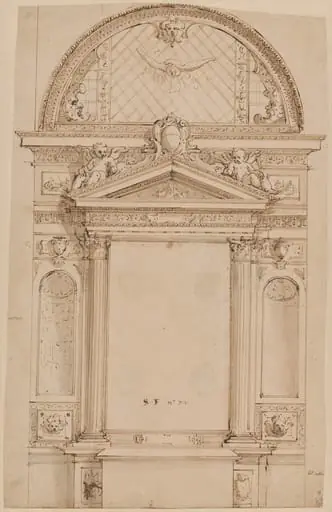 Design for an Altar
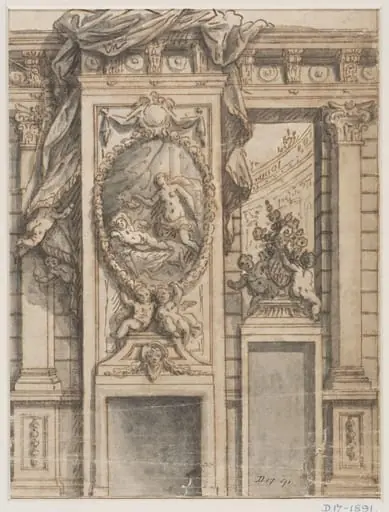 Design for wall decoration, possibly at Chatsworth, Derbyshire
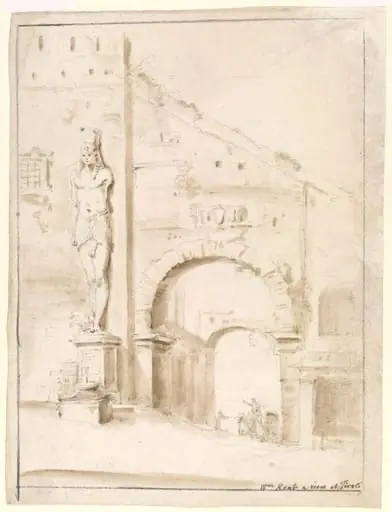 Untitled
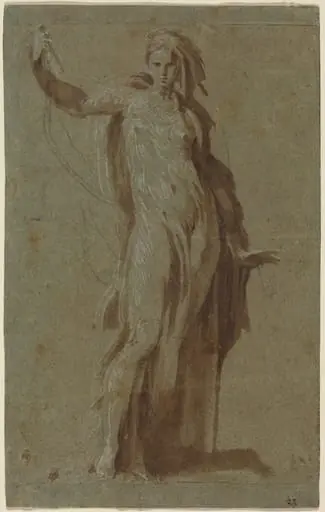 Standing Woman Holding a Scroll
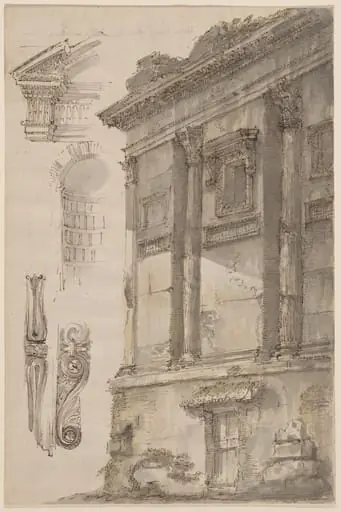 Studies of the Cenotaph of Annia Regilla
![Palatial Mantelpiece with Mercury and Hope [recto], by Austrian 16th Century](https://artifactworldgallery.com/img/austrian-16th-century--palatial-mantelpiece-with-mercury-and-hope-recto--35fcb50c5d0e2044-w320.webp) Palatial Mantelpiece with Mercury and Hope [recto]
Palatial Mantelpiece with Mercury and Hope [recto]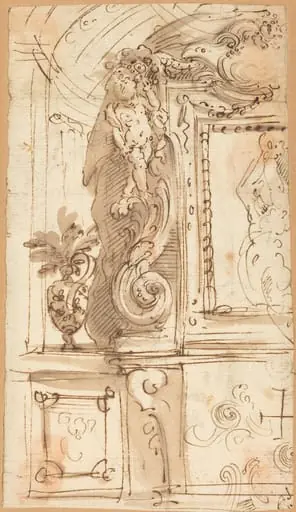 An Elaborately Sculpted Frame
![Palatial Mantelpiece with a Scene of Ancient Sacrifice [recto], by Austrian 16th Century](https://artifactworldgallery.com/img/austrian-16th-century--palatial-mantelpiece-with-a-scene-of-ancient-sacrifice-recto--6818e7e0eb258b13-w320.webp) Palatial Mantelpiece with a Scene of Ancient Sacrifice [recto]
Palatial Mantelpiece with a Scene of Ancient Sacrifice [recto]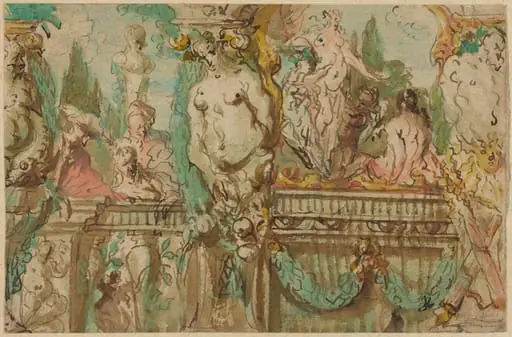 A Ceiling Design with Allegorical Figures
 Two Kings and a Woman Leaving an Elaborate Palace