Artwork
The Martyrdom of Saint Sebastian
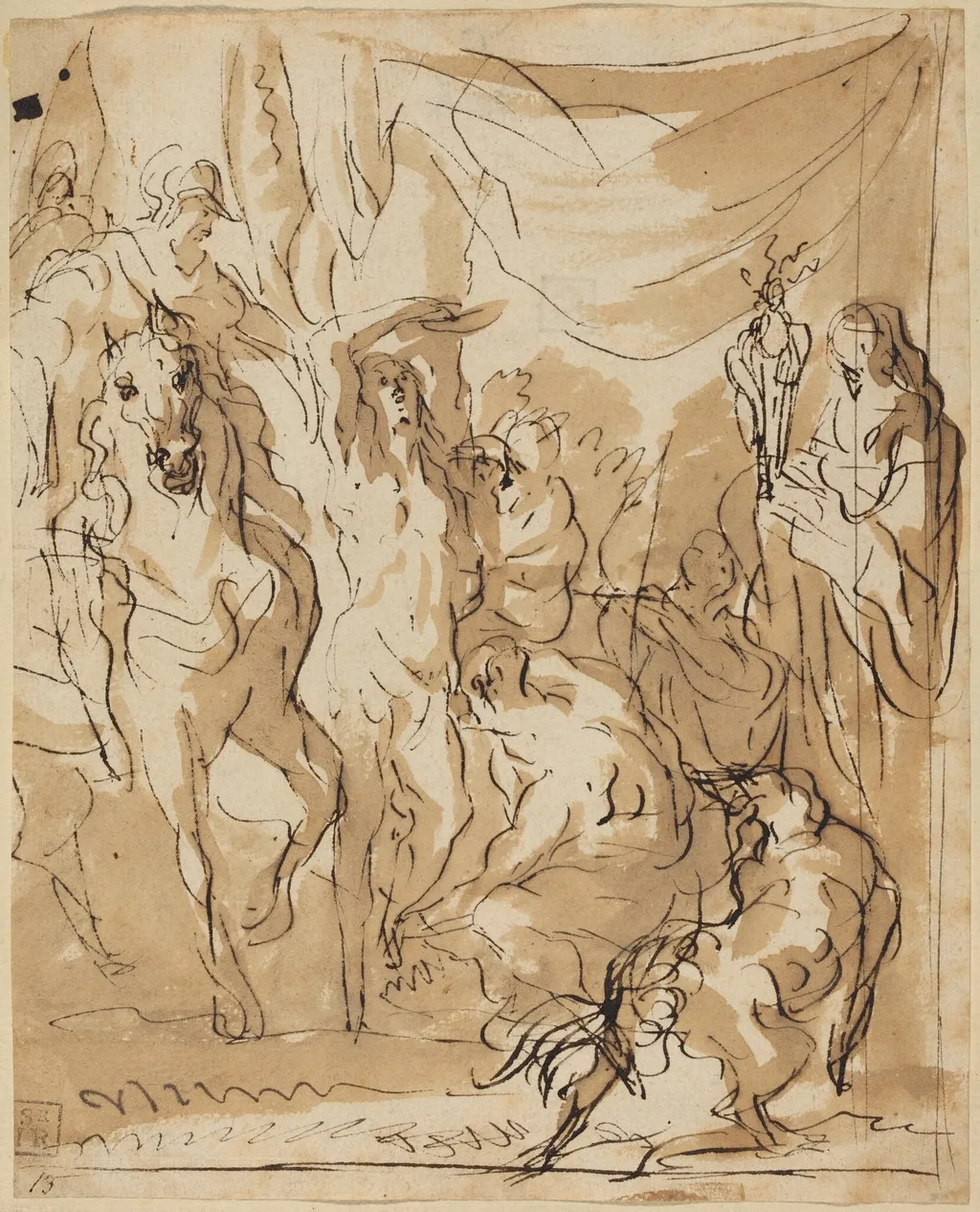
The Martyrdom of Saint Sebastian is an ink drawing by the Baroque artist Jacob Jordaens. It dates from 1620 and is held in the collection of the National Gallery of Art.
About this work
Overview
Unlike painted altarpieces of the period, this work is a study in monochrome, emphasizing emotional gravity through tonal gradations rather than color.
This drawing by Jacob Jordaens, dated around 1620, depicts the martyrdom of Saint Sebastian using pen and brown ink with wash on laid paper. Unlike painted altarpieces of the period, this work is a study in monochrome, emphasizing emotional gravity through tonal gradations rather than color. The medium’s intimacy suggests it was intended for private contemplation or as a preparatory sketch for a larger composition.
Subject & Meaning
Saint Sebastian, a Roman soldier and early Christian martyr, is shown bound to a tree, pierced by multiple arrows. His posture conveys endurance rather than agony, aligning with hagiographic traditions that emphasize spiritual fortitude. Surrounding figures, rendered with subdued gestures, express grief or witness, reinforcing the sacred nature of his suffering as an act of faith rather than mere violence.
Technique & Style
Jordaens employs pen lines of varying thickness to define form and shadow, layered with diluted brown wash to model volume and depth. The textured laid paper absorbs ink unevenly, enhancing the roughness of the tree bark and the weight of the saint’s body. The restrained palette and controlled brushwork reflect a focus on emotional resonance over theatrical spectacle, characteristic of early Baroque draftsmanship.
History & Provenance
The drawing likely originated in Antwerp during Jordaens’s early career, when he was producing studies for religious commissions. Its survival suggests it was valued by collectors or studio assistants. While its exact provenance before the 19th century is undocumented, it entered a public collection in the 20th century, where it is now preserved as an example of Flemish graphic art from the period.
Context
Created during the Counter-Reformation, the image responds to Catholic efforts to reinforce devotion through vivid depictions of martyrdom. Jordaens, influenced by Rubens and Italian models, adapted these themes into a more restrained, introspective format. This drawing reflects a broader trend in Northern Europe where artists used ink studies to explore emotional and spiritual intensity outside large-scale commissions.
Legacy
As a rare surviving example of Jordaens’s graphic work, the drawing offers insight into his process and the role of preparatory studies in Baroque religious art. It stands as a quiet counterpoint to his more flamboyant paintings, illustrating how emotional depth could be achieved through economy of means. The work continues to inform scholarly understanding of Flemish drawing practices in the early 17th century.
Artist & collection


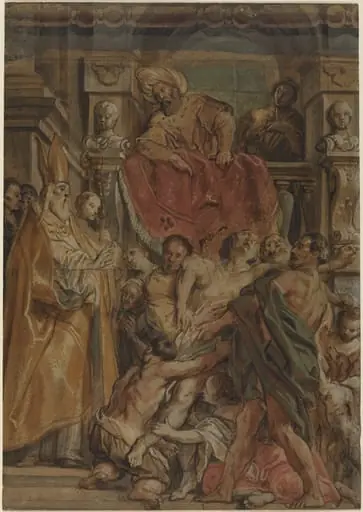
![Sheet of Studies with the Drunken Pan and Nymphs [verso], by Jacob Jordaens](https://artifactworldgallery.com/img/jacob-jordaens--sheet-of-studies-with-the-drunken-pan-and-nymphs-verso--7da29549b59c490a-w320.webp)
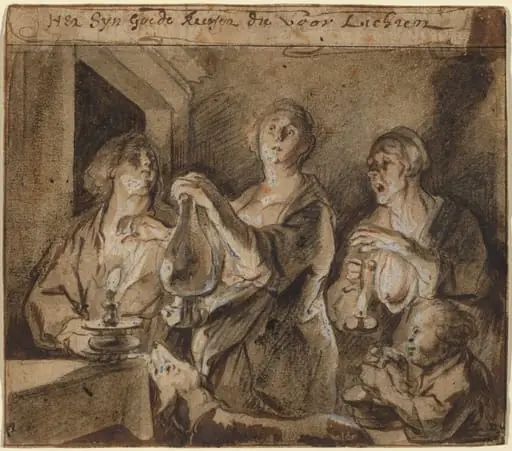
![Design for a Wall Decoration [recto], by Jacob Jordaens](https://artifactworldgallery.com/img/jacob-jordaens--design-for-a-wall-decoration-recto--87261d5e2477eba6-w320.webp)
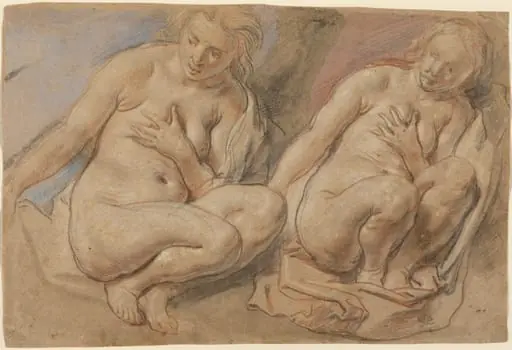
![Biblical Scene [verso], by Sebastiano Ricci](https://artifactworldgallery.com/img/sebastiano-ricci--biblical-scene-verso--d33f1e2abb3d29f7-w320.webp) Biblical Scene [verso]
Biblical Scene [verso]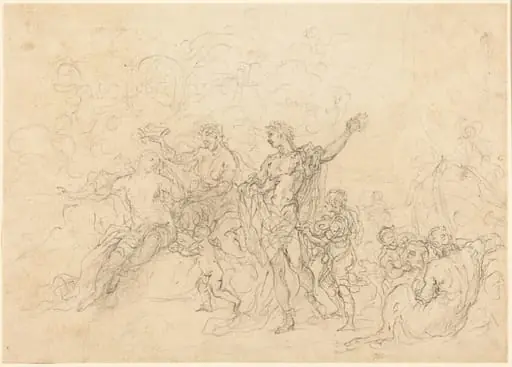 The Marriage of Bacchus and Ariadne
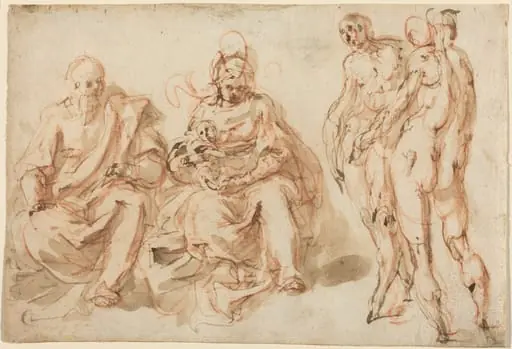 The Adoration of the Shepherds
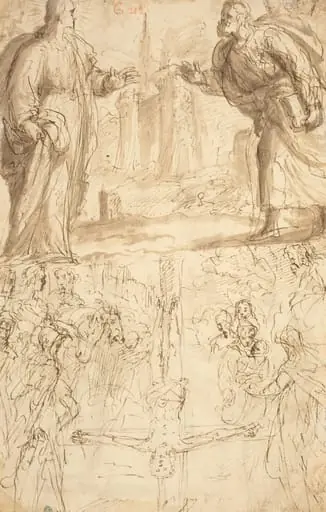 Crucifixion of Saint Peter
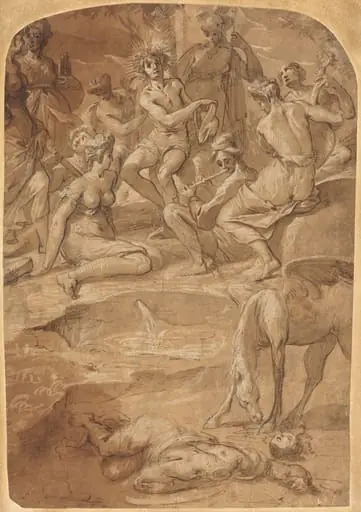 Apollo and the Muses on Mount Parnassus
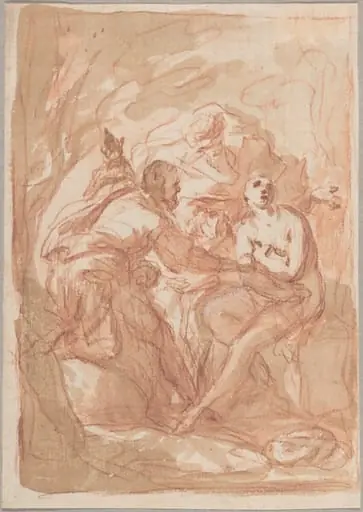 Susanna and the Elders
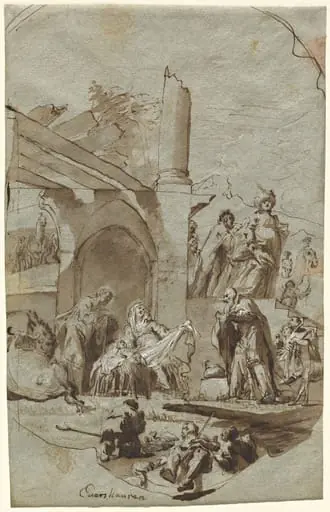 The Adoration of the Magi
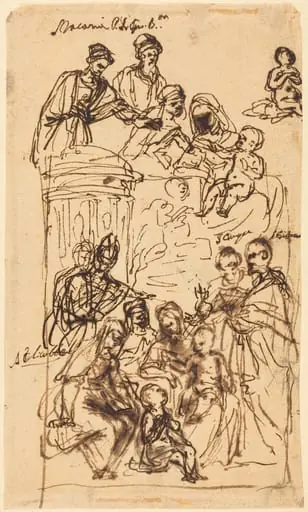 The Madonna and Child with Saints
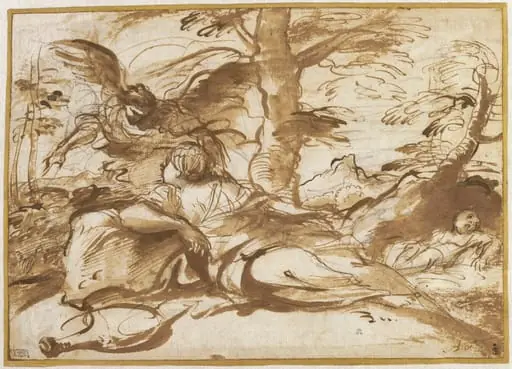 The Angel Appearing to Hagar in the Desert (recto)
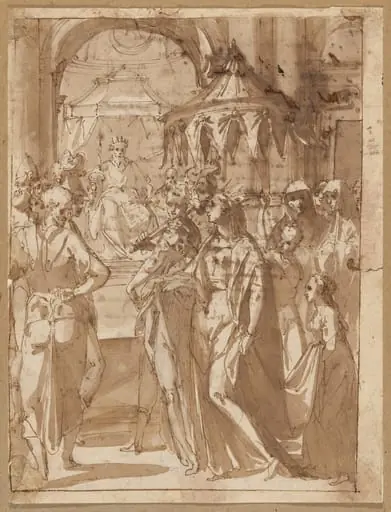 Esther before Ahasuerus
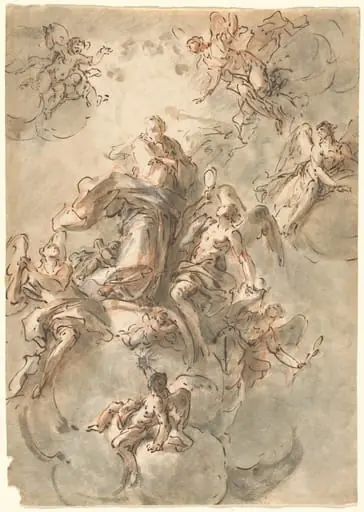 Virgin of the Immaculate Conception
![The Ecstasy of Saint Francis [recto], by Sebastiano Ricci](https://artifactworldgallery.com/img/sebastiano-ricci--the-ecstasy-of-saint-francis-recto--5f53f9b59775e5dd-w320.webp) The Ecstasy of Saint Francis [recto]
The Ecstasy of Saint Francis [recto]