Artwork
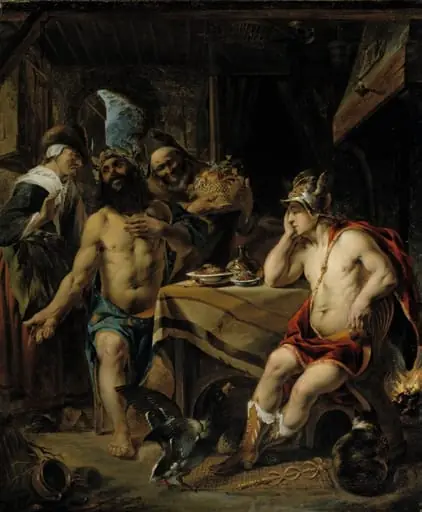
Jupiter ja Merkurius Filemonin ja Bauciin vieraina
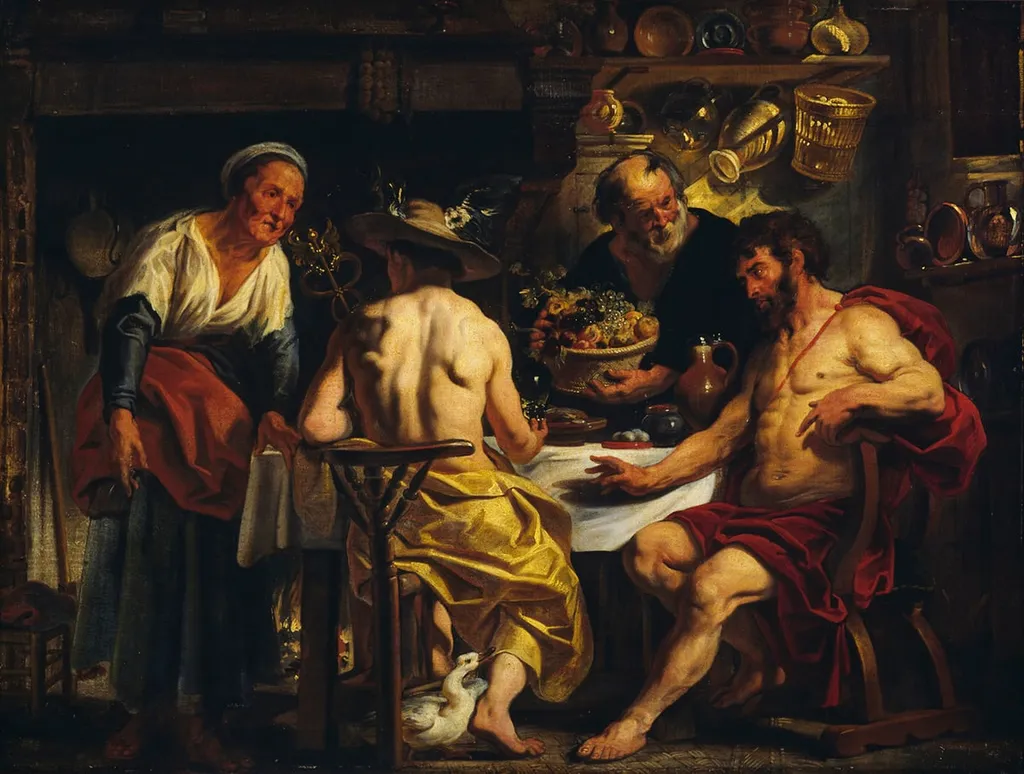
Jupiter ja Merkurius Filemonin ja Bauciin vieraina is an unspecified painting by the Flemish Baroque painting artist Jacob Jordaens. It is held in the collection of the Finnish National Gallery.
About this work
Overview
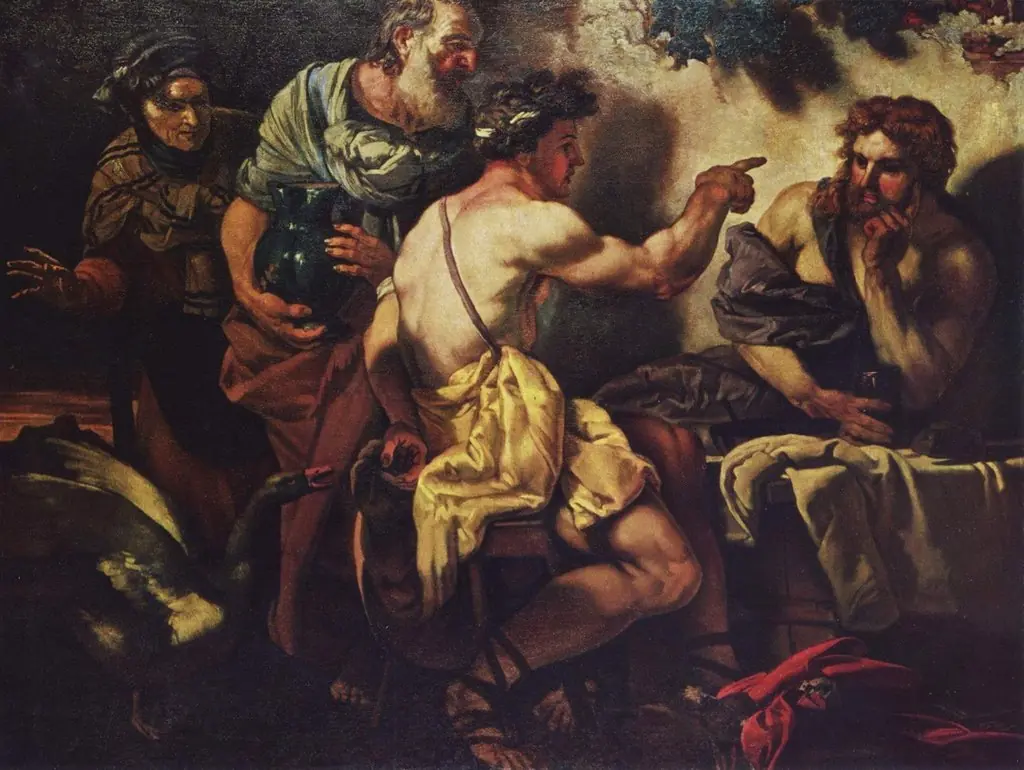
Two nude men in gold‑trimmed garments occupy the foreground, while an older woman and a seated gentleman complete the group.
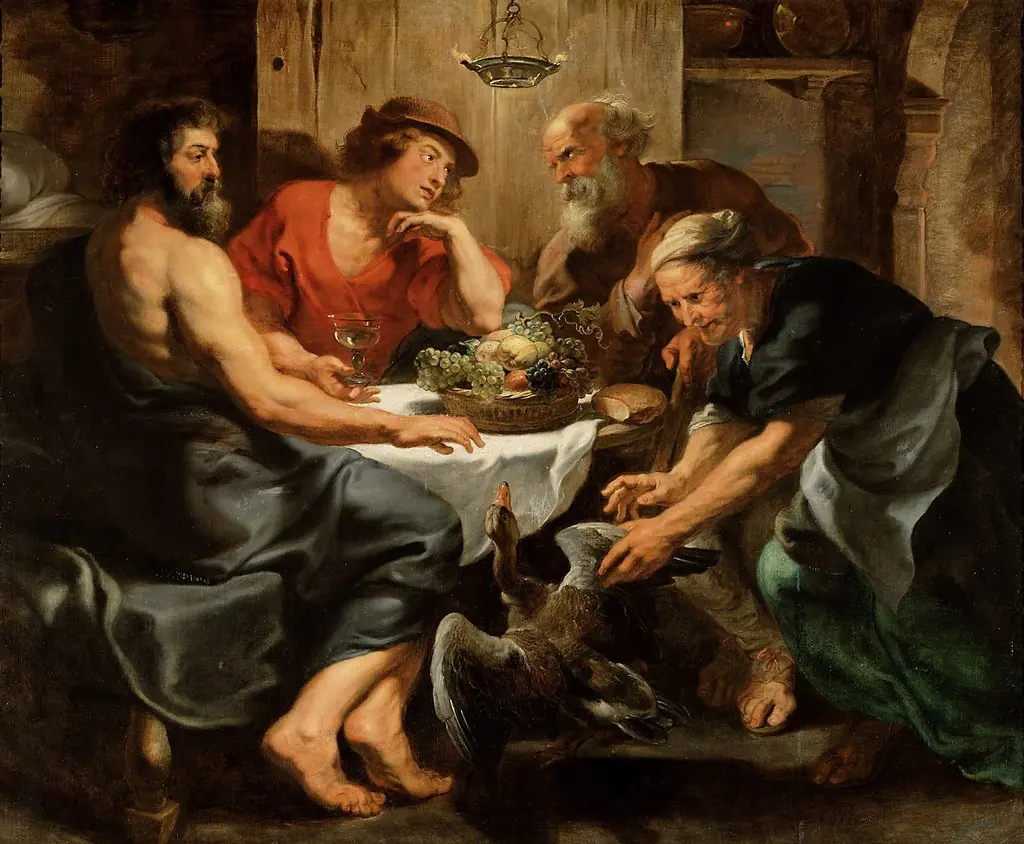
Jacob Jordaens’ oil painting, dated around 1652, presents a domestic interior populated by four figures. Two nude men in gold‑trimmed garments occupy the foreground, while an older woman and a seated gentleman complete the group. The composition is rendered in deep shadows that highlight the illuminated faces, creating a stark chiaroscuro effect characteristic of mid‑Seventeenth‑Century Flemish painting.
Subject & Meaning
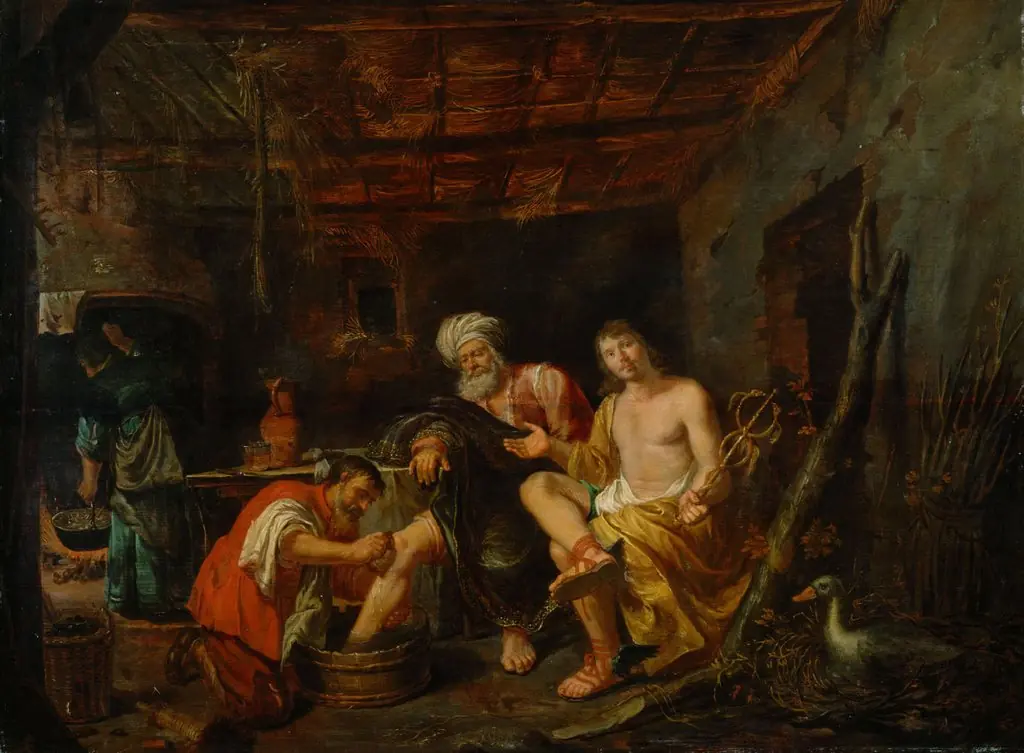
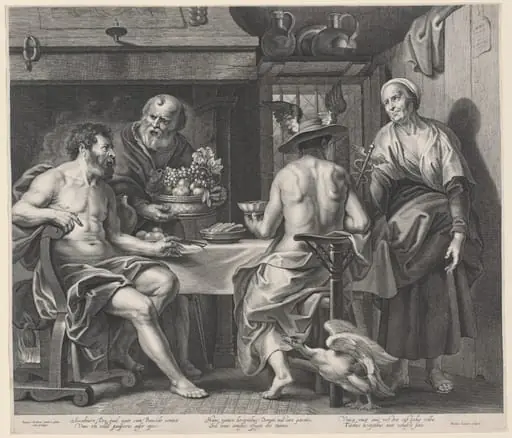
The work visualises the myth of Jupiter and Mercury visiting the humble couple Philemon and Baucis. The gods, disguised as modest travelers, are identified by their golden robes and the gesture of one pointing to a map‑like object, suggesting divine guidance. The elderly woman, clutching a staff, represents the pious hostess, while the seated elder watches, underscoring the theme of hospitality rewarded by the gods.
Technique & Style
Jordaens employs a limited palette of earthy tones punctuated by bright golds, allowing the light to fall dramatically on the central figures. The strong contrast between illuminated flesh and surrounding darkness exemplifies chiaroscuro, while the detailed rendering of household items—pots, baskets, jars—grounds the divine scene in a realistic, everyday setting.
History & Provenance
Created circa 1652, the painting belongs to Jordaens’ mature period, when he frequently revisited classical subjects. Although its early ownership records are sparse, the canvas entered public collections in the 19th century, eventually becoming part of a European museum’s holdings, where it has been displayed as an example of Flemish mythological genre.
Context
The composition reflects the Baroque interest in merging the sacred with the mundane, a motif also explored by contemporaries such as Rubens. By placing deities within a modest household, Jordaens reinforces moral lessons about humility and generosity, a narrative that continued to influence later Flemish and Dutch artists depicting mythological encounters.
Artist & collection


![Sheet of Studies with the Drunken Pan and Nymphs [verso], by Jacob Jordaens](https://artifactworldgallery.com/img/jacob-jordaens--sheet-of-studies-with-the-drunken-pan-and-nymphs-verso--7da29549b59c490a-w320.webp)
![Design for a Wall Decoration [recto], by Jacob Jordaens](https://artifactworldgallery.com/img/jacob-jordaens--design-for-a-wall-decoration-recto--87261d5e2477eba6-w320.webp)