Artwork
A cowboy
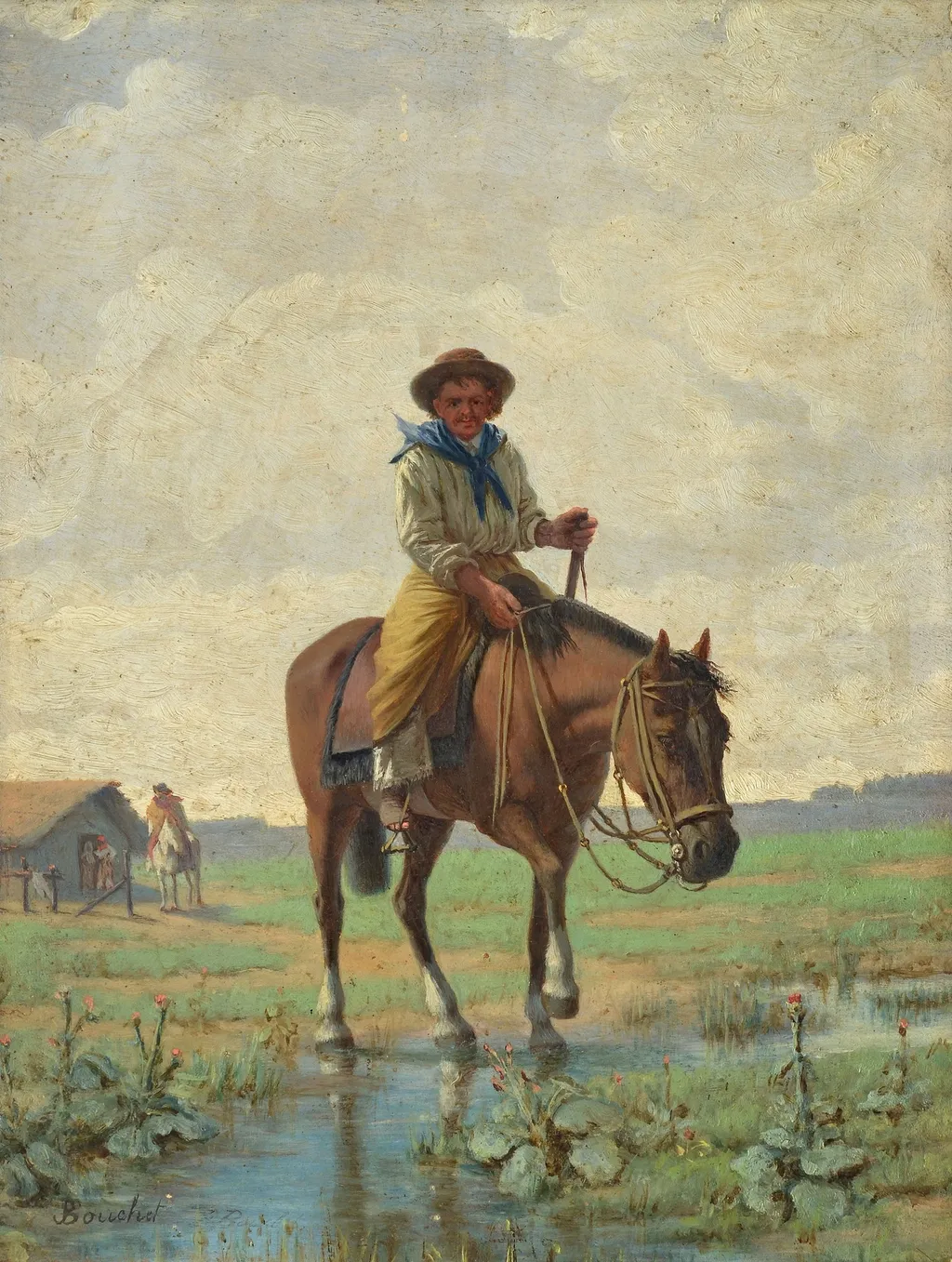
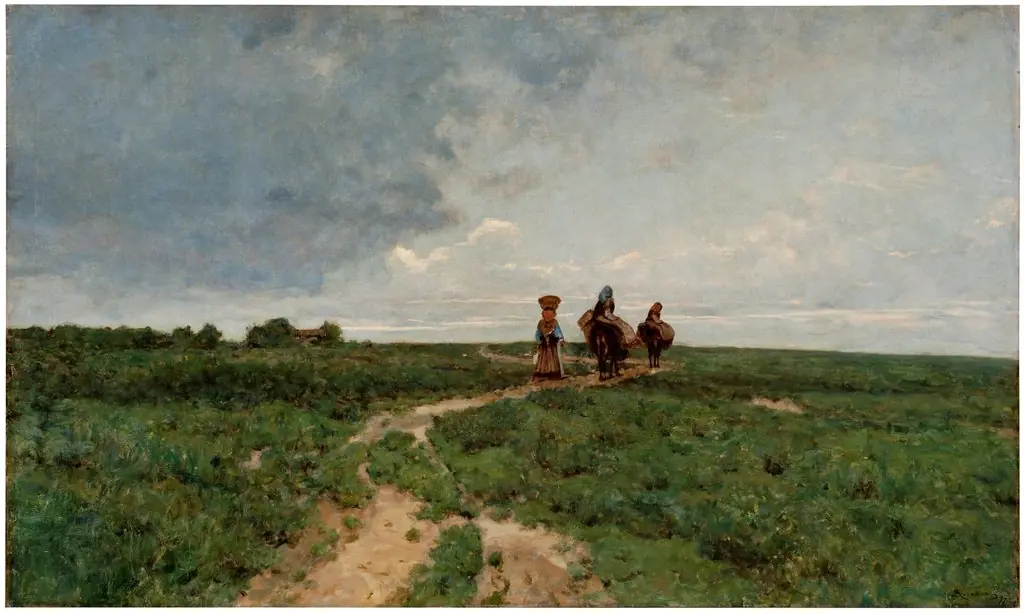
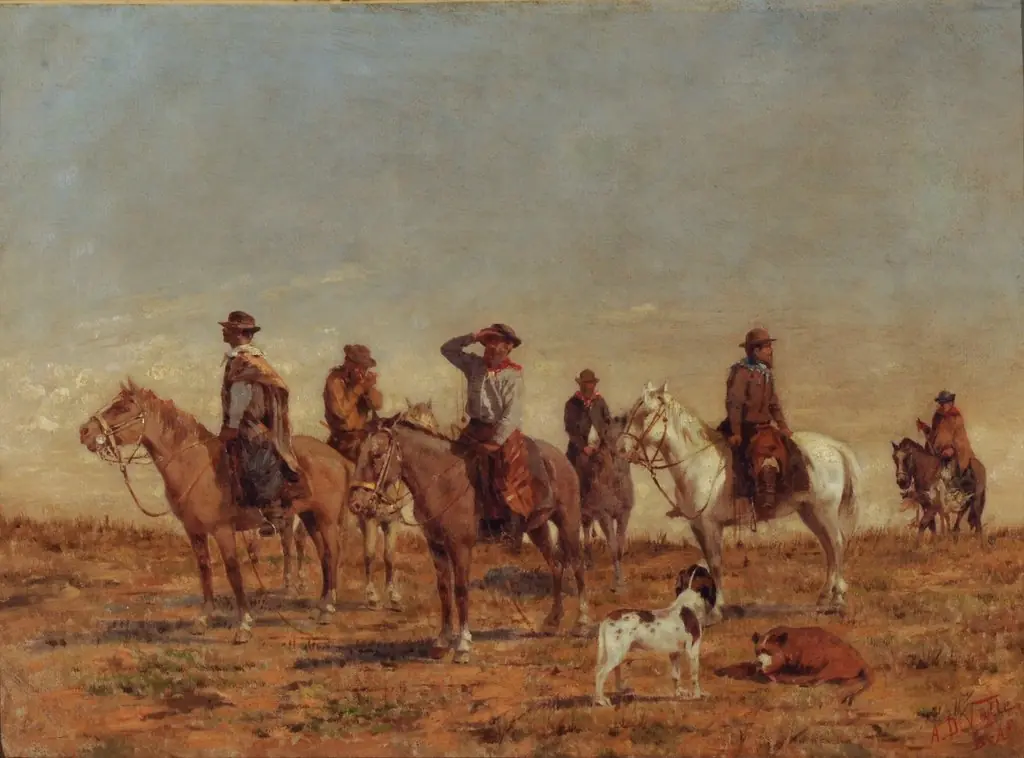
A cowboy is an unspecified painting by the Realist artist José Bouchet. It dates from 1850 and is held in the collection of the National Museum of Fine Arts, Argentina.
About this work
Overview
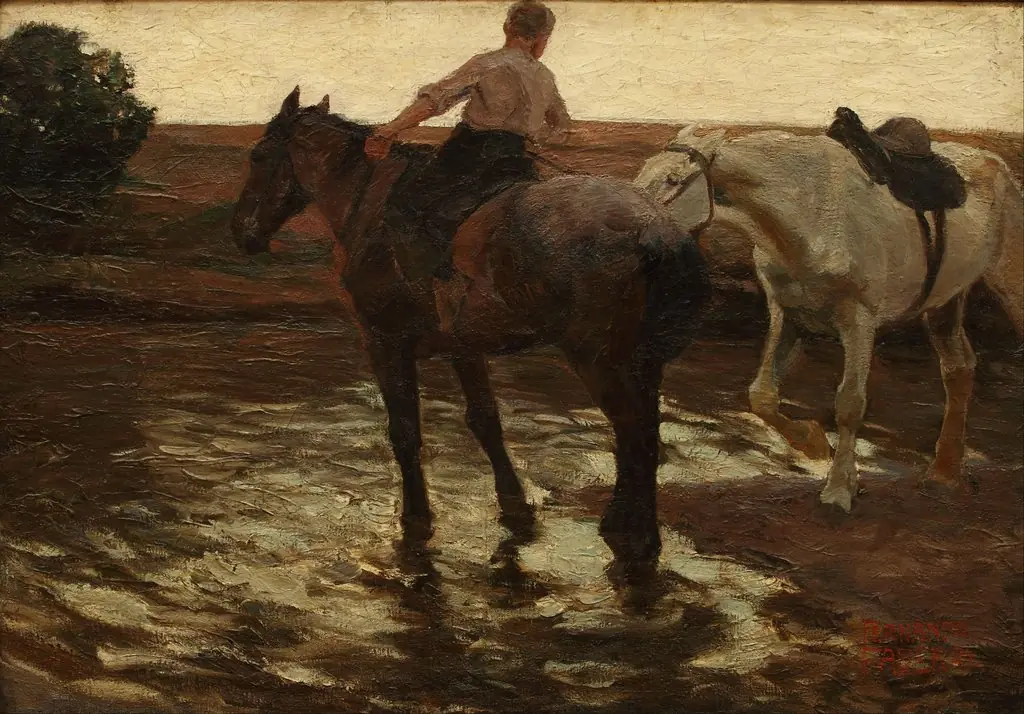
Painted around 1850 by José Bouchet, this work portrays a rural equestrian scene in the Argentine pampas. It is part of the permanent collection at the National Museum of Fine Arts in Buenos Aires. The composition captures a moment of transit—cowboy and horse moving through shallow water—offering a quiet yet dynamic glimpse into 19th-century rural life in the region.
Subject & Meaning
The figure is a gaucho, not a North American cowboy, dressed in typical regional attire: white shirt, yellow trousers, and a blue neckscarf.
The figure is a gaucho, not a North American cowboy, dressed in typical regional attire: white shirt, yellow trousers, and a blue neckscarf. He guides his horse through a wetland, a common feature of the pampas. A distant figure and modest structure suggest a working landscape, not a romanticized frontier. The scene reflects daily labor and mobility in Argentina’s rural economy, grounded in realism rather than myth.
Technique & Style
Bouchet employs loose brushwork and muted earth tones to convey motion and atmosphere. The water’s reflection and the horse’s submerged legs suggest fluidity, while the diagonal alignment of rider and animal imparts forward momentum. Light falls evenly across the scene, avoiding dramatic contrast, reinforcing the painting’s observational tone and quiet realism.
History & Provenance
The painting entered the collection of the National Museum of Fine Arts in Buenos Aires in the late 19th or early 20th century, likely through state acquisition or donation. Its attribution to José Bouchet, a lesser-known Argentine painter of the period, reflects efforts to document regional artistic output beyond European-influenced elites. No earlier provenance records are widely documented.
Context
Created during a period of national consolidation in Argentina, the painting aligns with emerging interest in indigenous and rural identities. While European academic styles dominated elite art, Bouchet’s work quietly documents local life. The gaucho, though not yet fully mythologized, was becoming a symbol of national character, and this image contributes to that evolving visual discourse.
Legacy
Though Bouchet’s oeuvre remains obscure, this painting endures as a modest but authentic record of 19th-century pampas life. It stands apart from later romanticized depictions of gauchos, offering instead a restrained, unembellished view. Its presence in a national museum affirms its role as a cultural artifact, valued for its historical testimony rather than artistic fame.
Own this work as a print
Artist & collection

Museum
National Museum of Fine Arts, Argentina
Continue through works from the same source collection.