Artwork
A Slave for Sale
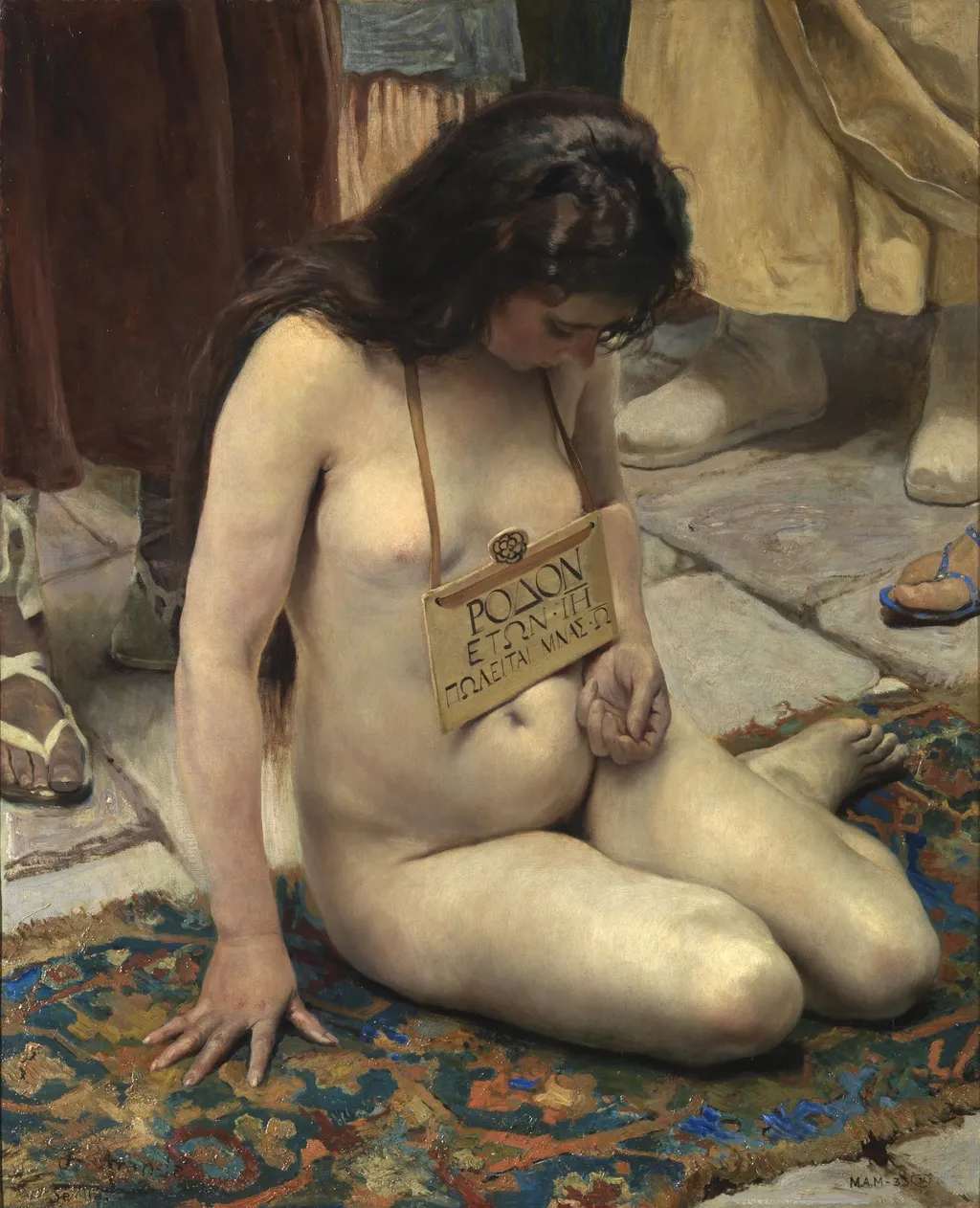
A Slave for Sale is an oil painting by the Post-Impressionist artist José Jiménez Aranda. It dates from 1899 and is held in the collection of the Museo del Prado.
About this work
Overview
Created in 1899, *A Slave for Sale* is an oil painting by Spanish artist José Jiménez Aranda. Executed toward the end of the 19th century, the work belongs to the period when Spanish painters were engaging with post‑impressionist tendencies. It is presently part of the Museo del Prado’s collection, representing a late‑career contribution by the artist.
Subject & Meaning
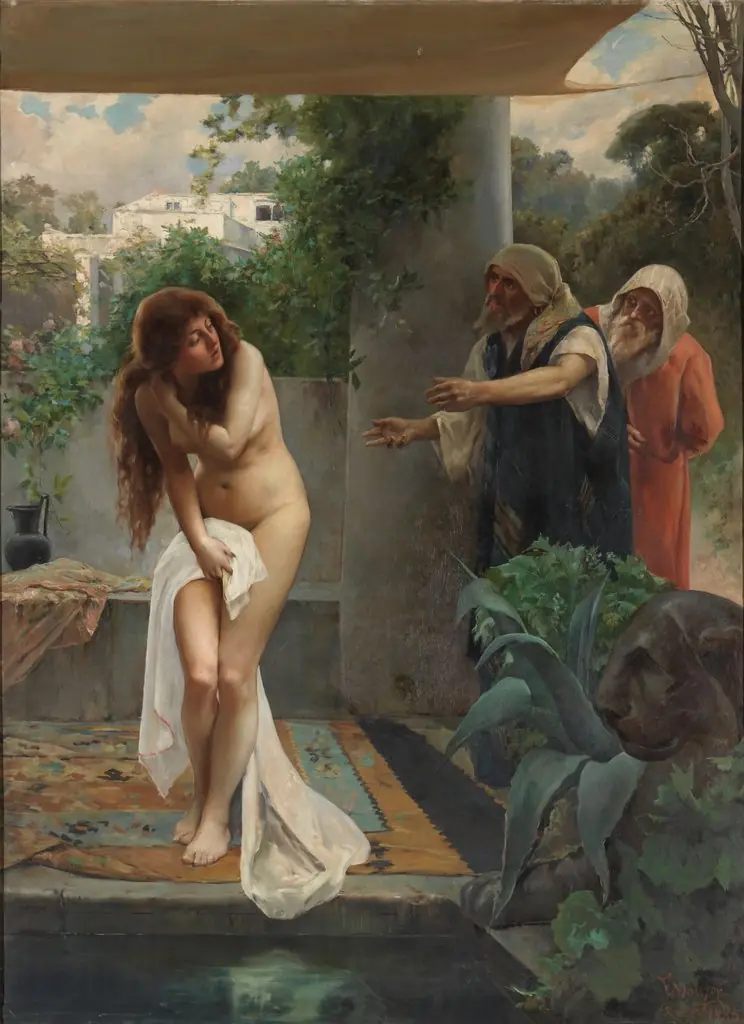
The canvas presents a seated woman draped on a rug, a placard bearing the Greek word “POISON” looped around her neck, indicating that she is being offered for purchase. Her dark hair frames a downcast gaze, and the composition suggests a commentary on the commodification of human beings, reflecting the lingering presence of slavery in the artist’s cultural memory.
Technique & Style
Aranda renders the figure with meticulous realism, emphasizing subtle variations in skin tone and the weight of fabric folds. A pronounced chiaroscuro model—strong contrasts between illuminated flesh and shadowed surroundings—creates a three‑dimensional presence. The background remains ambiguous, its dim stone walls receding into darkness, thereby focusing attention on the central figure.
History & Provenance
Born in 1837, José Jiménez Aranda was part of a family of painters that included his brothers Luis and Manuel. *A Slave for Sale* emerged during his mature phase, when he was active in the Spanish art world’s transition toward modernist approaches. The painting entered the Prado’s holdings through acquisition in the early 20th century, where it remains on display.
Own this work as a print
Artist & collection

Artist
José Jiménez Aranda (7 February 1837 – 6 May 1903) was a Spanish painter and brother of the painters Luis Jiménez Aranda and Manuel Jiménez Aranda.