Artwork
Banquet of a rich glutton
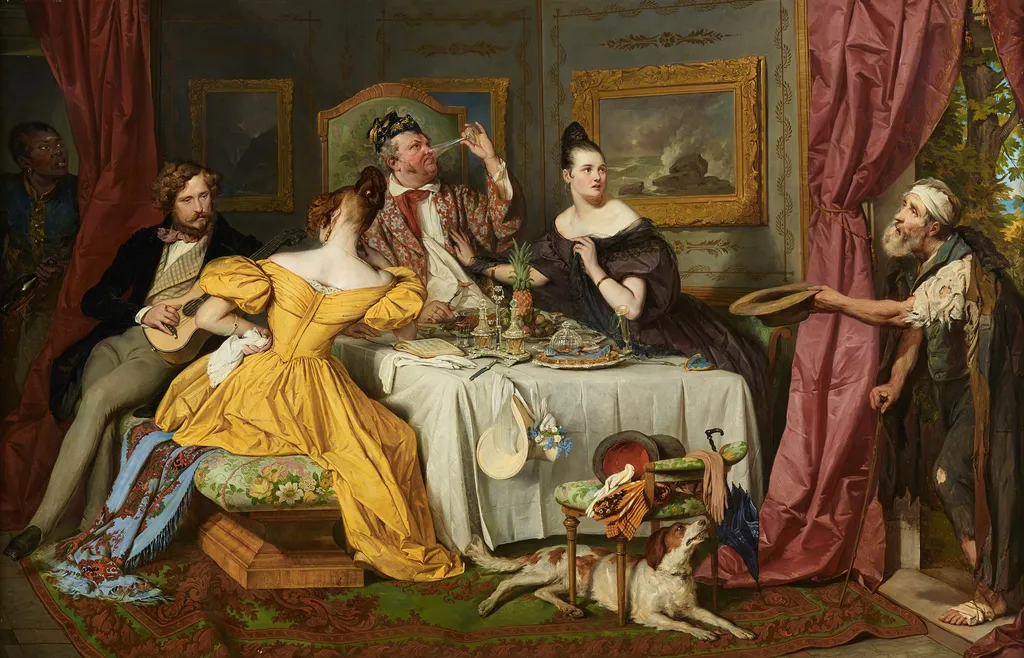
Banquet of a rich glutton is an oil painting by the Biedermeier artist Josef Danhauser. It dates from 1836 and is held in the collection of the Kunsthistorisches Museum.
About this work
Overview
It belongs to the Biedermeier tradition, which favored intimate, domestic scenes infused with social observation.
Josef Danhauser, an Austrian artist active in the early 19th century, completed this oil painting in 1836. It belongs to the Biedermeier tradition, which favored intimate, domestic scenes infused with social observation. The work captures a moment of excess at a wealthy household’s feast, rendered with meticulous detail and a quiet moral undertone characteristic of Danhauser’s approach to genre painting.
Subject & Meaning
The scene portrays a group of affluent individuals engaged in a lavish meal, surrounded by overflowing dishes, spilled wine, and discarded utensils. A dog scavenges beneath the table, while one guest raises a spoon and another plays a guitar, suggesting distraction and indulgence. The composition implies a critique of moral decay masked by luxury, echoing contemporary concerns about social responsibility amid rising consumerism.
Technique & Style
Danhauser employed fine brushwork to render textures—silks, porcelain, fur, and skin—with precision. The palette is rich but controlled, with warm tones dominating the table and cooler shadows framing the figures. Light falls selectively, drawing attention to gestures and expressions, while the cluttered arrangement enhances the sense of uncontrolled abundance without descending into chaos.
History & Provenance
Painted in 1836, the work entered the collection of the Kunsthistorisches Museum in Vienna, where it remains today. Danhauser’s reputation as a moralizing genre painter earned him institutional recognition in the Austrian Empire. The painting’s preservation reflects its value as a document of middle- and upper-class life during the Biedermeier era, rather than as a purely decorative object.
Context
Emerging in the aftermath of the Napoleonic Wars, the Biedermeier period emphasized domesticity and restraint, even as economic growth fueled conspicuous consumption. Danhauser’s work responded to this tension, using everyday scenes to question societal priorities. His indebtedness to William Hogarth’s satirical engravings is evident in the narrative clarity and ethical framing of the banquet’s excesses.
Legacy
Though less widely known today than his contemporaries, Danhauser’s paintings offer a nuanced window into 19th-century Austrian social values. *Banquet of a Rich Glutton* endures as a quiet but pointed commentary on privilege and self-indulgence, representative of a broader European trend in genre painting that sought to reflect moral dilemmas through the mundane.
Artist & collection

Artist
Josef Franz Danhauser (19 August 1805 in Laimgrube, currently part of Mariahilf or Neubau–4 May 1845) was a painter from the Austrian Empire.

 Poesía
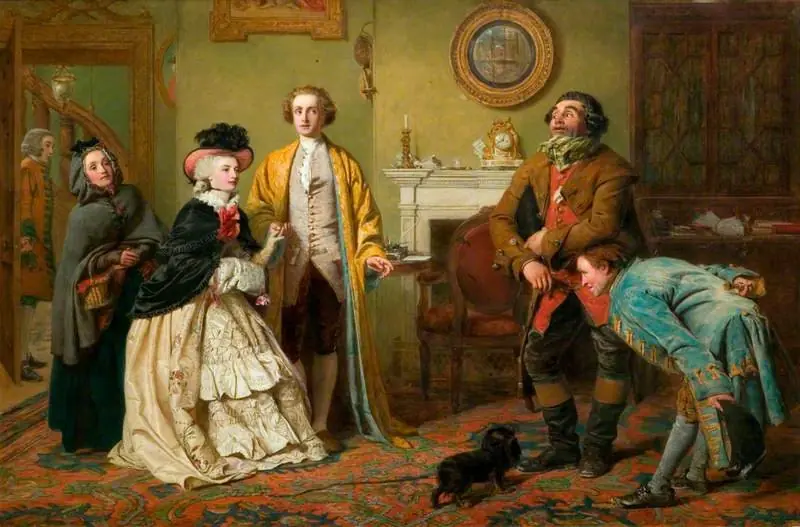 Mr Honeywood Introduces the Bailiffs to Miss Richland as His Friends (from Oliver Goldsmith's 'The Good-Natured Man', Act III, Scene 1)
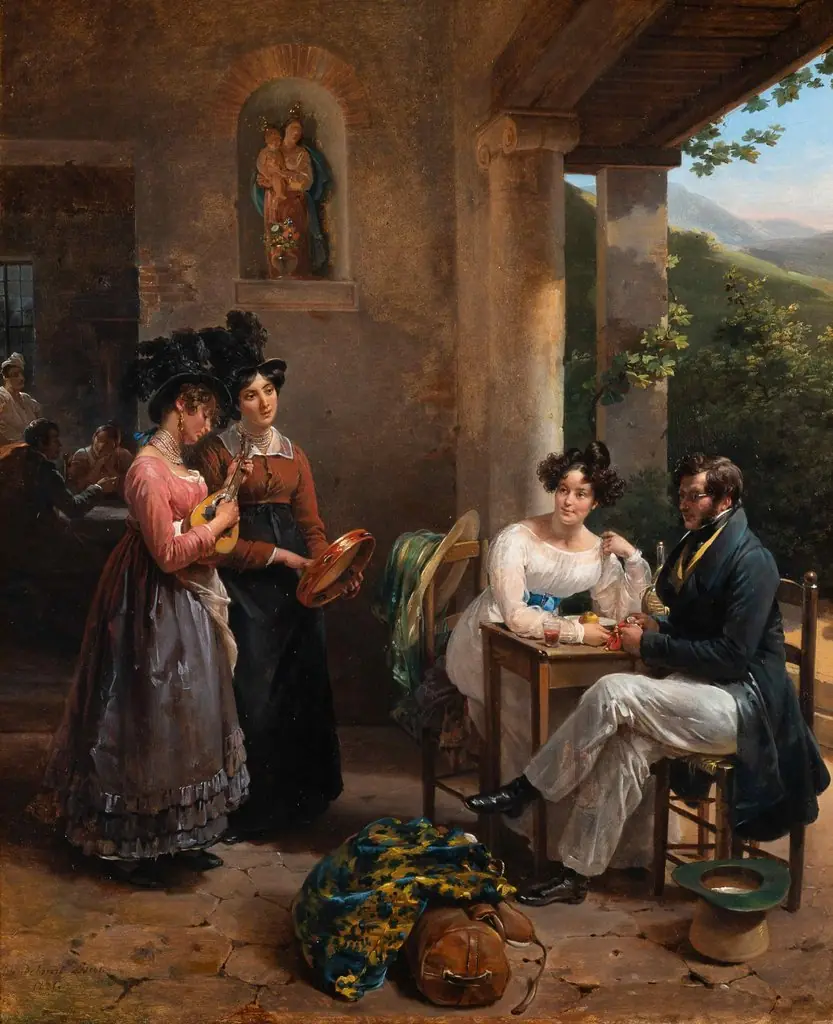 Self-Portrait of the Artist and Her Husband on Their Wedding Trip
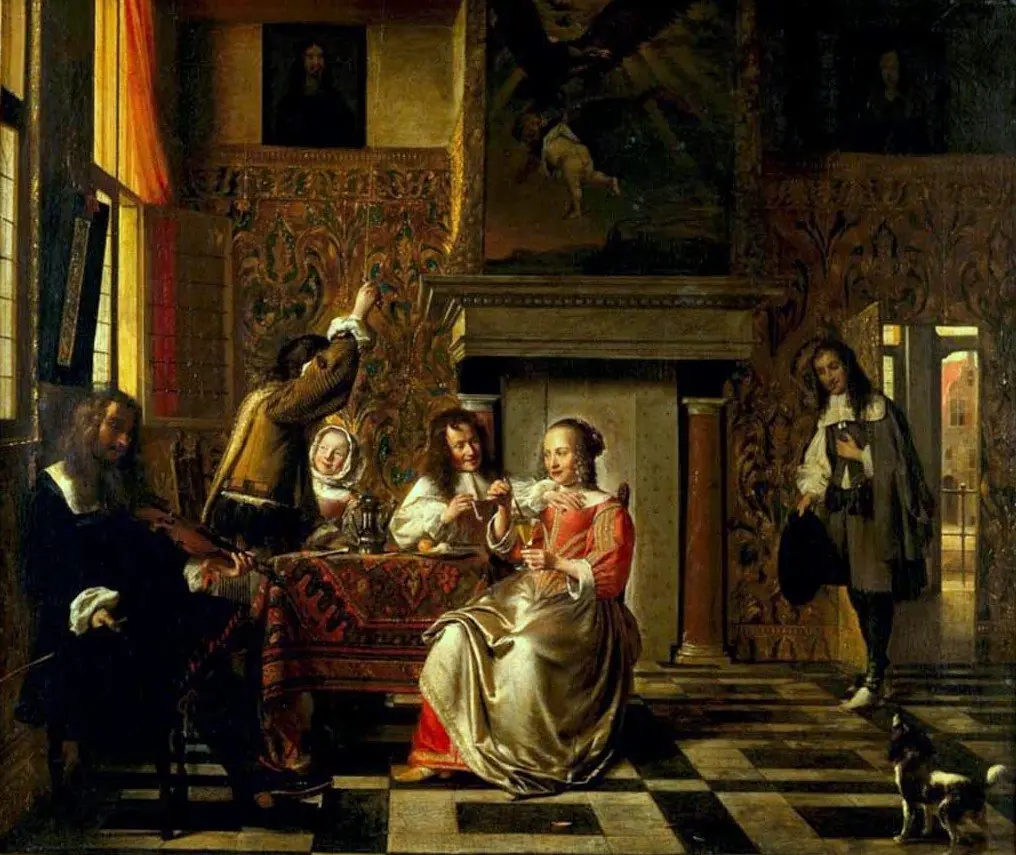 Merry company in an interior
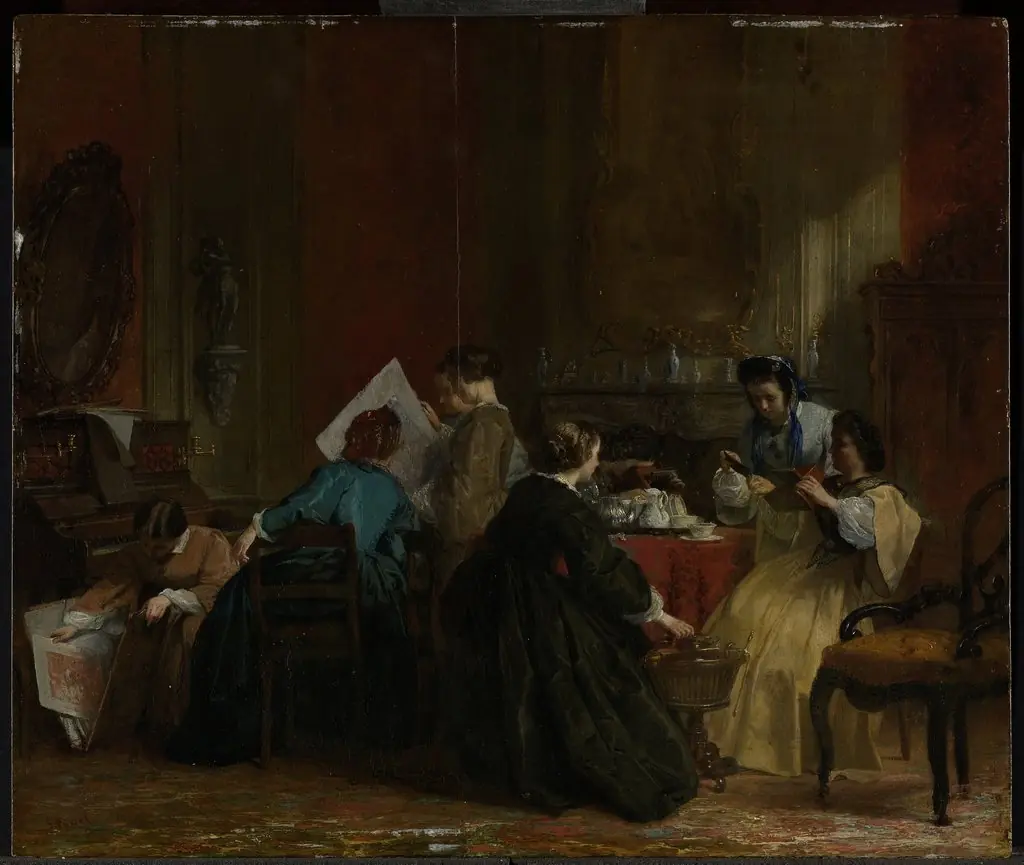 Group of Women Looking at Stereoscope Photographs
 Major's marriage proposal
 Motiv fra Ludvig Holbergs "Jeppe på Bjerget", III akt, 3. scene
 The convalescent
 Wedding in Flanders in the Seventeenth Century
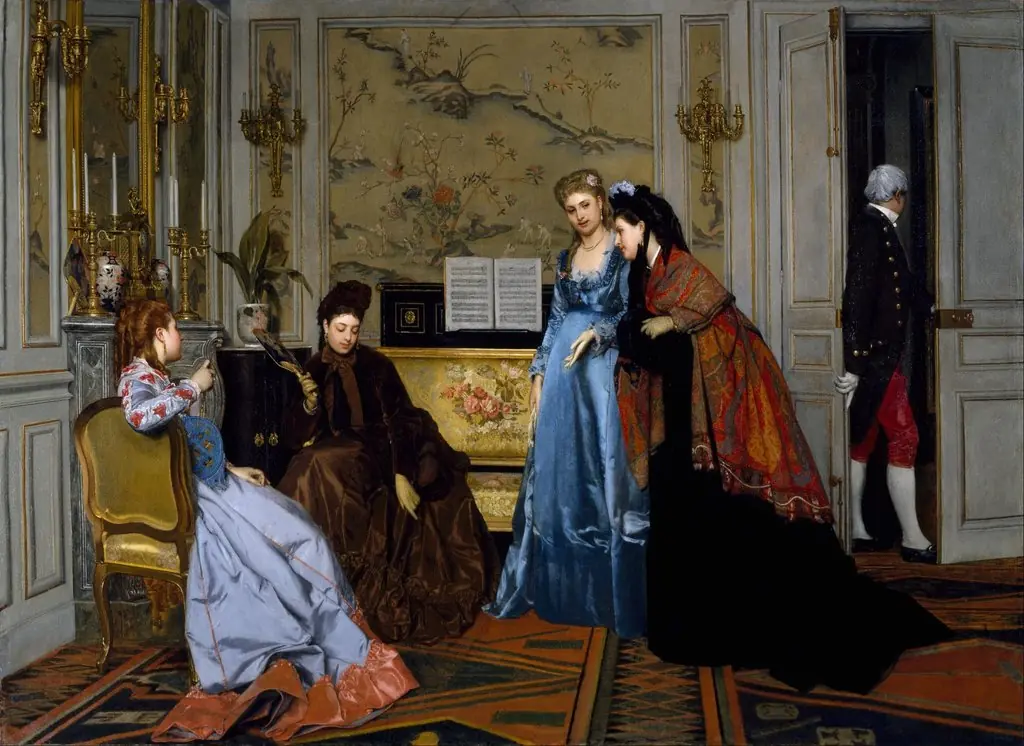 Elegant Figures in a Salon