Artwork
Bookplate: Coat of Arms with William Smith, Esq. inscribed below
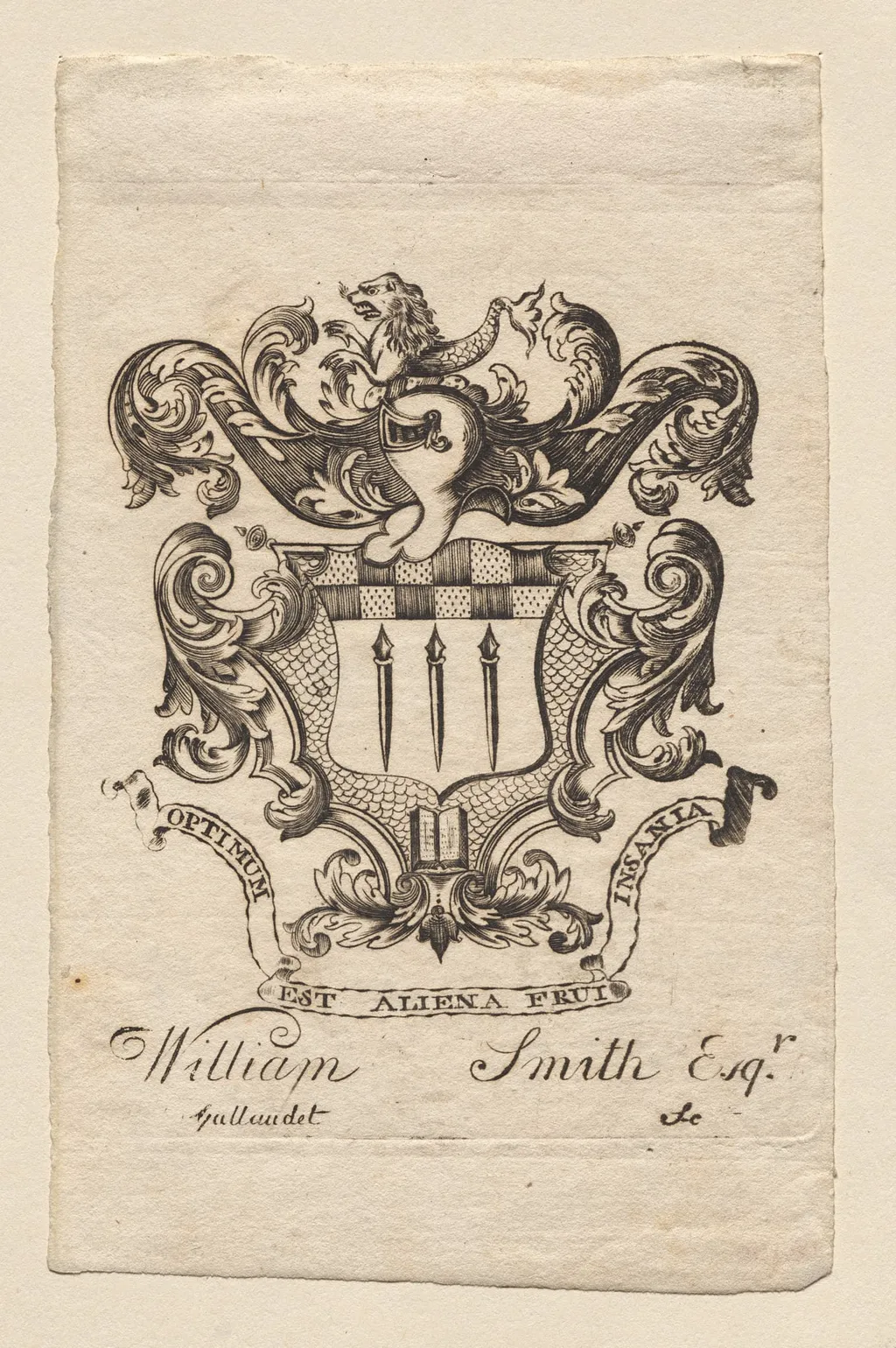
Bookplate: Coat of Arms with William Smith, Esq. inscribed below is a print by Joseph Callender. It dates from 1796 and is held in the collection of the Cleveland Museum of Art.
About this work
The shield is adorned with intricate designs and patterns, including a checkered pattern at the top and a fish-scale pattern at the bottom.
This image depicts a coat of arms, featuring a shield with three vertical spears at its center. The shield is adorned with intricate designs and patterns, including a checkered pattern at the top and a fish-scale pattern at the bottom. A banner with the inscription "EST ALIENA FRUI" is positioned below the shield, while another banner above it reads "OPTIMUM INSANIA". The coat of arms is flanked by two curved designs, each topped with a creature resembling a dragon or a lion. At the bottom of the image, the name "William Smith Esq." is inscribed.
The coat of arms is rendered in a detailed and ornate style, with a focus on intricate patterns and designs. The use of different textures and patterns adds depth and visual interest to the image.
To learn more about the artist behind this coat of arms, explore the work of Joseph Callender (American, 1751–1821).
Overview
This printed bookplate, executed around 1796 by the English engraver Joseph Callender, presents a personalized coat of arms for William Smith, Esq. The piece is part of the Cleveland Museum of Art’s collection and exemplifies the decorative heraldic designs used in private libraries during the late eighteenth century.
Subject & Meaning
The central shield displays three vertical spears, a motif traditionally associated with martial prowess. Above and below the shield, Latin mottos appear on banners: “OPTIMUM INSANIA” and “EST ALIENA FRUI,” suggesting aspirations toward excellence and the enjoyment of foreign (or perhaps intellectual) pursuits. The name of the owner, William Smith, Esq., is inscribed beneath the composition, identifying the intended recipient of the bookplate.
Technique & Style
Callender employed intaglio engraving to achieve fine line work and intricate texture. The shield is divided into a checkered field at the top and a fish‑scale pattern at the base, while surrounding scrollwork and stylized creatures—resembling dragons or lions—frame the design. The overall effect is a richly ornamented, highly detailed surface typical of late Georgian bookplate production.
History & Provenance
Created circa 1796, the print likely served as a personal label for books owned by William Smith, a gentleman of the period. The work entered the Cleveland Museum of Art’s holdings through acquisition (specific provenance details are not recorded in the source), where it remains catalogued as a representative example of British bookplate art.
Artist & collection

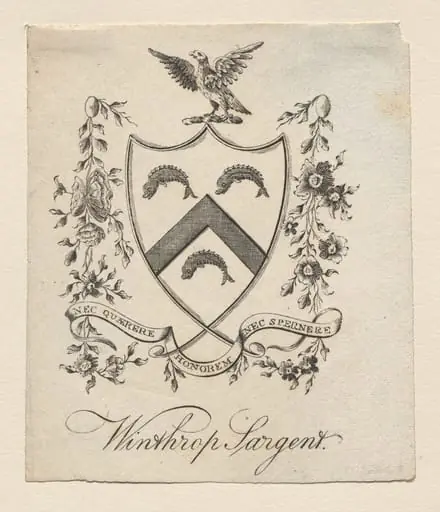
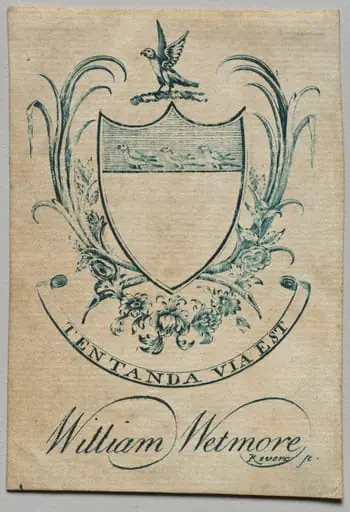 Bookplate: Coat of Arms with William Wetmore inscribed below
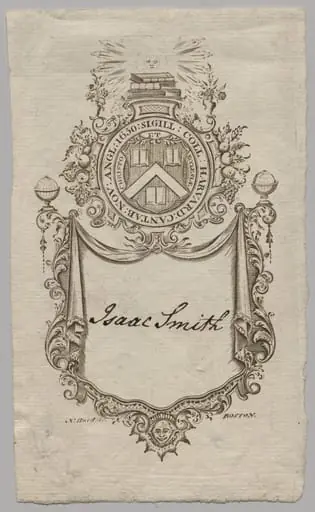 Bookplate: Coat of Arms with Isaac Smith inscribed
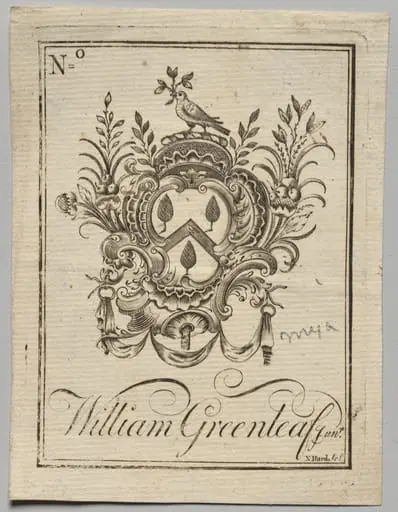 Bookplate: Coat of Arms with William Greenleaf Jun.r inscribed
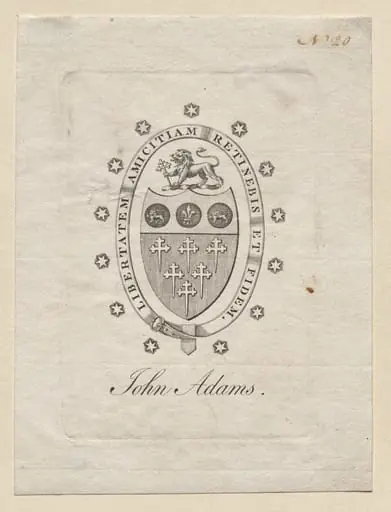 Bookplate: Coat of Arms with John Adams inscribed below
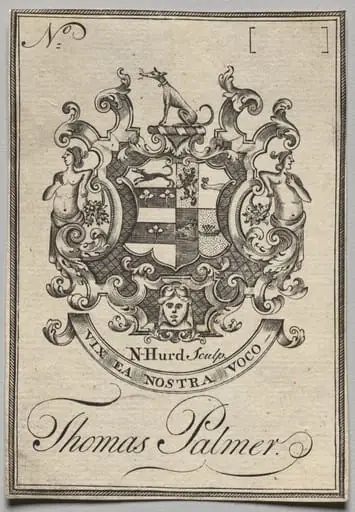 Bookplate: Coat of Arms with Thomas Palmer inscribed
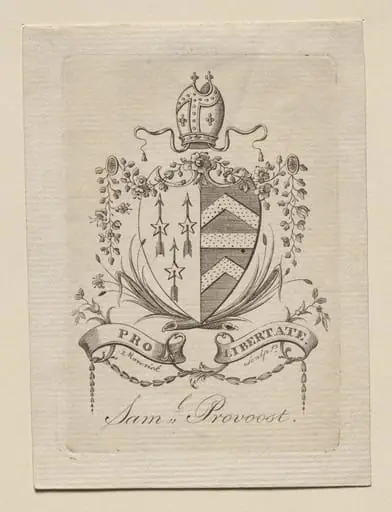 Bookplate: Coat of Arms with Sam'l Provoost inscribed below
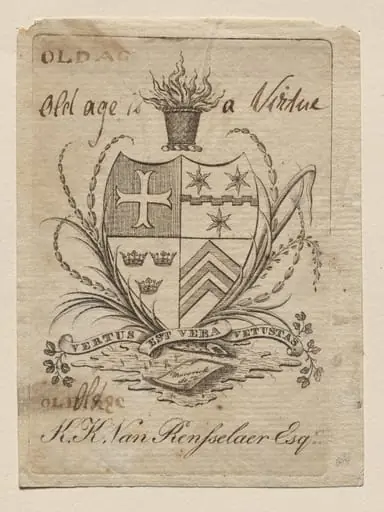 Bookplate: Coat of Arms with K. K. Van Rensselaer, Esq. inscribed below
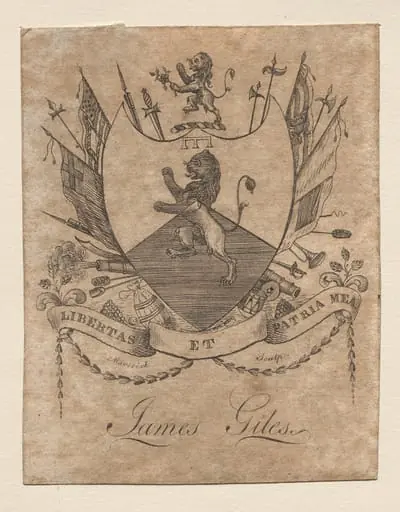 Bookplate: Coat of Arms with James Giles inscribed below
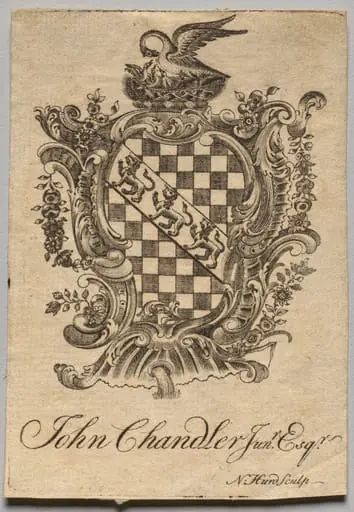 Bookplate: Coat of Arms with John Chandler Jun.r, Esq. inscribed
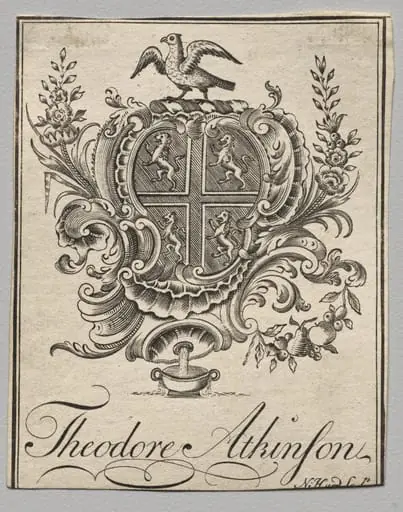 Bookplate: Coat of Arms with Theodore Atkinson inscribed