Artwork
Bookplate: Coat of Arms with John Chandler Jun.r, Esq. inscribed
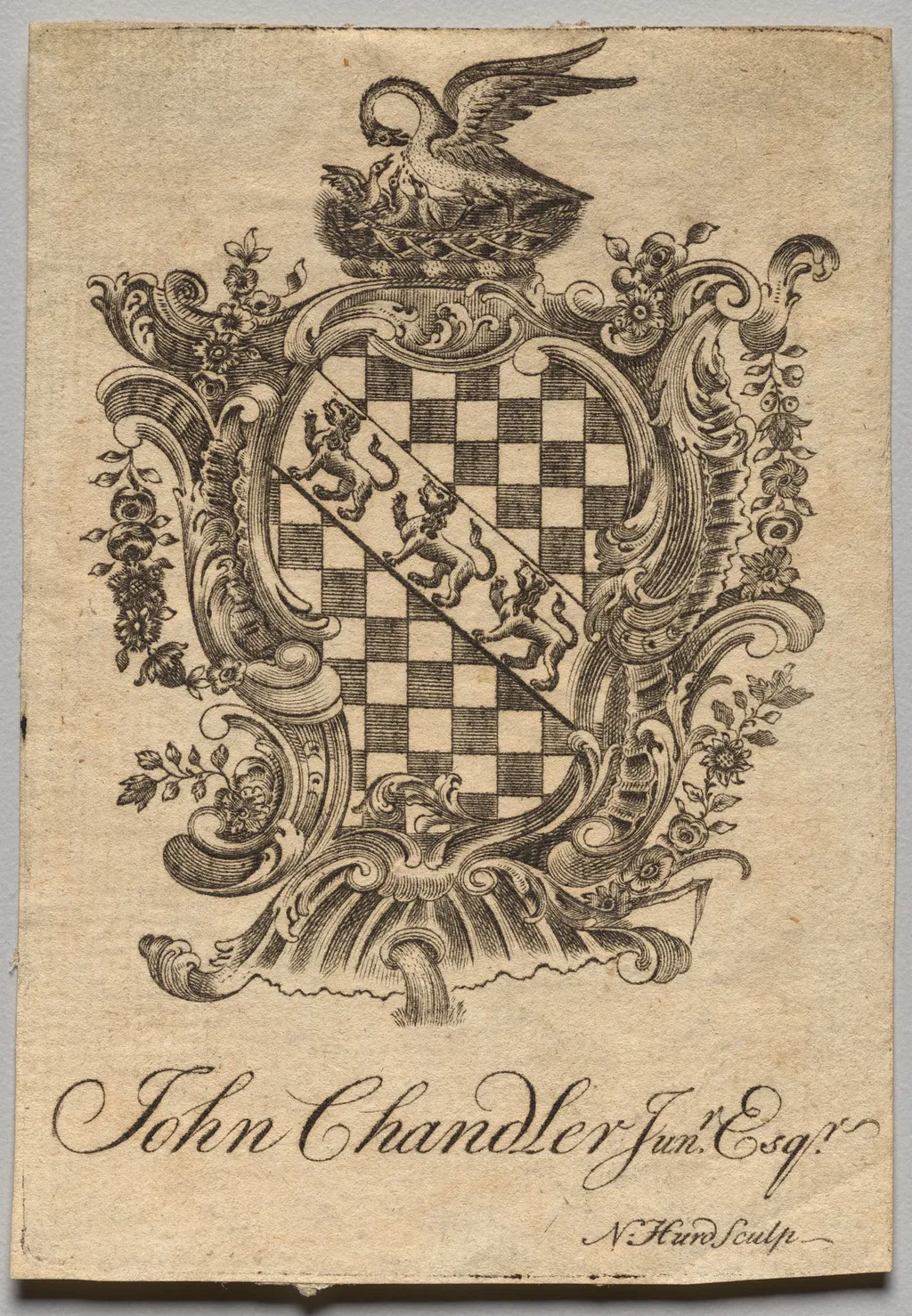
Bookplate: Coat of Arms with John Chandler Jun.r, Esq. inscribed is a print by Nathaniel Hurd. It dates from 1764 and is held in the collection of the Cleveland Museum of Art.
About this work
Overview
This black-and-white print, created around 1764 by Nathaniel Hurd, functions as a personal bookplate for John Chandler Jr.
This black-and-white print, created around 1764 by Nathaniel Hurd, functions as a personal bookplate for John Chandler Jr., Esq. Designed as a heraldic emblem, it combines ornamental engraving with textual identification to signify ownership. The work is part of the collection at The Cleveland Museum of Art, where it represents the intersection of personal identity and printed material culture in colonial America.
Subject & Meaning
The central shield displays a checkerboard pattern flanked by two lions, one bearing a spear—symbols traditionally associated with nobility and martial readiness. Above it, a bird with outstretched wings suggests vigilance or protection. The surrounding scrolls and foliage frame the emblem with decorative flourish, while the inscription explicitly links the imagery to its owner, reinforcing social status and lineage through visual and textual markers.
Technique & Style
Executed in fine line engraving, the plate relies on precise inked contours to render intricate details without shading. Hurd’s style reflects the conventions of 18th-century heraldic design, emphasizing symmetry and ornamental complexity. The cursive inscription is carefully integrated into the composition, balancing legibility with aesthetic harmony, typical of bookplates produced by colonial American artisans.
History & Provenance
The plate was likely commissioned by John Chandler Jr. to mark his personal library, a common practice among colonial elites. Nathaniel Hurd, a Boston-based engraver and silversmith, was known for producing such items for local gentry. The work entered the Cleveland Museum of Art’s collection through documented acquisition, preserving its role as a material artifact of early American domestic life.
Context
In mid-18th-century America, bookplates served as both practical identifiers and social statements. They reflected the owner’s aspirations to gentility, often emulating European heraldic traditions despite the absence of formal nobility. Hurd’s work exemplifies how colonial Americans adapted aristocratic visual language to assert status within a republican society, blending personal identity with inherited symbolic forms.
Legacy
As one of many surviving examples of colonial bookplates, this work contributes to the study of material culture and private ownership in early America. Hurd’s craftsmanship and the plate’s preservation offer insight into the values of literacy, lineage, and visual distinction among the colonial elite. It remains a quiet testament to the ways individuals curated their intellectual and domestic spaces.
Artist & collection

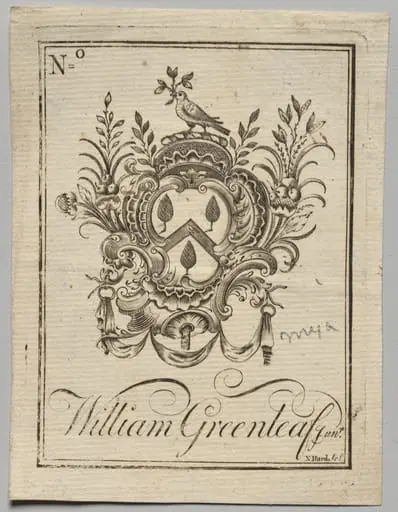 Bookplate: Coat of Arms with William Greenleaf Jun.r inscribed
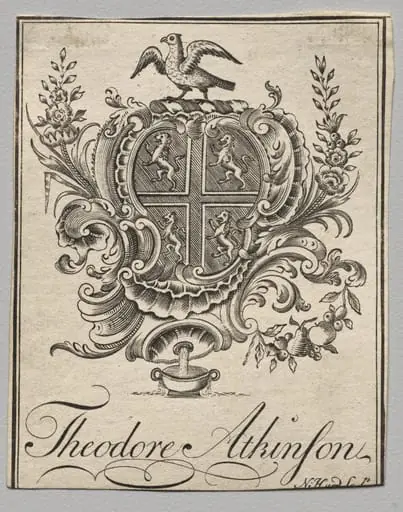 Bookplate: Coat of Arms with Theodore Atkinson inscribed
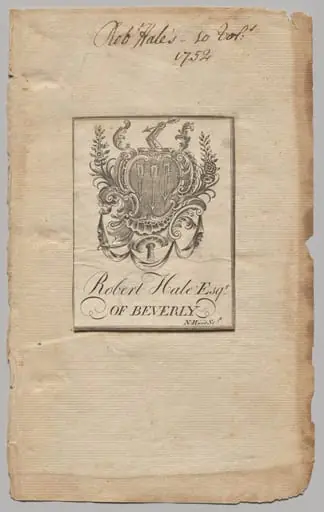 Bookplate: Coat of Arms with Robert Hale, Esq. inscribed
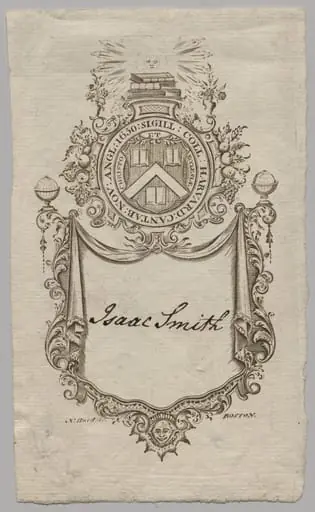 Bookplate: Coat of Arms with Isaac Smith inscribed
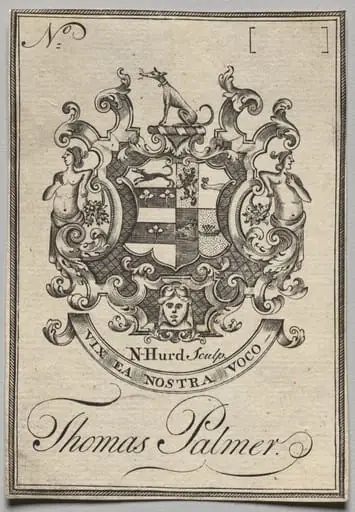 Bookplate: Coat of Arms with Thomas Palmer inscribed
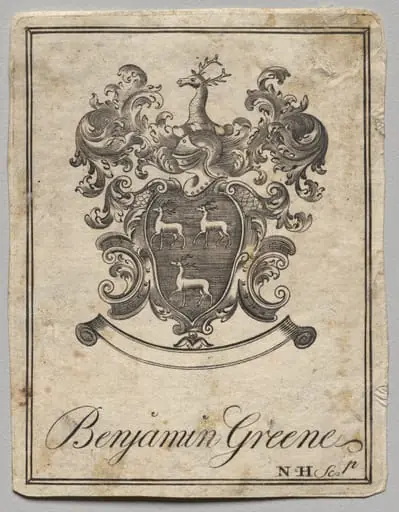 Bookplate: Coat of Arms with Benjamin Greene inscribed
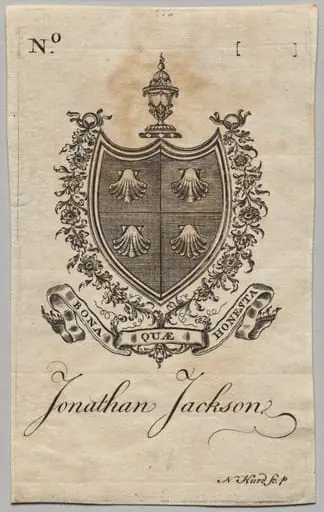 Bookplate: Coat of Arms with Jonathan Jackson inscribed
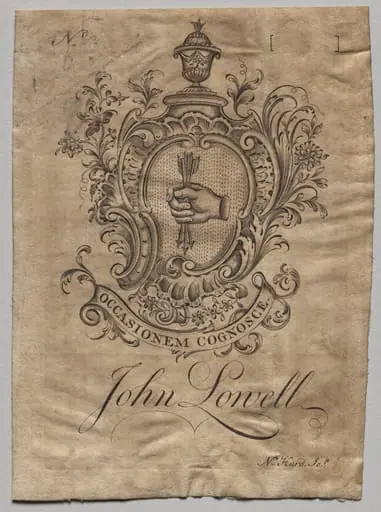 Bookplate: Coat of Arms with John Lowell inscribed
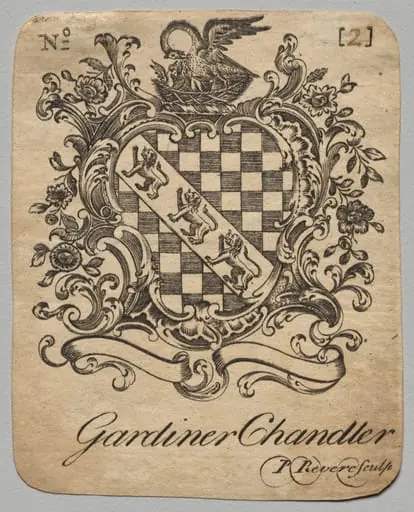 Bookplate: Coat of Arms with Gardiner Chandler inscribed below
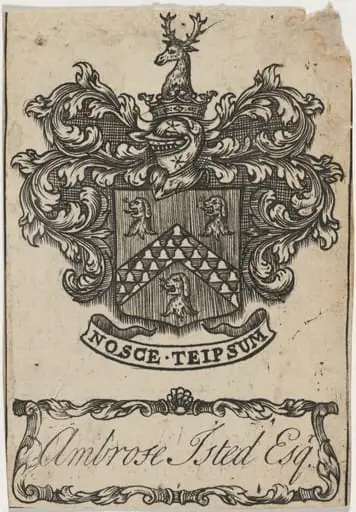 Bookplate for Ambrose Isted
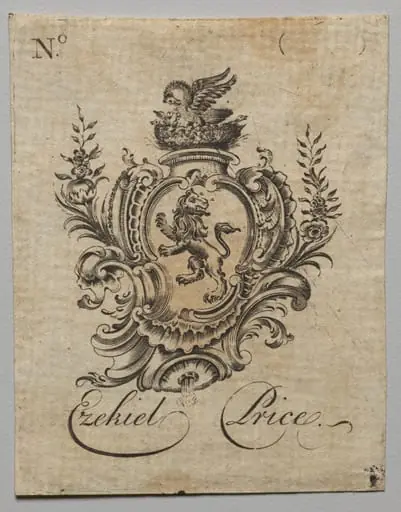 Bookplate: Coat of Arms with Ezekiel Price inscribed
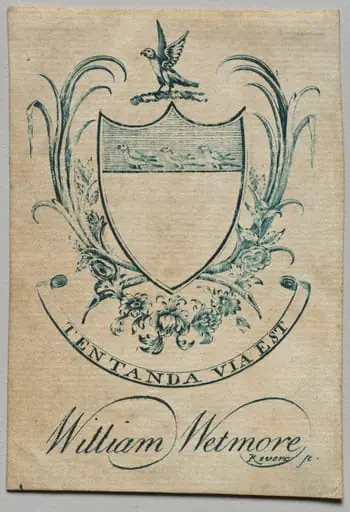 Bookplate: Coat of Arms with William Wetmore inscribed below
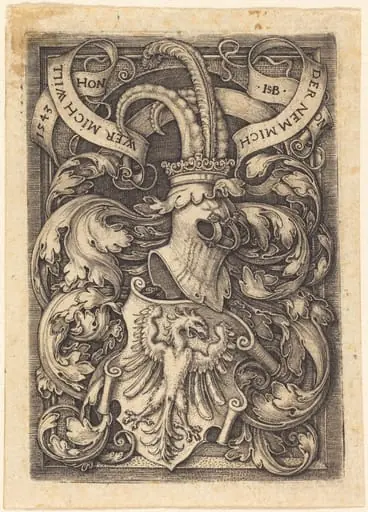 Coat of Arms with an Eagle
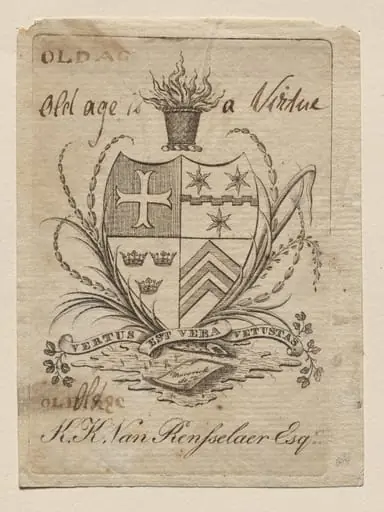 Bookplate: Coat of Arms with K. K. Van Rensselaer, Esq. inscribed below
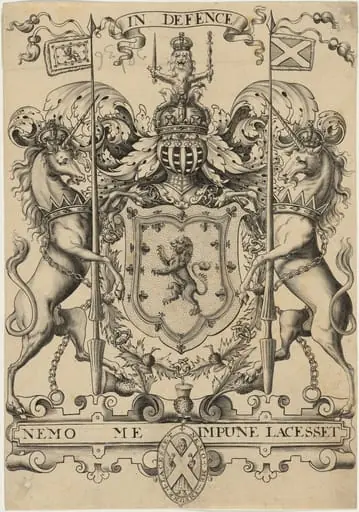 Later Copy of the Arms of Scotland