Artwork
Bookplate: Coat of Arms with Thomas Palmer inscribed
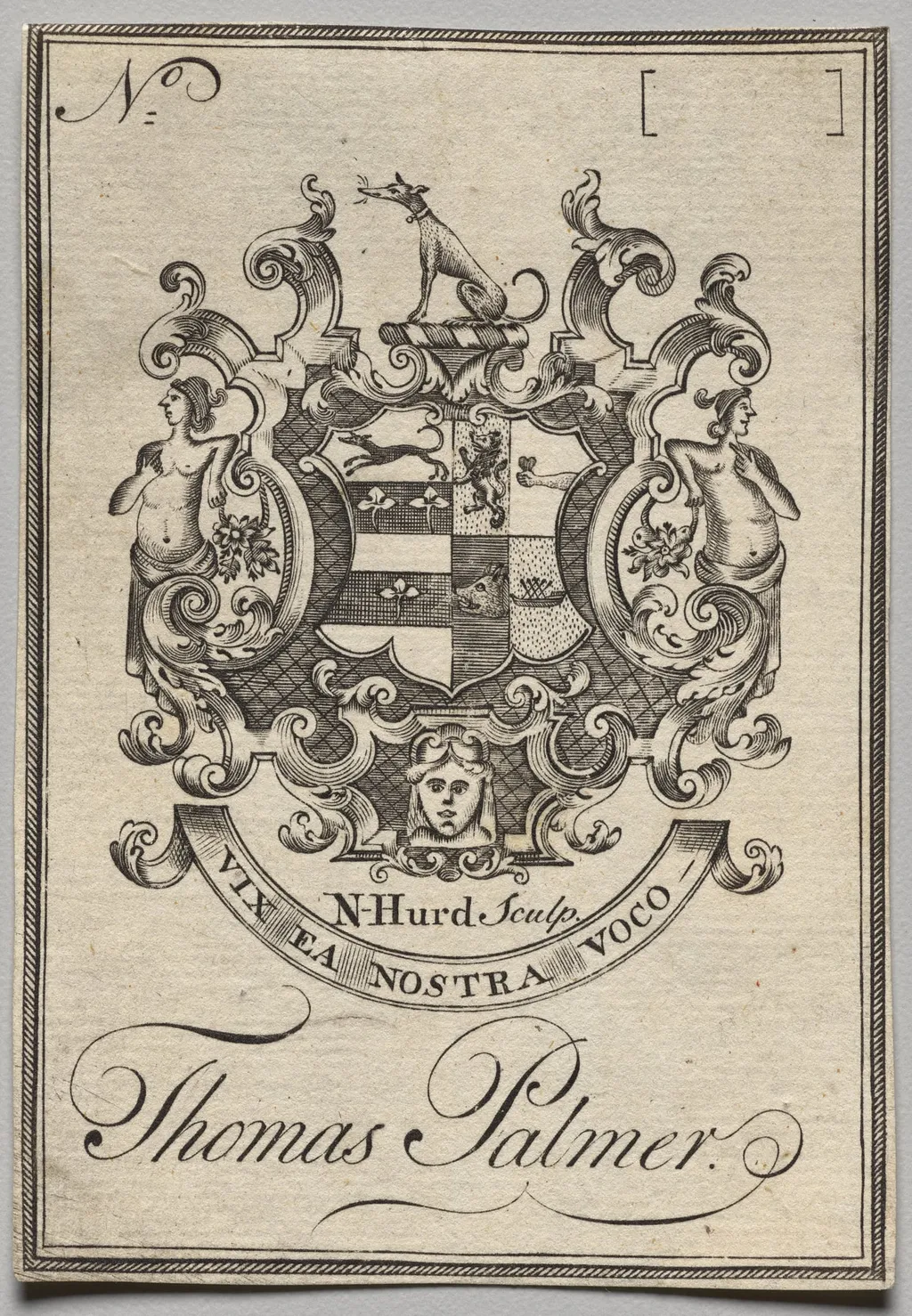
Bookplate: Coat of Arms with Thomas Palmer inscribed is a print by Nathaniel Hurd. It dates from 1764 and is held in the collection of the Cleveland Museum of Art.
About this work
At the center sits a shield with a pattern of stripes and shapes, topped by a deer and flanked by two winged figures.
This is a black-and-white engraved coat of arms on a rectangular card. At the center sits a shield with a pattern of stripes and shapes, topped by a deer and flanked by two winged figures. Swirls and a banner with Latin words wrap around the shield. Below, the name "Thomas Palmer" is written in fancy script.
The banner says *"Nostra Vox"* (our voice) and *"N-Hurd Sculp."* That’s the artist’s signature—Nathaniel Hurd made this.
Next, check out Nathaniel Hurd (American, 1730–1778) to see more of his work.
Overview
This black-and-white engraved bookplate, dated around 1764, was created by American engraver Nathaniel Hurd. It functions as a personal identifier, affixed to the inside cover of books owned by Thomas Palmer. The design follows traditional heraldic conventions, combining symbolic imagery with inscriptive elements to assert ownership and lineage. The plate is held in the collection of The Cleveland Museum of Art.
Subject & Meaning
At its center, a heraldic shield displays vertical stripes and geometric forms, typical of aristocratic emblems. Above it, a deer rests as a crest, possibly symbolizing grace or vigilance. Two winged figures flank the shield, suggesting divine protection or spiritual guidance. A banner bearing the Latin phrase 'Nostra Vox'—'our voice'—implies familial or institutional identity, reinforcing the plate’s role as a marker of social standing.
Technique & Style
Hurd employed fine-line engraving to render intricate details with precision. The composition is symmetrical and densely packed, adhering to 18th-century British and colonial bookplate conventions. Delicate swirls frame the shield, while the Latin inscription and the artist’s signature 'N-Hurd Sculp.' are meticulously carved into the design. The monochrome palette reflects the medium’s limitations and the era’s preference for restrained elegance.
History & Provenance
Created circa 1764, the plate was likely commissioned by Thomas Palmer, a colonial American of means, to mark his personal library. Nathaniel Hurd, a Boston-based engraver known for his bookplates and currency designs, produced it during the height of his career. The plate remained in private hands until entering the collection of The Cleveland Museum of Art, where it is preserved as an example of early American print culture.
Context
In mid-18th-century America, bookplates were common among the educated elite as symbols of literacy and status. Hurd’s work reflects transatlantic influences, blending English heraldic traditions with colonial tastes. His designs often included personal mottos and artistic signatures, a practice that elevated bookplates from mere labels to miniature works of art within domestic intellectual spaces.
Legacy
Nathaniel Hurd’s bookplates, including this one, represent a significant body of work in early American printmaking. They offer insight into the values of colonial society—ownership, lineage, and education. Though modest in scale, these engravings remain important artifacts, illustrating how personal identity was visually encoded in everyday objects during the pre-revolutionary period.
Artist & collection

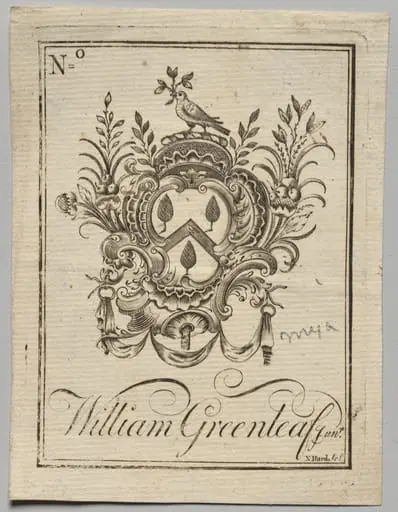 Bookplate: Coat of Arms with William Greenleaf Jun.r inscribed
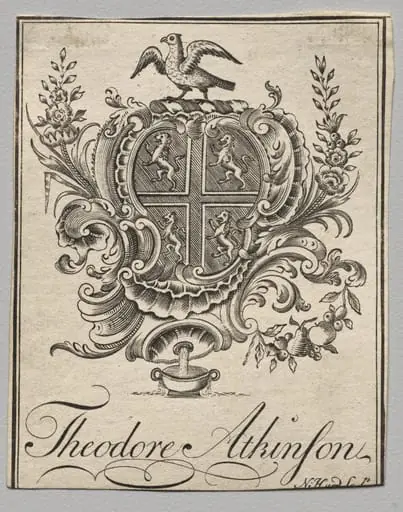 Bookplate: Coat of Arms with Theodore Atkinson inscribed
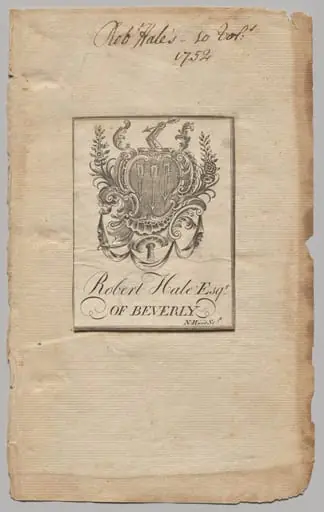 Bookplate: Coat of Arms with Robert Hale, Esq. inscribed
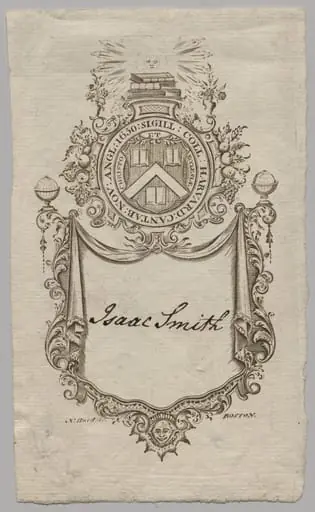 Bookplate: Coat of Arms with Isaac Smith inscribed
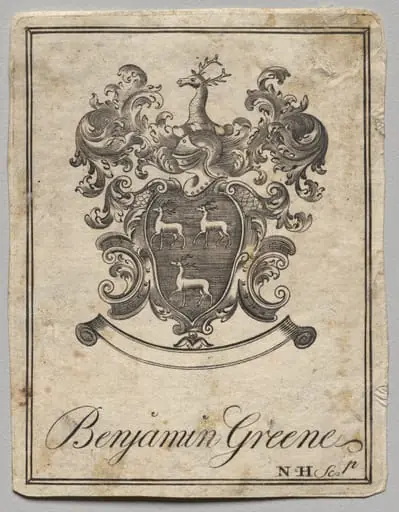 Bookplate: Coat of Arms with Benjamin Greene inscribed
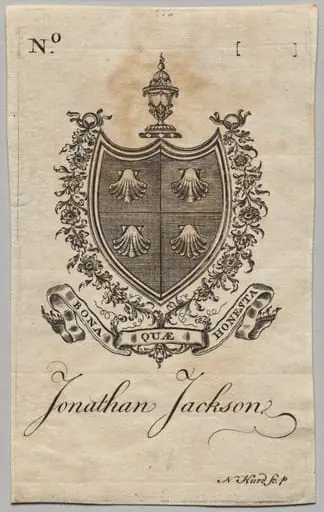 Bookplate: Coat of Arms with Jonathan Jackson inscribed
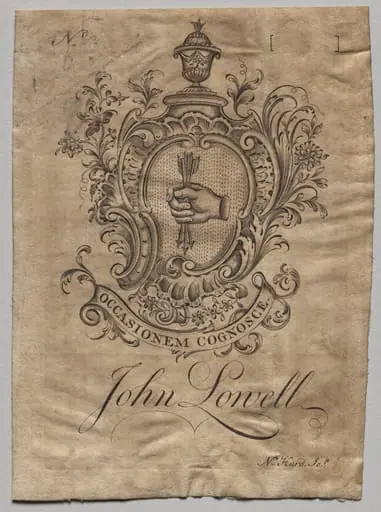 Bookplate: Coat of Arms with John Lowell inscribed
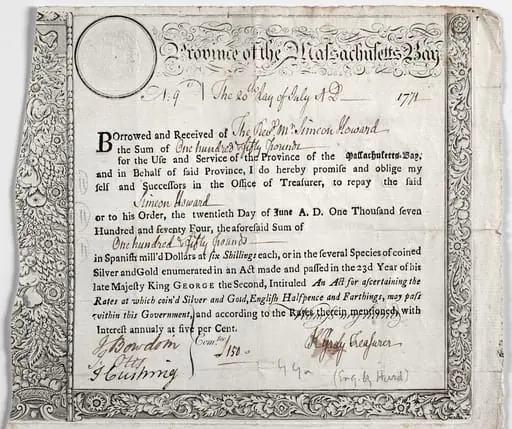 Loan Certificate
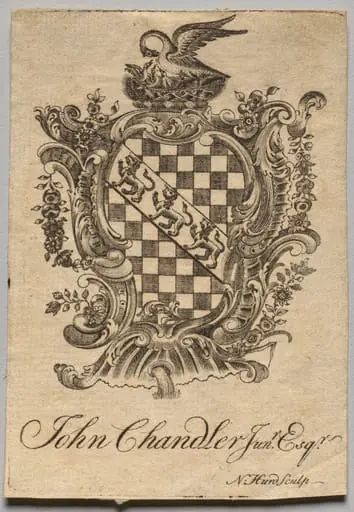 Bookplate: Coat of Arms with John Chandler Jun.r, Esq. inscribed
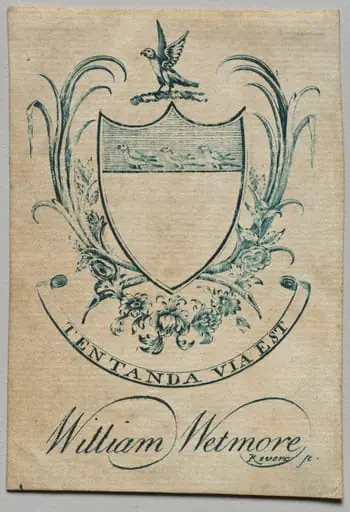 Bookplate: Coat of Arms with William Wetmore inscribed below
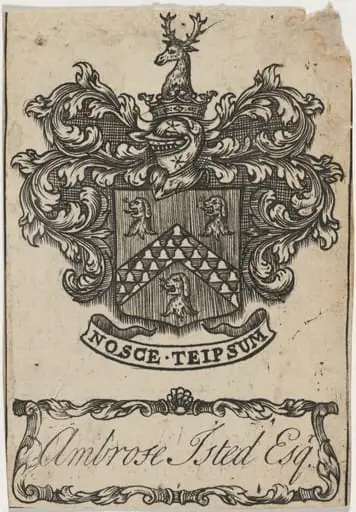 Bookplate for Ambrose Isted
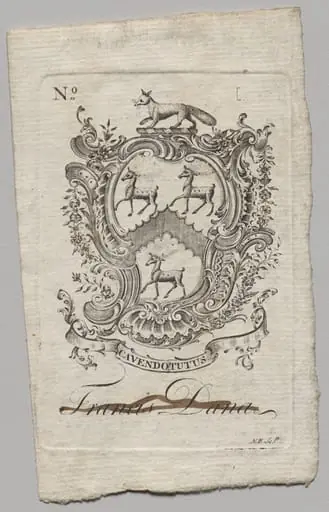 Bookplate: Coat of Arms with Francis Dana inscribed
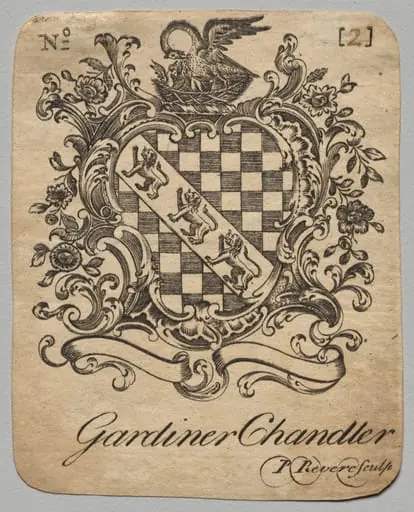 Bookplate: Coat of Arms with Gardiner Chandler inscribed below
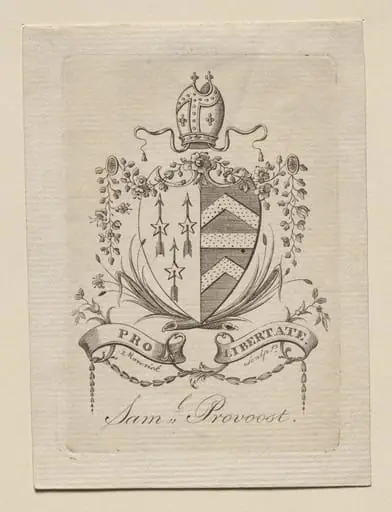 Bookplate: Coat of Arms with Sam'l Provoost inscribed below
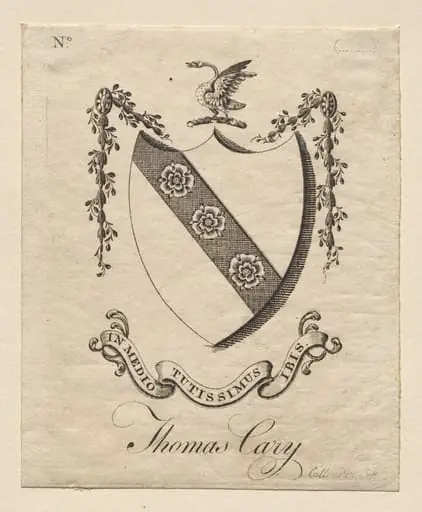 Bookplate: Coat of Arms with Thomas Cary inscribed below
 Bookplate: Coat of Arms with William Smith, Esq. inscribed below
 Coat of Arms with Two Eagles
 Bookplate: Coat of Arms with Ezekiel Price inscribed