Artwork
English War Work: Munitions City, No. 1
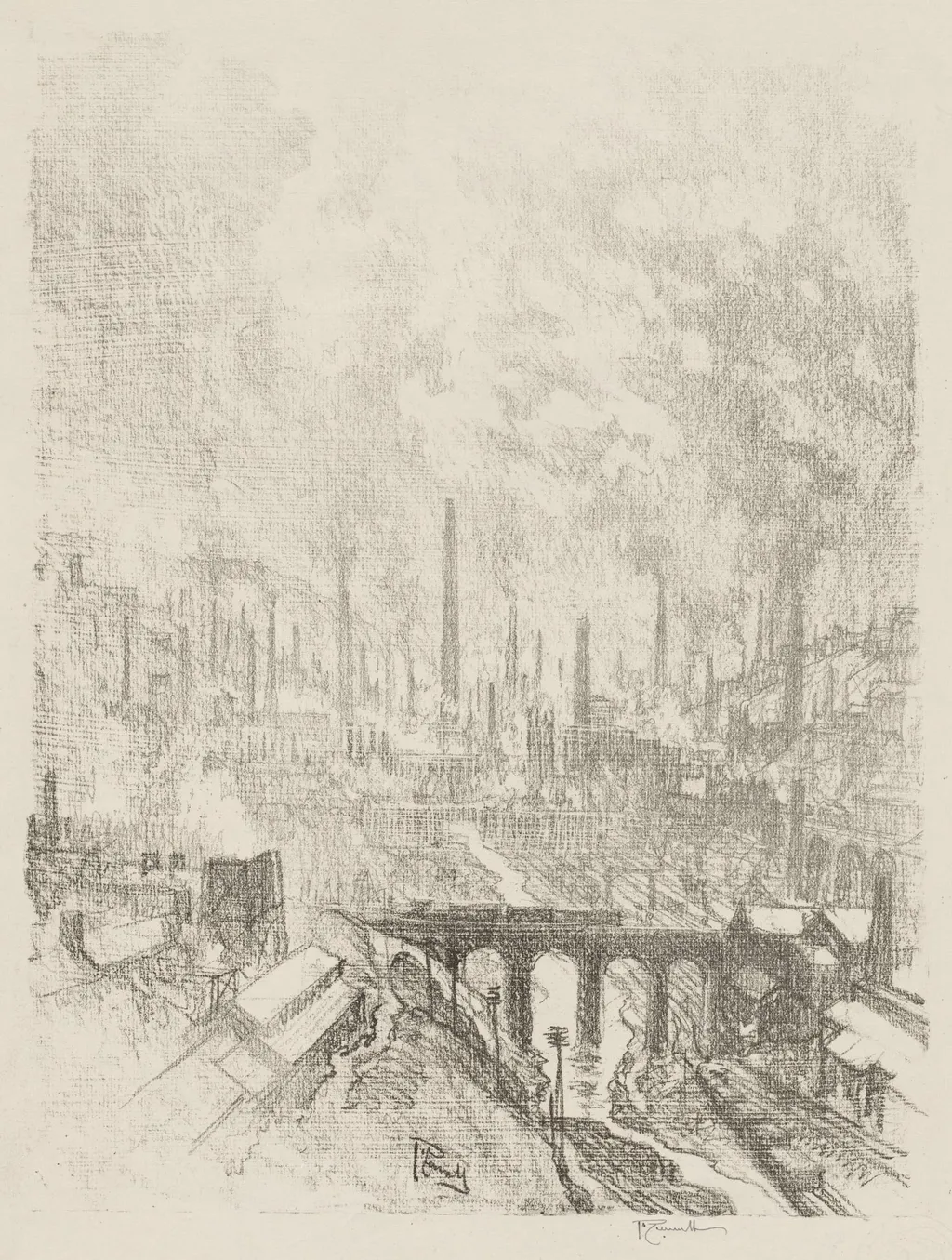
English War Work: Munitions City, No. 1 is a print by Joseph Pennell. It dates from 1916 and is held in the collection of the Cleveland Museum of Art. Created in 1916, *English War Work: Munitions City, No.
About this work
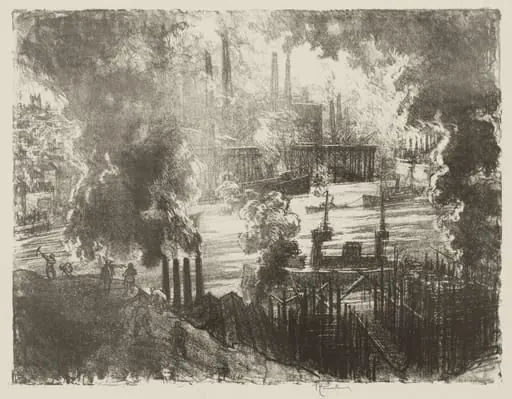
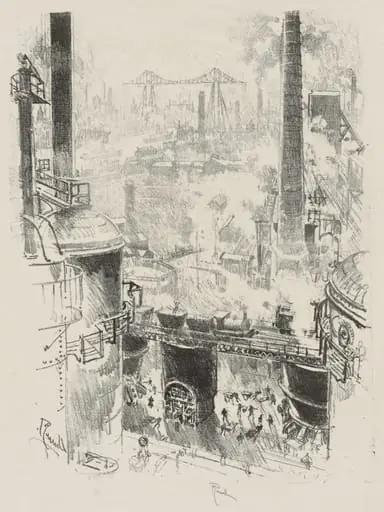
This sketch shows a busy industrial scene with tall smokestacks and a bridge in the foreground.
This sketch shows a busy industrial scene with tall smokestacks and a bridge in the foreground. The artist used quick, rough lines to draw factories, stacks of materials, and a river below. Shadows and light create a gritty, textured look.
The drawing focuses on wartime work—likely making supplies for the war effort. The artist signed it in the corner, adding a personal touch to the scene.
Next, look up Joseph Pennell (American, 1857–1926) to see more of his bold, detailed sketches.
Overview
Created in 1916, *English War Work: Munitions City, No. 1* is a lithograph by American artist Joseph Pennell, capturing the industrial landscape of Britain during World War I. Executed in a rapid, expressive style, the work documents the scale and intensity of wartime production. Pennell, known for his urban and industrial subjects, produced this piece as part of a series commissioned to record Britain’s home front efforts. It is held in the collection of The Cleveland Museum of Art.
Subject & Meaning
The scene depicts a dense cluster of factories, smokestacks, and storage piles beside a river, emphasizing the relentless activity of munitions manufacturing. No human figures dominate the composition; instead, the machinery and infrastructure become the silent protagonists. The image conveys the transformation of the landscape into a site of national labor, reflecting the mobilization of civilian industry to support the war. Pennell’s focus on structure over people underscores the impersonal scale of modern warfare.
Technique & Style
Pennell employed bold, gestural lines and dense hatching to render the industrial forms with immediacy. The lithographic medium allowed for sharp contrasts between soot-dark shadows and pale, chalky highlights, enhancing the gritty texture of smoke, metal, and earth. His brushwork is loose yet deliberate, avoiding polished finish in favor of energetic spontaneity. This approach aligns with his training under Eakins and Whistler, favoring atmospheric truth over idealized detail.
History & Provenance
Pennell was commissioned by the British government in 1916 to document wartime industry as part of an official record. He traveled extensively across England, sketching munitions plants and shipyards. *Munitions City, No. 1* was one of several works produced during this period and later entered American collections through private acquisition. The Cleveland Museum of Art acquired it in the 20th century, preserving it as a visual archive of wartime production.
Context
During World War I, governments increasingly turned to artists to visually document the home front, recognizing the power of imagery to shape public perception. Pennell’s work stood apart for its unromanticized portrayal of industrial labor, contrasting with heroic battlefield depictions. His focus on factories and infrastructure reflected a broader shift in wartime representation—from the battlefield to the workshop—as civilian contribution became central to national survival.
Legacy
Pennell’s series of war-related lithographs, including this one, helped establish industrial subjects as legitimate subjects for fine art. His direct, unembellished style influenced later documentary artists and photojournalists. Though less celebrated than his European contemporaries, his records of wartime industry remain valuable for their unvarnished insight into the mechanics of total war and the quiet labor that sustained it.
Own this work as a print
Artist & collection
Artist
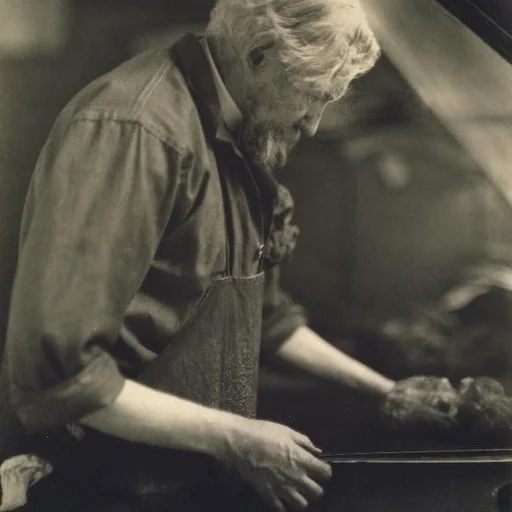
Joseph Pennell (July 4, 1857 – April 23, 1926) was an American draftsman, etcher, lithographer, and illustrator for books and magazines.

 English War Work: Munitions River
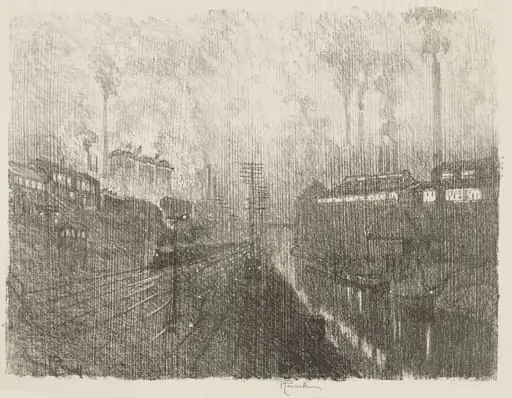 English War Work: Evening in the Munitions Country
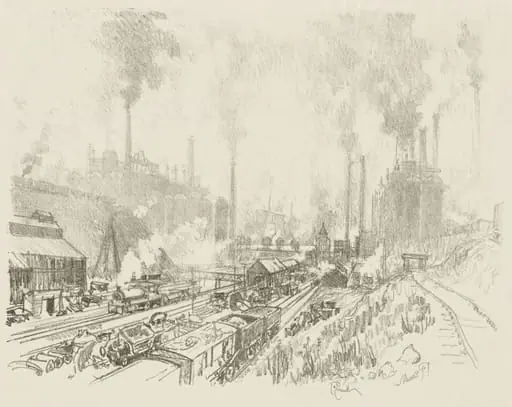 English War Work: In the Land of Iron and Steel
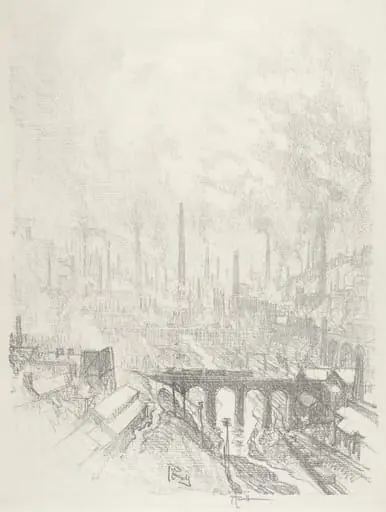 Munitions City, No.I
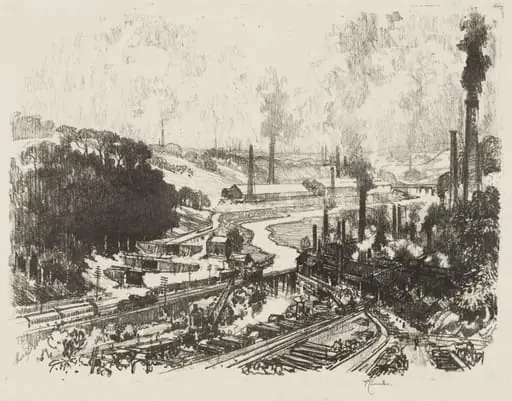 English War Work: Munition Works
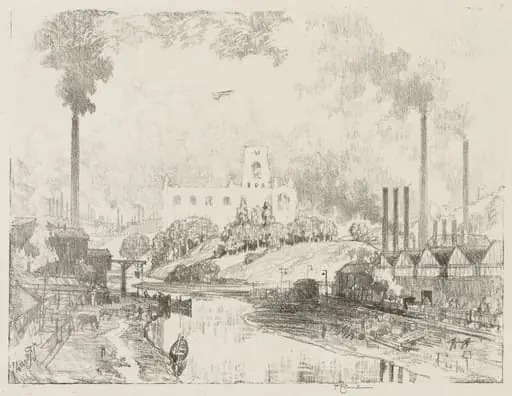 English War Work: Peace and War
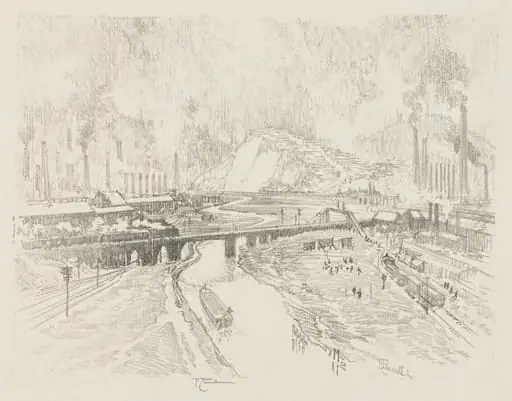 English War Work: Munition Town
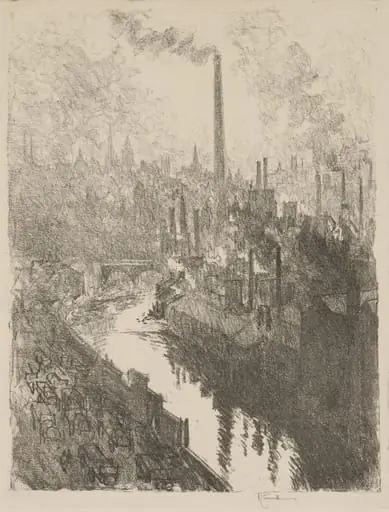 English War Work: The Great Chimney, The Motor Park
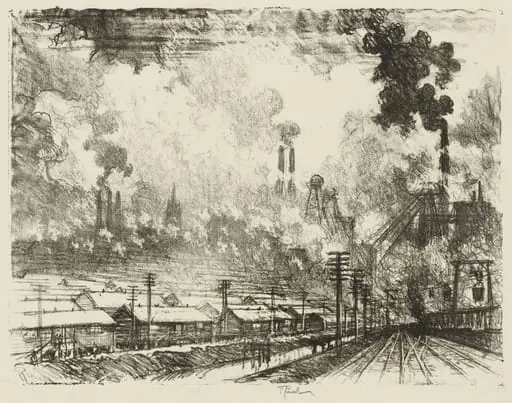 English War Work: The Coal Mines
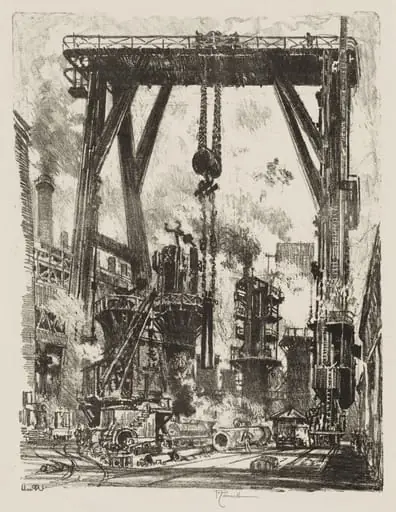 English War Work: The Old Gun Pit
 English War Work: From othe Tops of the Furnaces