Artwork
Munitions City, No.I
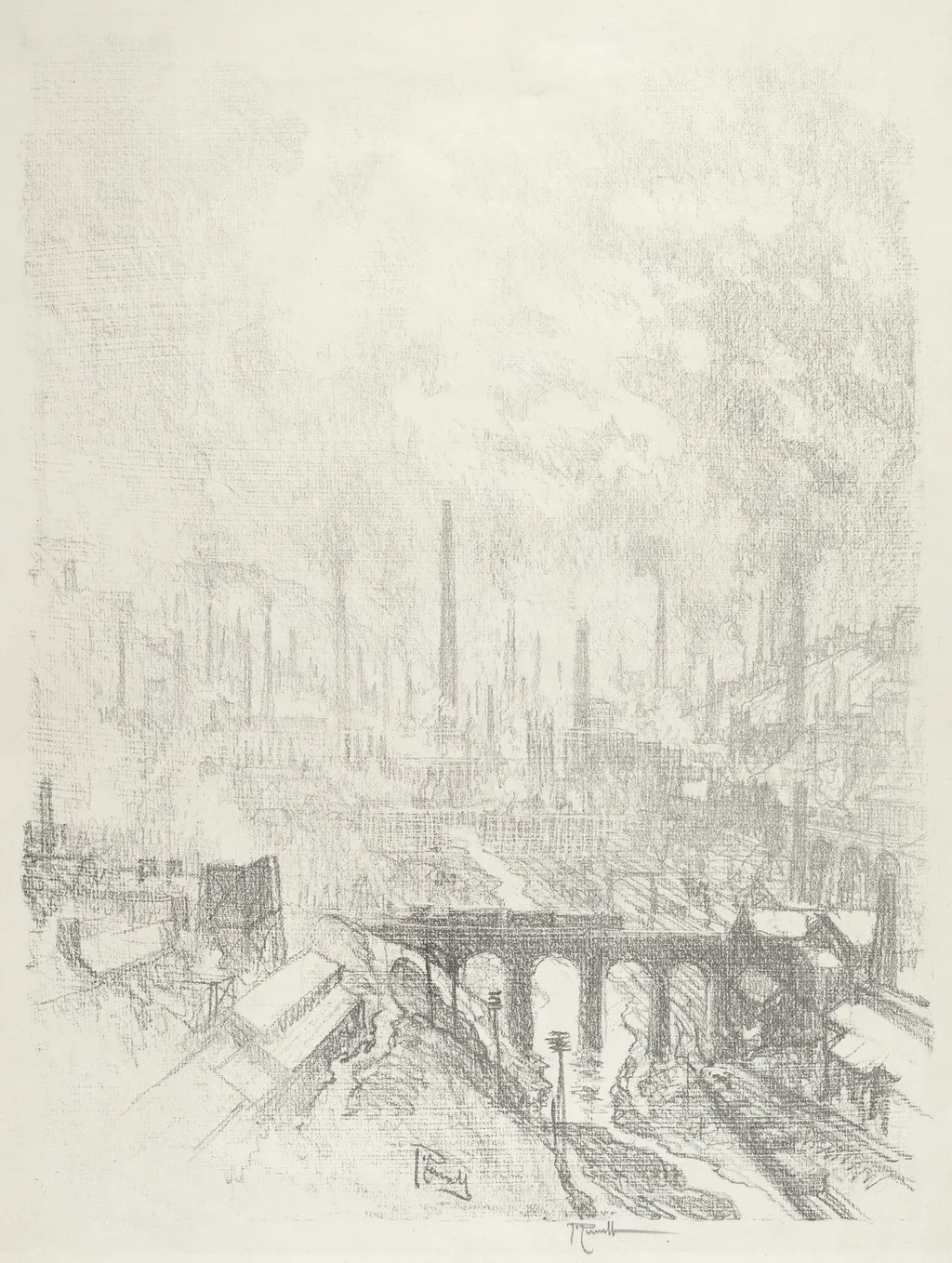
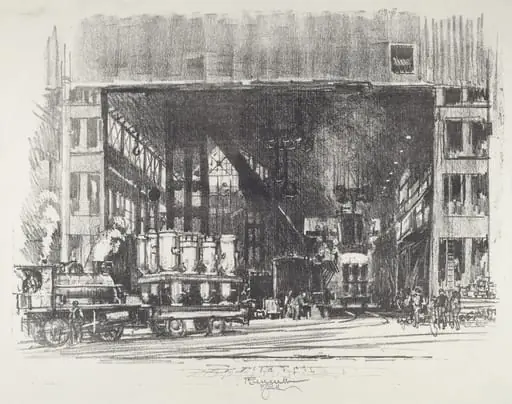
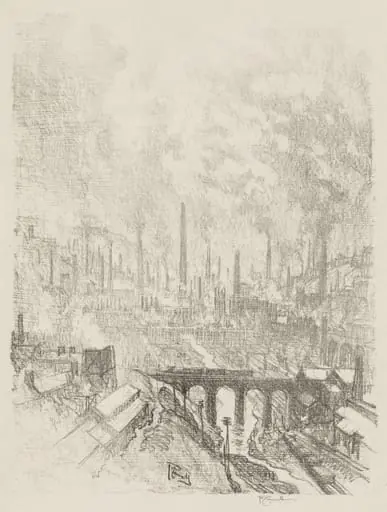
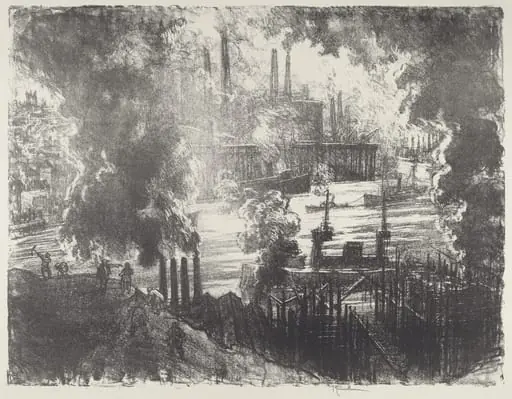
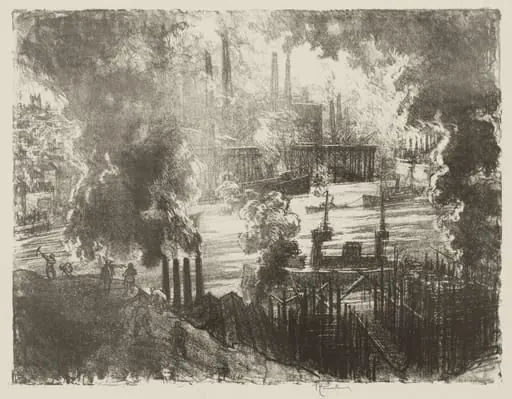
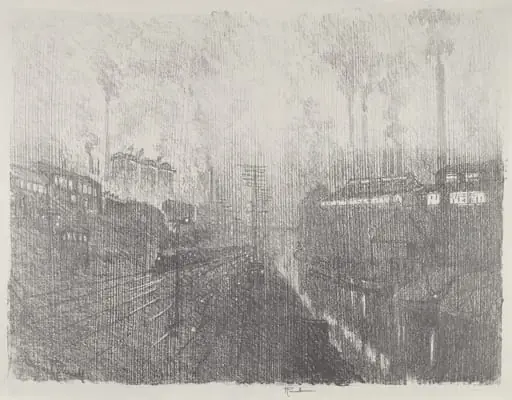
Munitions City, No.I is an ink print by Joseph Pennell. It dates from 1916 and is held in the collection of the National Gallery of Art.
About this work
Overview
Pennell, known for his urban and industrial subjects, rendered this scene with immediacy, emphasizing movement and density over precision.
Joseph Pennell’s 1916 lithograph *Munitions City, No.I* captures the sprawling industrial landscape of a British armaments facility during World War I. Executed in a rapid, expressive style, the print conveys the scale and energy of wartime production without idealizing its environment. Pennell, known for his urban and industrial subjects, rendered this scene with immediacy, emphasizing movement and density over precision.
Subject & Meaning
The image portrays a dense cluster of factories, smokestacks, and bridges, suggesting the overwhelming scale of munitions manufacturing. No human figures dominate the scene; instead, the machinery and architecture become the silent actors of war. The absence of clear narrative cues shifts focus to the impersonal rhythm of industrial labor, reflecting the era’s transformation of cities into engines of conflict.
Technique & Style
Pennell employed lithography to achieve a sketch-like quality, using loose, energetic lines and dense cross-hatching to model form and shadow. The composition avoids smooth gradients, favoring stark contrasts and fragmented contours that mimic the urgency of a field drawing. This deliberate roughness enhances the sense of spontaneity, as if the scene was recorded in real time from a moving vantage point.
History & Provenance
Created in 1916 during Pennell’s commission by the British War Office, the work was part of a series documenting wartime industry. Pennell traveled extensively through Britain to observe munitions plants, often accompanied by his wife, writer Elizabeth Robins. The lithograph was later included in publications and exhibitions aimed at informing the public about home-front efforts, though it was never intended as propaganda.
Context
In 1916, Britain’s industrial centers were reconfigured to support total war, with cities like Sheffield and Birmingham transformed into hubs of arms production. Pennell’s work emerged amid a broader cultural shift toward documenting modern industry, influenced by earlier American realists and European tonalists. His approach diverged from heroic war imagery, instead offering a quiet, unembellished record of labor’s physical environment.
Legacy
Pennell’s *Munitions City, No.I* contributed to the recognition of industrial subjects as legitimate themes in fine art printmaking. Its unpolished aesthetic influenced later documentary artists who sought to capture modern labor without sentimentality. Though not widely exhibited during his lifetime, the work is now held in major collections as a significant example of early 20th-century printmaking’s engagement with social change.
Own this work as a print
Artist & collection
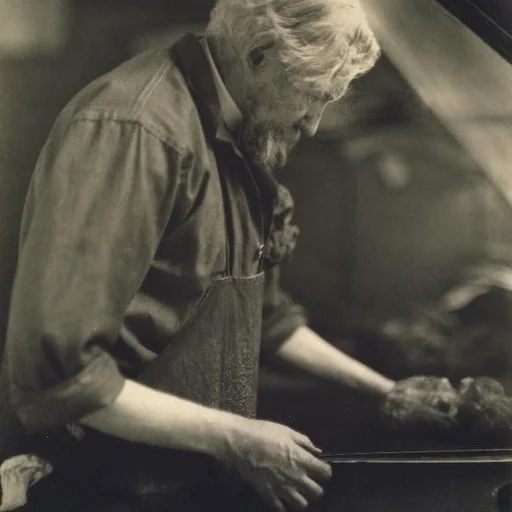
Artist
Joseph Pennell (July 4, 1857 – April 23, 1926) was an American draftsman, etcher, lithographer, and illustrator for books and magazines.