Artwork
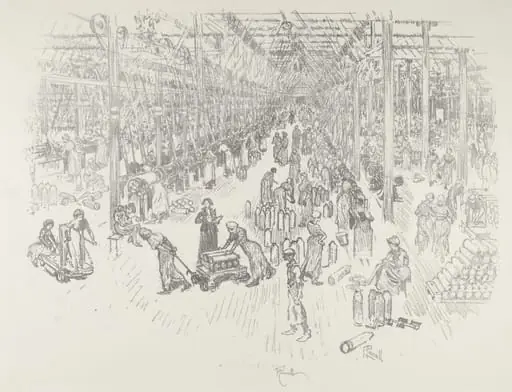
English War Work: The Bay of the Thousand Girls
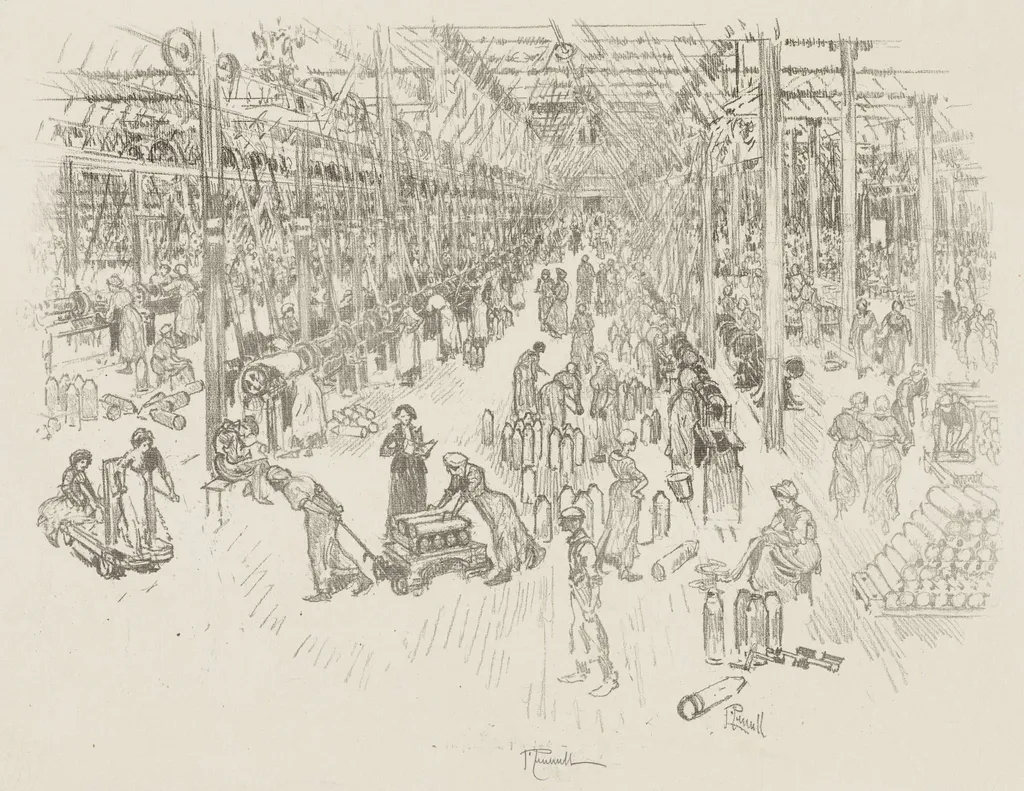
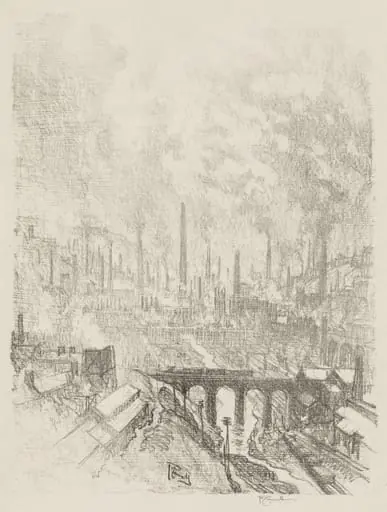
English War Work: The Bay of the Thousand Girls is a print by Joseph Pennell. It dates from 1916 and is held in the collection of the Cleveland Museum of Art.
About this work
Overview
Part of a series documenting wartime production in Britain, the work reflects Pennell’s interest in modern industry and social transformation.
Created in 1916 by American artist Joseph Pennell, this lithograph captures women engaged in industrial labor during World War I. Part of a series documenting wartime production in Britain, the work reflects Pennell’s interest in modern industry and social transformation. Though American, Pennell was based in Europe and commissioned by British authorities to record the home front. The piece resides in The Cleveland Museum of Art’s print collection.
Subject & Meaning
The scene depicts a group of women performing shipbuilding tasks—welding, riveting, and assembling hulls—in a bustling factory or dockyard. Their presence signifies a dramatic shift in gender roles, as women replaced men who had enlisted. Pennell emphasizes collective effort over individual identity, portraying labor as a unified, national duty. The title, referencing a poetic name for a shipyard, subtly elevates their work to mythic scale.
Technique & Style
Pennell employed lithography to achieve sharp contrasts and dynamic line work, capturing motion and density in the crowded workspace. His compositions favor angular, rhythmic forms, influenced by Whistler’s tonal harmony and Eakins’ realism. The lack of idealized figures and the focus on mechanical precision reflect a modernist sensibility, aligning the human body with industrial machinery without romanticizing it.
History & Provenance
Commissioned by the British government during World War I, the print was part of a broader effort to document and promote the war effort through visual media. Pennell traveled extensively in Britain with his wife, Elizabeth Robins, producing both images and written accounts. The work entered The Cleveland Museum of Art’s collection in the 20th century, where it remains as part of its holdings on wartime graphic art.
Context
As men went to the front, British industry relied heavily on female labor for the first time on such a scale. Factories and shipyards became sites of social change, challenging prewar norms about women’s place in public life. Pennell’s image aligns with official propaganda that celebrated this contribution while subtly reinforcing its temporary nature—labor as patriotic duty, not permanent reform.
Legacy
The print stands as a documented record of wartime labor transformation, offering insight into early 20th-century gender dynamics and industrial mobilization. Though not widely exhibited today, it contributes to scholarly understanding of how visual media shaped perceptions of women’s roles during conflict. Pennell’s approach influenced later documentary artists seeking to capture labor without sentimentality.
Own this work as a print
Artist & collection
Artist
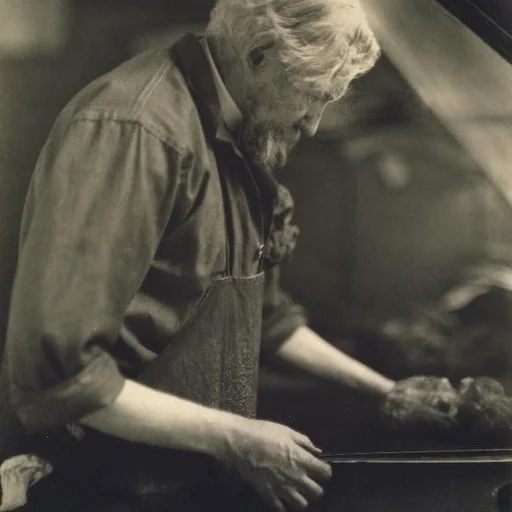
Joseph Pennell (July 4, 1857 – April 23, 1926) was an American draftsman, etcher, lithographer, and illustrator for books and magazines.

 The Bay of the Thousand Girls
 English War Work: The Shell Factory
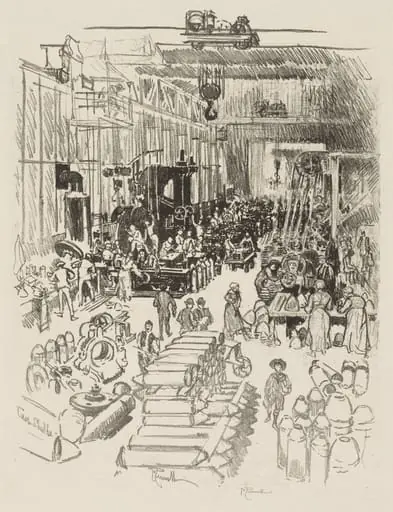 English War Work: Finishing Shells
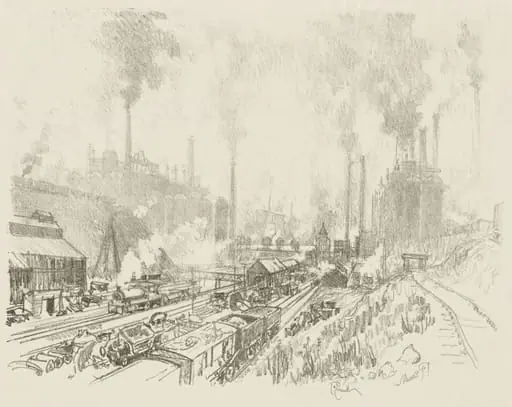 English War Work: In the Land of Iron and Steel
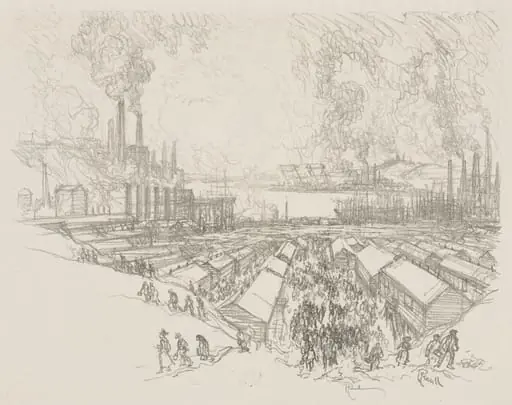 English War Work: Five O'Clock
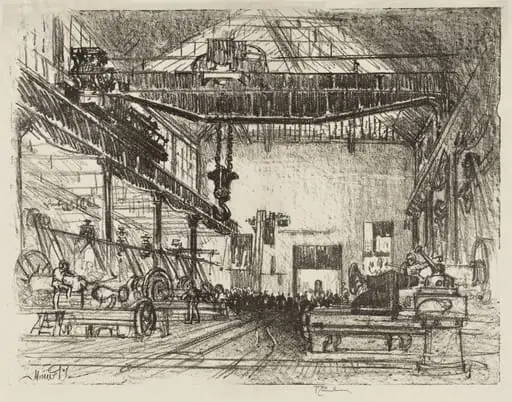 English War Work: Planing Big Shells
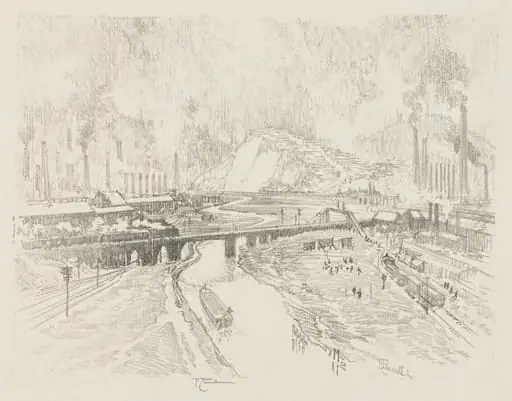 English War Work: Munition Town
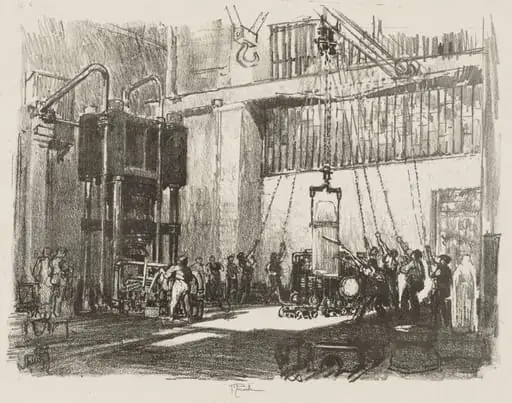 English War Work: Bottling the Big Shell
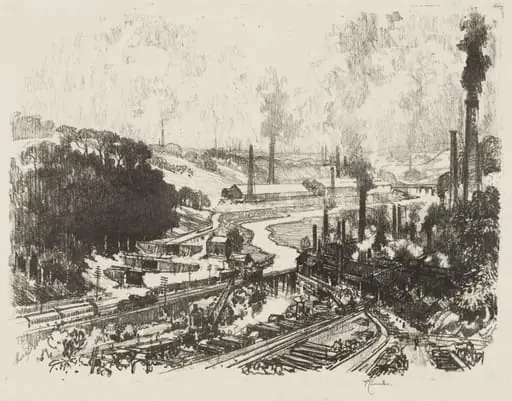 English War Work: Munition Works
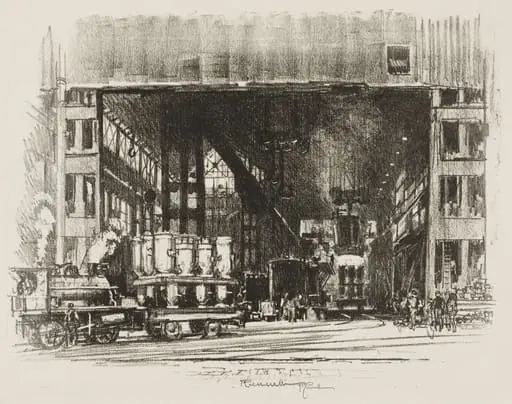 English War Work: The Urns, Casting Big Shells
 English War Work: Munitions City, No. 1