Artwork
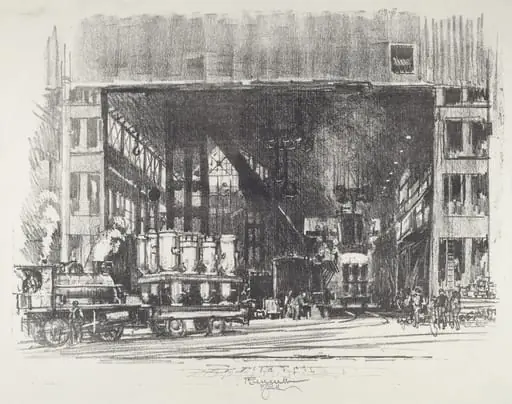
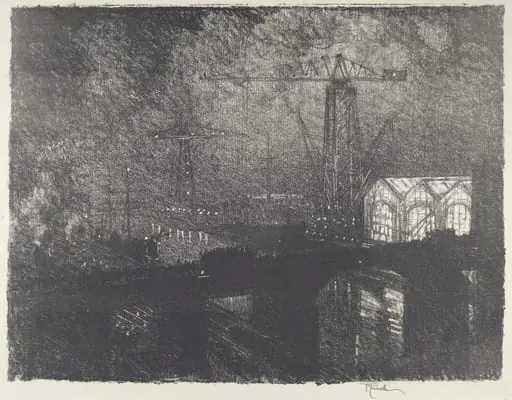
English War Work: The Shops at Night, Changing Shifts
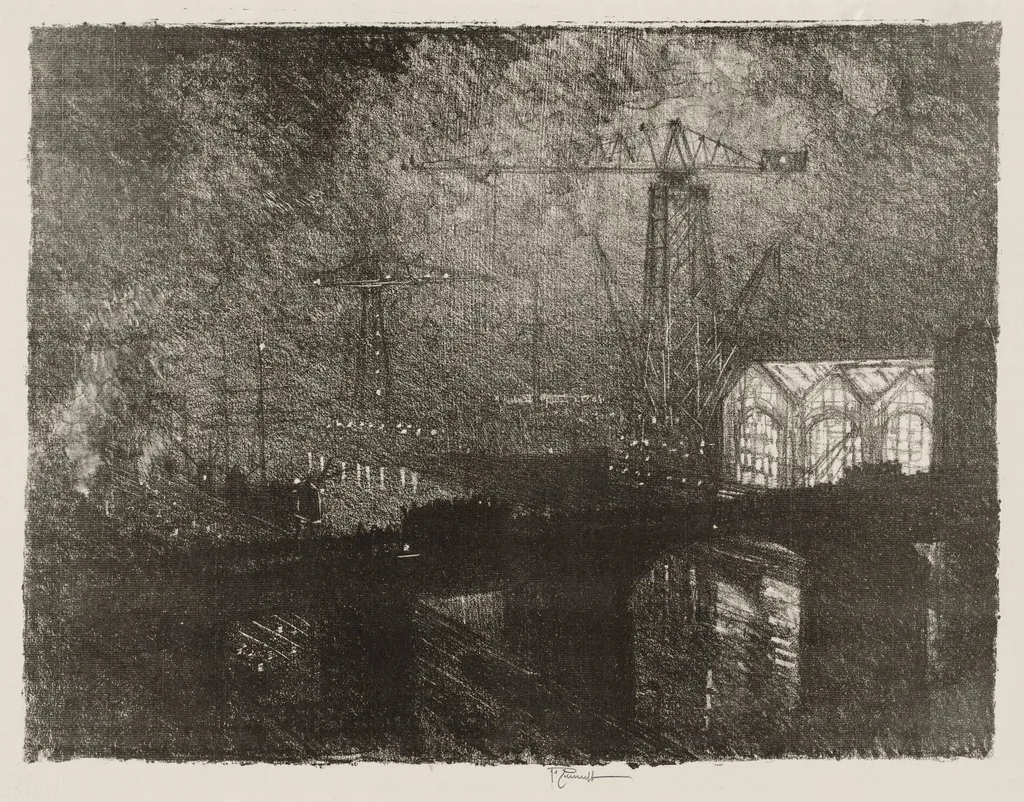
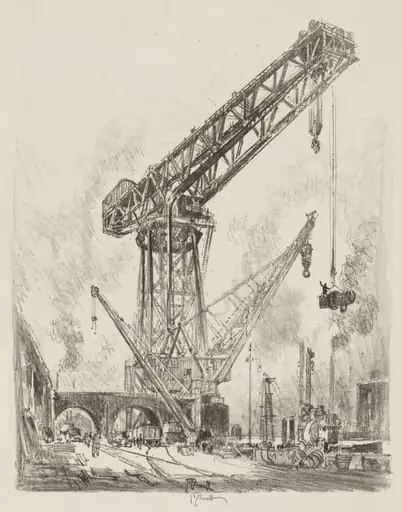
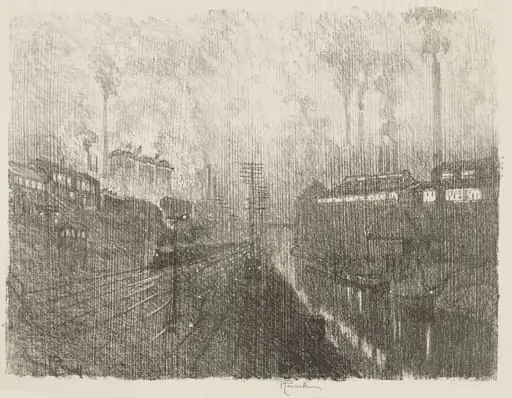
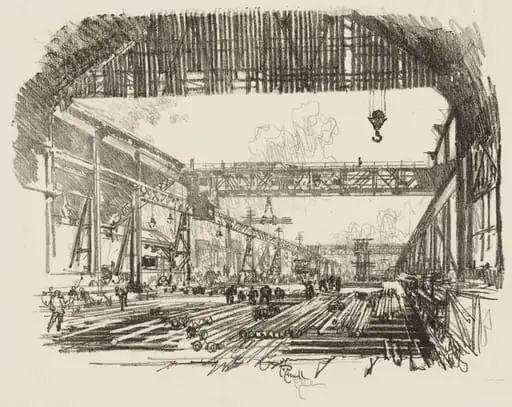
English War Work: The Shops at Night, Changing Shifts is a print by Joseph Pennell. It dates from 1916 and is held in the collection of the Cleveland Museum of Art.
About this work
Overview
It captures the rhythm of industrial labor during World War I, focusing on the transition between shifts in a British factory district after dark.
Created in 1916, *English War Work: The Shops at Night, Changing Shifts* is a lithograph by American artist Joseph Pennell. It captures the rhythm of industrial labor during World War I, focusing on the transition between shifts in a British factory district after dark. Pennell, known for his precise draftsmanship and urban subjects, produced this work as part of a series commissioned to document wartime production efforts in England.
Subject & Meaning
The scene depicts workers moving through a nocturnal industrial landscape, their figures silhouetted against the glow of factory windows and streetlights. Rather than glorifying combat, the print honors the quiet persistence of civilian labor supporting the war. The absence of soldiers or weaponry shifts focus to the domestic front, suggesting that industry itself had become a battlefield of endurance and coordination.
Technique & Style
Pennell employed chiaroscuro to heighten the drama of the night scene, using deep blacks and stark highlights to define architectural forms and human movement. His lithographic technique emphasized bold lines and tonal contrasts, influenced by his training under Thomas Eakins and the tonal aesthetics of James McNeill Whistler. The composition avoids sentimentality, favoring structural clarity and atmospheric density to convey the scale of industrial activity.
History & Provenance
Commissioned by the British government during World War I, the print was part of a broader effort to record and publicize home-front contributions. Pennell traveled to England in 1915–1916 to observe and sketch wartime industry. The work entered The Cleveland Museum of Art’s collection in the 20th century, where it remains as part of their holdings of early 20th-century American printmaking and war documentation.
Context
In 1916, Britain relied heavily on its manufacturing base to supply munitions and equipment. Factories operated around the clock, and civilian workers—many of them women—took on roles previously held by men at the front. Pennell’s image reflects this societal shift, aligning with contemporary efforts to visualize national resilience through art, even as the war’s human cost grew increasingly apparent.
Legacy
The print stands as a significant example of American artists engaging with European wartime realities. Pennell’s documentation of industrial labor influenced later social realist movements and contributed to the recognition of printmaking as a viable medium for historical record. His work remains a quiet testament to the unseen labor sustaining modern conflict.
Artist & collection
Artist
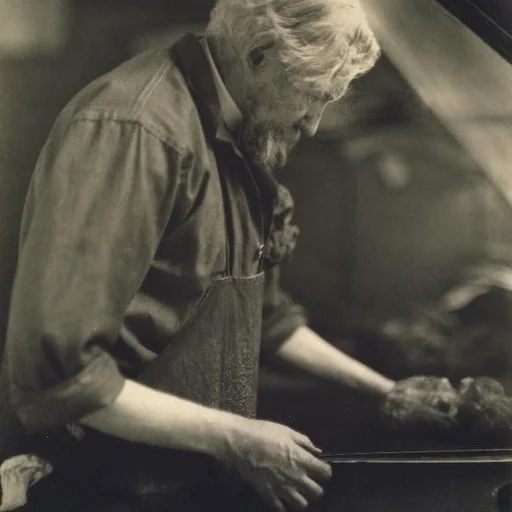
Joseph Pennell (July 4, 1857 – April 23, 1926) was an American draftsman, etcher, lithographer, and illustrator for books and magazines.