Artwork
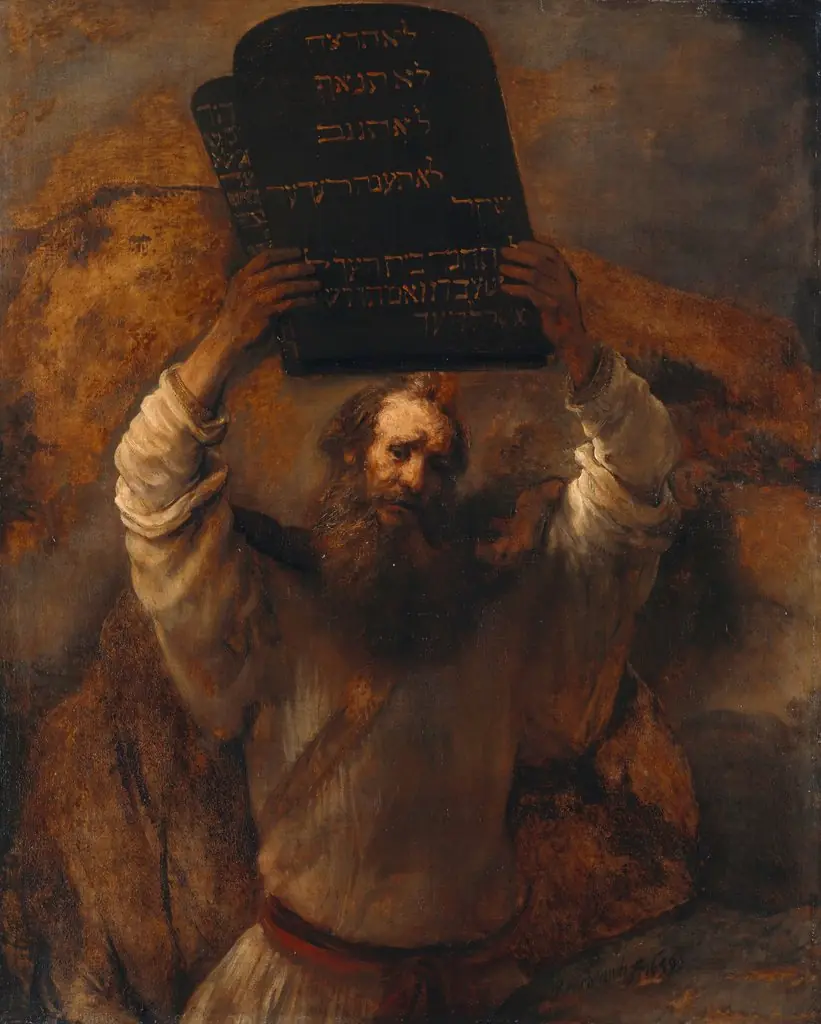
God Writes the Ten Commandments to Moses on Two Tablets of Stone on Mount Sinai
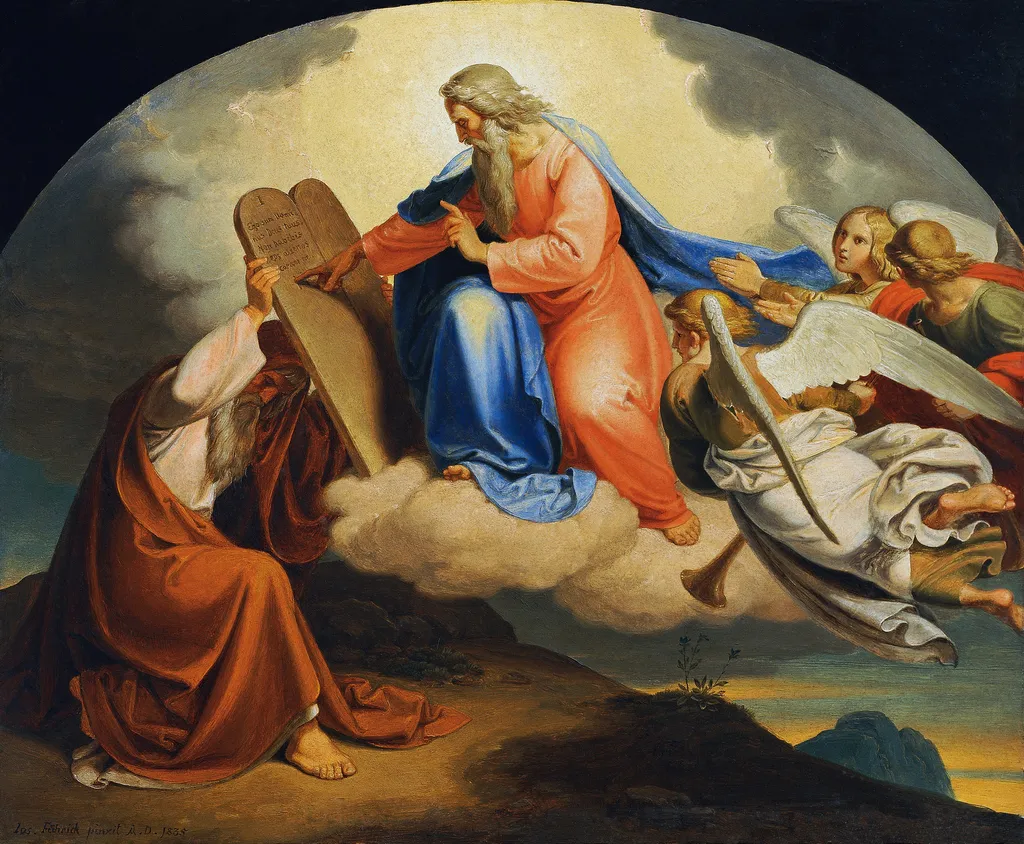
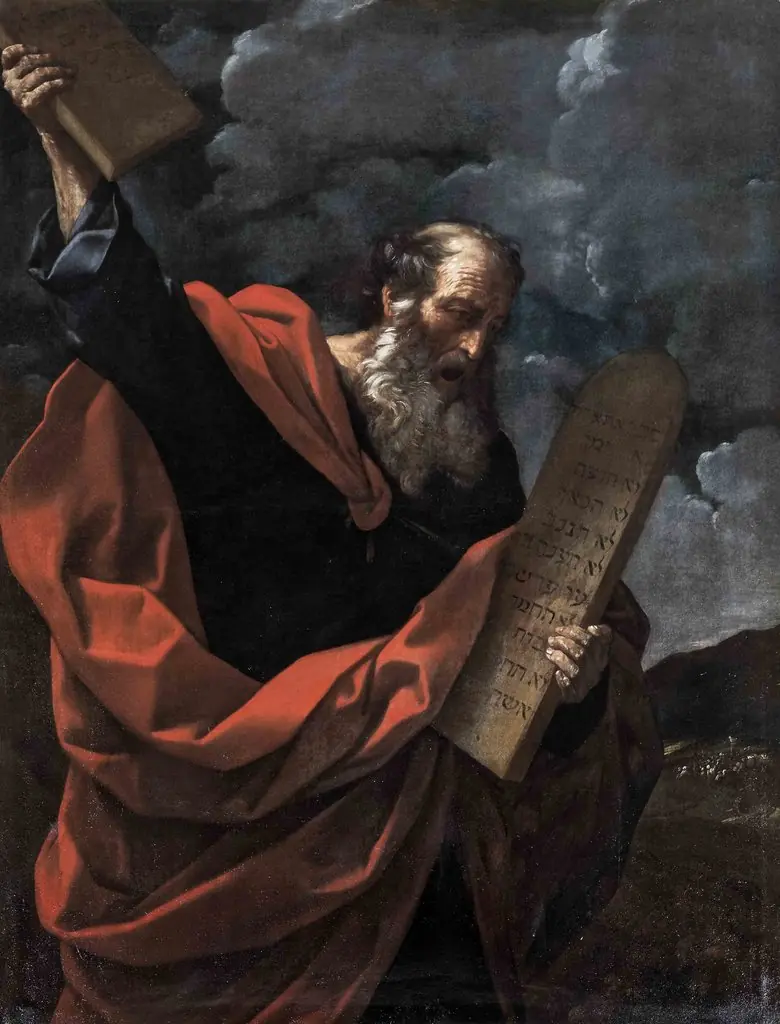
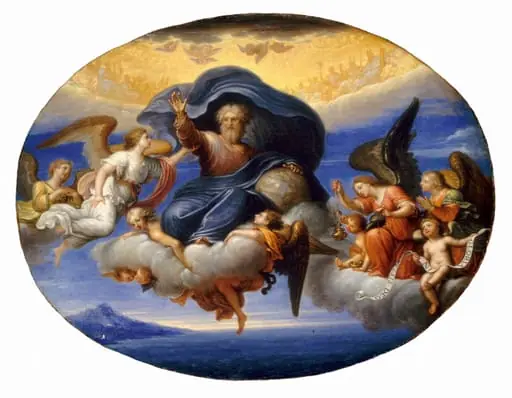
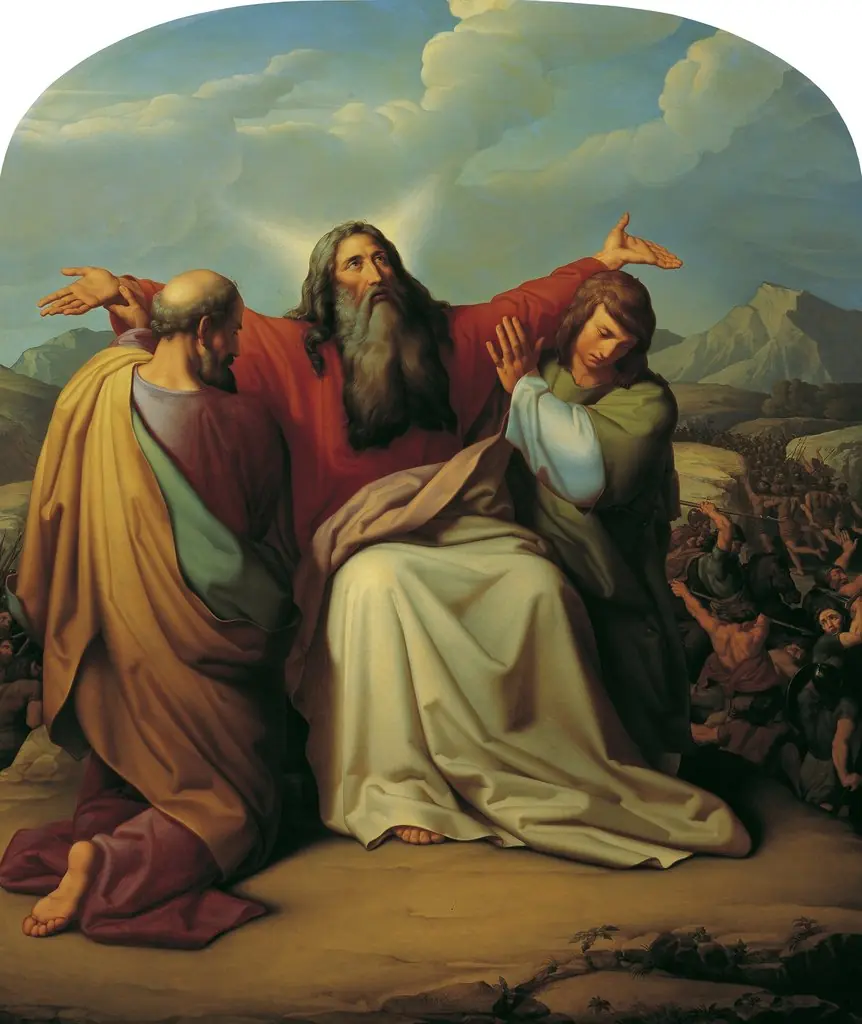
God Writes the Ten Commandments to Moses on Two Tablets of Stone on Mount Sinai is an oil painting by Joseph von Führich. It dates from 1835 and is held in the collection of the Kunsthistorisches Museum.
About this work
Overview
Joseph von Führich's 1835 oil painting, God Writes the Ten Commandments to Moses on Two Tablets of Stone on Mount Sinai, is a representation of a pivotal biblical scene. Created by an Austrian artist associated with the Nazarene movement, it showcases his skill in conveying religious themes.
Subject & Meaning
The painting depicts God inscribing the Ten Commandments on stone tablets as Moses looks on in reverence. The scene is characterized by serenity, emphasizing the divine moment of the commandments' revelation.
Technique & Style
Führich's use of oil paint achieves a warm and deep effect, with intricate details such as the elegant script on the tablets. A soft, gradient blue background enhances the sense of a heavenly presence, underscoring the scene's spiritual significance.
History & Provenance
The painting is part of the Kunsthistorisches Museum's collection, reflecting its significance within the artist's oeuvre and the broader context of 19th-century religious art.
Artist & collection
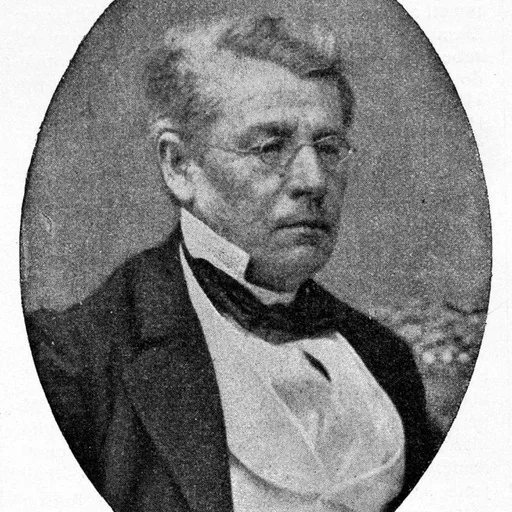
Artist
Joseph von Führich (fully Josef Ritter von Führich) (9 February 1800 – 13 March 1876) was an Austrian painter, one of the Nazarenes. He painted religious pictures almost exclusively. Führich acquired his greatest fame as a draughtsman.