Artwork
Still Life with a dead Bird
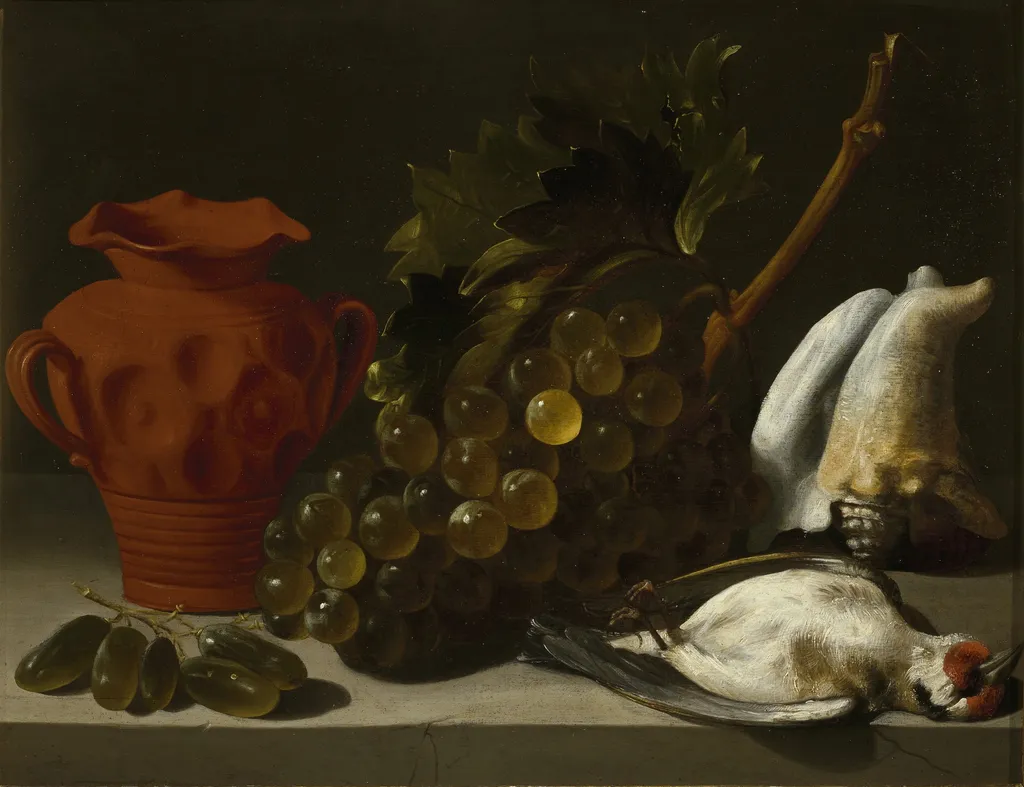
Still Life with a dead Bird is an oil painting by the Early Baroque Italian artist Juan Bautista de Espinosa. It is held in the collection of the Museo del Prado.
About this work
Overview
Juan Bautista de Espinosa, a Spanish painter active in the early 1600s, executed *Still Life with a Dead Bird* in 1651. The oil on canvas presents a modest arrangement of everyday objects, rendered with meticulous realism. The work is part of the Prado Museum’s collection and represents the only surviving genre of his oeuvre, which consists exclusively of still‑life compositions.
Subject & Meaning
The composition centers on a darkened tabletop bearing a red clay jug, a handful of green olives, a spilling cluster of grapes, a white pitcher, a leafy branch, and a dead bird perched on a plate. The juxtaposition of fresh fruit with a lifeless creature invites contemplation of mortality and the fleeting nature of abundance, a common moral undertone in seventeenth‑century still‑life painting.
Technique & Style
Espinosa employs a pronounced chiaroscuro, allowing a narrow light source to illuminate the objects against a deep, almost black background.
Espinosa employs a pronounced chiaroscuro, allowing a narrow light source to illuminate the objects against a deep, almost black background. The contrast heightens the tactile qualities of the jug’s glaze, the translucence of the grapes, and the softness of the bird’s feathers. The painter’s handling of oil paint yields fine detail and a near‑photographic surface, aligning the work with early Baroque sensibilities that prized naturalistic representation.
History & Provenance
Created in 1651, the painting entered the Spanish royal collection before being transferred to the Museo del Prado, where it remains on public display. Its provenance traces a typical path for court‑owned artworks of the period, moving from private aristocratic holdings to a national museum during the nineteenth‑century reorganization of Spain’s cultural assets.
Context
Although Espinosa was Spanish, the piece reflects the influence of Italian early Baroque still‑life traditions, especially in its dramatic lighting and careful rendering of material textures. The work belongs to a broader European trend that elevated humble objects to subjects of artistic inquiry, emphasizing observation, texture, and the moral symbolism associated with vanitas themes.
Own this work as a print
Artist & collection
Artist
Juan Bautista de Espinosa (1590–1641) was a Spanish painter. Much of his work, which included religious paintings and portraits, is now untraced, and his few known extant paintings are all still lifes.

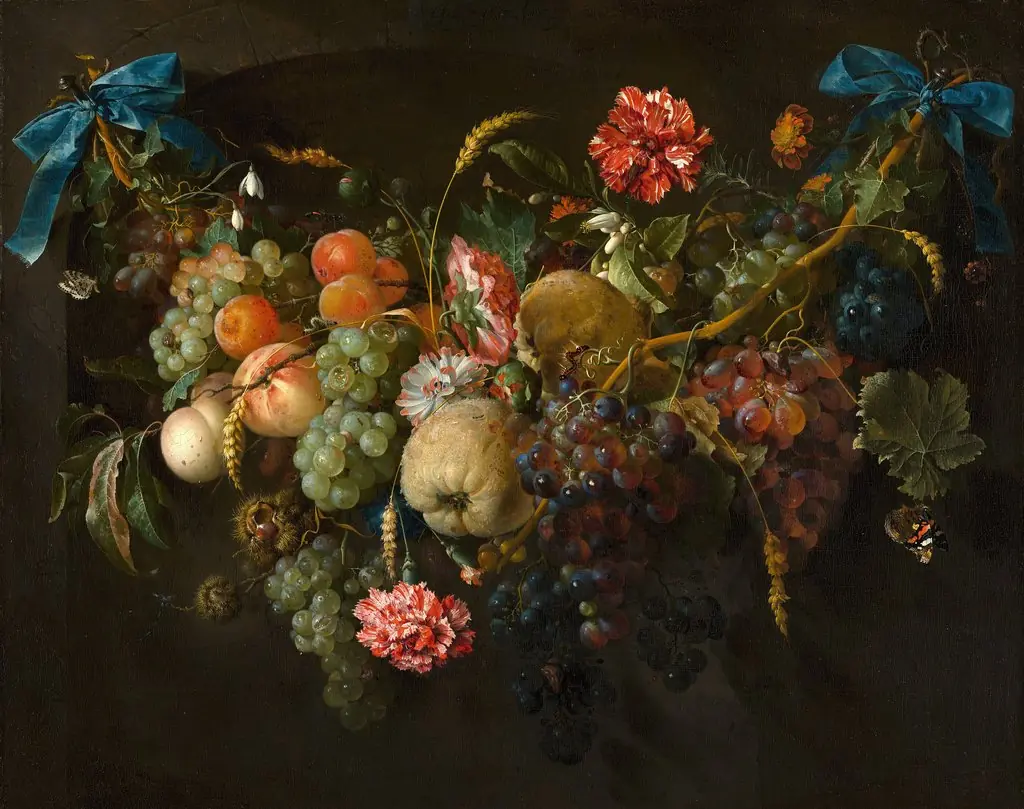 Garland of Fruit and Flowers
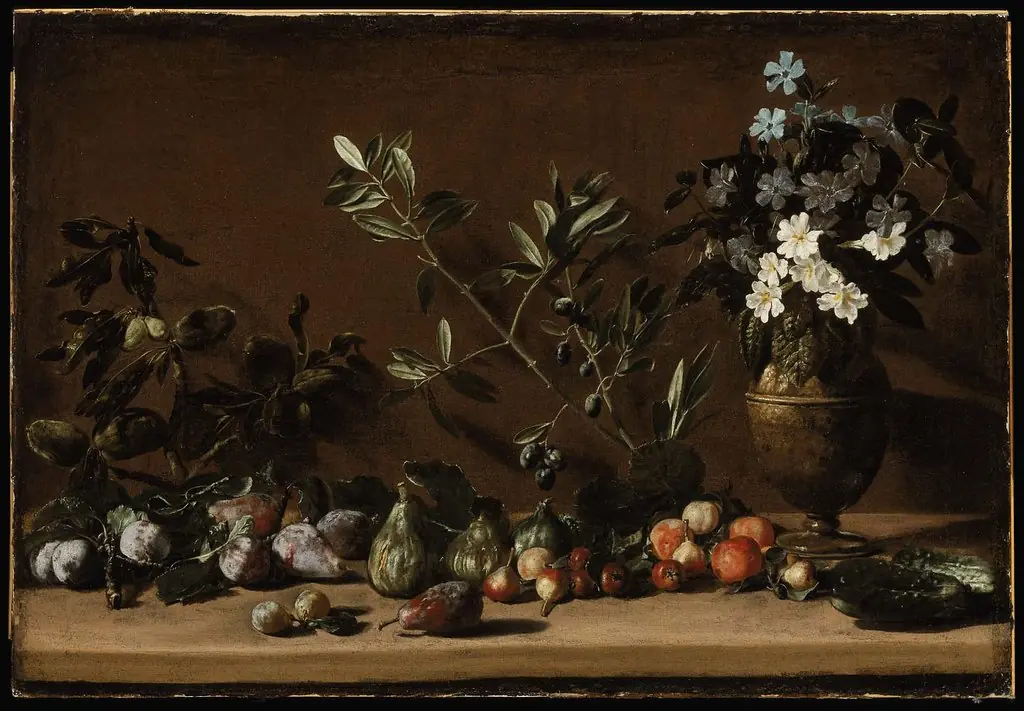 Fruit and Vase of Flowers on a Ledge
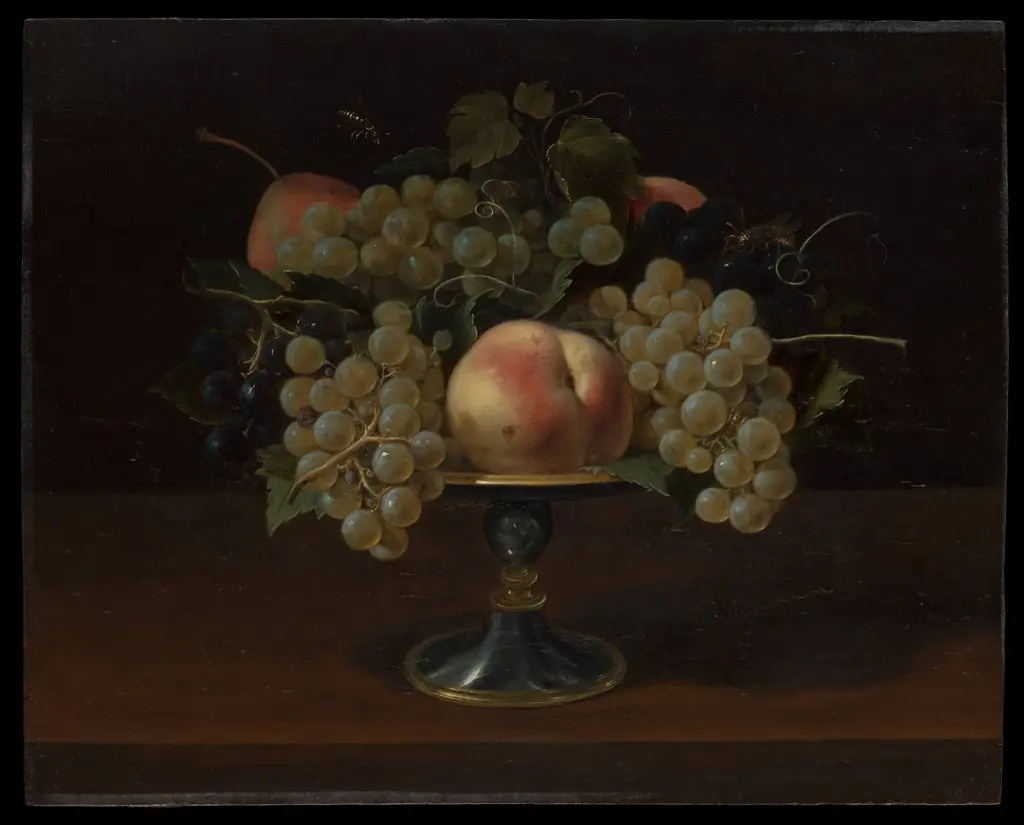 Still Life of Grapes and Peaches
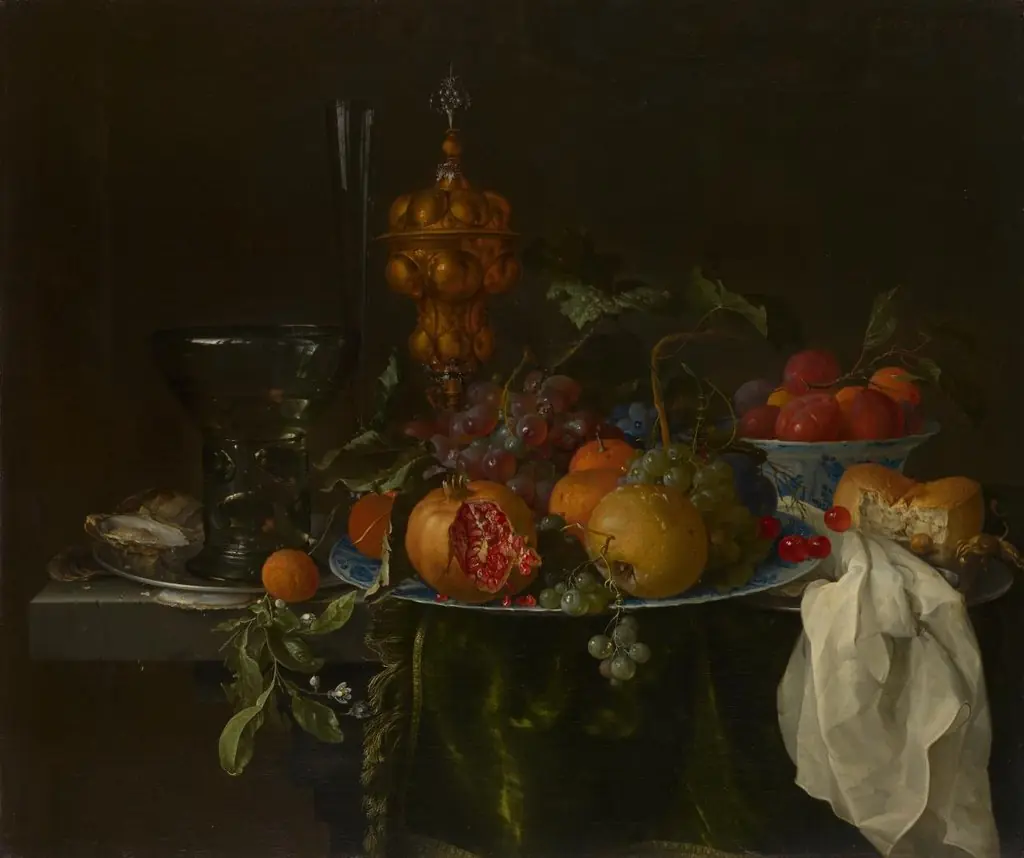 Still life with fruit
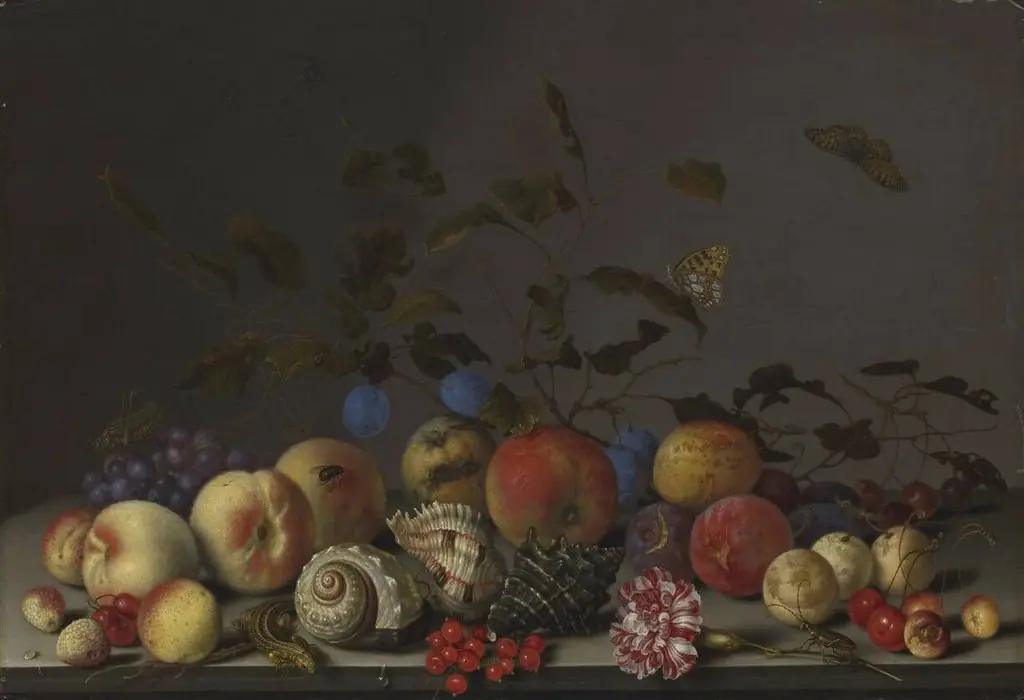 Stillleben mit Früchten und Seeschneckenhäusern
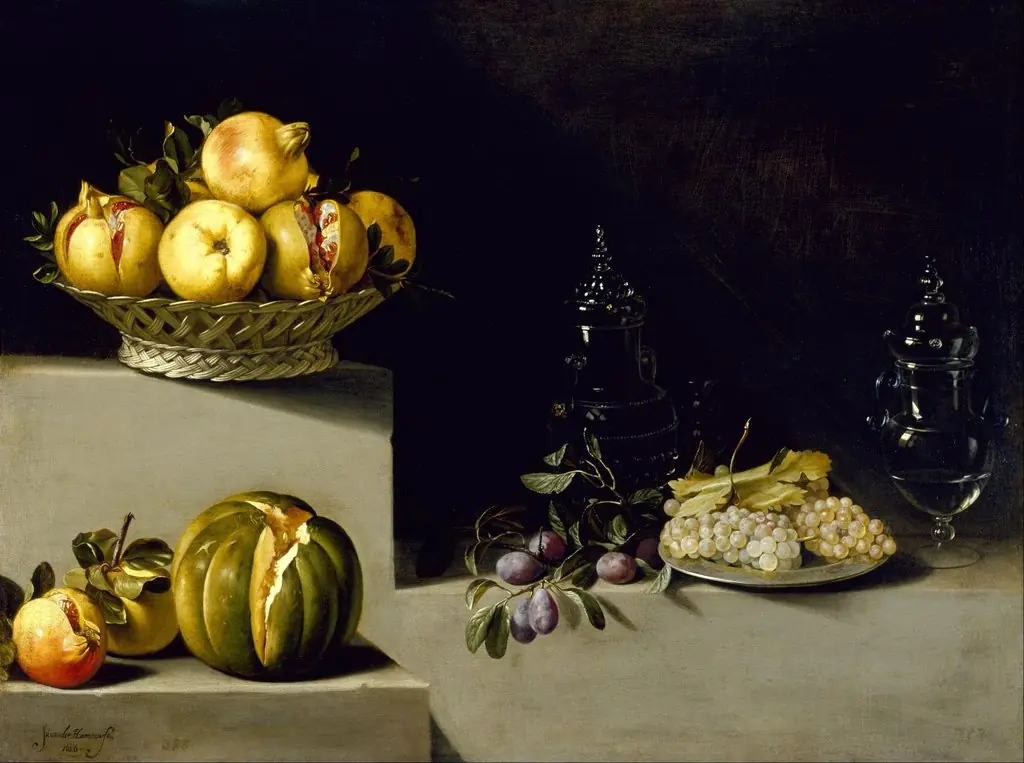 Still Life with Fruit and Glassware
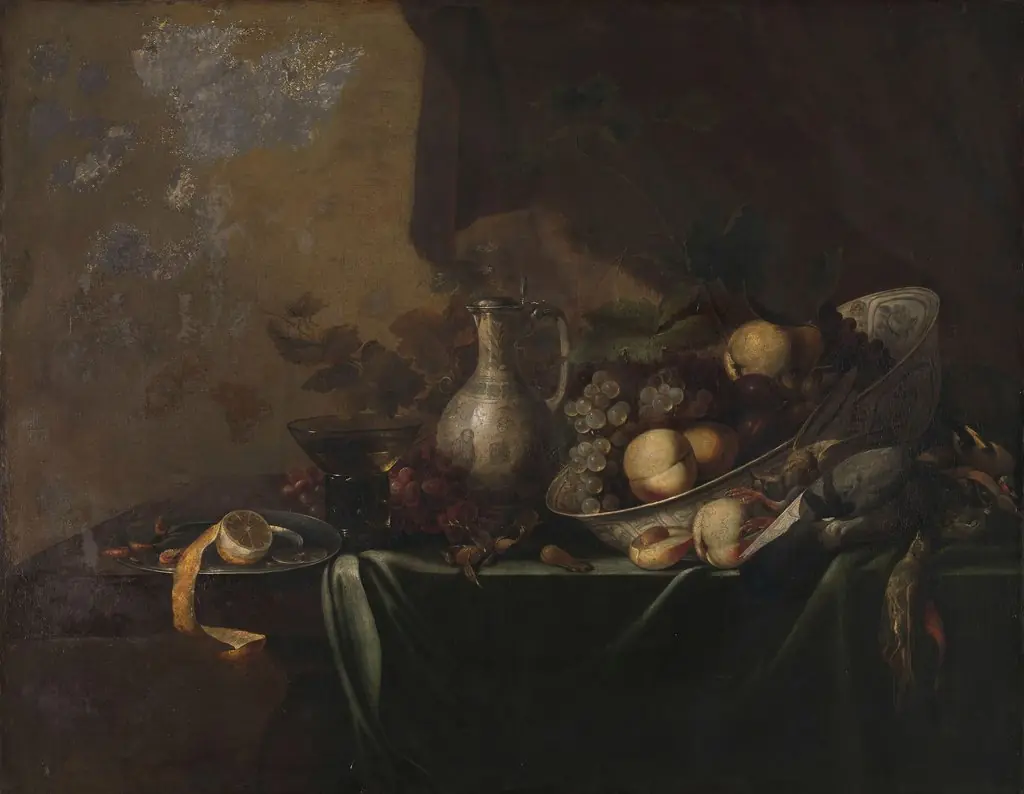 Still Life with Fruit
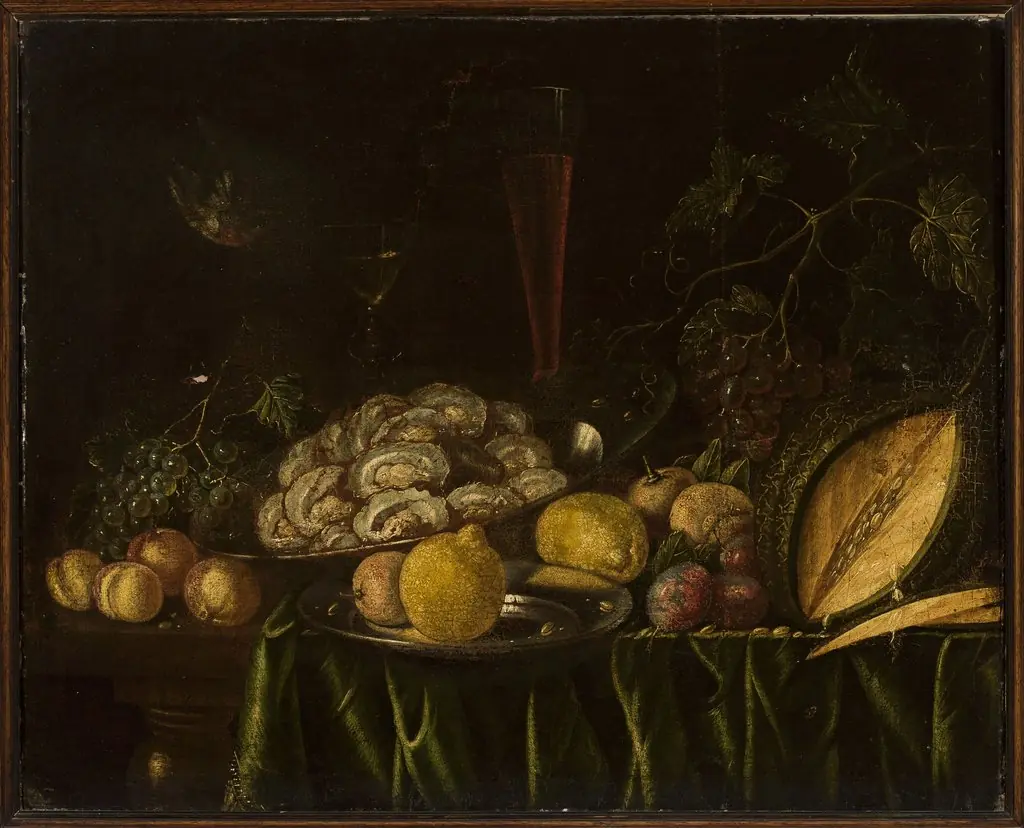 Still life with – fruit, mussels and a bird
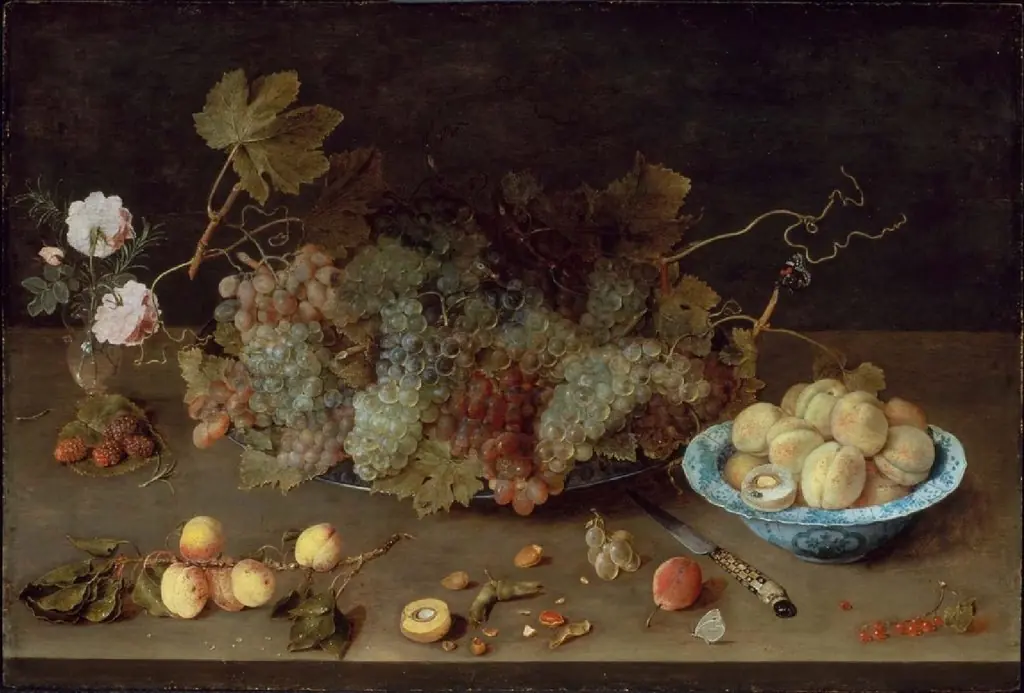 Still Life with Grapes on a Platter
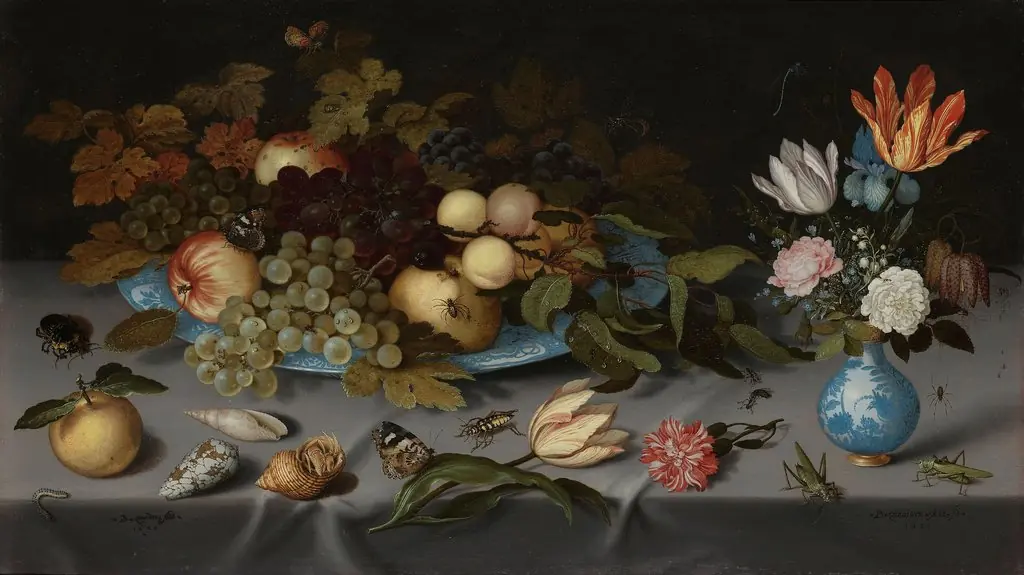 Still Life with Fruits and Flowers
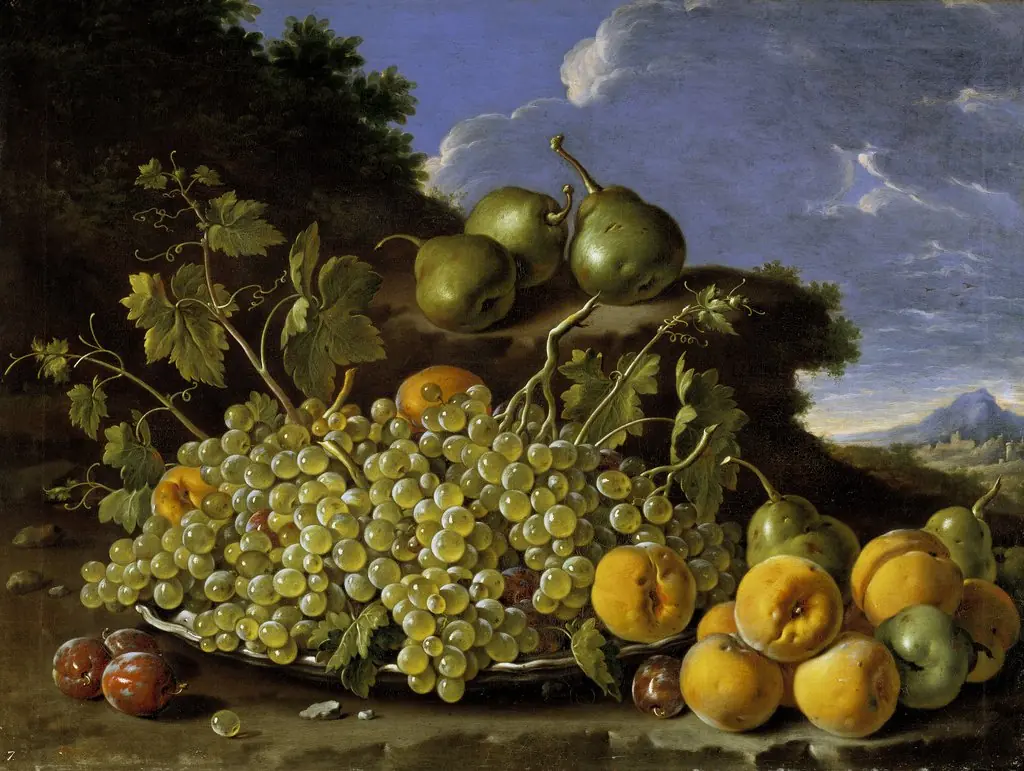 Still Life with Plate of Grapes Peaches Pears and Prunes in a Landscape
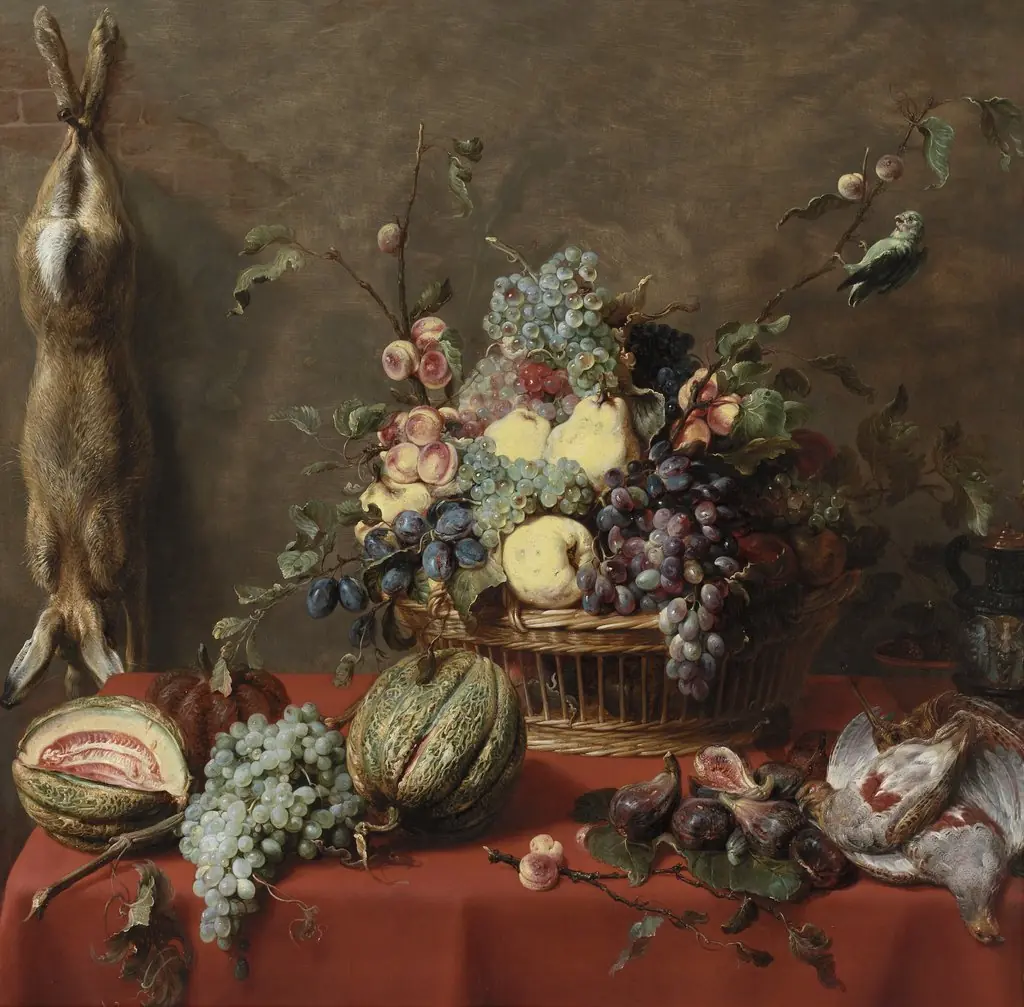 Still Life with Fruit and a Dead Hare