Artwork
Saint Luke
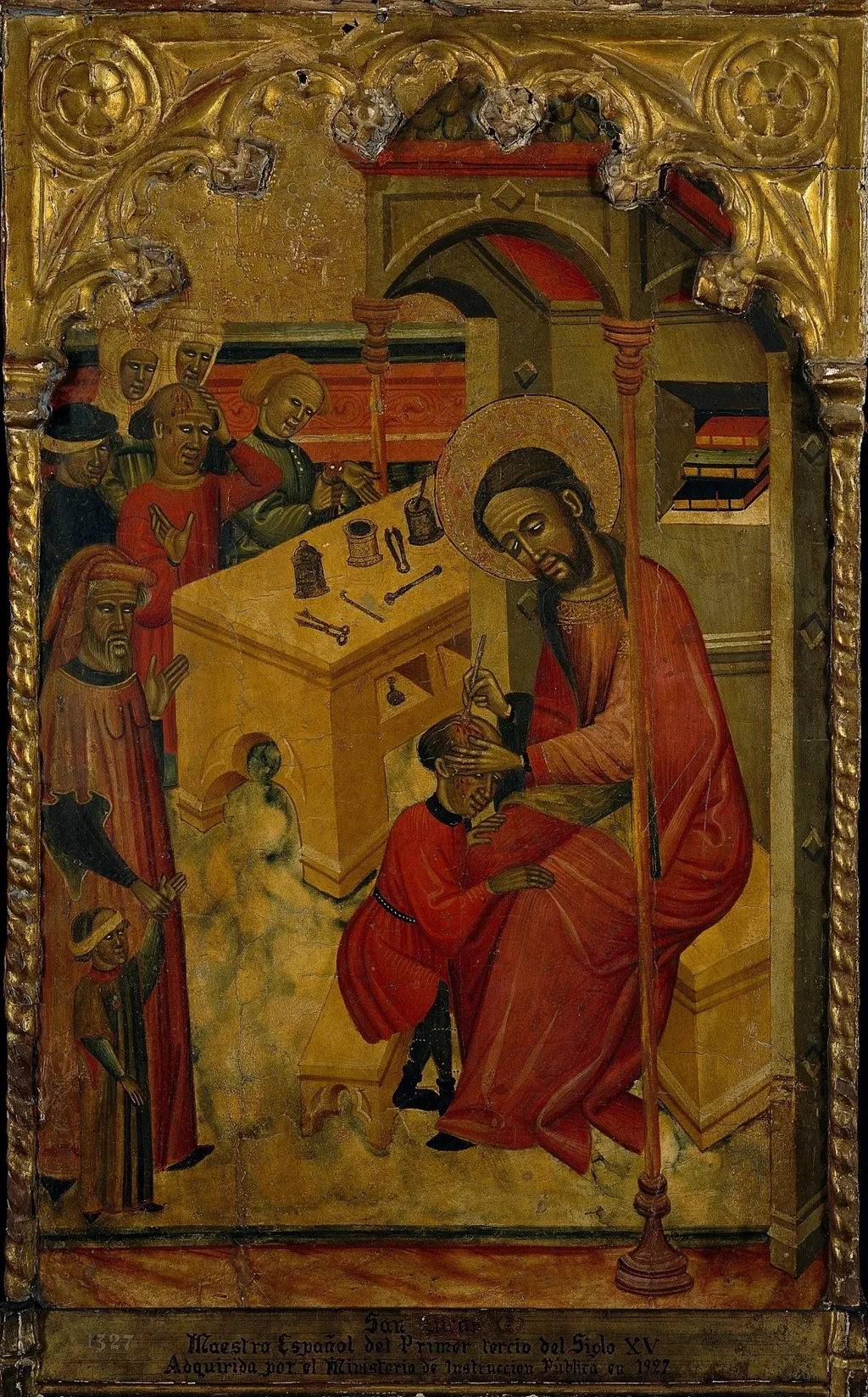
Saint Luke is a tempera painting by the Early Renaissance artist Juan de Sevilla. It dates from 1401 and is held in the collection of the Museo del Prado.
About this work
Overview
Painted in 1401 by Juan de Sevilla, this tempera-on-panel work depicts a quiet scene of ritual grooming within a gilded interior. It is housed in the Museo del Prado and reflects the devotional art traditions of early 15th-century Spain. The use of egg-based pigment gives the surface a matte, luminous quality, typical of the period’s religious panel paintings.
Subject & Meaning
Though traditionally associated with painting and medicine, Luke’s role here as a barber suggests a metaphor for the care of the soul.
The central figure, identified as Saint Luke, is shown carefully trimming the hair of another man, an act interpreted as symbolic of spiritual cleansing or humility. Though traditionally associated with painting and medicine, Luke’s role here as a barber suggests a metaphor for the care of the soul. The onlookers in red robes, likely clergy or disciples, observe in stillness, reinforcing the sacred nature of the moment.
Technique & Style
Tempera paint, made from pigments mixed with egg yolk, was applied in thin, precise layers to achieve fine detail and a soft sheen. The background is densely adorned with gold leaf patterns and miniature figures, creating a celestial atmosphere. The figures are rendered with elongated proportions and calm expressions, characteristic of late Gothic aesthetics prioritizing spiritual presence over naturalism.
History & Provenance
The painting entered the collection of the Museo del Prado in the 19th century, having likely been part of a Spanish ecclesiastical collection. Its attribution to Juan de Sevilla, a documented Sevillian painter of the period, is supported by stylistic comparisons with other surviving works from his workshop. Little is known of its earlier ownership or original placement.
Context
In early 15th-century Spain, religious imagery often blended biblical narratives with everyday acts to convey moral lessons. Hair-cutting, a common ritual in monastic life, was seen as an act of renunciation. The inclusion of objects like a book and cup may reference Luke’s role as evangelist and physician, subtly connecting physical care with spiritual duty.
Legacy
This work exemplifies the transition from Byzantine iconography to more narrative-driven devotional art in Iberia. While not widely reproduced, it remains a key example of how local Spanish painters adapted international Gothic conventions to express regional piety. Its quiet composition continues to inform studies of medieval symbolism and artisanal religious practice.
Artist & collection

 Pilate Washing his Hands
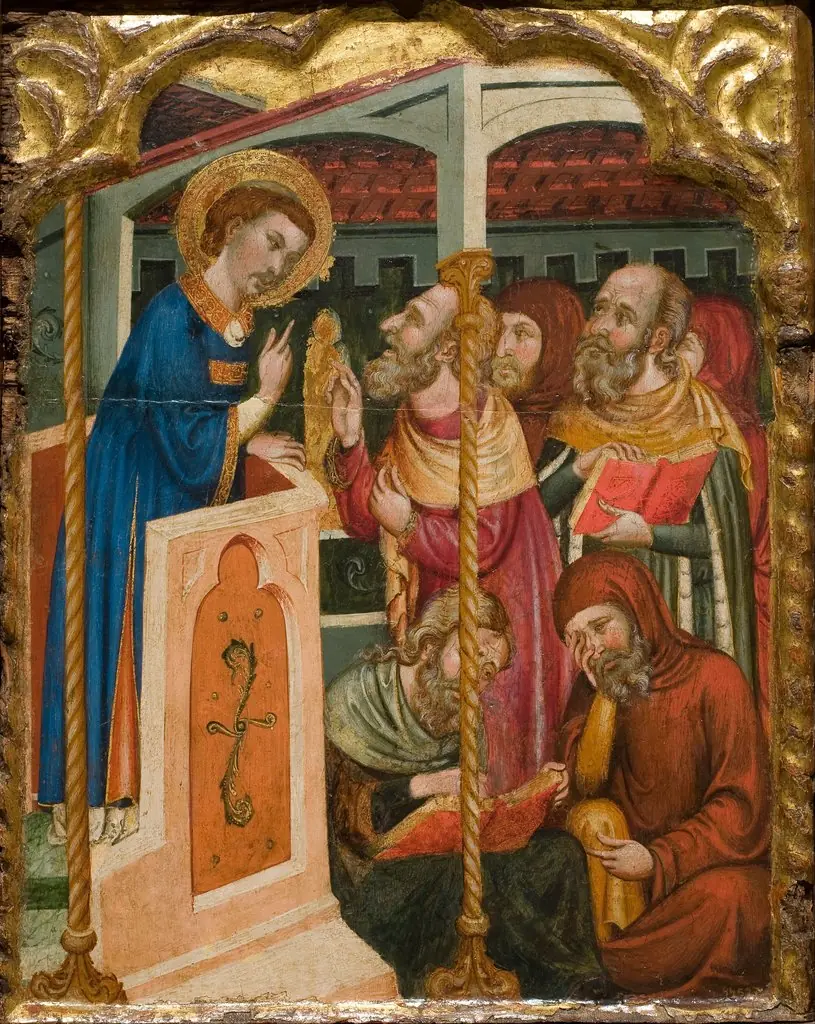 Saint Stephen's Dispute with the Jews
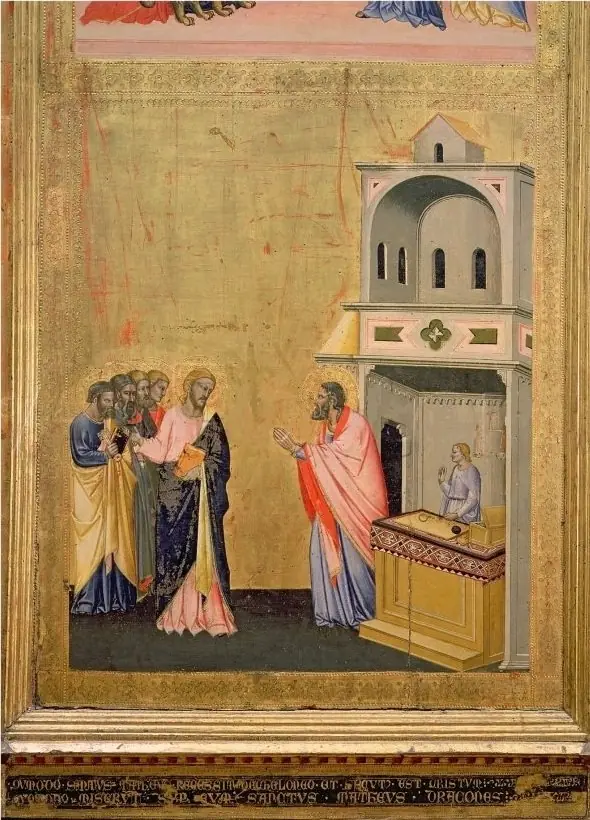 The Calling of St. Matthew
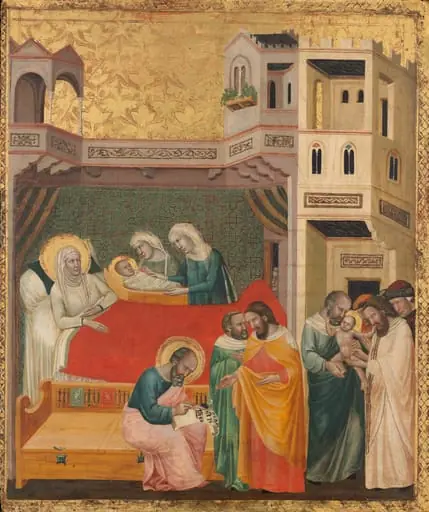 The Birth, Naming, and Circumcision of Saint John the Baptist
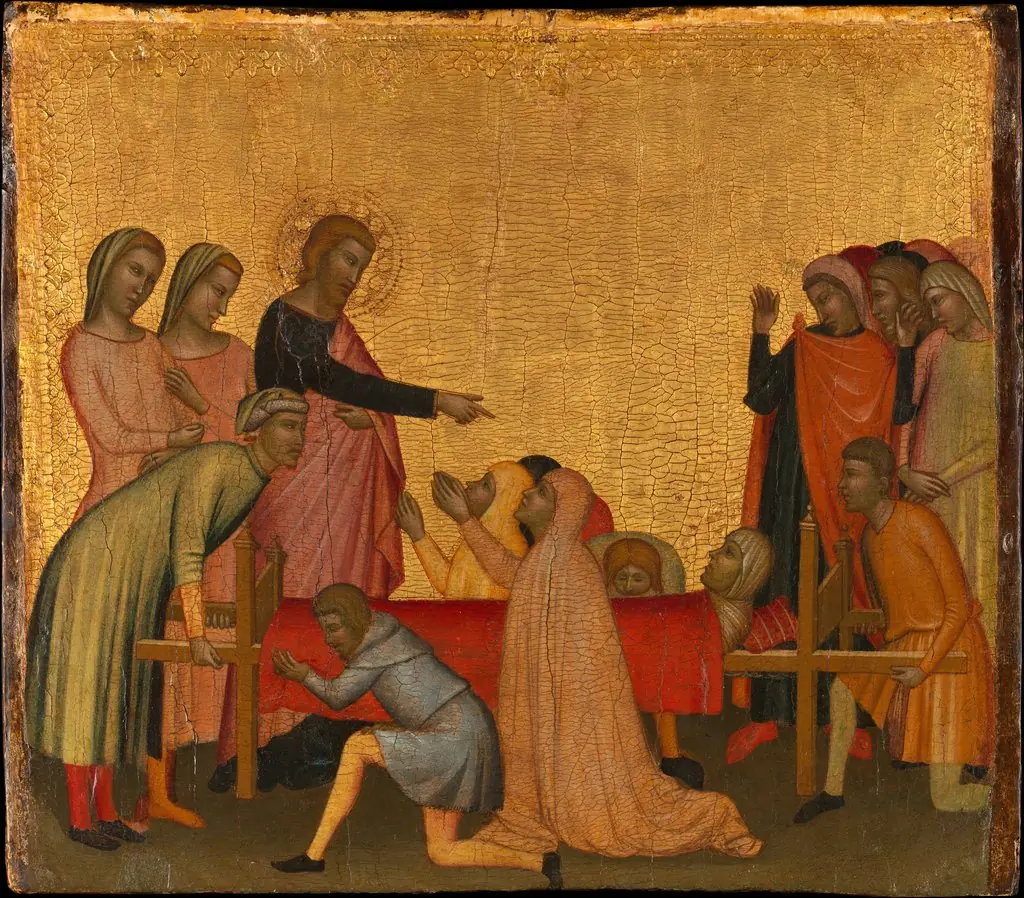 Saint John the Evangelist Raises Satheus to Life
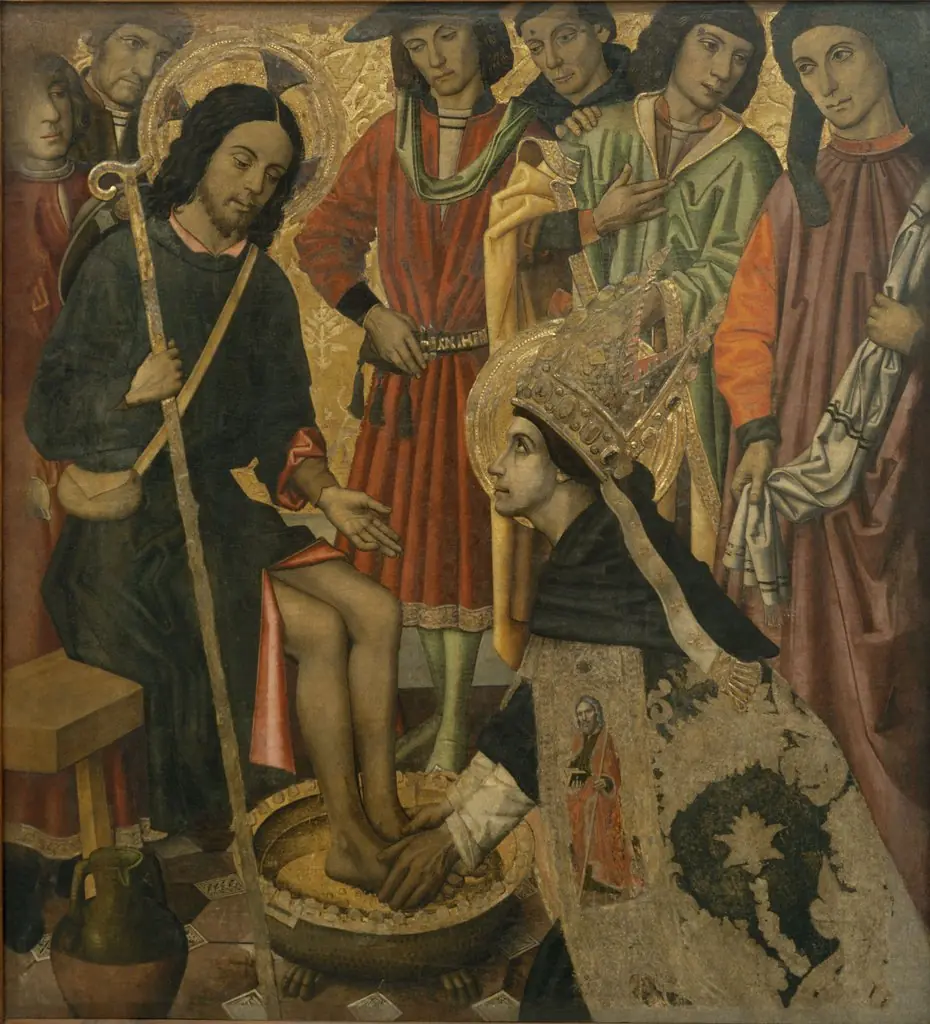 Saint Augustine washing the feet to Pilgrim Jesus
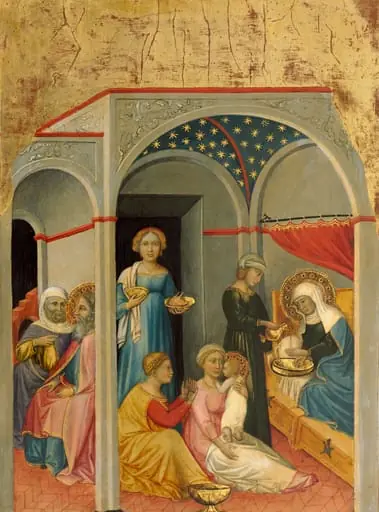 The Nativity of the Virgin
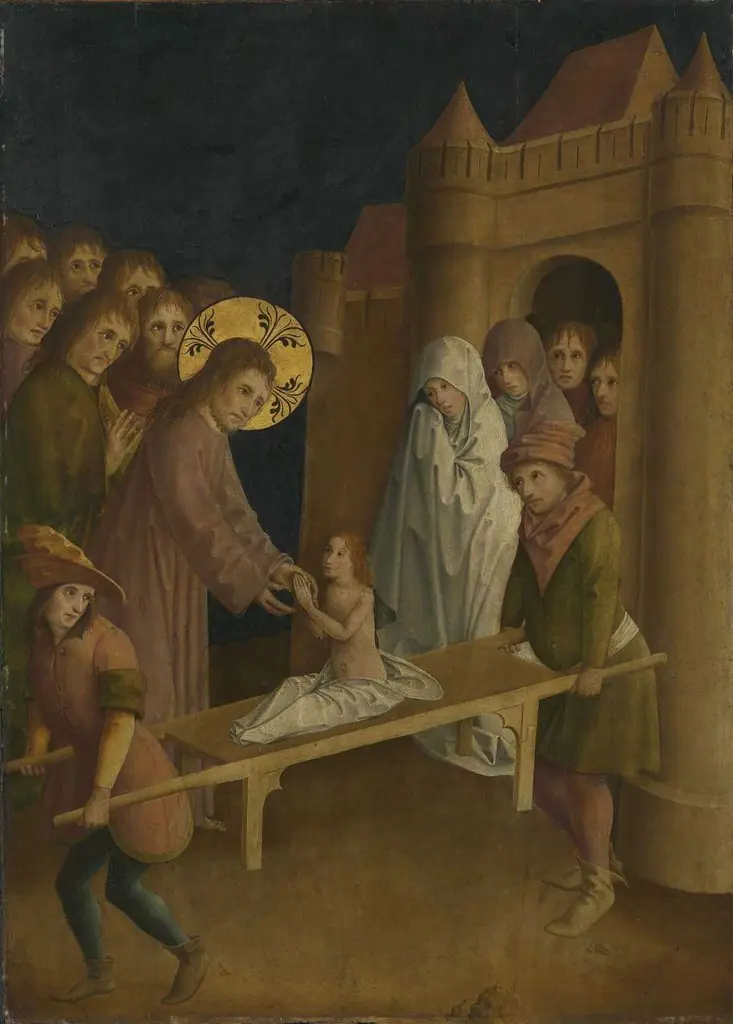 Die Erweckung des Jünglings von Nain
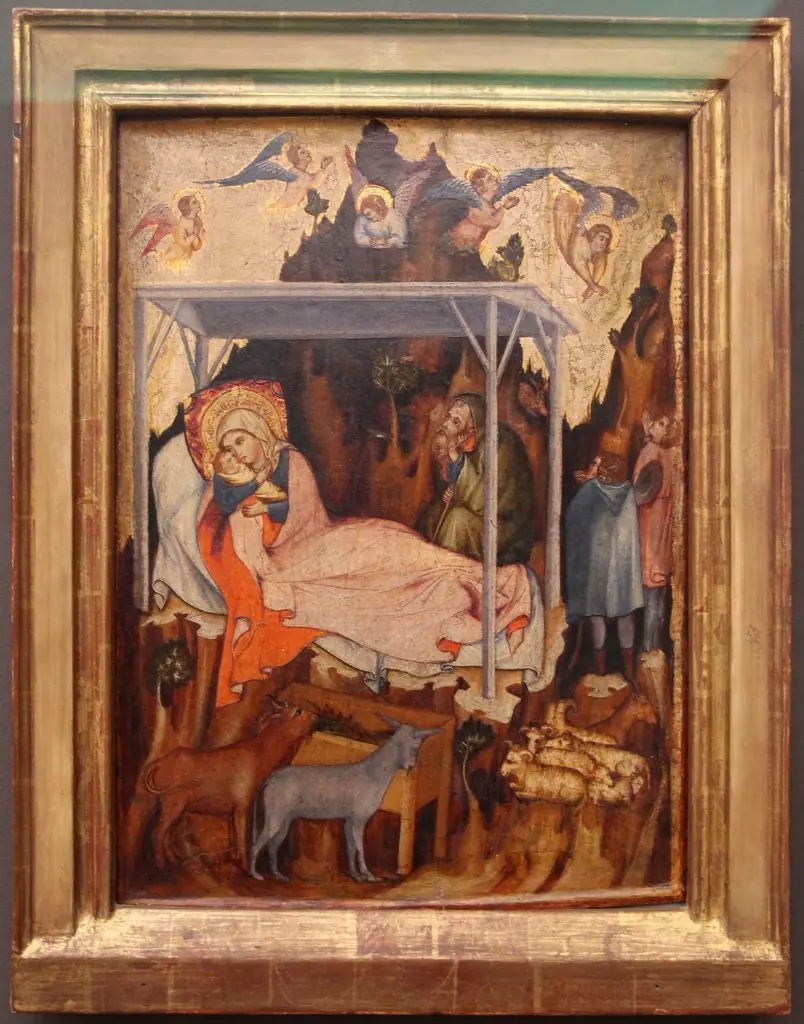 The birth of Christ
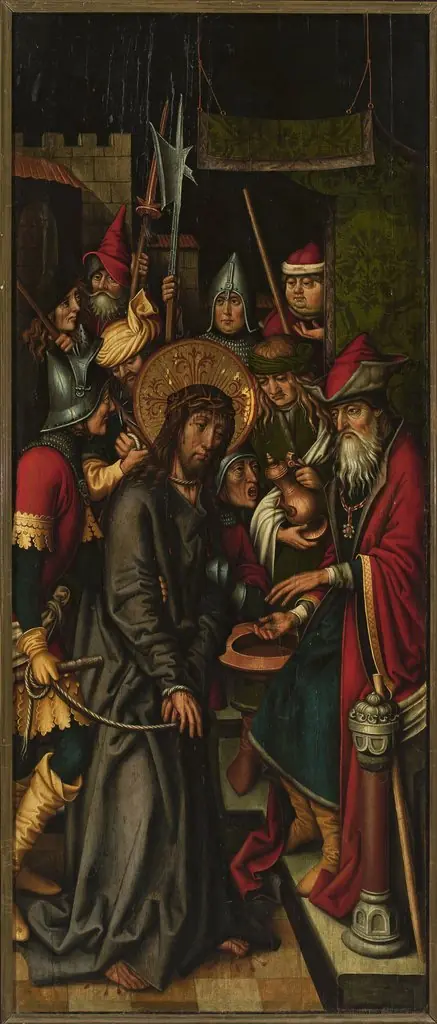 Christ before Pilate
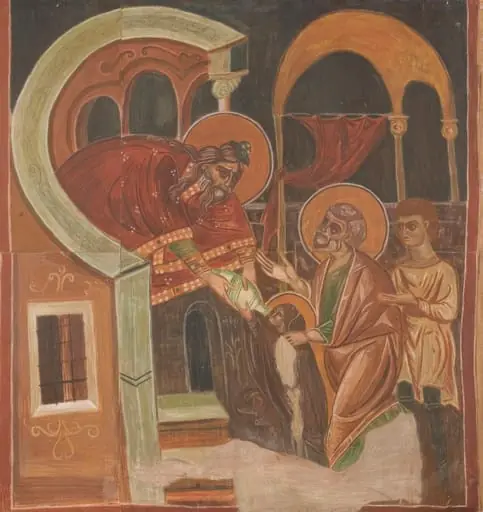 The control water
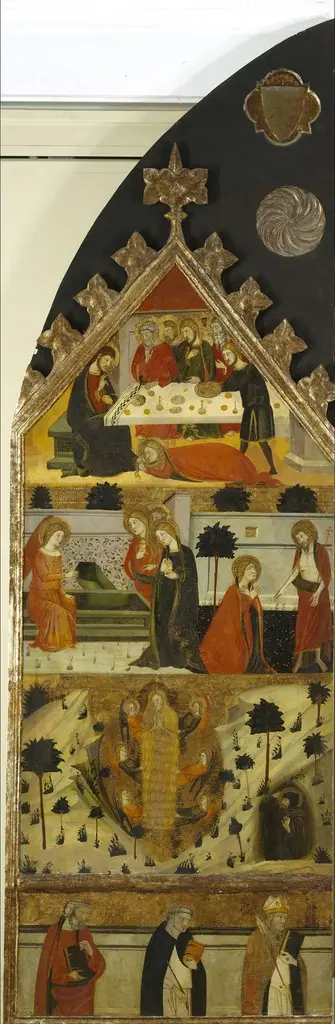 Episodes from the Lives of Mary Magdalen and Saint John the Baptist