Artwork
Los amantes de Teruel
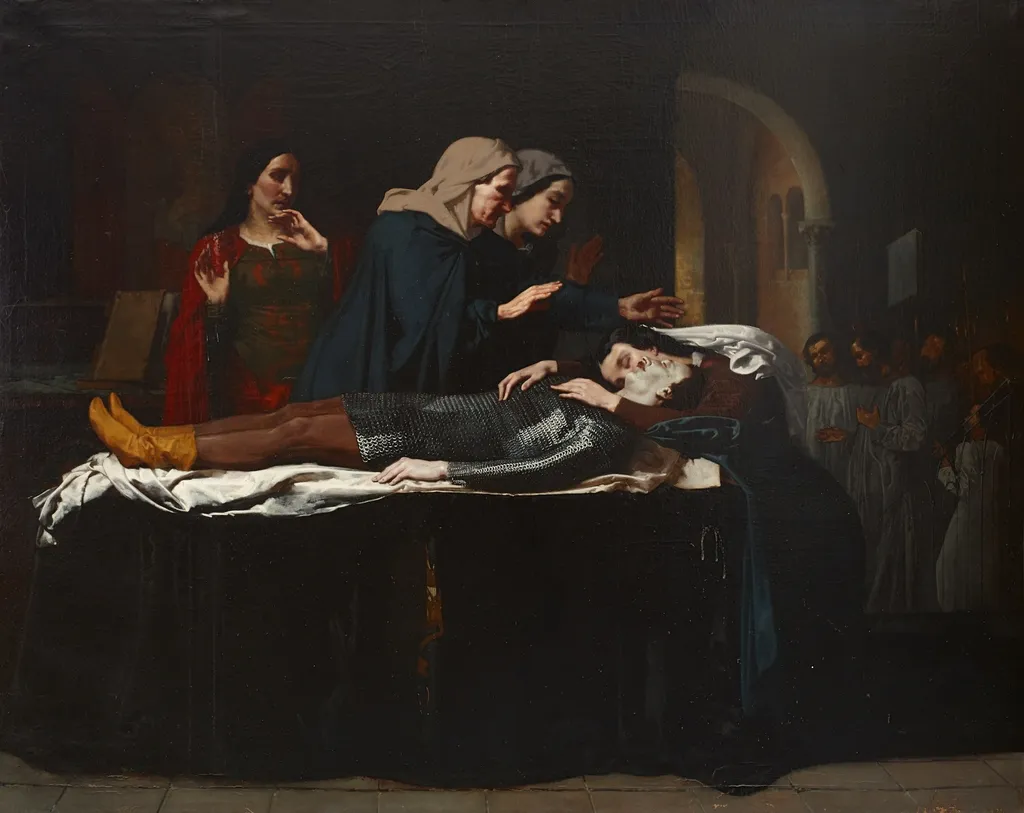
Los amantes de Teruel is an oil painting by the Realist artist Juan García Martínez. It dates from 1857 and is held in the collection of the Museo del Prado.
About this work
Overview
The background is rendered in deep, dark tones, with indistinct figures visible in the shadows, creating a somber atmosphere that isolates the central tragedy.
Painted in 1857 by the Spanish artist Juan García Martínez, Los amantes de Teruel depicts the tragic conclusion of the medieval legend of Diego and Inés. The composition centers on the corpse of Diego, clad in armor and a dark tunic, lying supine on a table draped with white cloth. His right arm rests across his chest, and his head is supported by a white pillow, emphasizing his death. Surrounding the body are three women engaged in mourning; one stands with hands raised in a gesture of prayer or grief, while others observe the scene. The background is rendered in deep, dark tones, with indistinct figures visible in the shadows, creating a somber atmosphere that isolates the central tragedy. This work reflects the Romantic fascination with historical narratives and fatal love stories prevalent in mid-19th-century Spanish art. García Martínez, active during a period of renewed interest in national history and folklore, utilized the dramatic lighting and emotional intensity characteristic of the era to visualize the moment of discovery of the lovers' bodies, a pivotal scene in the legend that has inspired numerous artistic interpretations.
Subject & Meaning
The work evokes a narrative drawn from the medieval legend of the Lovers of Teruel, portraying the tragic aftermath of a knight’s death. The presence of mournful women and the solemn pose of the armored man suggest themes of loss, fidelity, and the intertwining of love and honor that characterize the tale.
Technique & Style
Martínez employs pronounced chiaroscuro, contrasting illuminated figures with a tenebrous background to heighten emotional intensity. The rendering of armor and fabric displays meticulous attention to texture, while the soft modeling of the women’s drapery balances the rigidity of the knight’s gear, creating a dynamic visual tension.
History & Provenance
Completed in 1857, the painting entered the collection of Spain’s national museum, the Museo del Prado, where it remains on display. Its acquisition reflects the 19th‑century interest in historic and literary subjects, aligning the work with contemporary Spanish artistic currents.
Own this work as a print
Artist & collection

 Muerte de Cristóbal Colón
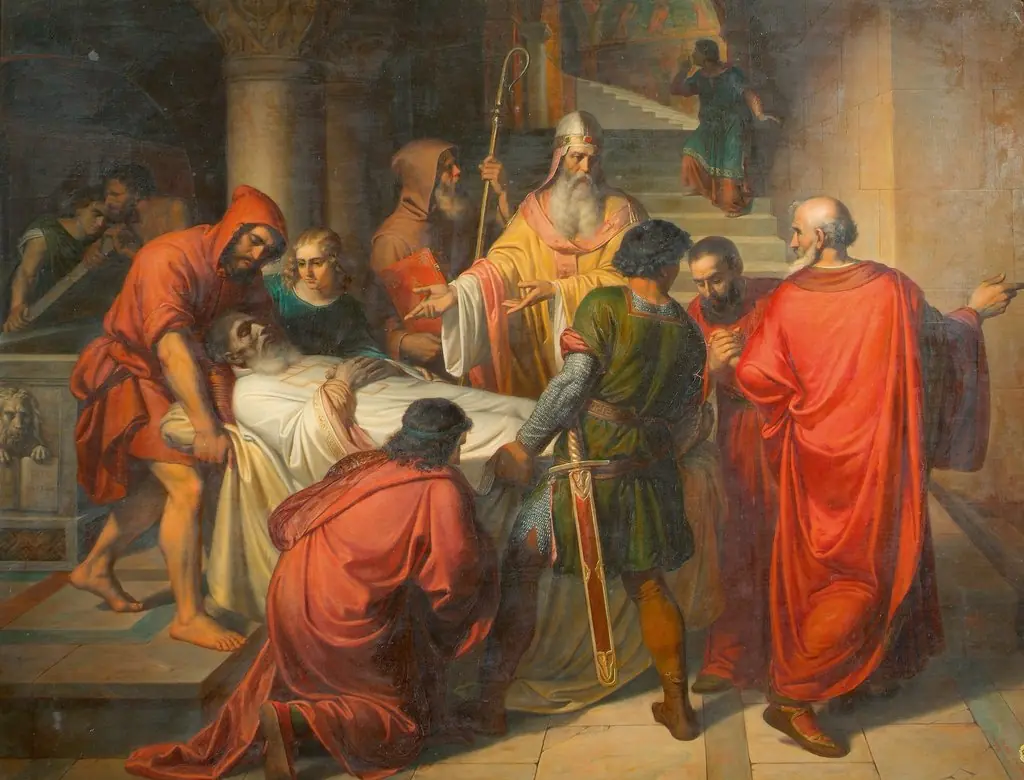 Übergabe des Leichnams des heiligen Markus in Alexandria an die Venezianer
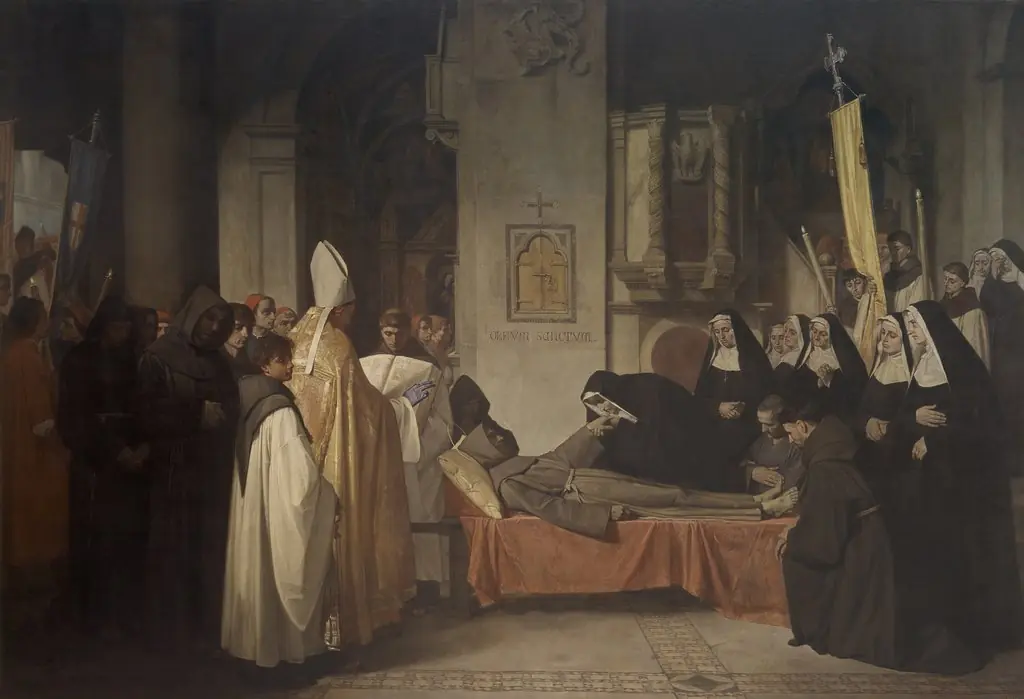 Traslación de San Francisco de Asís
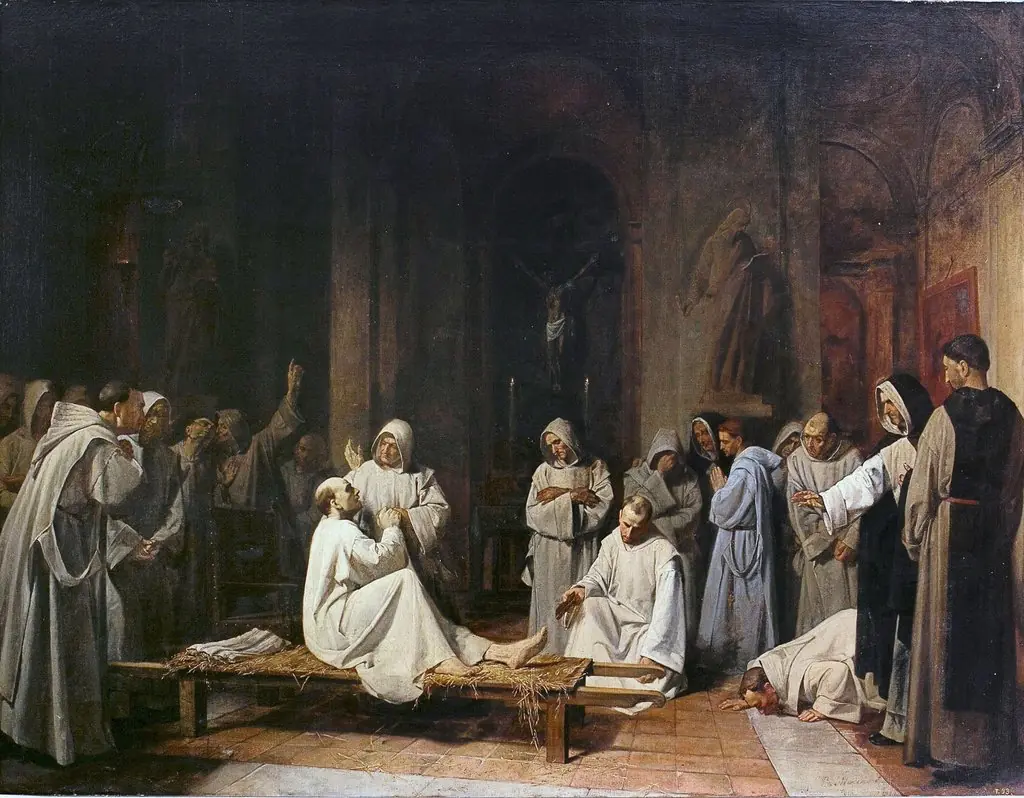 Últimos momento de Fray Charles Climaque
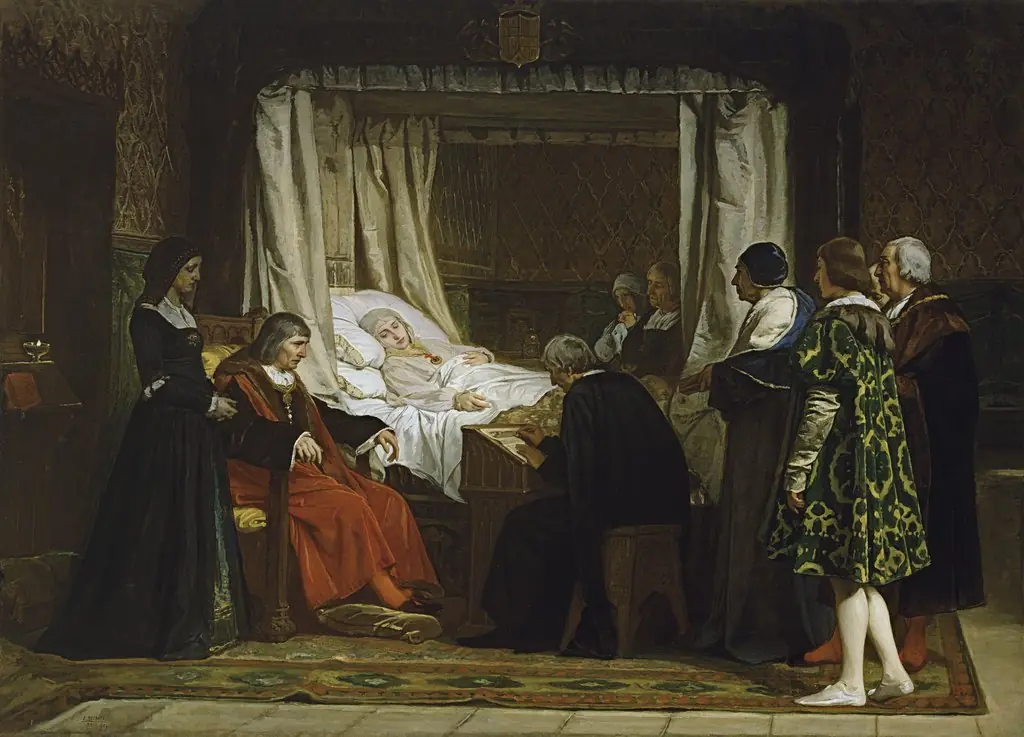 Queen Isabel la Católica dictating her last will and testament
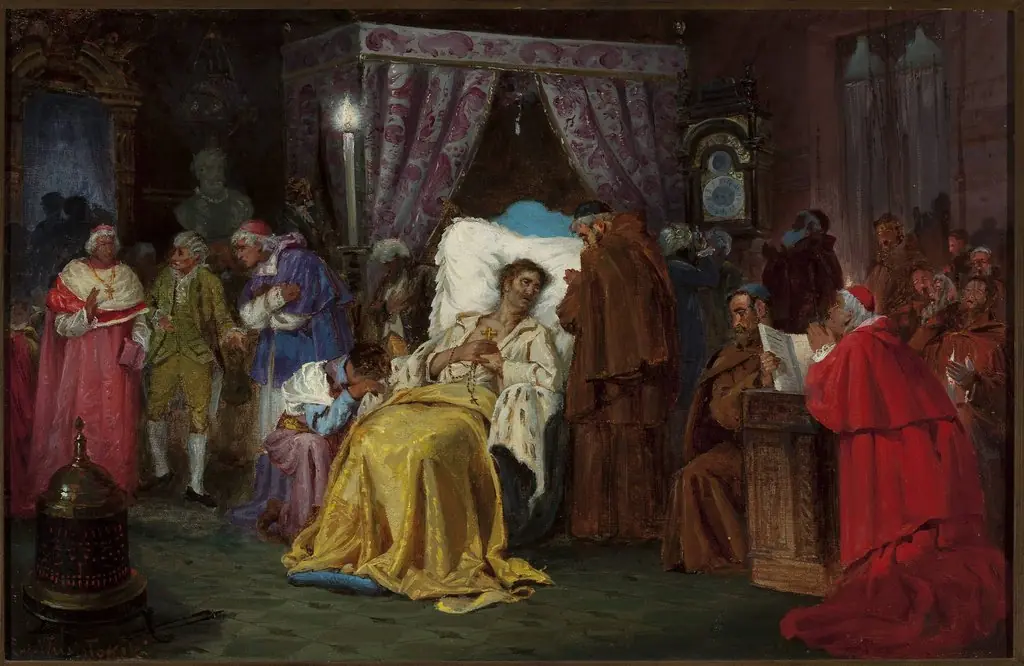 Aleksander Sobieski on his deathbed in Rome in 1714
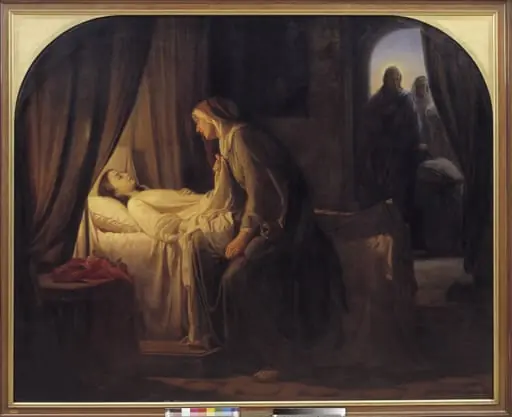 The Daughter of Jairius
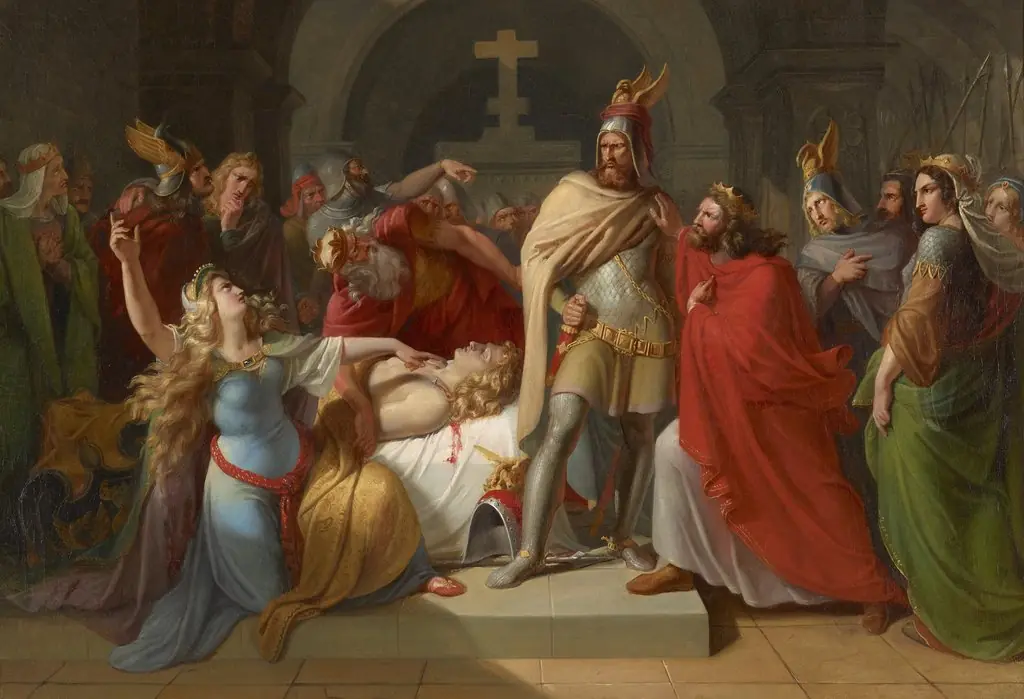 Kriemhild an der Leiche Siegfrieds erklärt Hagen als dessen Mörder und schwört Rache
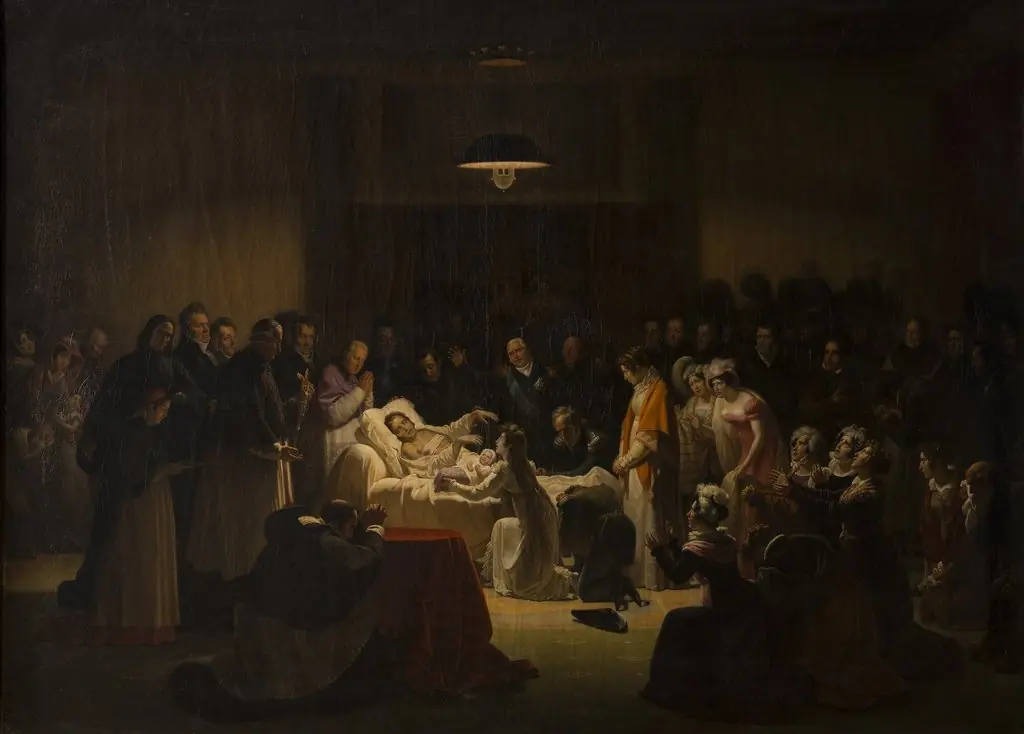 The Death of the Duke of Berry
 Last Tribute to the Counts of Egmont and of Horn
 Felipe III de Francia moribundo bendiciendo a sus hijos
 Guzmán el Bueno