Artwork
Manifestación del rey don Enrique IV de Castilla al pueblo segoviano
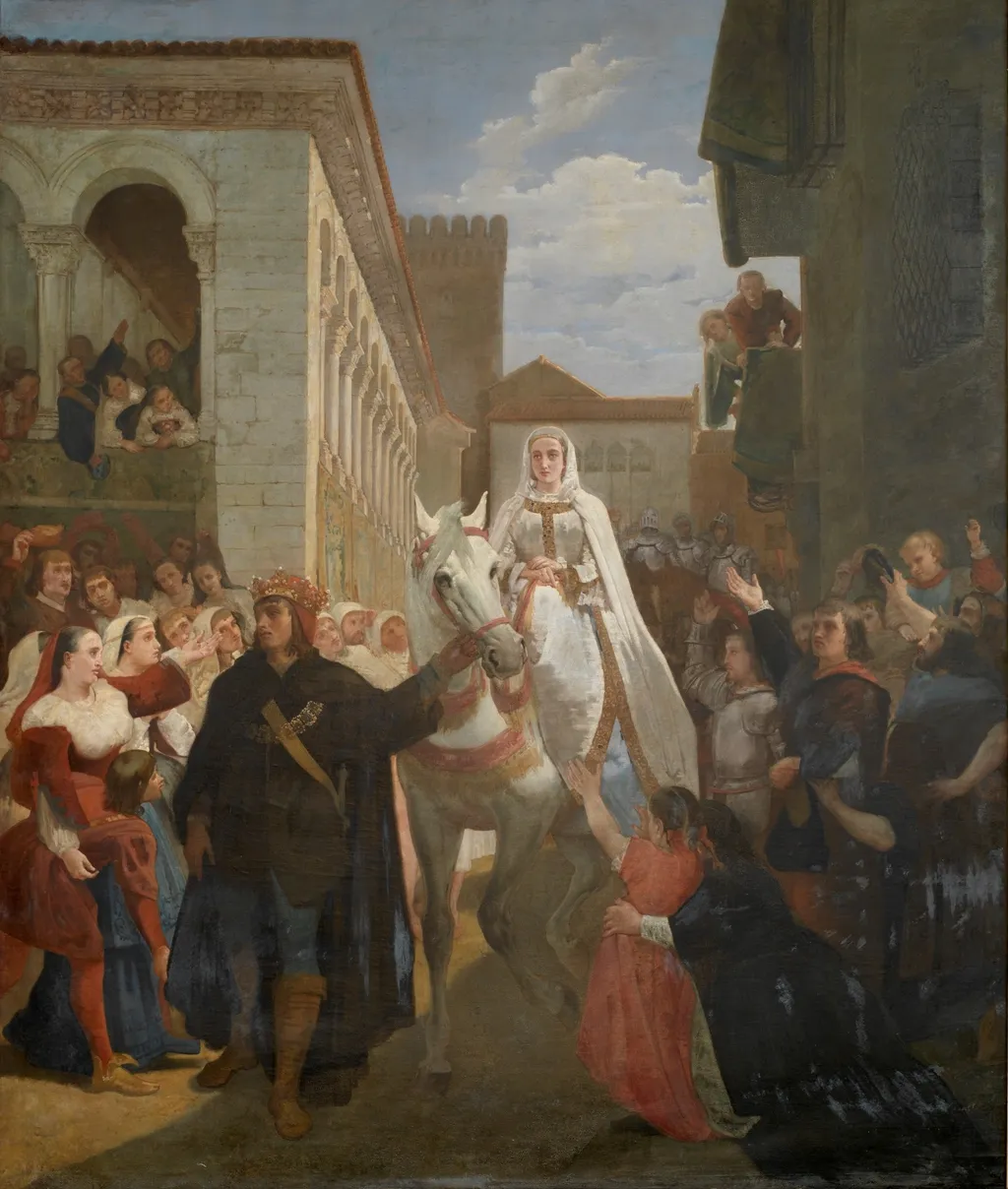
Manifestación del rey don Enrique IV de Castilla al pueblo segoviano is an oil painting by the Realist artist Juan García Martínez. It dates from 1862 and is held in the collection of the Museo del Prado.
About this work
Overview
Commissioned during a period of renewed interest in Spain’s medieval past, the painting was acquired by the Museo del Prado shortly after completion.
Painted in 1862 by Juan García Martínez, this oil work portrays a ceremonial moment involving a royal figure in Segovia. Commissioned during a period of renewed interest in Spain’s medieval past, the painting was acquired by the Museo del Prado shortly after completion. Its composition centers on a solitary woman on horseback, surrounded by an attentive crowd, rendered with careful attention to costume, gesture, and architectural detail.
Subject & Meaning
The figure is intended to represent Queen Eleanor of Castile, wife of King Henry IV, though her identity is not explicitly documented. Her white garments and veil suggest purity or penitence, while the crowd’s reach toward her implies reverence or supplication. The scene evokes a public appearance meant to reinforce royal authority, possibly referencing a historical moment of political outreach during a time of dynastic instability.
Technique & Style
Martínez employed precise brushwork to distinguish textures: the sheen of silk, the metallic glint of harnesses, and the roughness of stone architecture. The palette is rich but restrained, with white and gold dominating the central figure against muted earth tones in the background. Lighting is even, avoiding dramatic contrasts, which supports the painting’s documentary tone rather than emotional intensity.
History & Provenance
Commissioned in the mid-19th century as part of a state initiative to visually reclaim Spain’s medieval heritage, the painting entered the Prado’s collection in 1862. It was not exhibited widely until the 20th century, when interest in academic history painting revived. Its provenance remains unbroken since acquisition, with no record of private ownership after its initial presentation.
Context
Created during a wave of historicist art in Spain, the work reflects efforts by the Isabella II regime to legitimize monarchy through visual references to earlier dynasties. Similar paintings of medieval rulers were commissioned for public buildings, aligning art with national identity projects. Martínez’s choice of Segovia—a city with strong royal associations—reinforced this symbolic linkage.
Legacy
Though not widely reproduced, the painting remains a key example of 19th-century Spanish academic history painting. It contributes to the visual archive of how Spain’s past was reconstructed during the Restoration era. Scholars reference it in studies of royal iconography and the use of art in political narrative, though it has never entered popular cultural discourse.
Own this work as a print
Artist & collection

 Youth of Bolesław the Wry-Mouthed
 Reposición de Colón
 Der Doge Francesco Foscari schickt seinen Sohn Giacomo in die Verbannung ("I due Foscari")
 Offering to the fatherland by the Widow of Jacob van Artevelde
 Boleslaw the Brave with Svyatopolk at the Golden Gate in Kiev
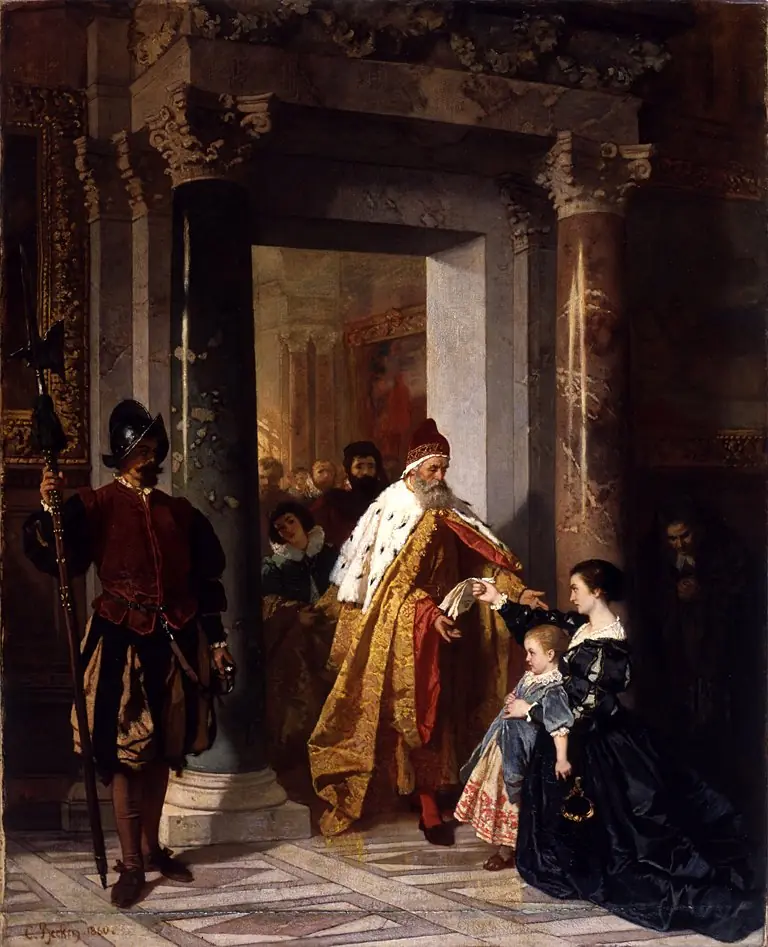 The Petition to the Doge
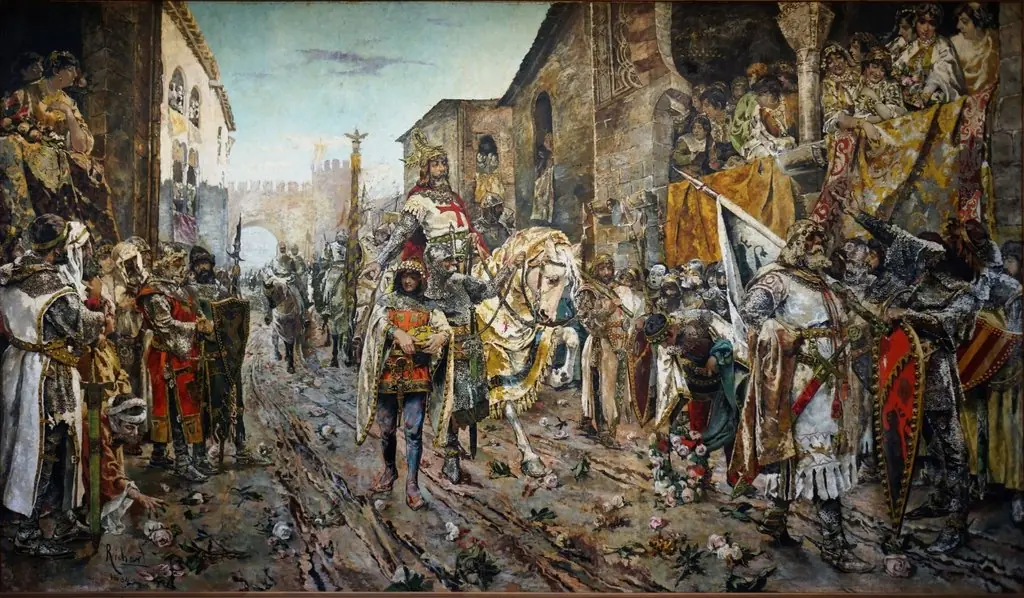 Entrada triunfal en Valencia del rey don Jaime el Conquistador (año 1238)
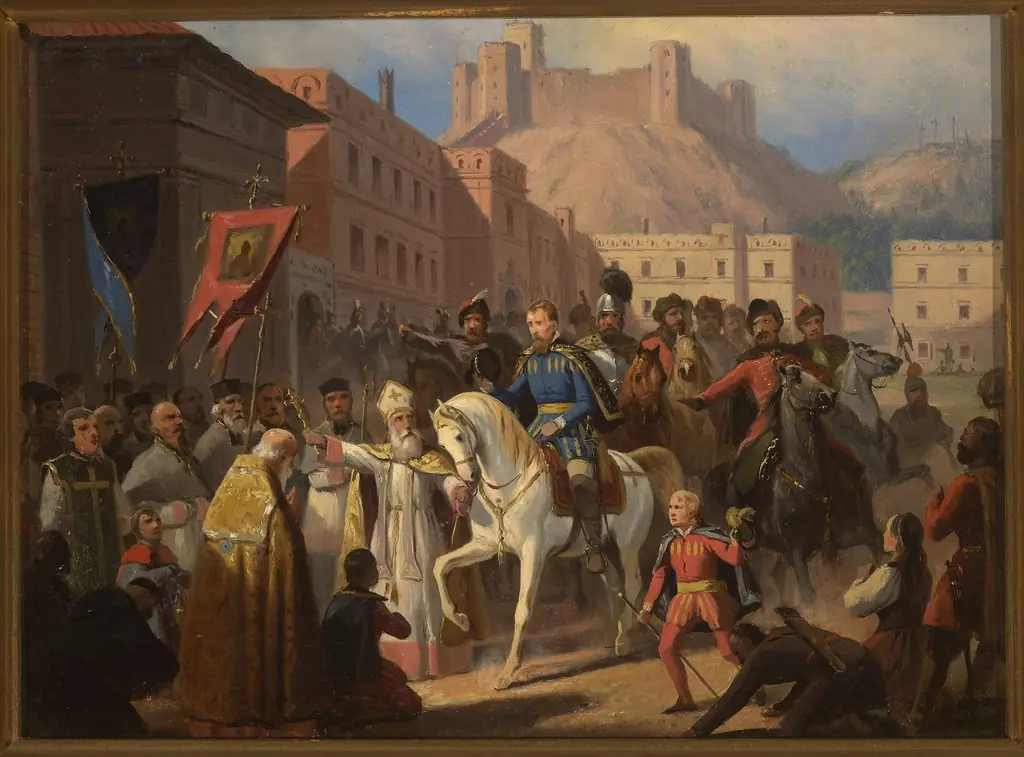 Hosius, bishop of Vilnius, and Sigismund Augustus
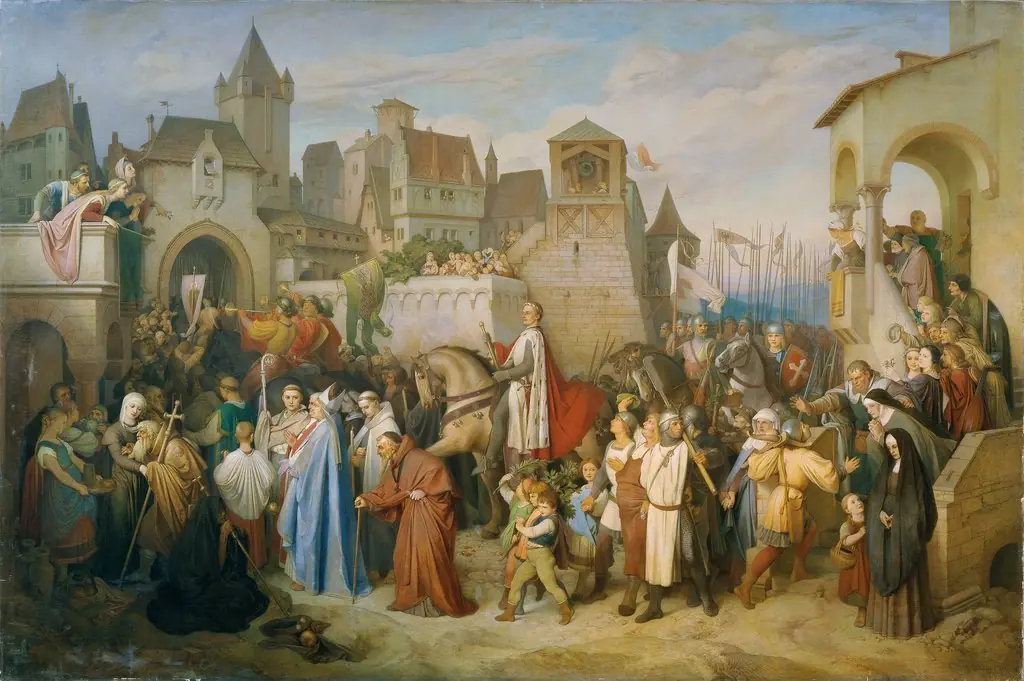 Herzog Leopolds des Glorreichen Einzug in Wien nach dem Kreuzzug von 1219
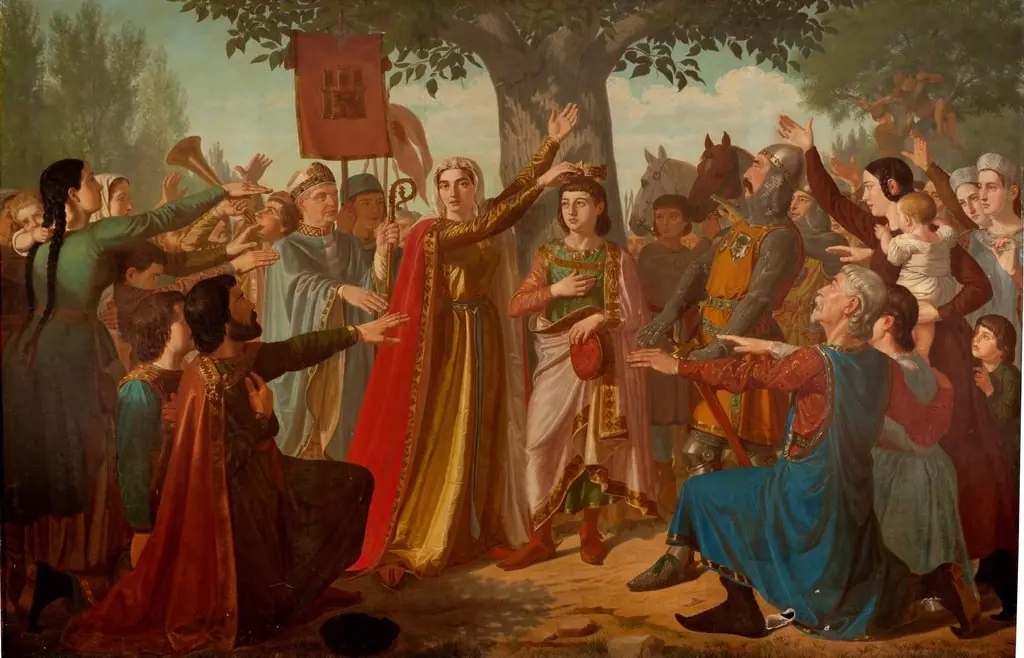 Doña Berenguela coronando a su hijo don Fernando
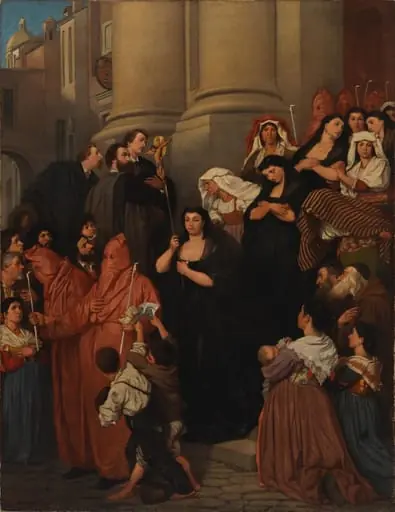 Juhlakulkue Roomassa
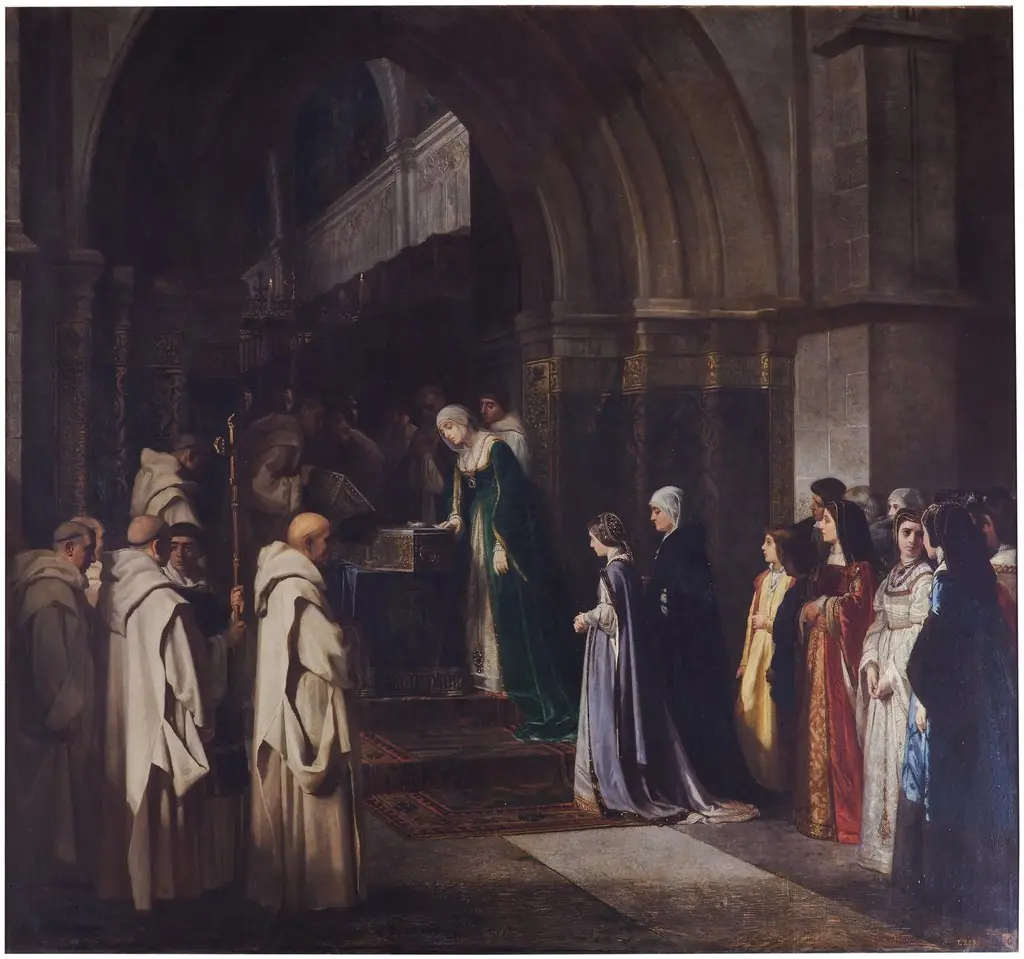 Doña Isabel la Católica en la cartuja de Miraflores