Artwork
The passage of the Jordan River with the Ark of the Covenant
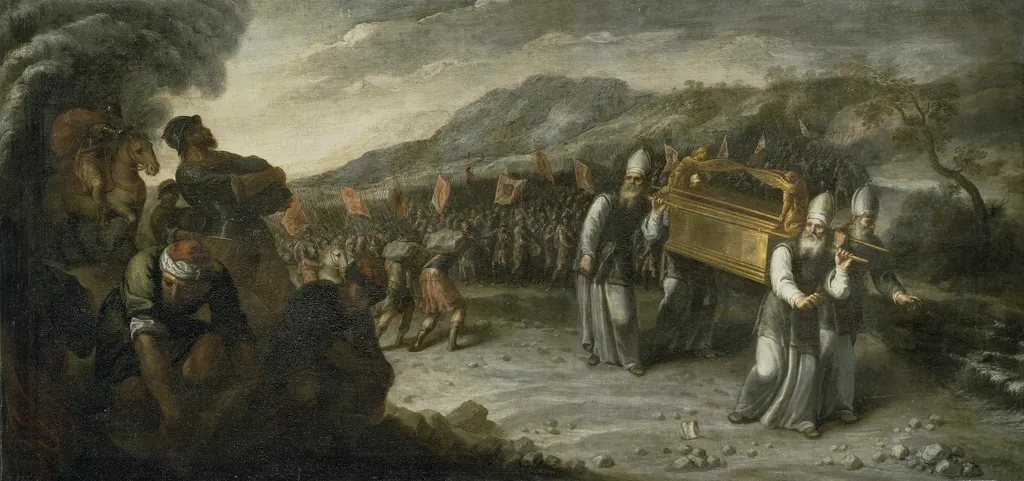
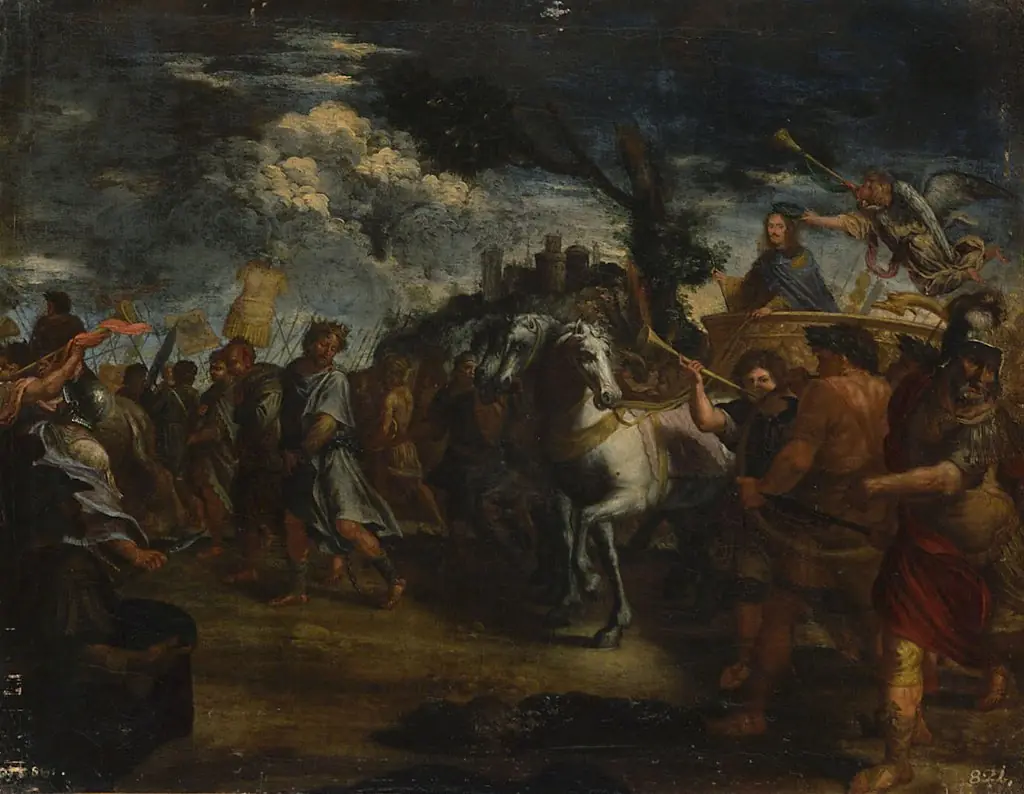
The passage of the Jordan River with the Ark of the Covenant is an oil painting by the Early Baroque Italian artist Juan Montero de Rojas. It dates from 1667 and is held in the collection of the Museo del Prado.
About this work
Overview
Juan Montero de Rojas painted The Passage of the Jordan River with the Ark of the Covenant in oil in 1667. The work, now in the Museo del Prado, portrays a biblical procession as the sacred chest is carried across a rocky riverbank under a storm‑laden sky. Soldiers and flags appear in the distance, while two robed figures lead the group, one playing a flute.
Subject & Meaning
The central object is the golden chest traditionally identified as the Ark of the Covenant, the emblem of Israel’s covenant with God. The scene evokes the biblical episode in which the Israelites cross the Jordan River, a moment symbolising divine guidance and communal triumph. The presence of military figures and banners underscores the intertwining of religious devotion and national identity.
Technique & Style
Montero de Rojas employs a strong chiaroscuro, contrasting deep shadows on the riverbank with illuminated figures and the gleaming Ark. This play of light creates a three‑dimensional effect, guiding the viewer’s eye toward the sacred container. The composition balances dynamic movement—evident in the flute‑player’s gesture—with a still, reverent atmosphere.
History & Provenance
Completed in 1667, the painting entered the Spanish royal collection before being transferred to the Museo del Prado, where it remains on display. Documentation traces its ownership through 18th‑century inventories, confirming its attribution to Montero de Rojas and its continuous presence in state holdings.
Context
Created during Spain’s Baroque period, the work reflects contemporary interest in dramatizing biblical narratives for devotional and didactic purposes. The emphasis on light and shadow aligns with the Counter‑Reformation’s visual strategies, aiming to inspire piety through emotionally charged, realistic scenes.
Artist & collection

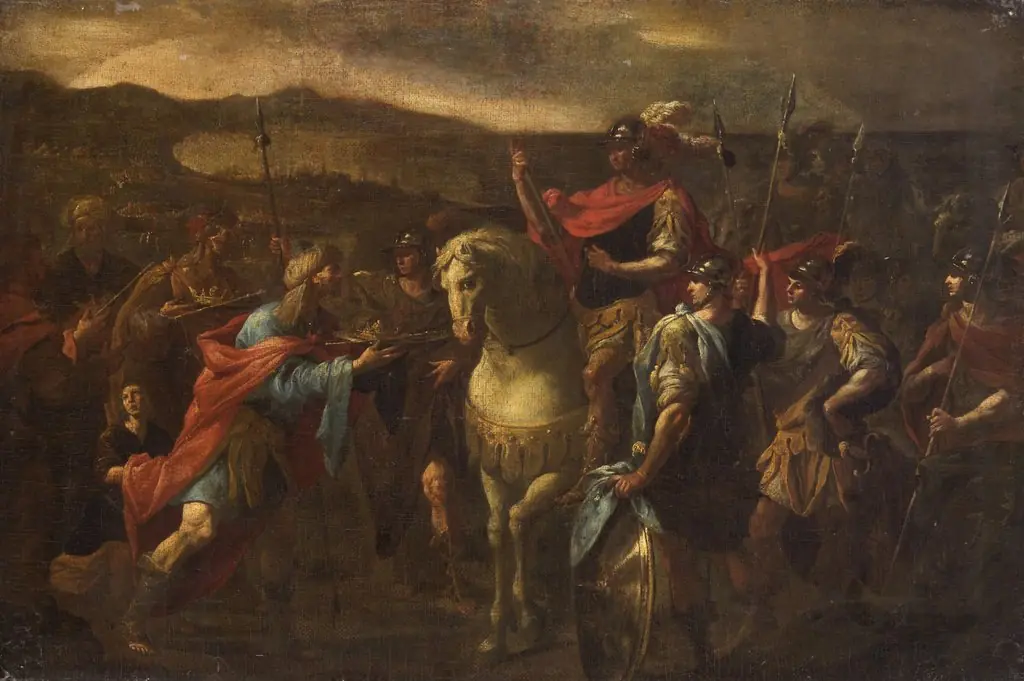 Indische Könige huldigen Alexander dem Großen
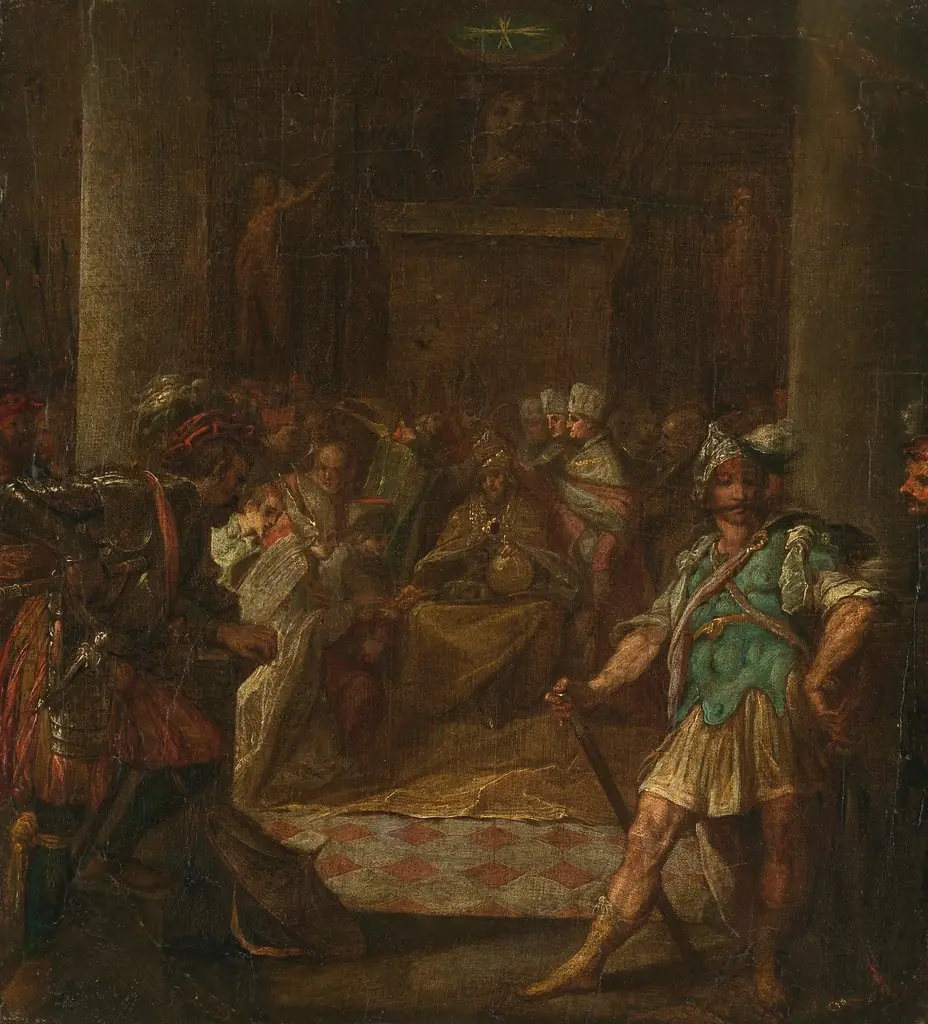 Imperial Coronation
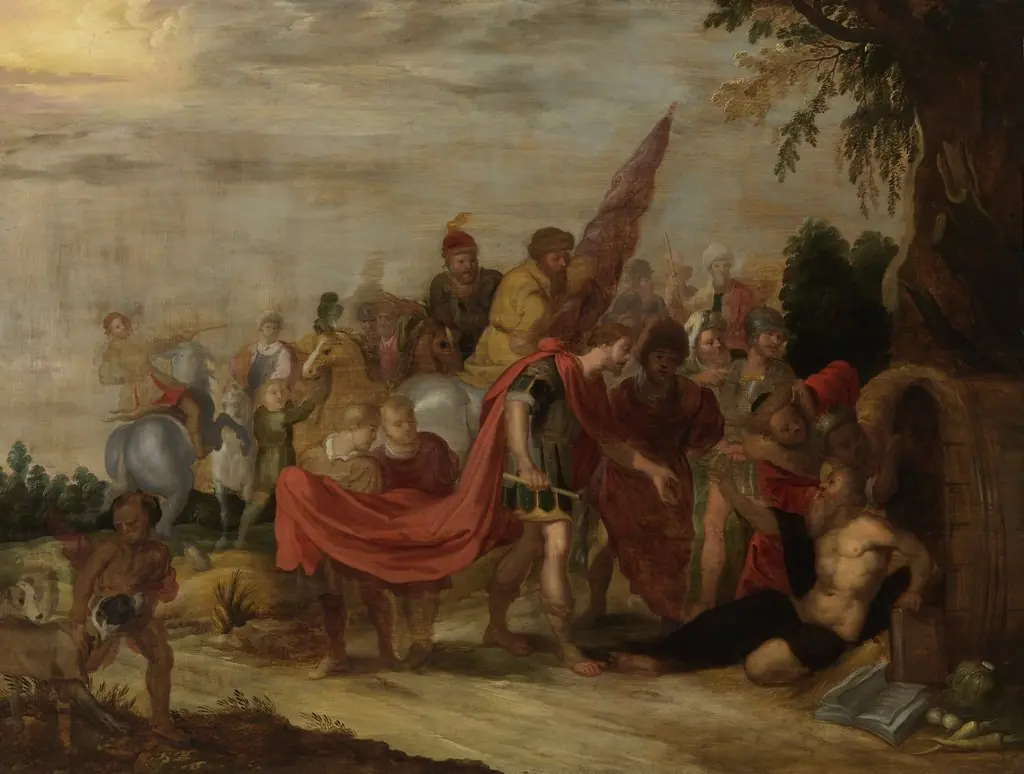 Alexander en Diogenes
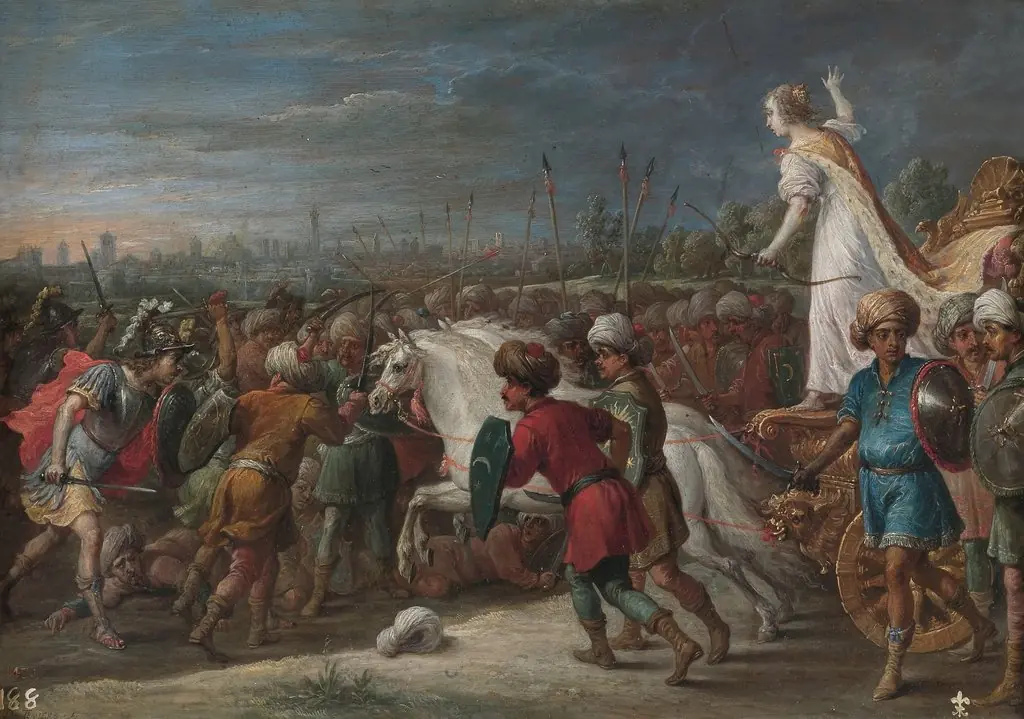 Armida en la batalla frente a los sarracenos
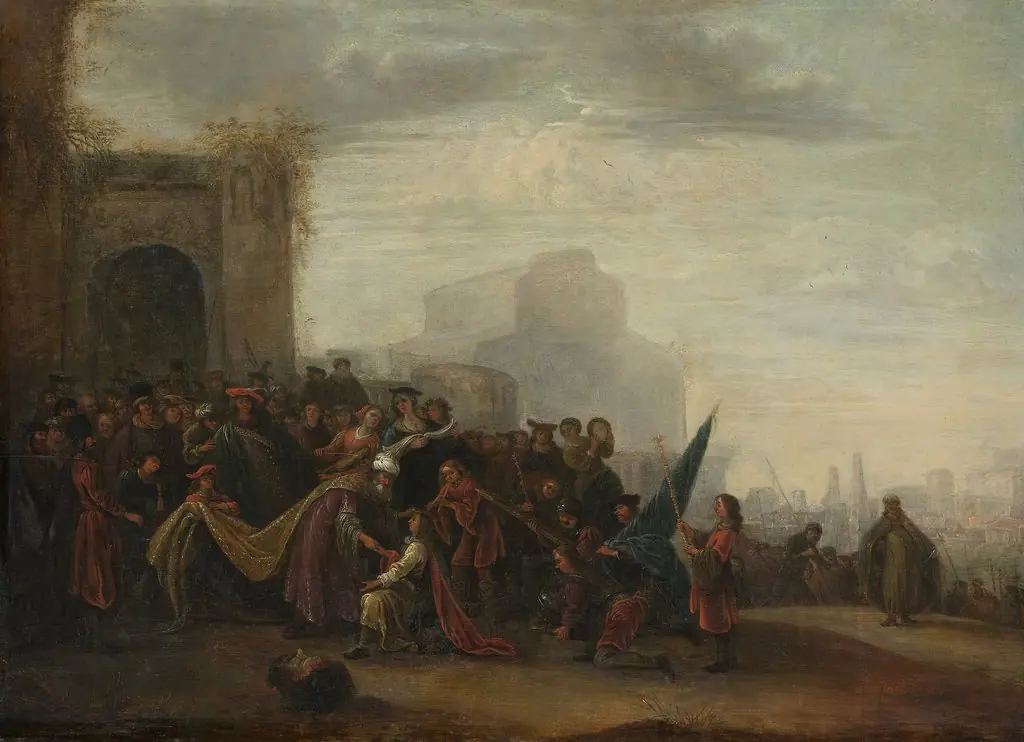 Saul honoring David after his victory over Goliath
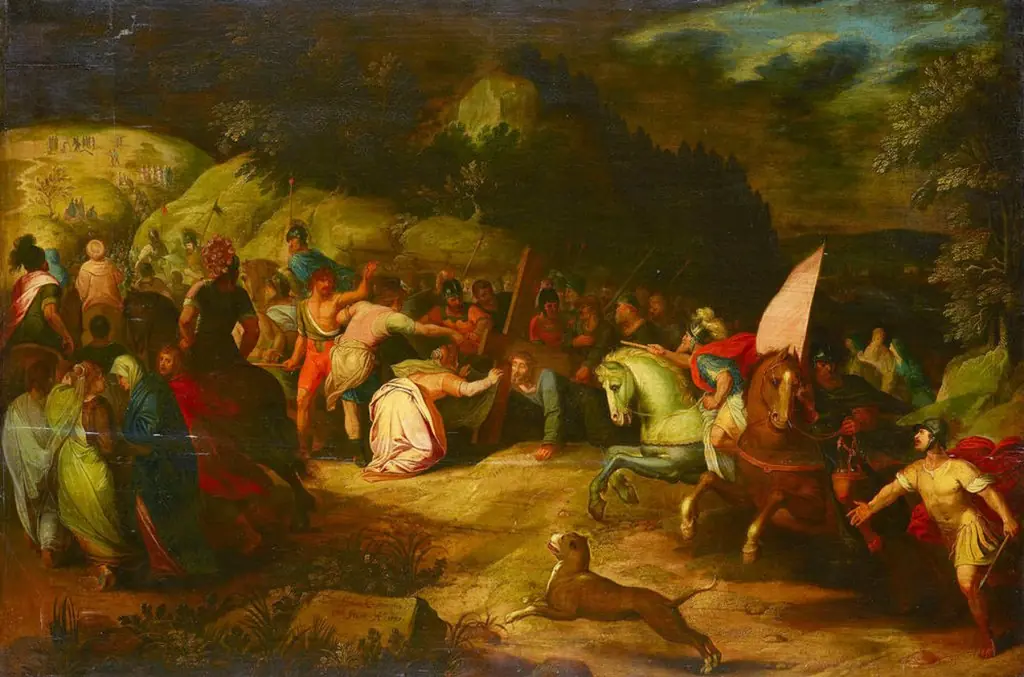 Christ collapsing under the cross on his way to Golgotha
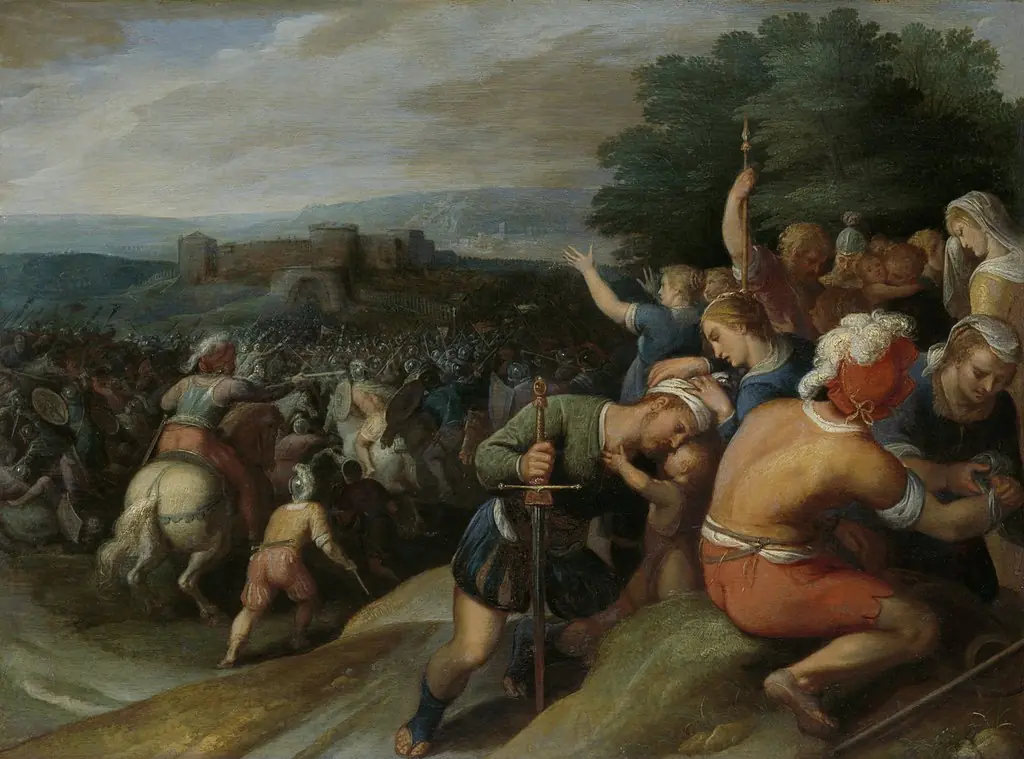 The Batavians Surround the Romans at Vetera
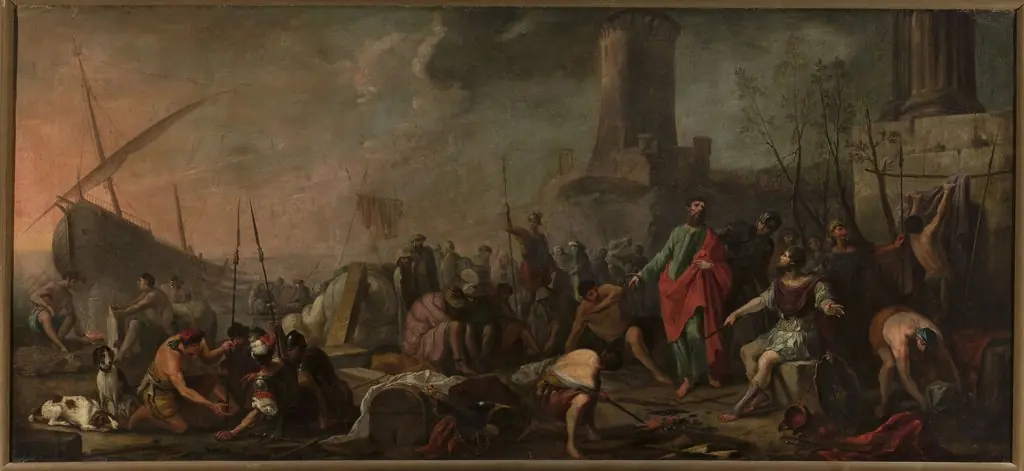 St. Paul on Malta
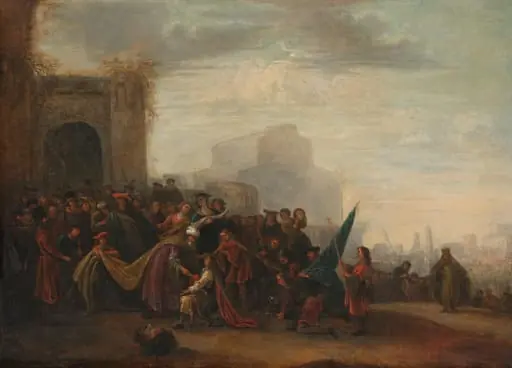 Saul Welcoming David after his Victory over Goliath
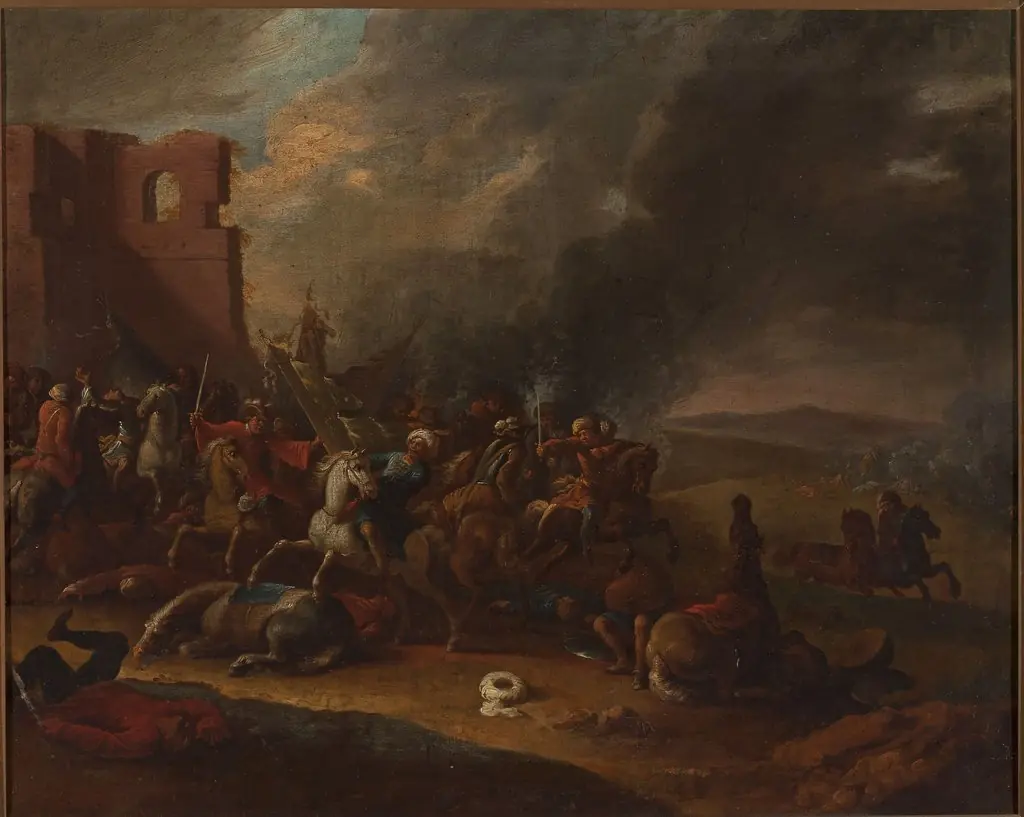 Battle with the Turks
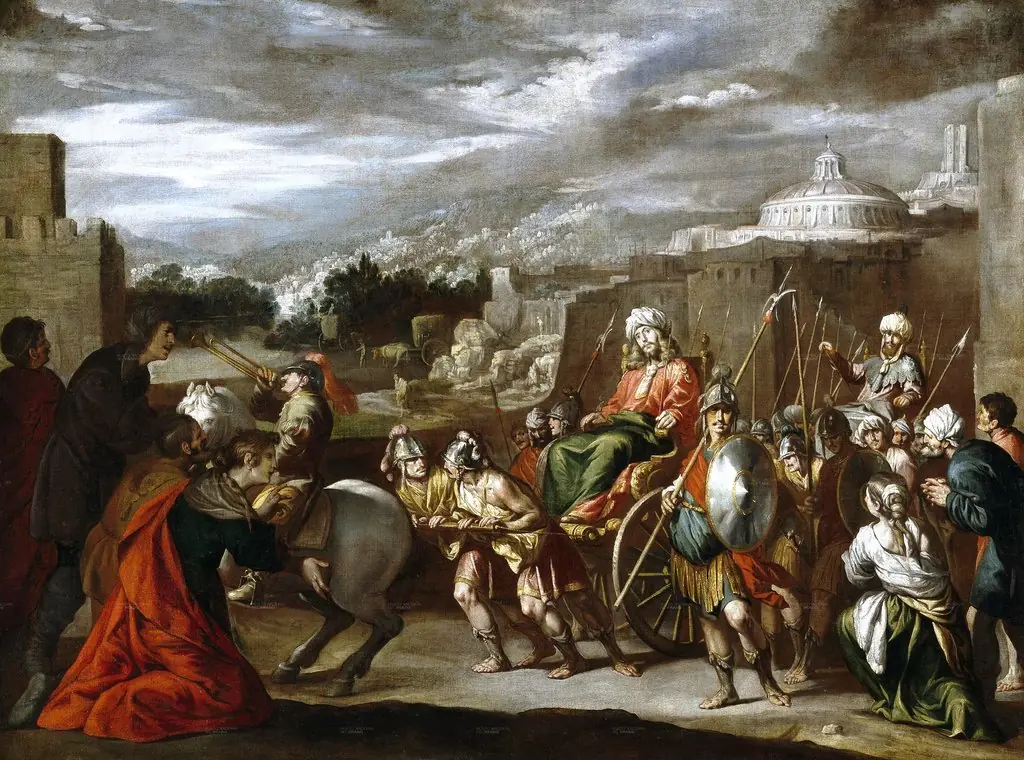 Joseph’s Triumph in Egypt
 Triumphzug des Erzherzogs Leopold Wilhelm