Artwork
The Estuary Farm
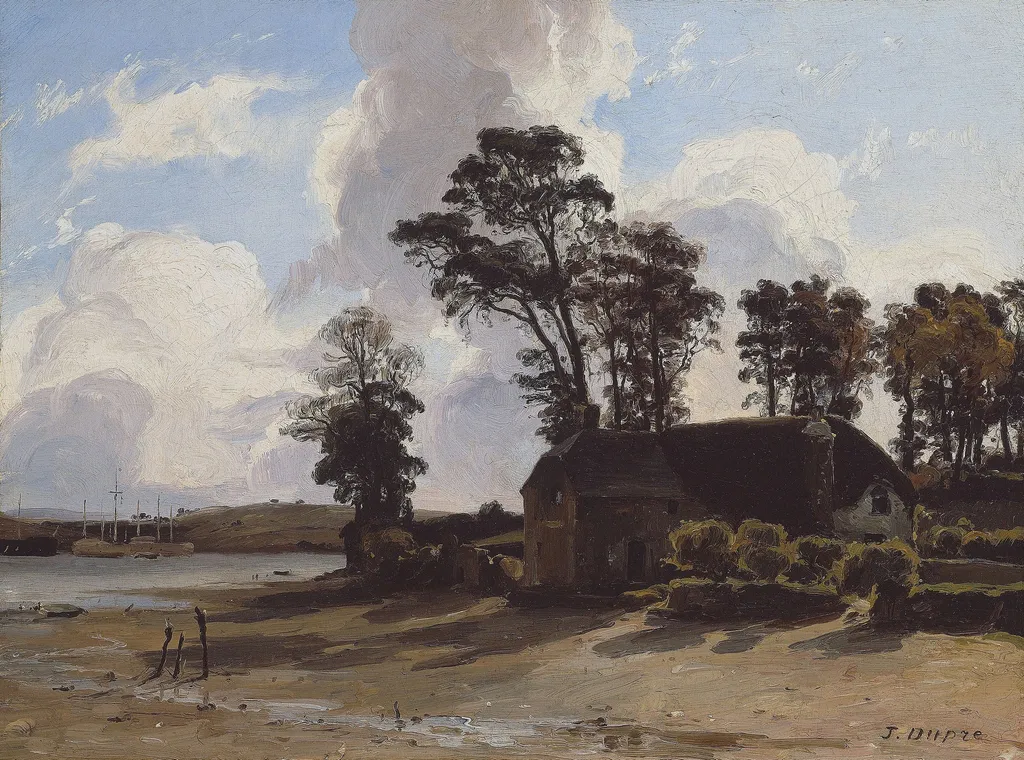
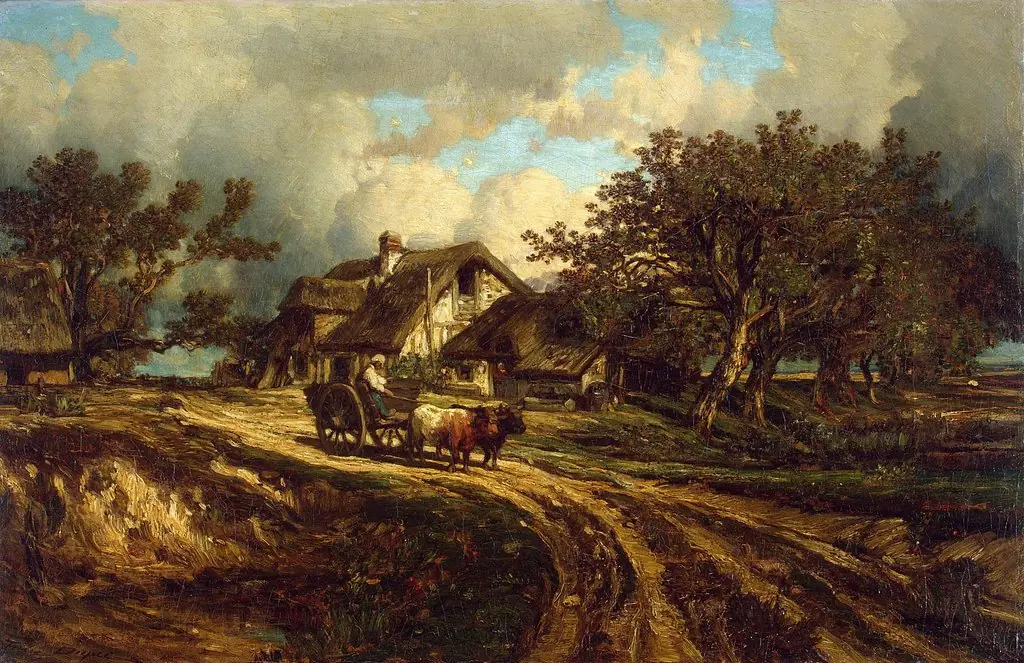
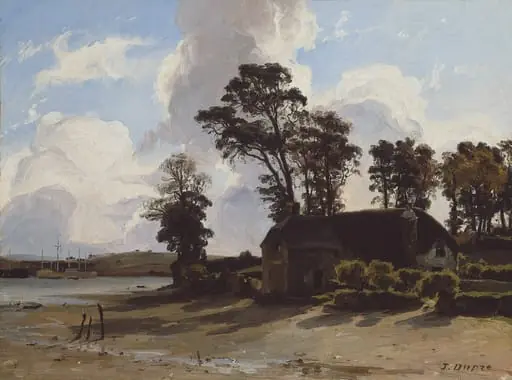
The Estuary Farm is an oil painting by the Barbizon school artist Jules Dupré. It dates from 1830 and is held in the collection of the Art Institute of Chicago.
About this work
Overview
The Estuary Farm, an oil painting created by Jules Louis Dupré in 1830, exemplifies the Barbizon school's emphasis on naturalistic rural landscapes. It depicts a serene scene of a small cottage nestled among trees, with a body of water in the background, set against a palette of earthy tones and a serene gray sky.
Subject & Meaning
The painting captures a tranquil rural moment, focusing on a brown cottage with a dark roof, situated on a hillside near a body of water. The composition conveys a sense of peacefulness, highlighting the harmony between the natural environment and human habitation.
Technique & Style
Dupré employs characteristic Barbizon techniques, blending earthy tones (browns, greens, grays) with softer grays and whites in the sky. The brushwork and color choices create a naturalistic, atmospheric effect, drawing the viewer into the serene landscape.
History & Provenance
Created in 1830 by Jules Louis Dupré (1811-1889), a prominent Barbizon school artist, The Estuary Farm is now part of the Art Institute of Chicago's collection.
Own this work as a print
Artist & collection
Artist
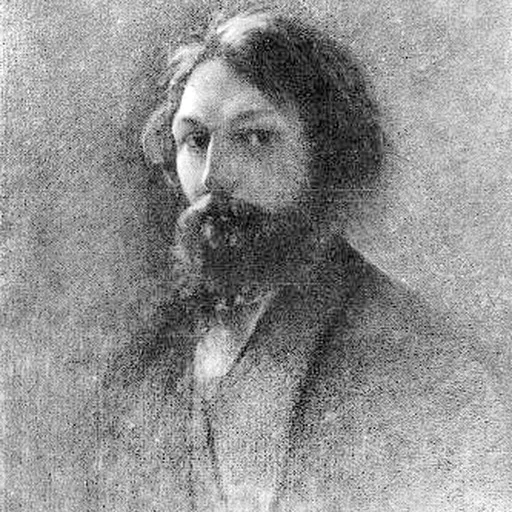
Jules Louis Dupré (French pronunciation: ; April 5, 1811 – October 6, 1889) was a French painter, one of the chief members of the Barbizon school of landscape painters.

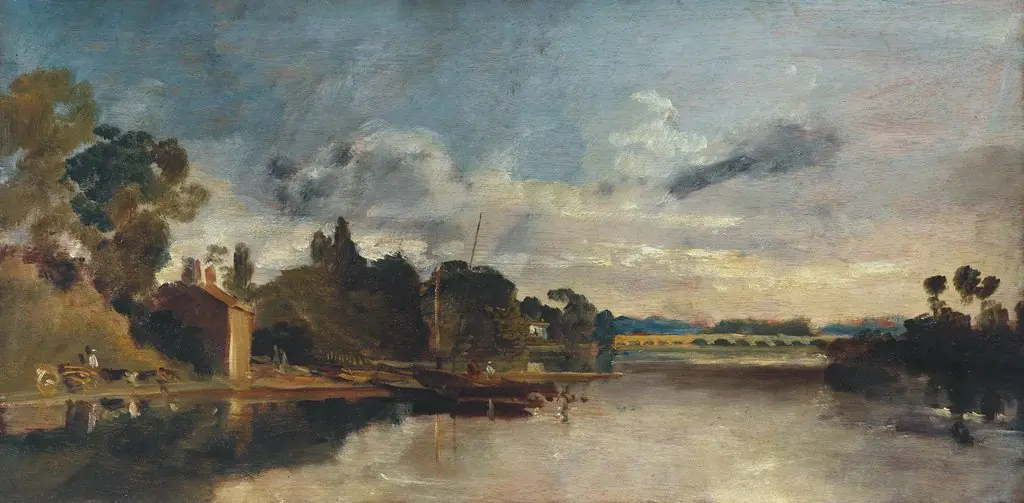 The Thames near Walton Bridges
 A Peaceful River
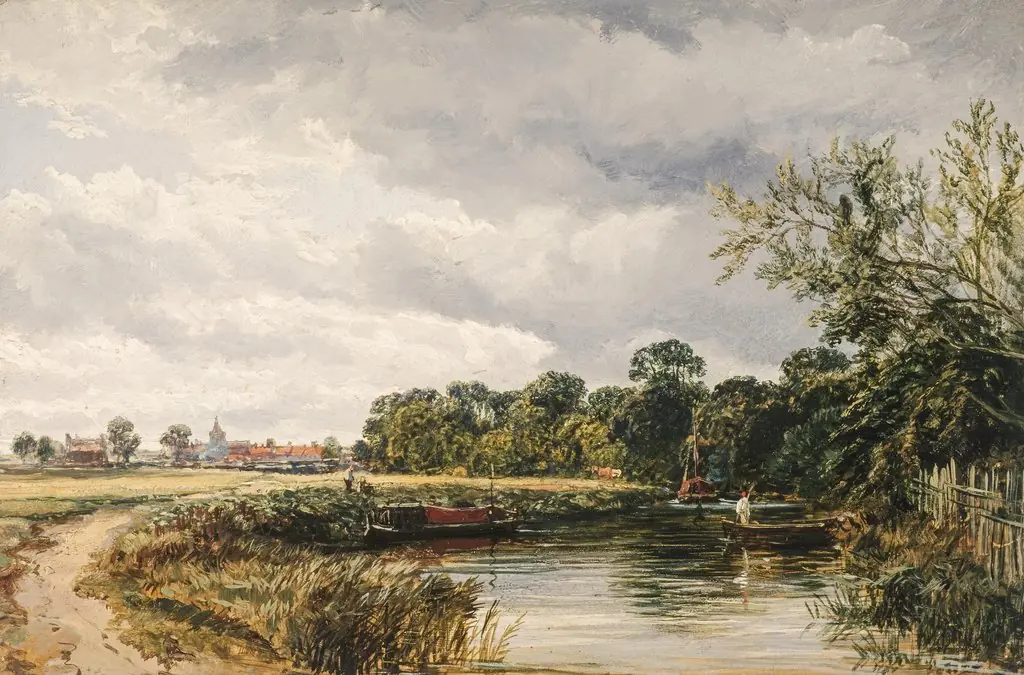 An English Canal Scene
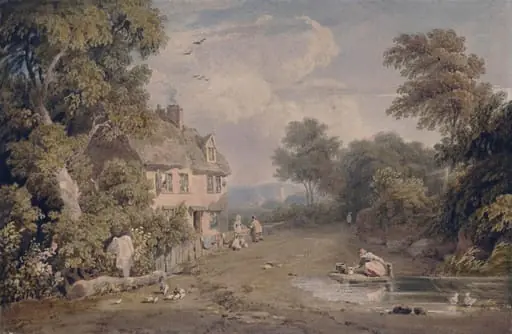 Landscape with cottage and figures
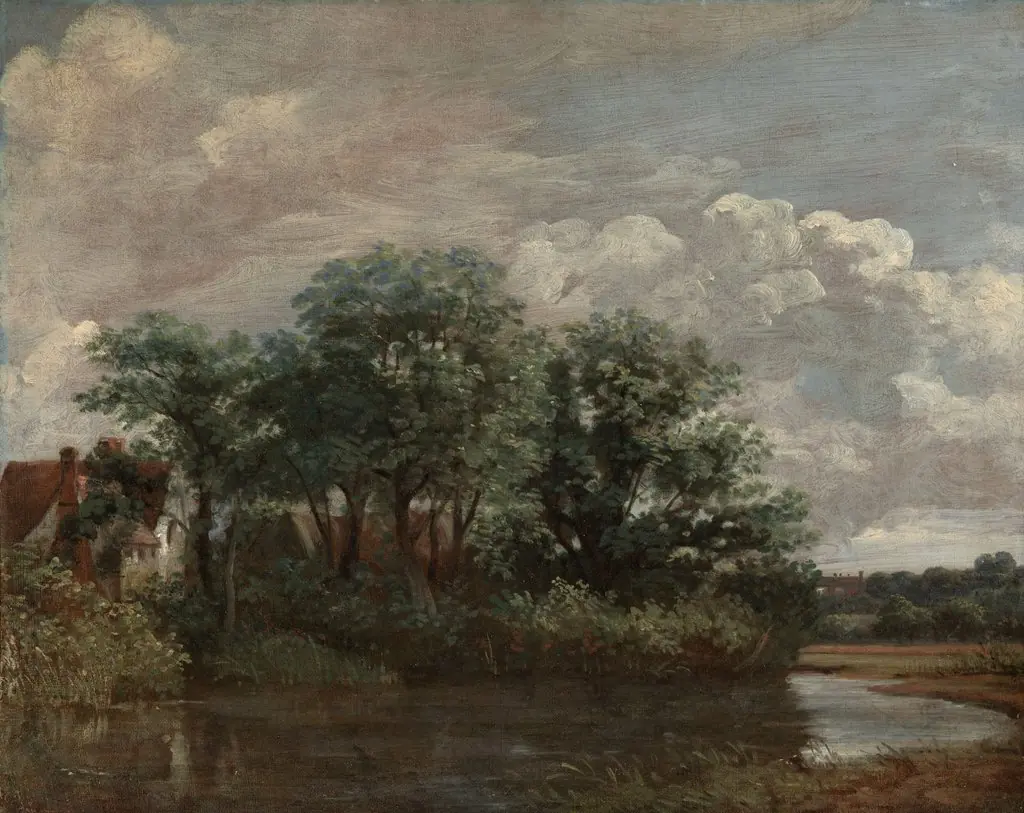 Willy Lott's House
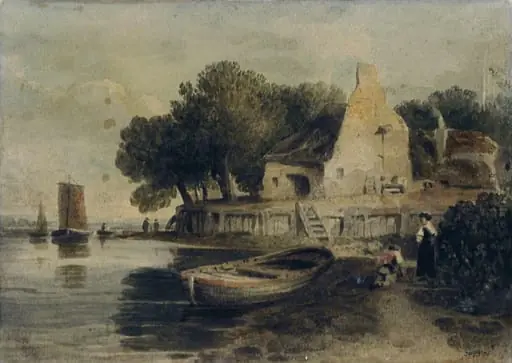 On the Thames at Millbank
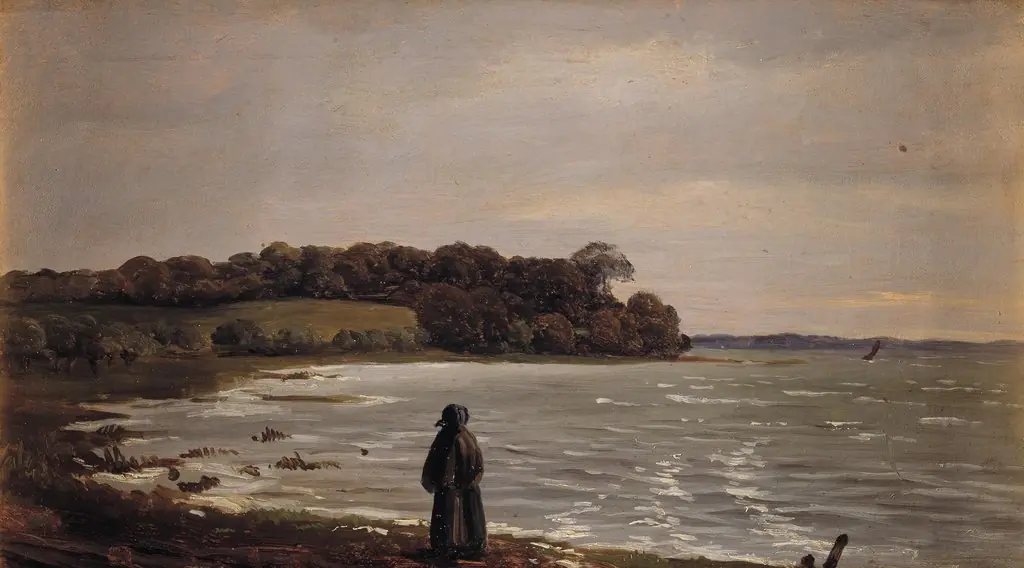 At the Præstø Fjord in the wind
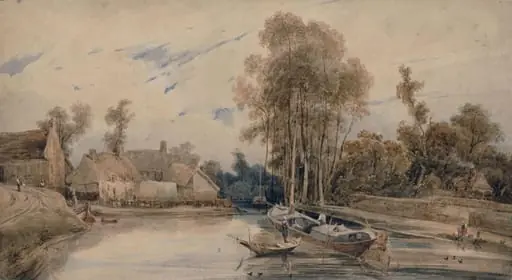 River with Barges
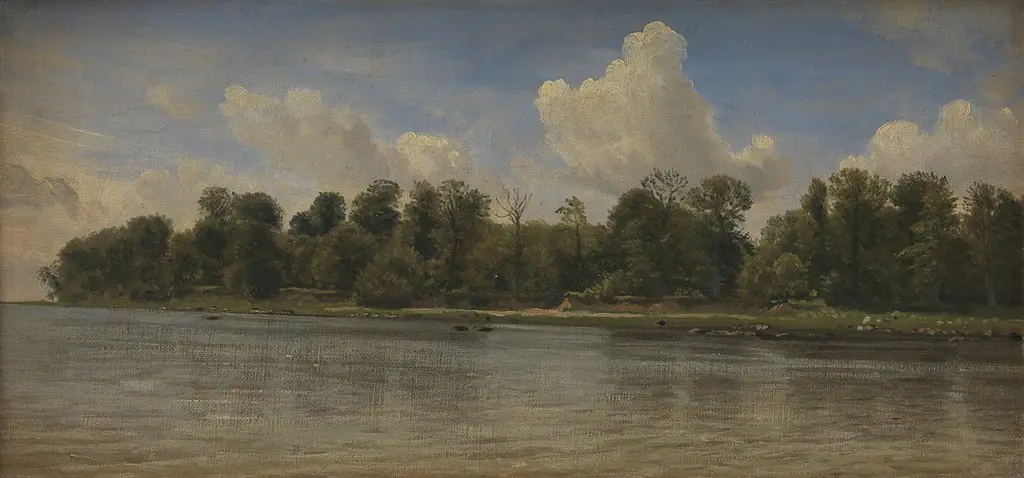 Strand ved Præstø
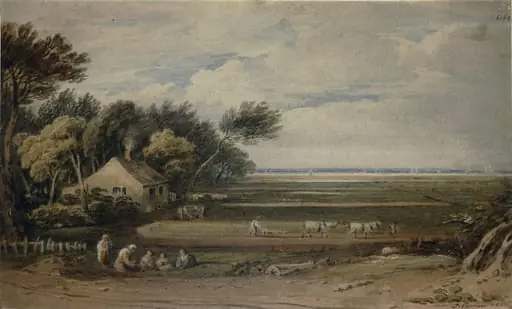 View near Woolwich
 The Bridge across Tryggevælde River with a View of Køge, Zealand
 The Estuary Farm