Artwork
Sappho
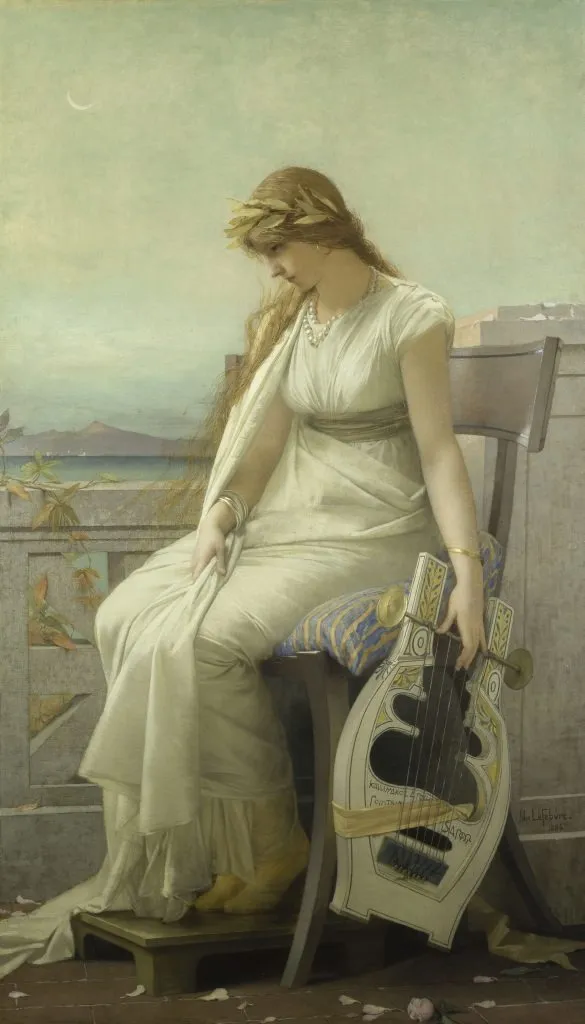
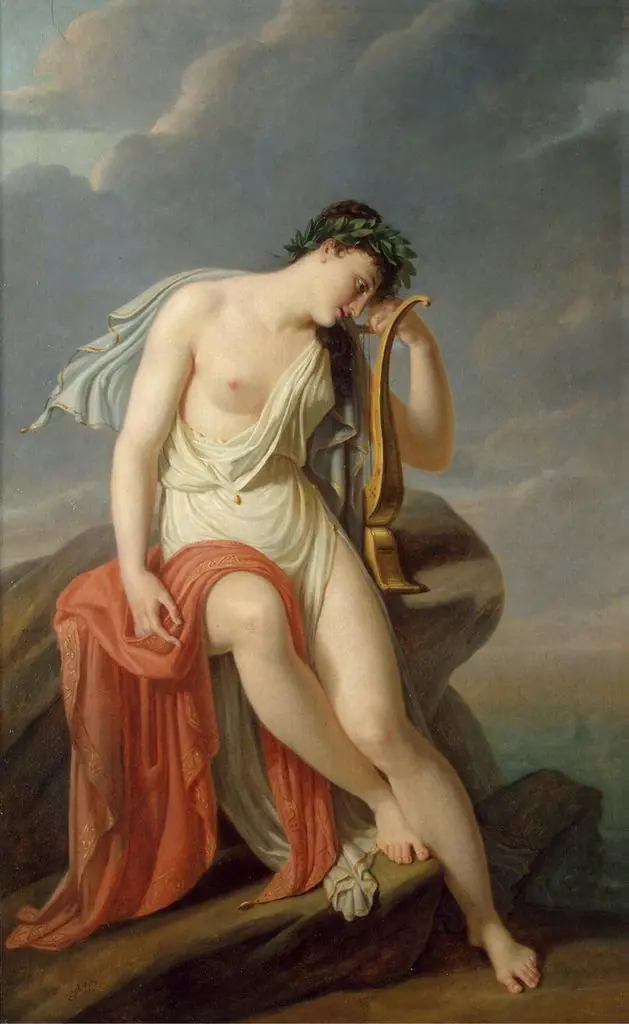
Sappho is an oil painting by the Impressionist artist Jules Lefebvre. It dates from 1892 and is held in the collection of the Montreal Museum of Fine Arts.
About this work
Overview
The composition emphasizes stillness and introspection, aligning with 19th-century academic traditions of historical and literary portraiture.
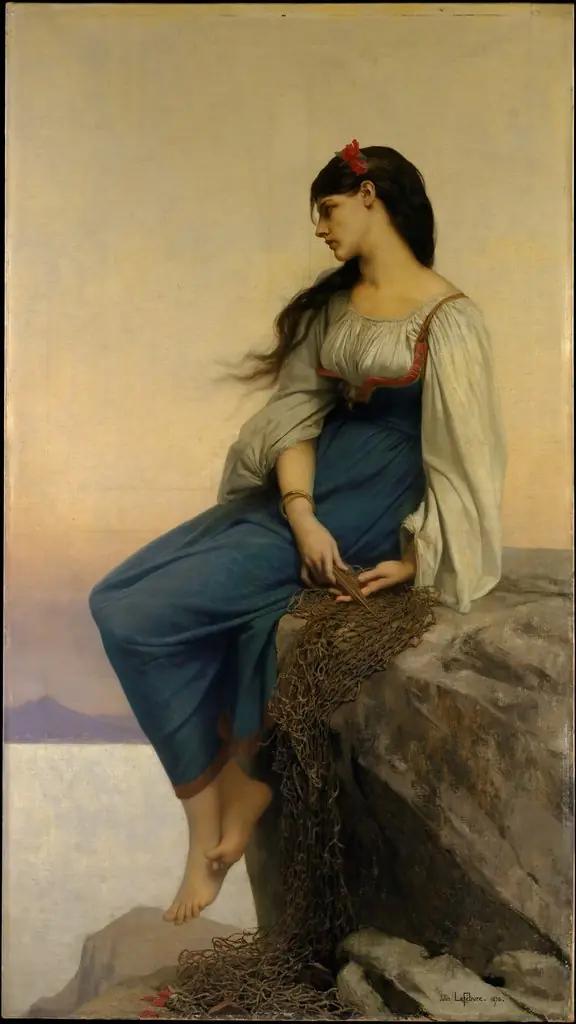
Painted in 1892 by French artist Jules Lefebvre, this oil on canvas work portrays the ancient Greek poet Sappho. The piece is part of the collection at the Montreal Museum of Fine Arts. It presents a solitary female figure in a quiet, interior setting, rendered with attention to texture and light. The composition emphasizes stillness and introspection, aligning with 19th-century academic traditions of historical and literary portraiture.
Subject & Meaning
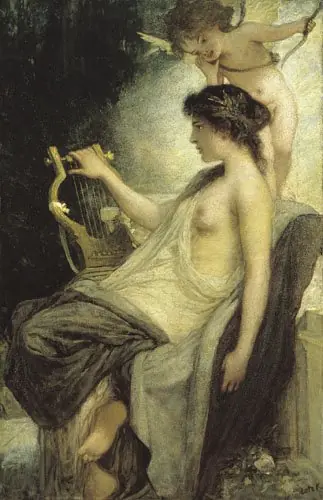
The figure is identified as Sappho, the archaic lyric poet of Lesbos, symbolized by the laurel wreath and lyre—attributes of poetic inspiration and cultural prestige. Her downward gaze and seated posture convey contemplation, evoking the inner life of the poet rather than a narrative moment. The absence of overt drama or action invites reflection on creativity and solitude, common themes in academic interpretations of classical figures during the period.
Technique & Style
Lefebvre employs smooth brushwork and careful modeling to render the woman’s white drapery and delicate features. The lighting is soft and directional, enhancing the volume of the fabric and the subtlety of skin tones. The background, minimally detailed with a distant seascape through a window, serves to isolate the figure and focus attention on her form. The lyre’s ornate carvings are rendered with precision, reinforcing the theme of artistic refinement.
History & Provenance
Completed in 1892, the painting entered the Montreal Museum of Fine Arts’ collection in the early 20th century. Its acquisition reflects the museum’s interest in European academic art during a period of expanding international holdings. No significant alterations or documented restorations are recorded, and the work has remained in stable condition since its arrival in Montreal.
Context
Lefebvre painted during a time when academic institutions favored idealized representations of classical antiquity. Sappho, though historically obscure in many details, was frequently invoked in 19th-century art as a symbol of poetic genius and feminine intellect. This work aligns with contemporaneous depictions by French artists who sought to revive ancient themes through refined technique and emotional restraint.
Legacy
The painting remains a representative example of academic portraiture in the late 19th century, valued for its technical discipline and quiet dignity. While not widely reproduced or discussed in contemporary scholarship, it continues to serve as a visual reference for how classical figures were interpreted in Western art during the era. Its presence in Montreal underscores the transatlantic circulation of academic art ideals.
Artist & collection