Artwork
Muse
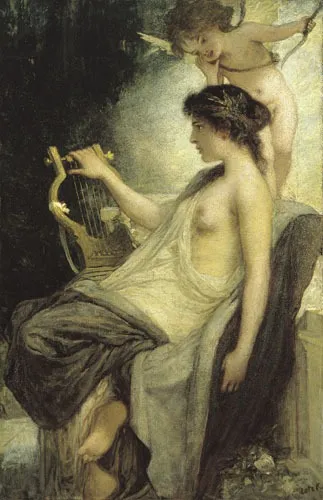
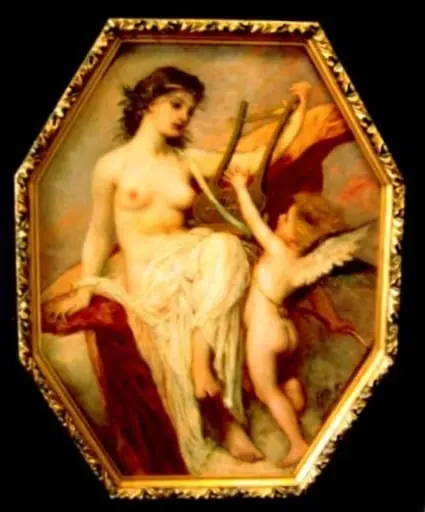
Muse is an oil painting by the Art Nouveau artist Károly Lotz. It dates from 1896 and is held in the collection of the Hungarian National Gallery.
About this work
Overview
Muse is an 1896 oil painting by Hungarian artist Károly Lotz, currently part of the collection at the Hungarian National Gallery.
Subject & Meaning
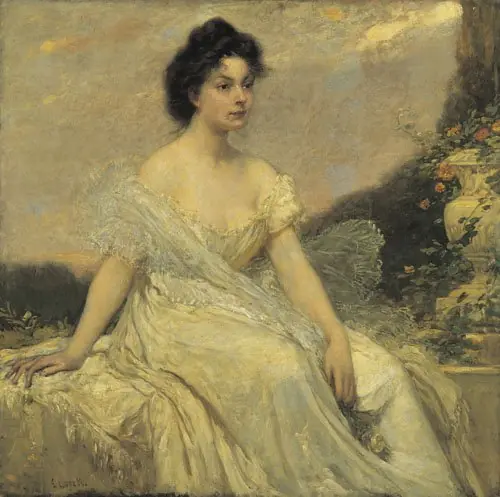
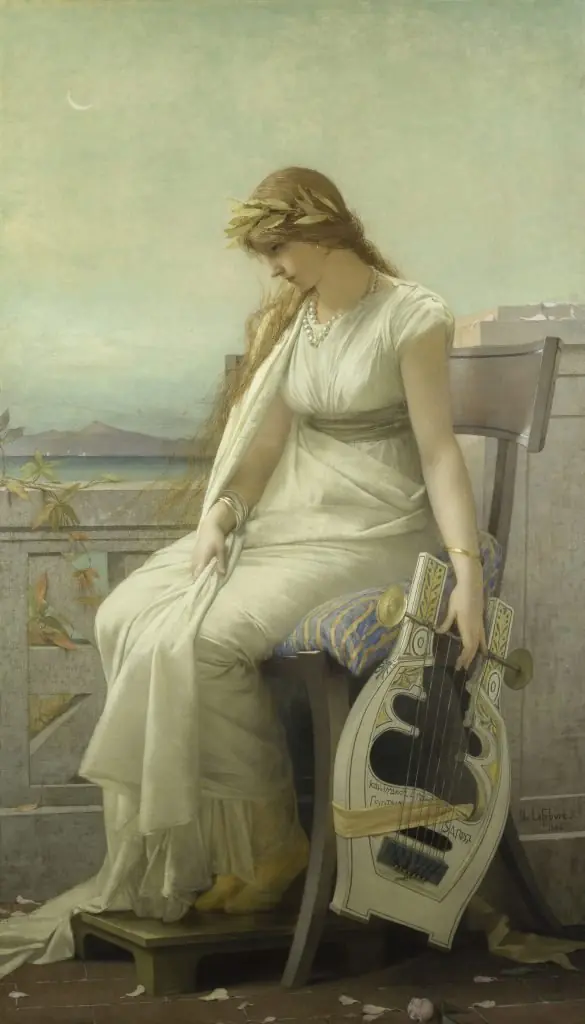
The painting portrays a seated woman, symbolically depicted as a muse, wearing a predominantly white dress with a dark skirt. She holds a lyre, an instrument associated with artistic inspiration, and wears a laurel wreath, signifying achievement or divine inspiration. A cherub behind her, armed with a bow and arrow, introduces a note of playful mythology.
Technique & Style
Lotz employed chiaroscuro to dramatic effect, contrasting deep shadows in the background with illuminated figures in the foreground. This technique, along with the elegant draping of the muse's dress and the cherub's playful pose, showcases Lotz's skill in capturing depth, dimension, and nuanced expression.
History & Provenance
Created in 1896, the painting's history prior to its acquisition by the Hungarian National Gallery is not detailed here. It is known to be part of the gallery's permanent collection.
Context
Muse reflects late 19th-century artistic interests in classical themes and the symbolic representation of artistic inspiration. The use of a muse and cherubic figure grounds the work in traditional European art motifs.
Legacy
While specific influences of 'Muse' on subsequent art movements are not highlighted, it contributes to the broader legacy of Károly Lotz's oeuvre within Hungarian and European late 19th-century art.
Artist & collection