Artwork
Love divination
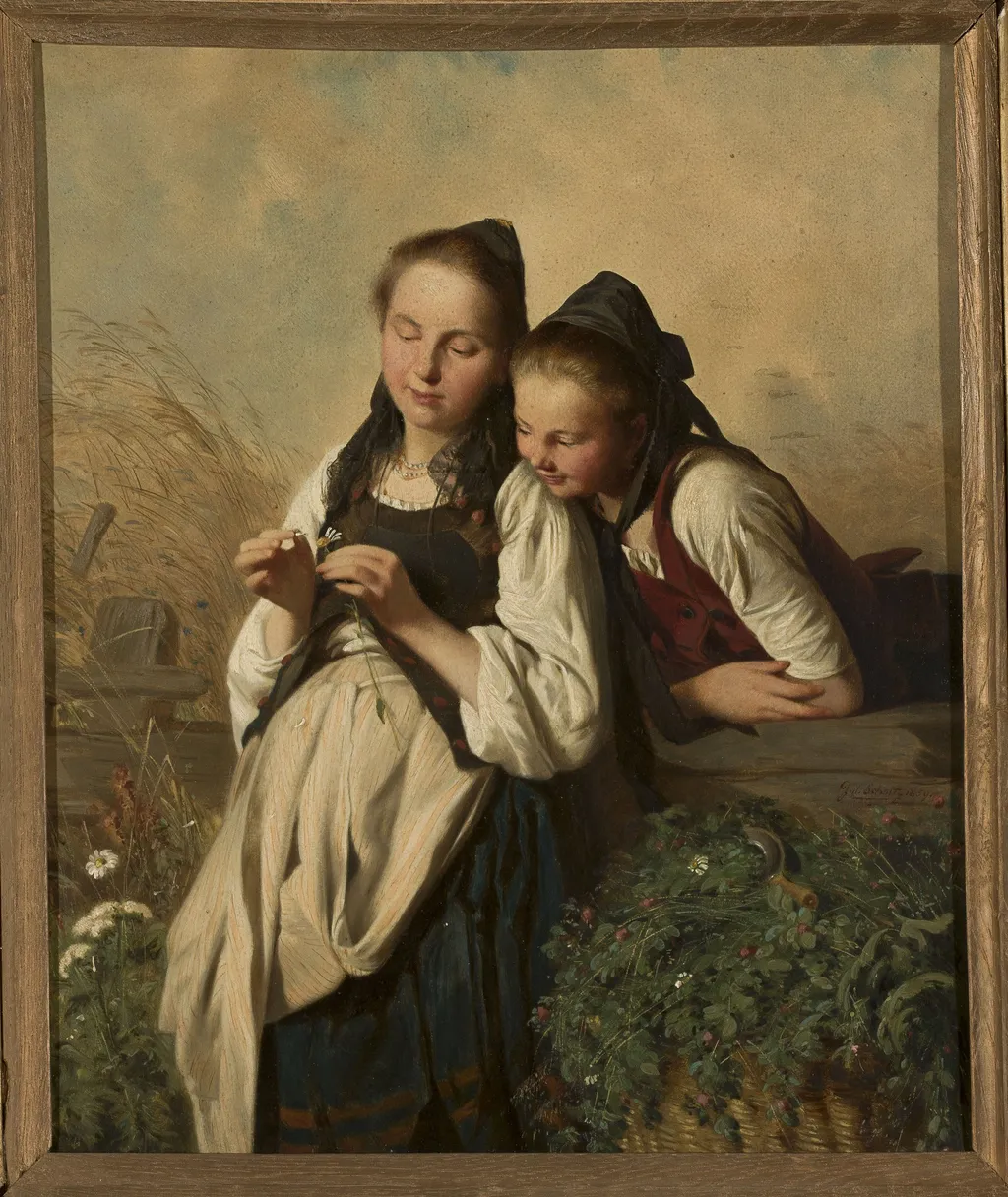
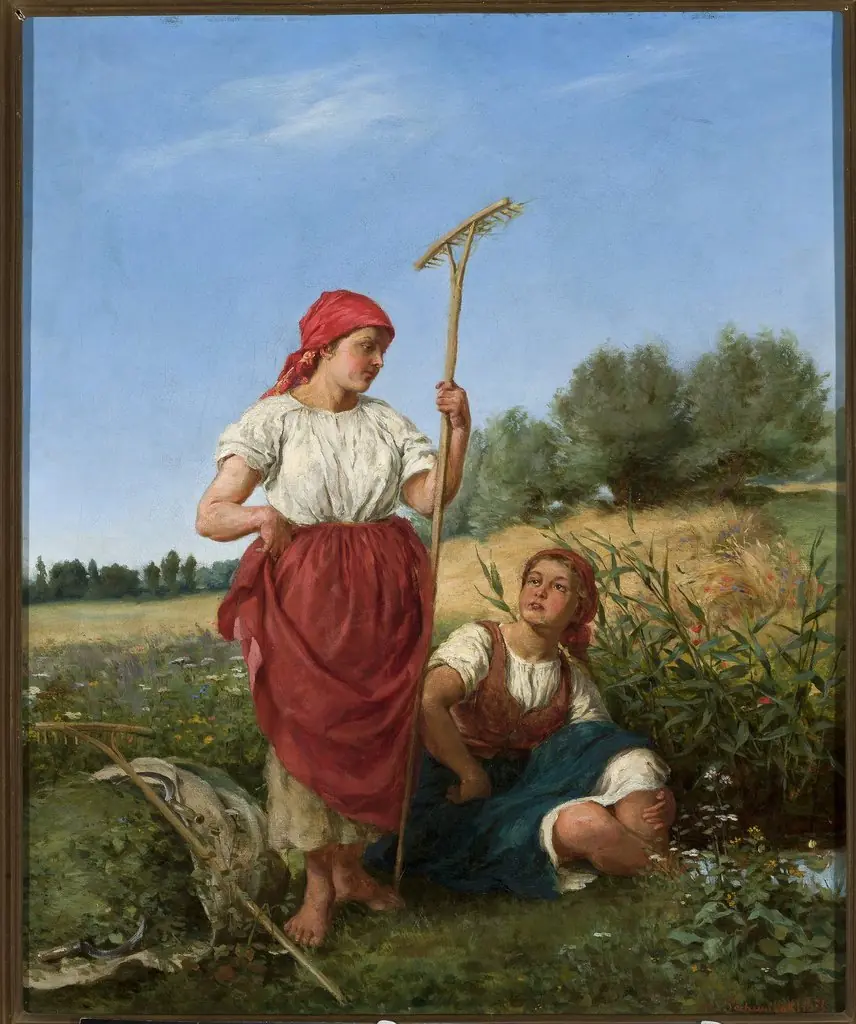
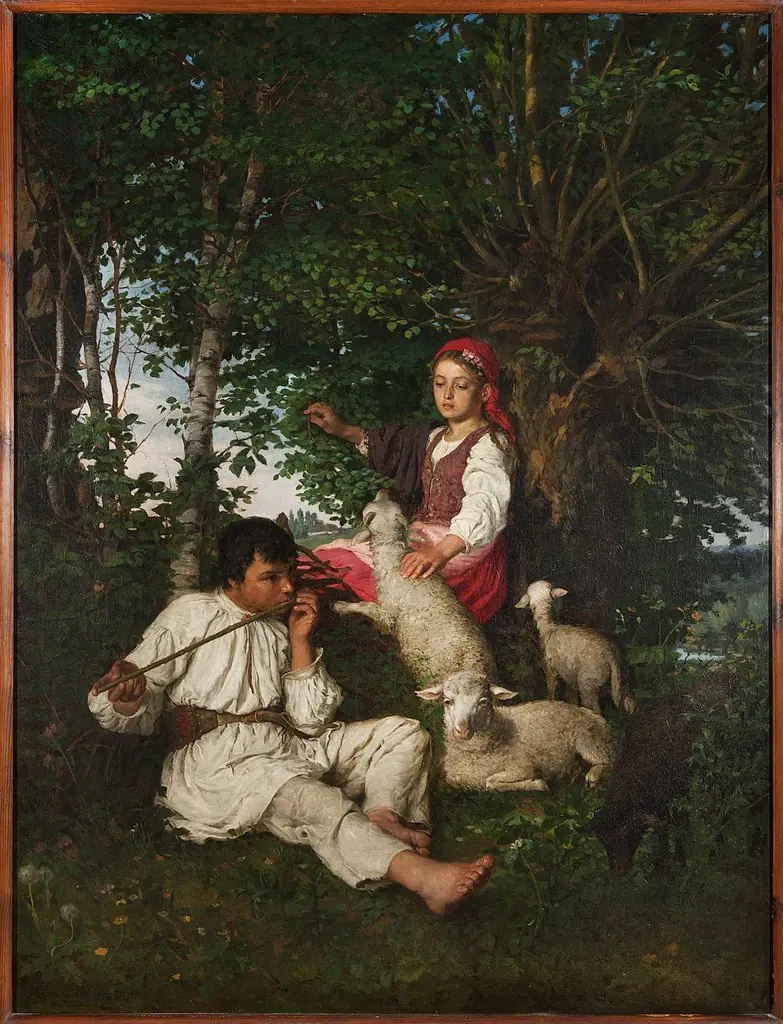
Love divination is an oil painting by the Realist artist Julius Scholtz. It dates from 1859 and is held in the collection of the National Museum in Warsaw.
About this work
Overview
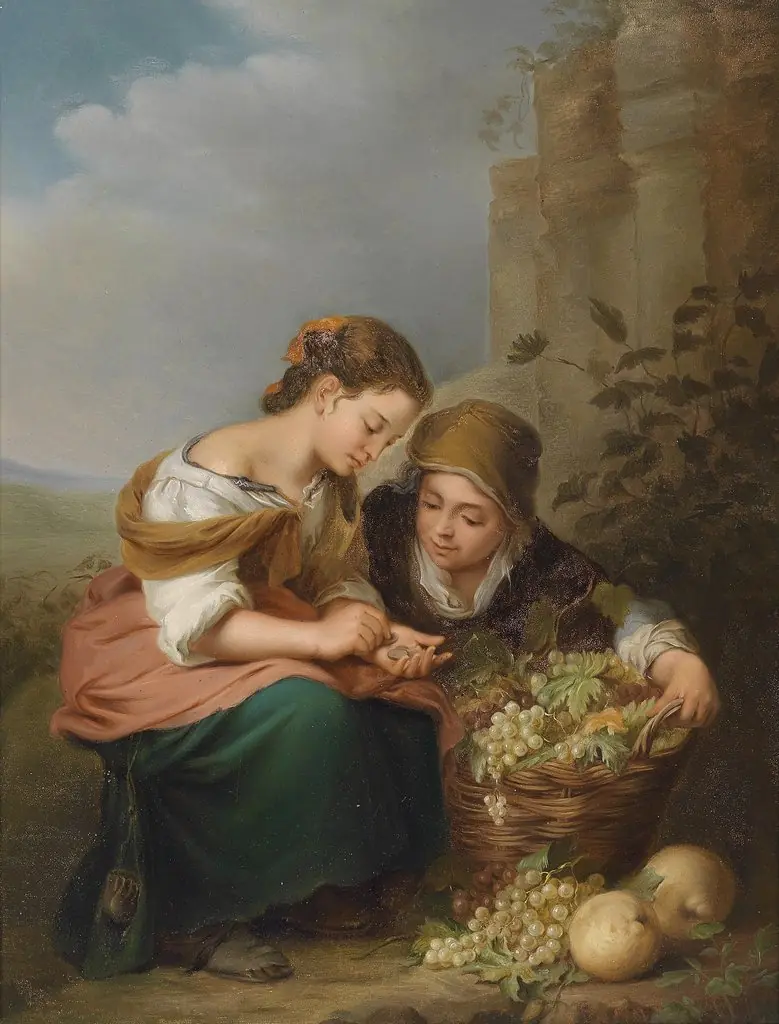
Painted in 1859 by Julius Scholtz, this oil on canvas work depicts a quiet moment between two young women in a natural setting. It resides in the National Museum in Warsaw, where it is cataloged as a genre scene reflecting 19th-century Central European domestic life. The composition emphasizes stillness and intimacy, avoiding dramatic action in favor of subtle interaction.
Subject & Meaning
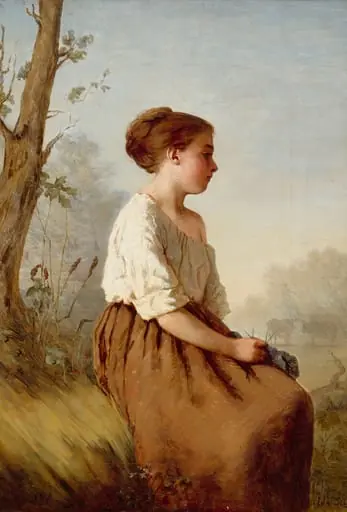
The painting suggests a ritual of love divination, a folk practice in which young women sought signs of future romance. One figure holds a flower, possibly plucking petals in sequence, while the other observes. The absence of male figures and the secluded garden setting reinforce the private, feminine nature of the ritual, framing it as a moment of personal hope rather than public spectacle.
Technique & Style
The background dissolves into blurred greenery, enhancing the focus on the figures’ quiet exchange and the intimacy of the moment.
Scholtz employs soft, warm earth tones to unify the figures with their surroundings. Detailed brushwork renders the textures of fabric, foliage, and skin with quiet precision. Light falls gently across the women’s faces and garments, drawing attention without theatricality. The background dissolves into blurred greenery, enhancing the focus on the figures’ quiet exchange and the intimacy of the moment.
History & Provenance
Created in 1859, the painting entered the collection of the National Museum in Warsaw in the late 19th century. Its early ownership is undocumented, but its preservation suggests it was valued within Polish artistic circles. It has remained in the museum’s holdings since, with no record of significant exhibition or public controversy, indicating its quiet endurance as a cultural artifact.
Context
Scholtz worked during a period when Polish artists increasingly turned to domestic and rural scenes as expressions of national identity under foreign partition. Folk customs like love divination, though rooted in peasant tradition, were reinterpreted by middle-class artists as symbols of cultural continuity. This painting aligns with a broader trend of romanticizing everyday female rituals as expressions of national spirit.
Legacy
Though not widely reproduced or critically celebrated, the painting endures as a representative example of 19th-century Polish genre painting. Its restrained emotion and attention to detail reflect the aesthetic values of its time. It contributes to the historical record of how private, feminine rituals were visually preserved within a national artistic canon.
Artist & collection