Artwork
The Vesper Bell: The Young Reapers
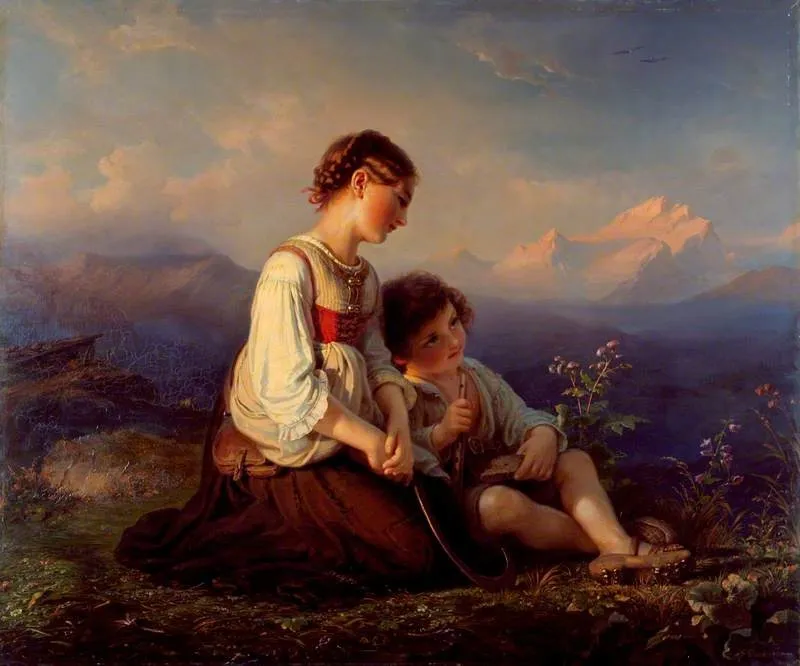
The Vesper Bell: The Young Reapers is an oil painting by the Biedermeier artist Friedrich Dürck. It dates from 1848 and is held in the collection of the Victoria and Albert Museum.
About this work
Overview
Painted in 1848 by Friedrich Dürck, this oil on canvas work depicts a quiet moment between two rural children. It is part of the Victoria and Albert Museum’s collection, where it remains as an example of mid-nineteenth-century German genre painting. The composition centers on stillness, avoiding dramatic action in favor of intimate, unposed interaction.
Subject & Meaning
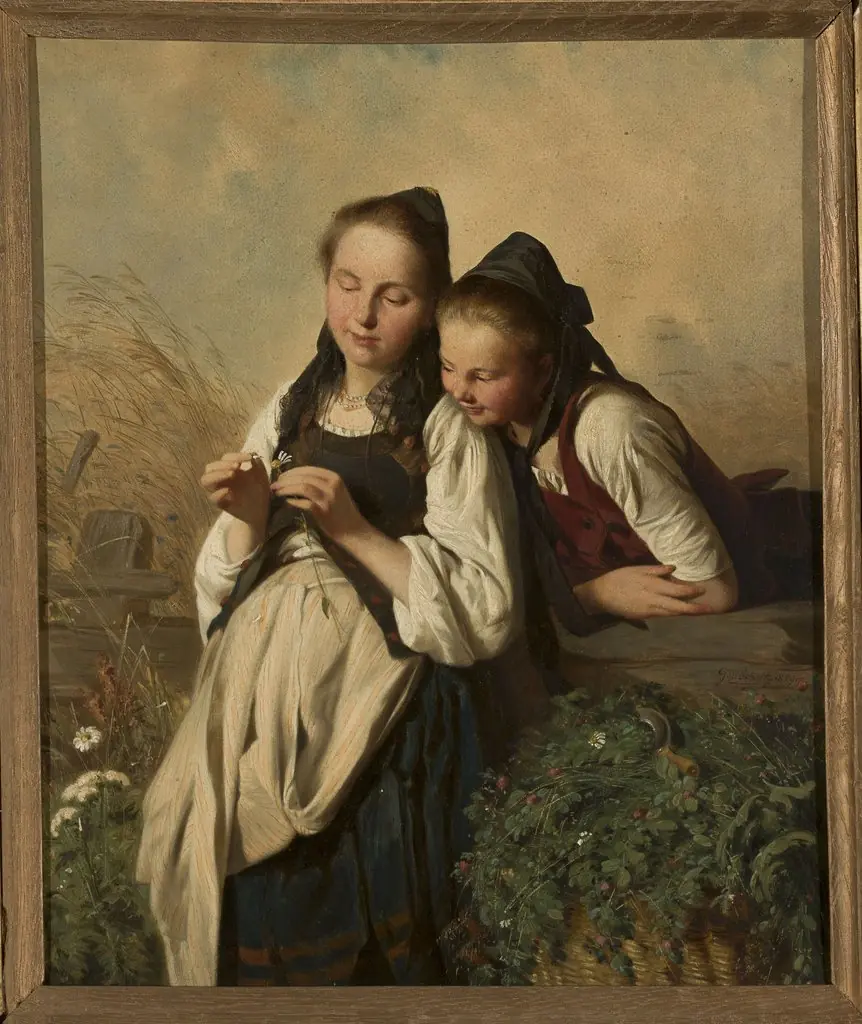
The girl, in a simple white blouse and dark skirt, gazes gently ahead; the boy, dressed in a light shirt and shorts, holds a wildflower.
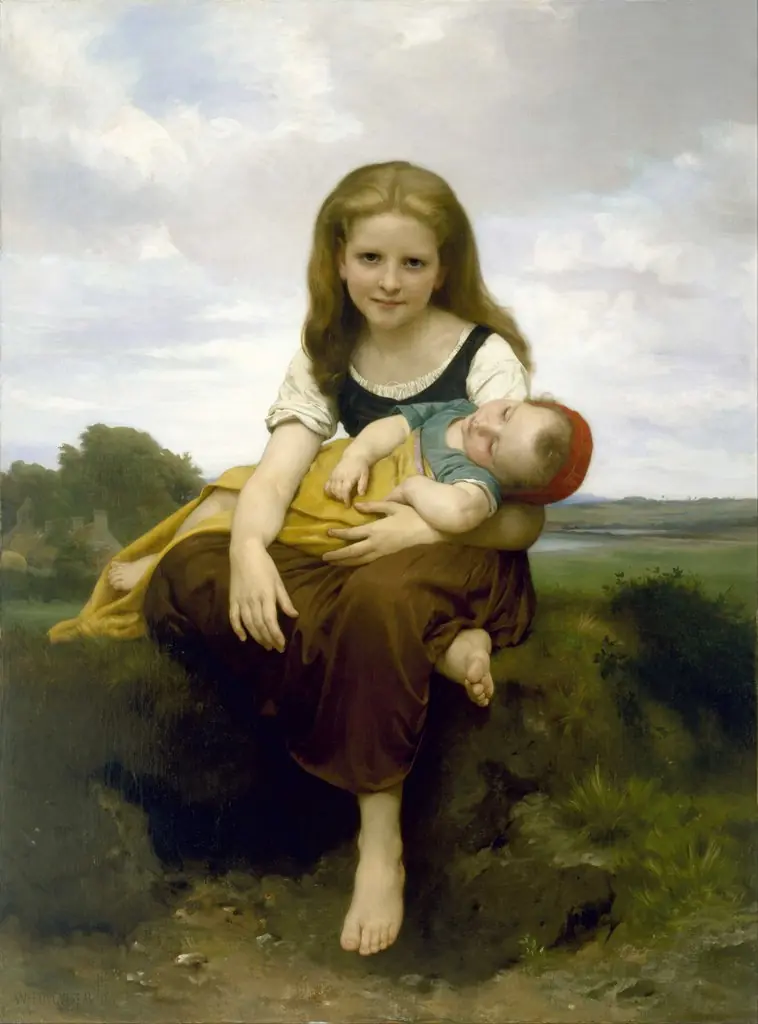
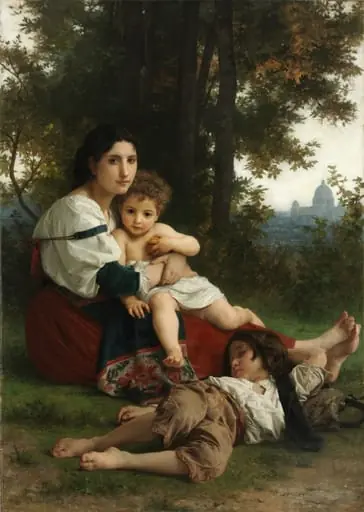
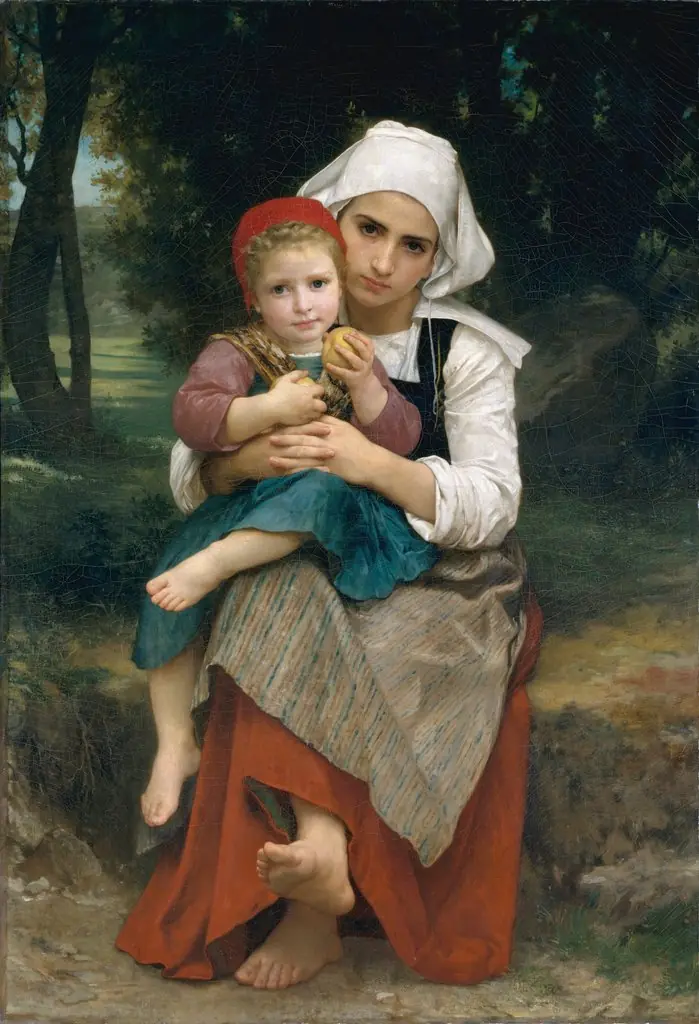
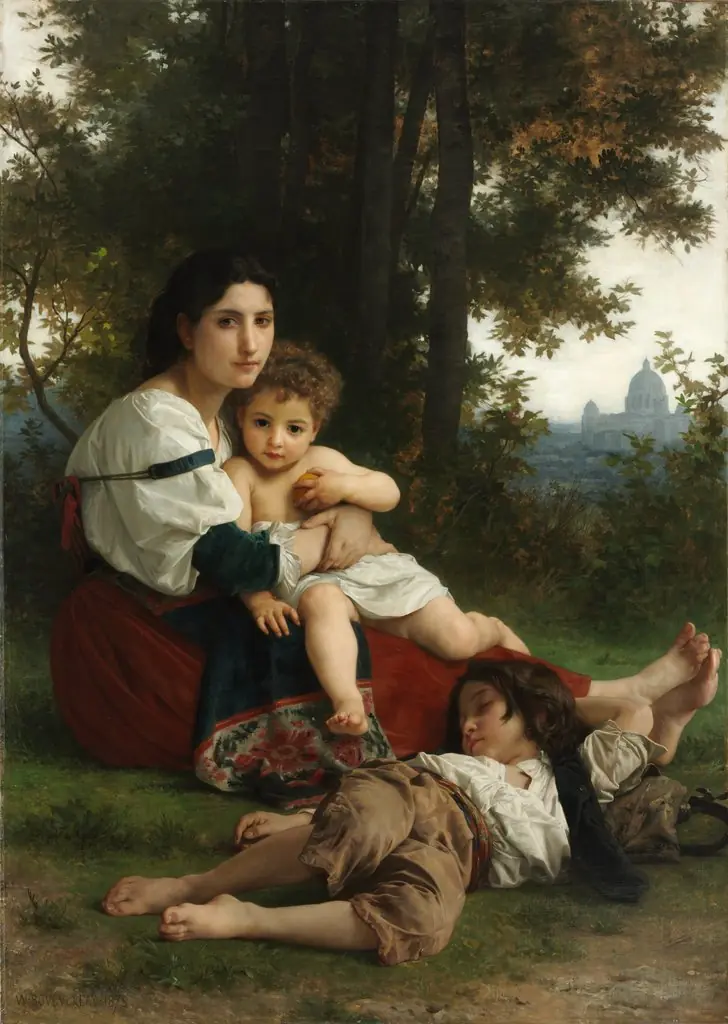
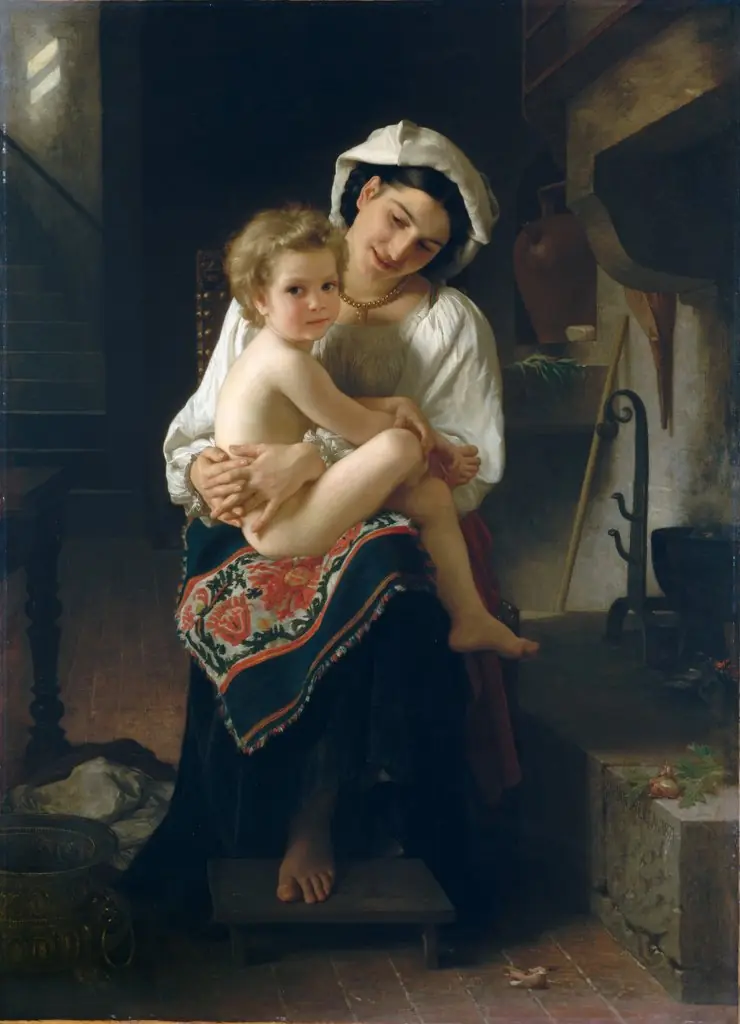
A young girl and boy sit side by side on the earth, their hands lightly clasped. The girl, in a simple white blouse and dark skirt, gazes gently ahead; the boy, dressed in a light shirt and shorts, holds a wildflower. Their posture and the absence of tools suggest a pause in labor, evoking a fleeting moment of rest rather than labor itself. The scene implies tenderness and shared solitude within a rural setting.
Technique & Style
Dürck employs chiaroscuro to model the figures with soft contrasts of light and shadow, grounding them in a tangible space. The background fades into muted tones of green and gray, allowing the children’s forms to emerge with quiet clarity. Brushwork is restrained, favoring smooth transitions over texture, reinforcing the calm mood. The sky, lightly clouded, diffuses natural light evenly across the scene.
History & Provenance
Created in 1848, the painting entered the Victoria and Albert Museum’s collection in the late nineteenth century. Its acquisition reflects the museum’s interest in domestic and moralizing genre scenes from continental Europe. No significant exhibition or ownership history outside institutional custody is documented, suggesting it remained a private or academic interest rather than a public sensation.
Context
Painted during a year of political upheaval across Europe, the work offers a deliberate retreat from social tension. Dürck, trained in Munich, aligned with the Biedermeier tradition, which valued domestic harmony and nature as sources of moral stability. This image of rural innocence contrasts with the era’s industrial and revolutionary currents, offering an idealized vision of quiet continuity.
Legacy
The painting is not widely reproduced or studied outside museum contexts. It stands as a modest example of German Biedermeier genre painting, valued for its emotional restraint and technical precision. While not influential in broader art movements, it contributes to the understanding of how everyday rural life was visually idealized in mid-nineteenth-century Central Europe.
Artist & collection