Artwork
Saint Paul the Hermit
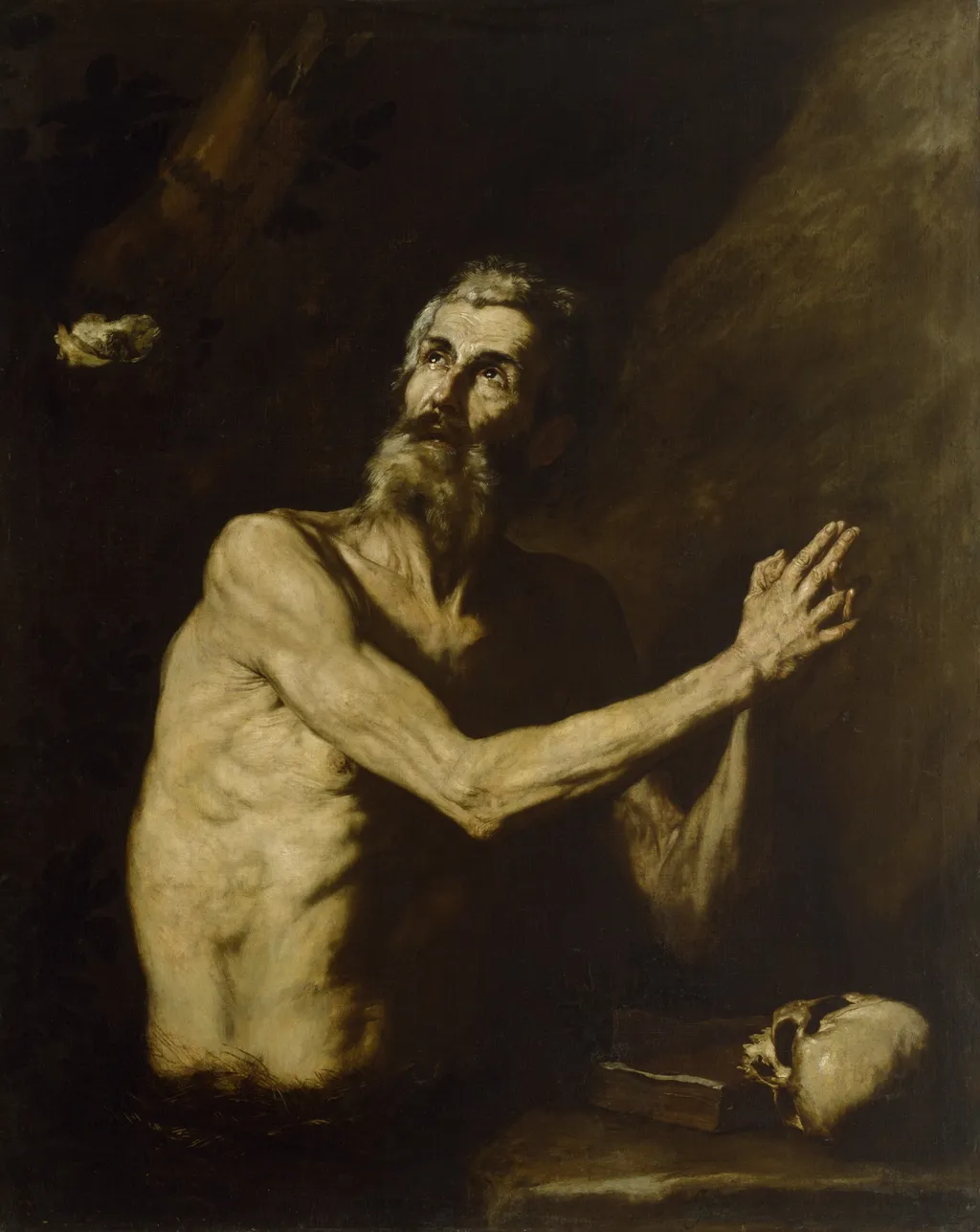
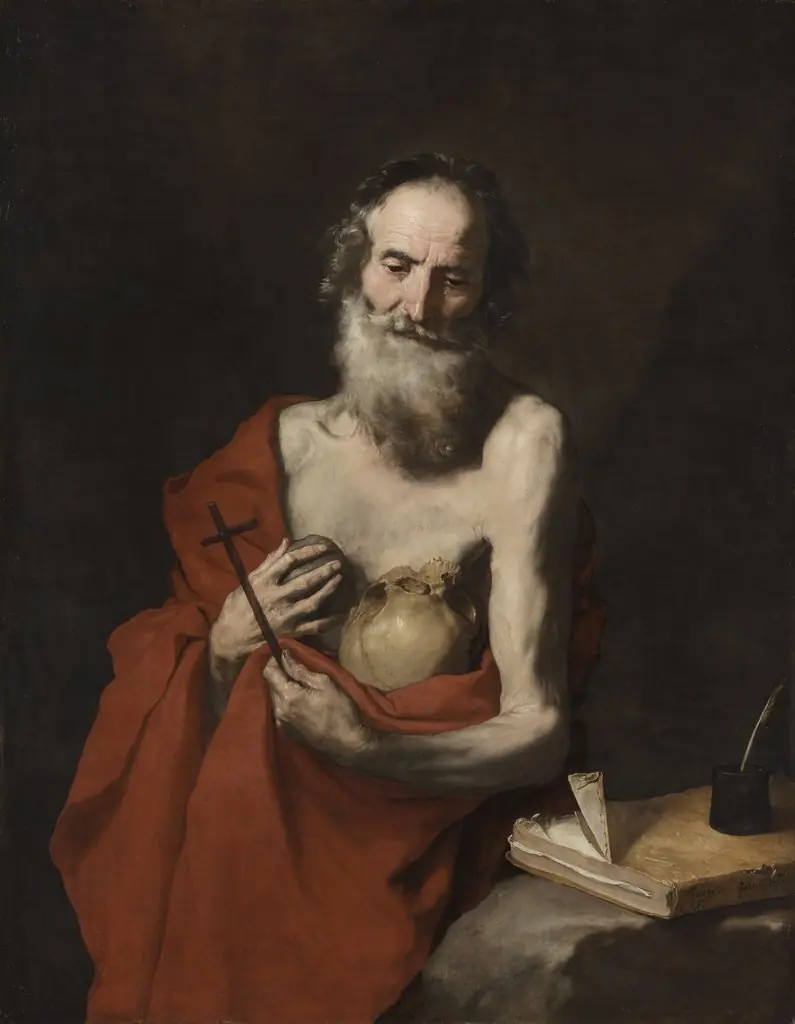
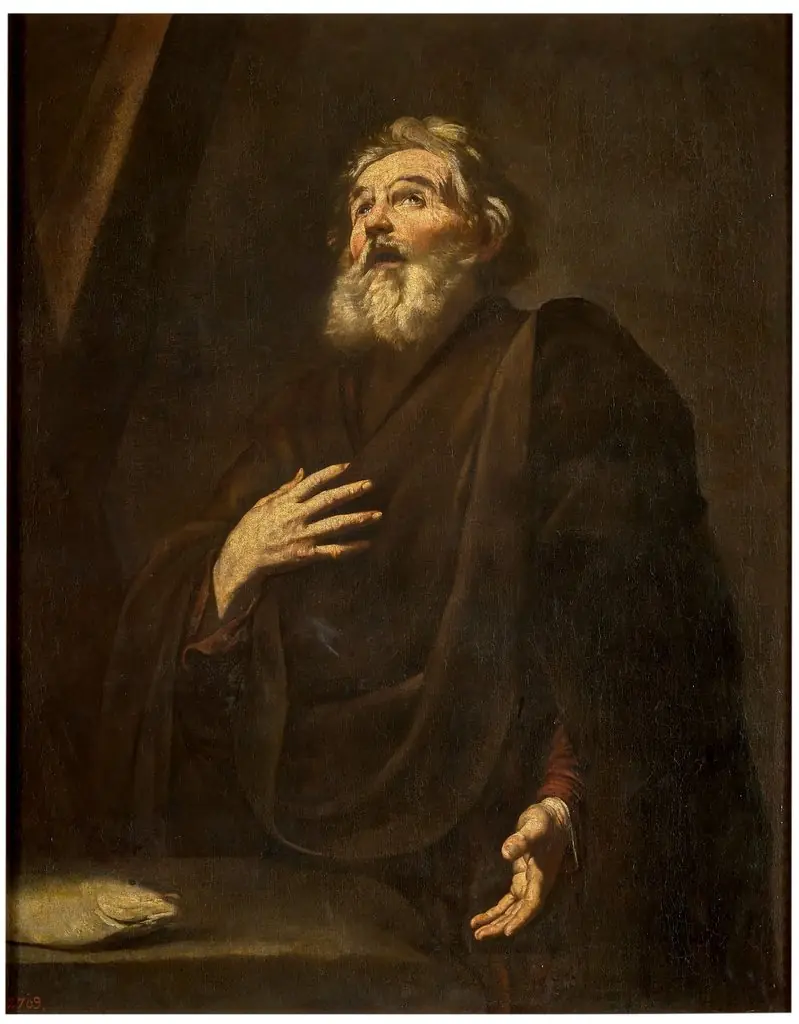
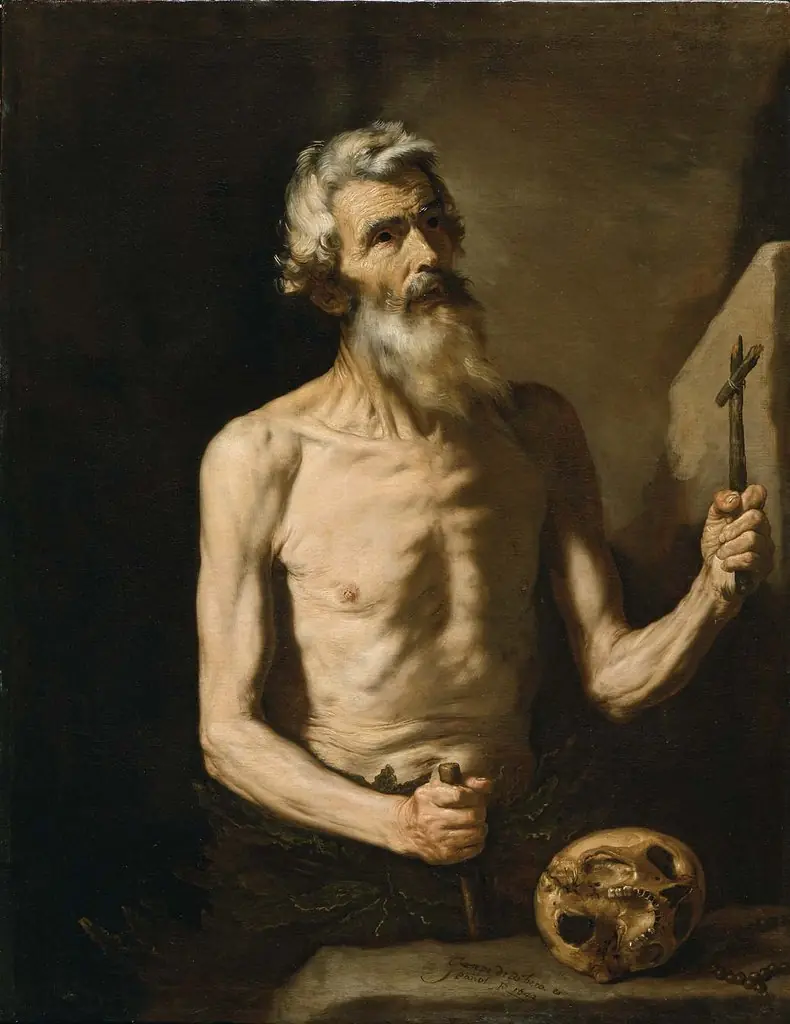
Saint Paul the Hermit is an oil painting by the Early Baroque Italian artist Jusepe de Ribera. It dates from 1638 and is held in the collection of the Walters Art Museum.
About this work
Overview
Saint Paul the Hermit, painted in 1638 by Jusepe de Ribera, is an oil painting depicting the Christian ascetic Paul of Thebes. It is part of the Walters Art Museum's collection.
Subject & Meaning
The painting portrays an elderly Paul of Thebes in contemplative prayer, emphasizing his asceticism through minimal attire and the presence of a skull, symbolizing mortality. A bird above him may allude to divine providence or the soul.
Technique & Style
Ribera employed chiaroscuro to dramatically highlight the subject's face and hands, contrasting with a dark background. The painting also features impasto for textured depth and glazing for luminous, layered color effects, characteristic of early Baroque Italian influences.
History & Provenance
Created in 1638 by the prominent Spanish Baroque painter Jusepe de Ribera, active in Naples, the work is now held in the Walters Art Museum's collection.
Context
As part of the early Baroque Italian movement, the painting reflects the era's emphasis on emotional intensity and the dramatic use of light, while also touching on themes of religious devotion and solitude.
Legacy
While specific lasting impacts of *Saint Paul the Hermit* on subsequent art are not widely documented, it remains a notable example of Ribera's contribution to Baroque painting, illustrating the style's expressive and technical innovations.
Own this work as a print
Artist & collection
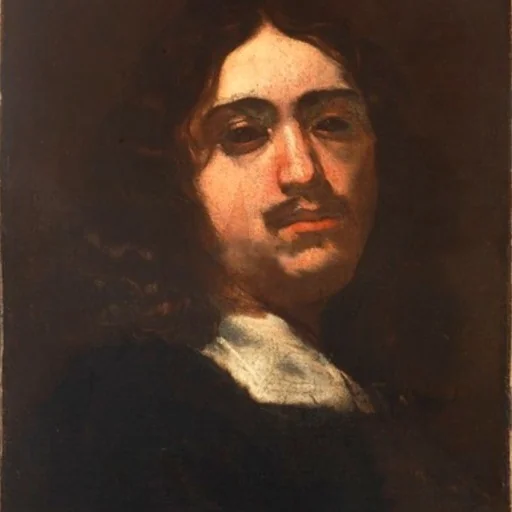
Artist
Jusepe de Ribera (Valencian: ; baptised 17 February 1591 – 3 November 1652) was a Spanish painter and printmaker.