Artwork
Saint Peter Repentant
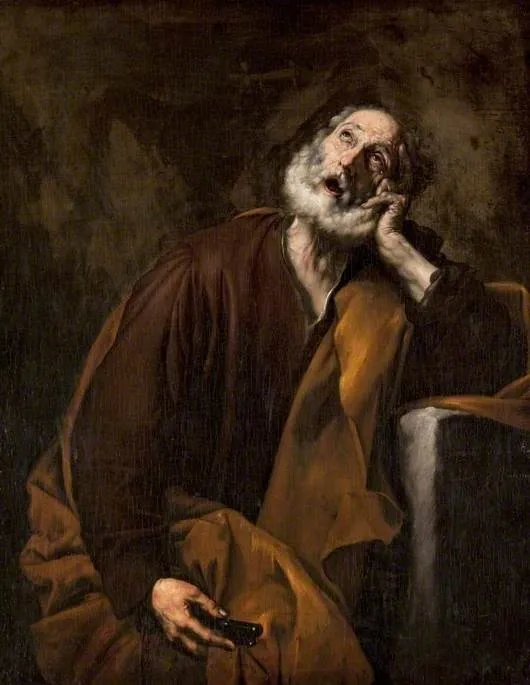
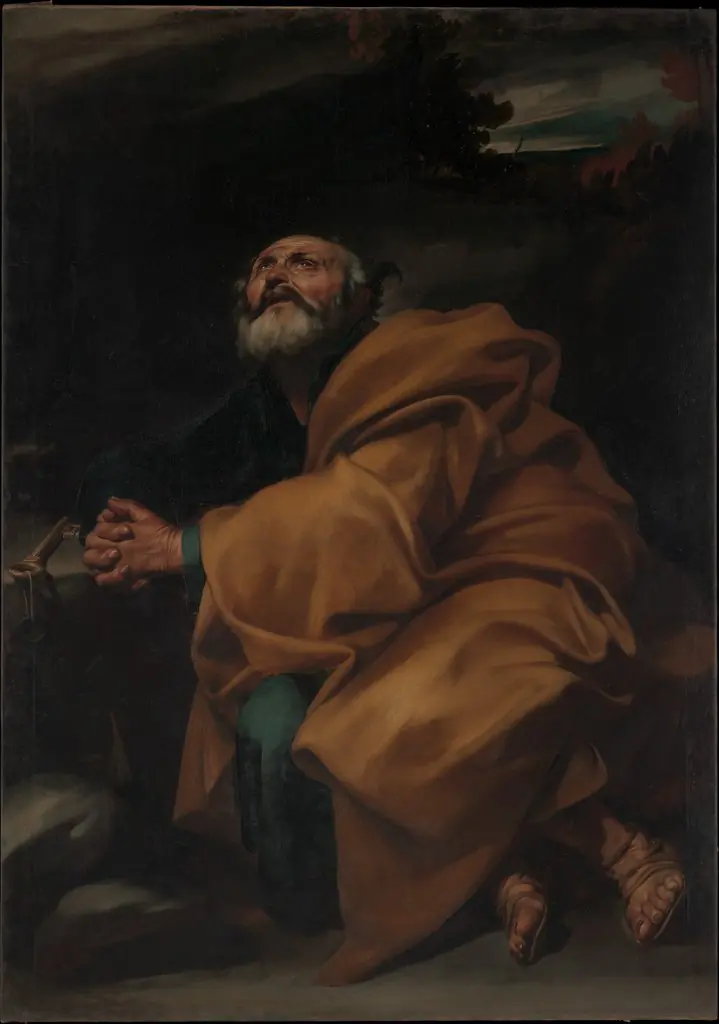
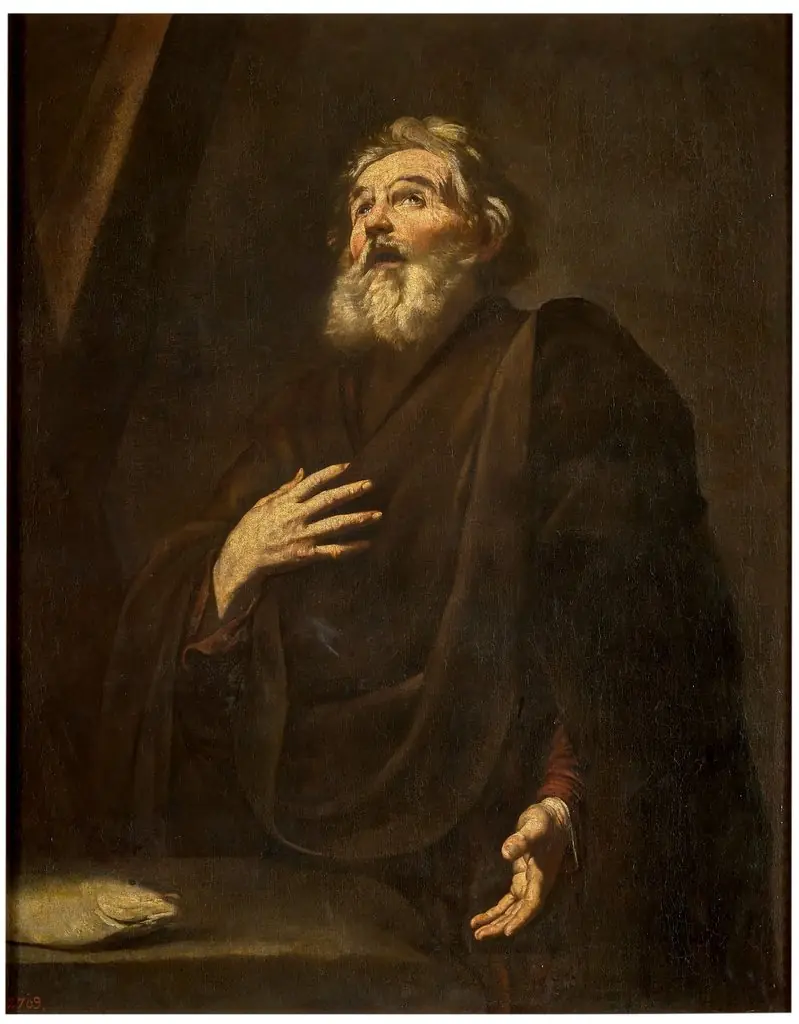
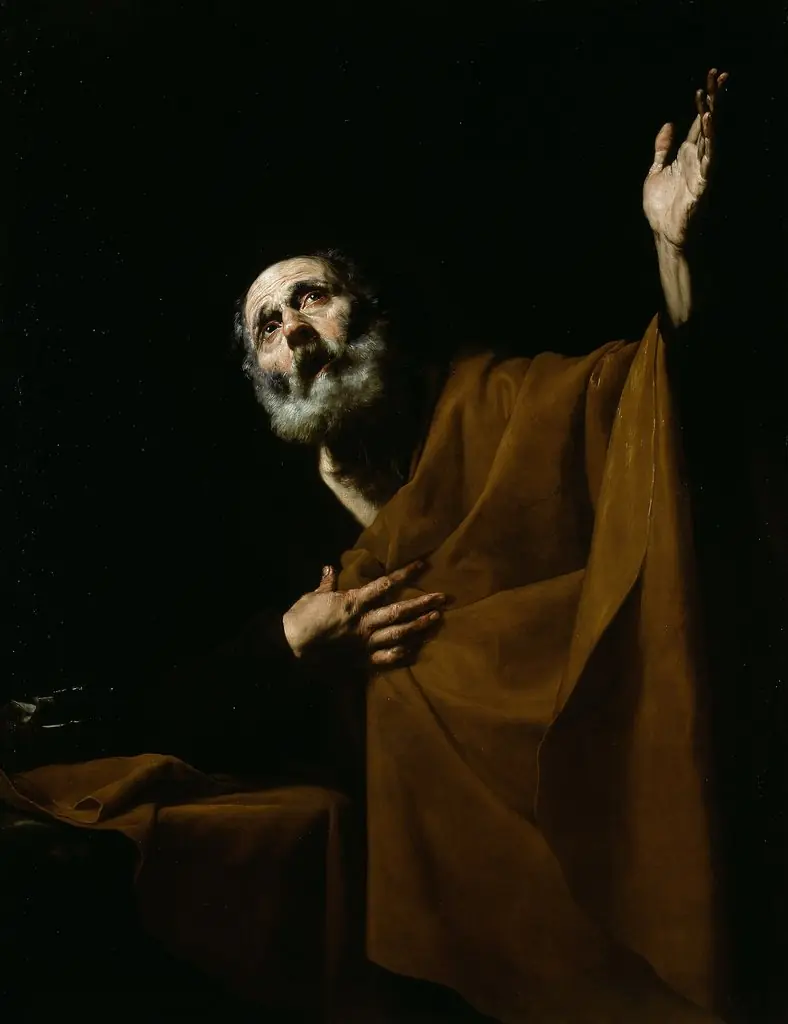
Saint Peter Repentant is an oil painting by the Spanish Baroque Tenebrist artist Jusepe de Ribera. It dates from 1628 and is held in the collection of the Kelvingrove Art Gallery and Museum.
About this work
Overview
The painting’s subdued palette and intense lighting reflect the tenebrist tradition, emphasizing psychological depth over narrative detail.
Painted in 1628 by Jusepe de Ribera, this oil-on-canvas work portrays Saint Peter in a moment of private sorrow. Ribera, a Spanish artist based in Naples, was known for his emotionally charged depictions of religious figures. The painting’s subdued palette and intense lighting reflect the tenebrist tradition, emphasizing psychological depth over narrative detail. It remains part of the Kelvingrove Art Gallery and Museum’s permanent collection.
Subject & Meaning
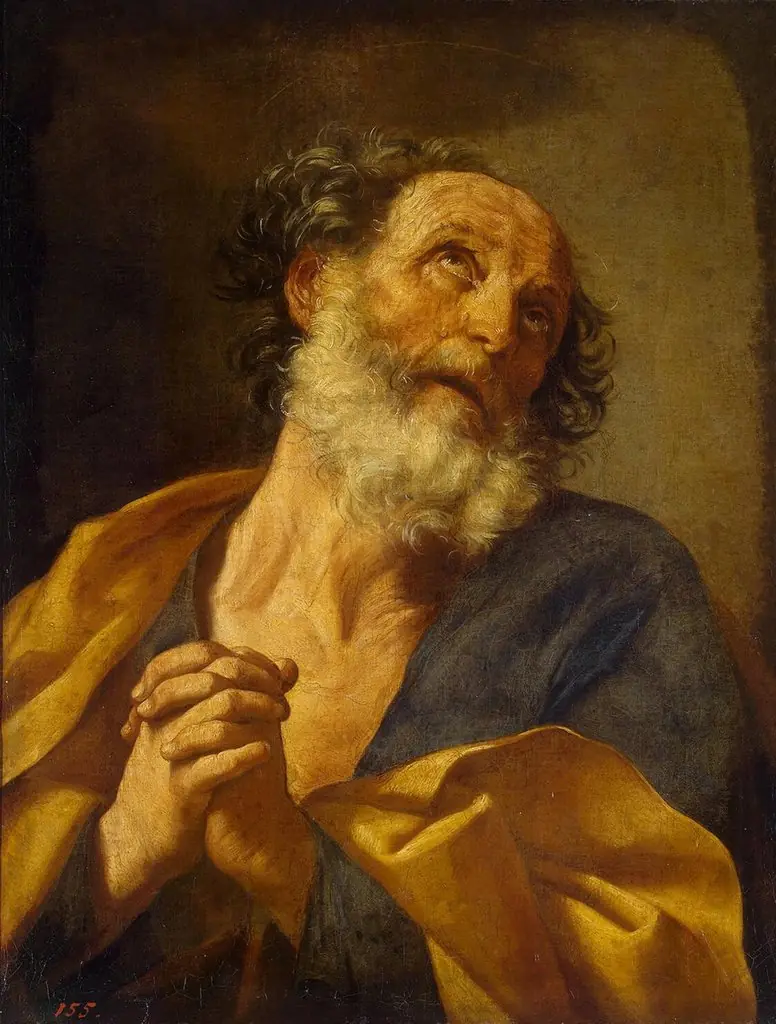
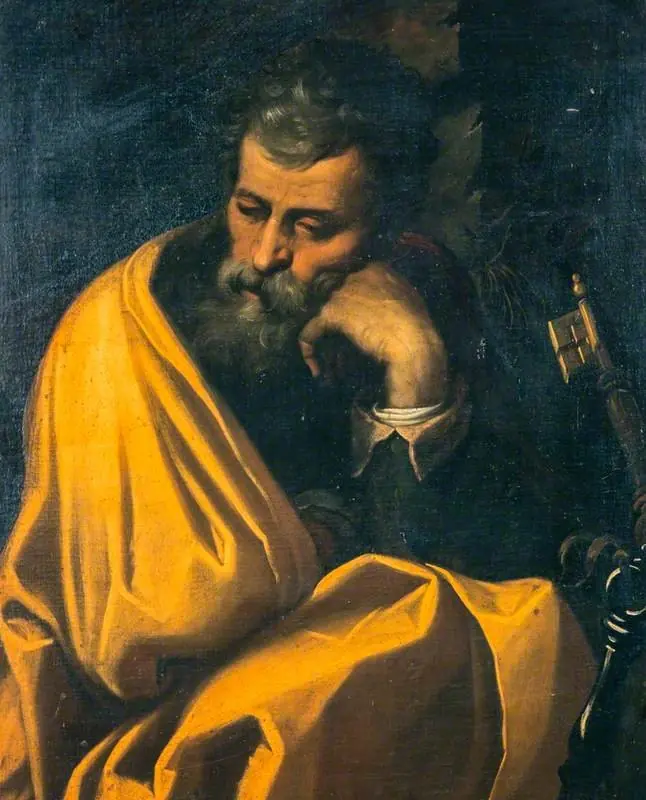
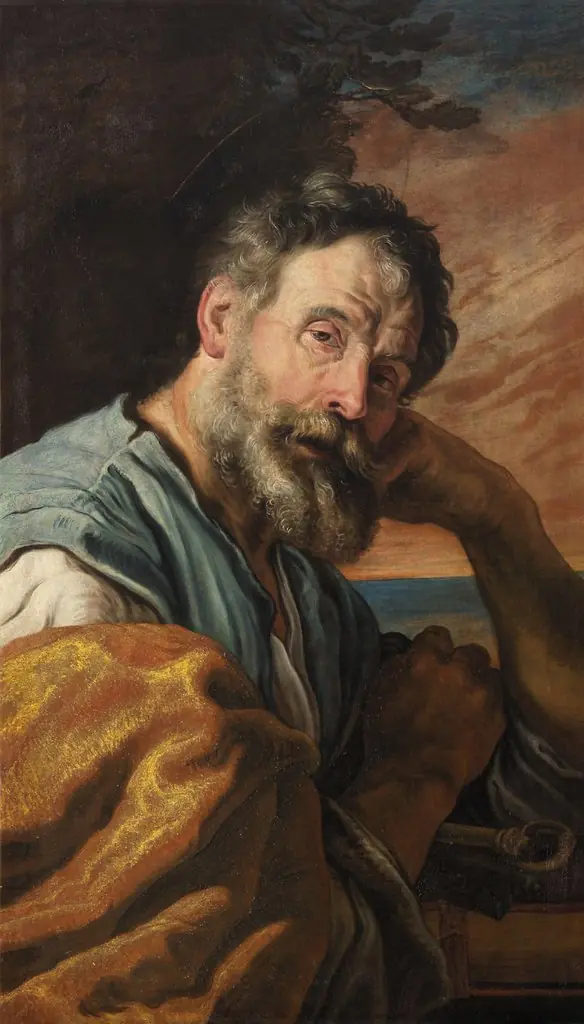
The apostle Peter is shown after his denial of Christ, captured not in action but in quiet contrition. His aged face, half-shadowed, conveys inner turmoil; the key he holds symbolizes his divine commission, now weighed by guilt. The absence of other figures isolates him in his remorse, inviting contemplation rather than storytelling. Ribera avoids theatricality, focusing instead on the human cost of failure and redemption.
Technique & Style
Ribera employs chiaroscuro with deliberate restraint, using narrow bands of light to define Peter’s face and hands against a near-black background. The textures of his coarse robe and weathered skin are rendered with tactile precision, enhancing the sense of physical and spiritual weariness. Brushwork is controlled yet expressive, avoiding ornamentation in favor of raw emotional presence, typical of Spanish Baroque realism.
History & Provenance
Commissioned during Ribera’s mature period in Naples, the painting entered the Kelvingrove collection in the 19th century through private acquisition. Its journey from southern Italy to Glasgow reflects broader patterns of European art circulation. No significant alterations or restorations are documented, preserving its original tonal harmony and compositional clarity.
Context
Created during the Counter-Reformation, the image aligns with Catholic efforts to evoke personal devotion through relatable human suffering. While Italian tenebrism influenced Ribera, his approach diverged in its austerity—eschewing grandeur for intimacy. The work resonates with contemporaneous Spanish devotional art, where inner penitence was valued over external spectacle.
Legacy
Though less widely exhibited than Ribera’s more violent scenes, this painting exemplifies his capacity for quiet psychological insight. It influenced later Spanish painters interested in spiritual introspection and contributed to the broader European tradition of portraying religious figures as vulnerable individuals. Its enduring presence in a public museum underscores its role as a study in human remorse.
Artist & collection
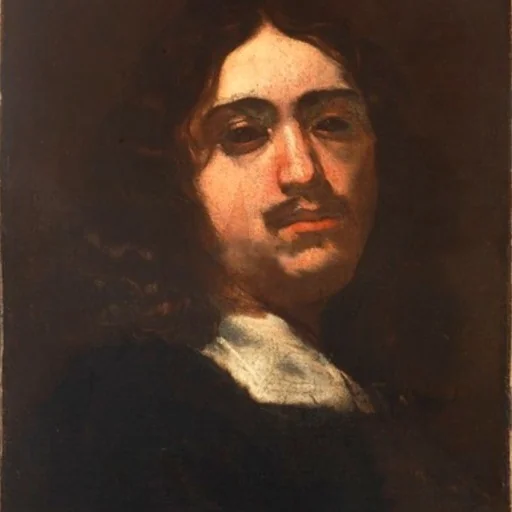
Artist
Jusepe de Ribera (Valencian: ; baptised 17 February 1591 – 3 November 1652) was a Spanish painter and printmaker.