Artwork
Essais de gravure à l'eau forte par Alexandre Calame, I, pl. 21
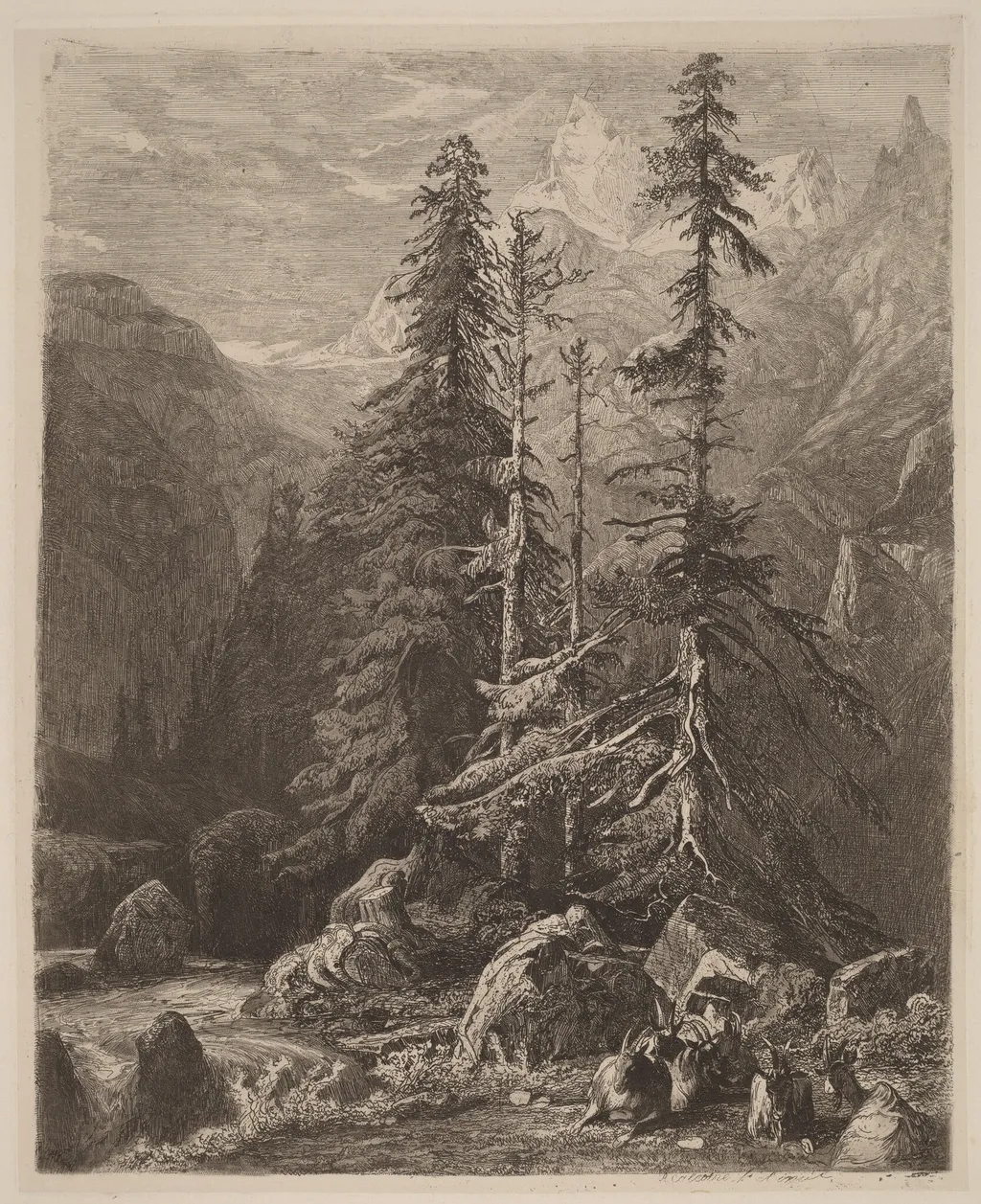
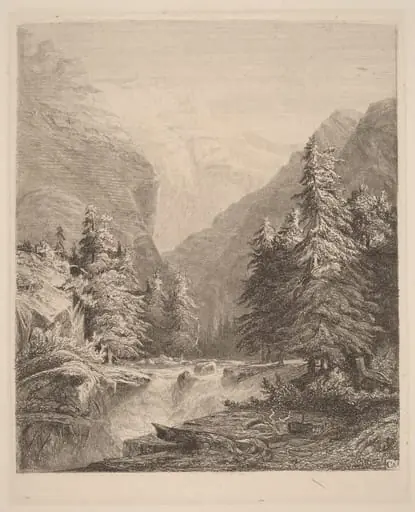
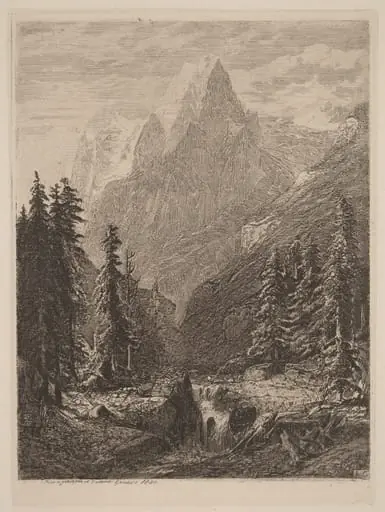
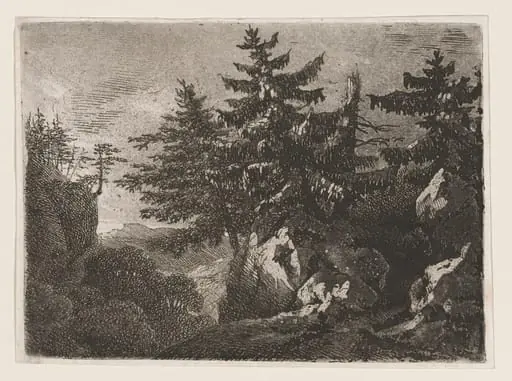
Essais de gravure à l'eau forte par Alexandre Calame, I, pl. 21 is an ink print by the Romanticist artist Alexandre Calame. It dates from 1838 and is held in the collection of the National Gallery of Art.
About this work
Overview
Created in 1838, this black‑and‑white print by Alexandre Calame belongs to his series of experimental etchings. Executed on chine collé, the work combines traditional acid etching with roulette stippling, resulting in a finely detailed landscape that exemplifies Calame’s early forays into printmaking.
Subject & Meaning
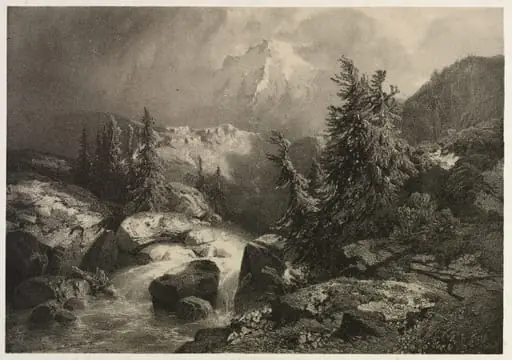
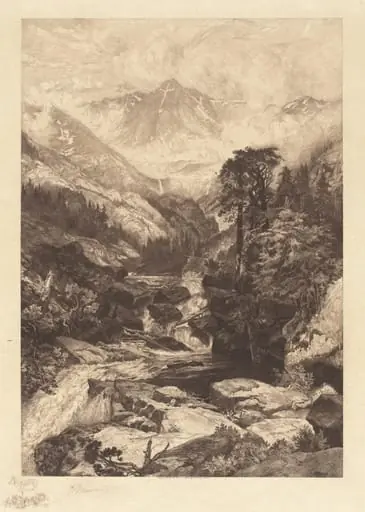
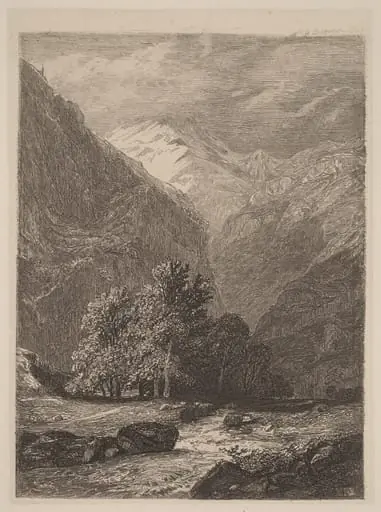
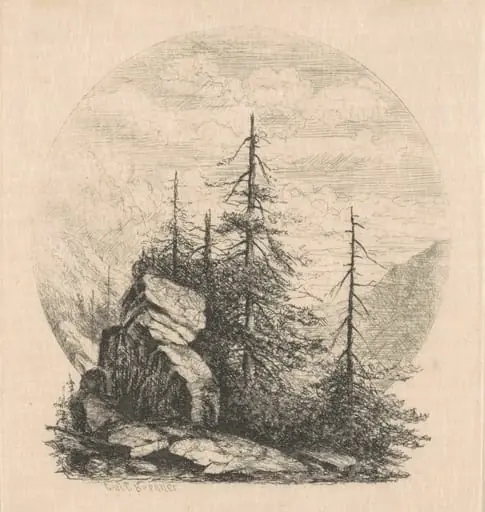
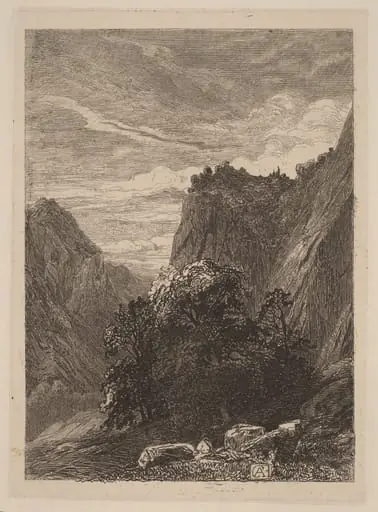
The composition centers on a solitary pine that dominates a steep, stony slope, its bark rendered in crisp, intersecting lines. Beyond the tree, a range of rugged mountains recedes into a veil of mist, conveying a sense of remote, untamed wilderness and the precarious balance between nature’s solidity and its fleeting atmospheric effects.
Technique & Style
Calame employed a combination of acid‑etched lines and roulette‑generated textures to differentiate surfaces. The sharp incisions delineate the tree’s bark and the craggy ground, while the roulette creates subtle tonal variations in the shadows, especially the cavern‑like darkness beneath the trunk, enhancing depth without the use of color.
History & Provenance
Issued as plate 21 in the first volume of Calame’s "Essais de gravure à l'eau forte," the print was part of a limited series intended to explore the possibilities of etching for landscape representation. It remains documented in several 19th‑century print collections, reflecting the artist’s interest in disseminating his alpine visions beyond painted canvases.
Artist & collection