Artwork
Plain with a Working Farmer
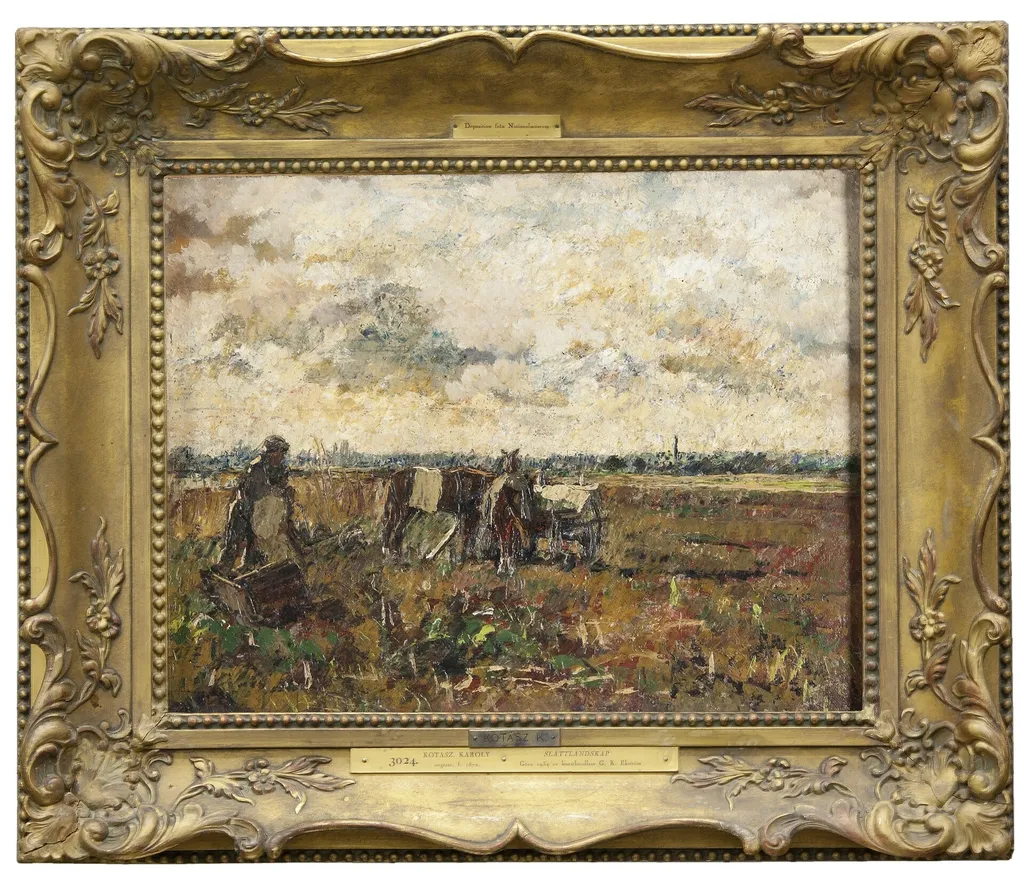
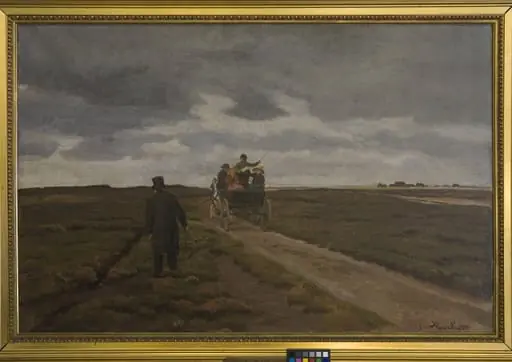
Plain with a Working Farmer is an oil painting by Károly Kotász. It dates from 1916 and is held in the collection of the Nationalmuseum.
About this work
Overview
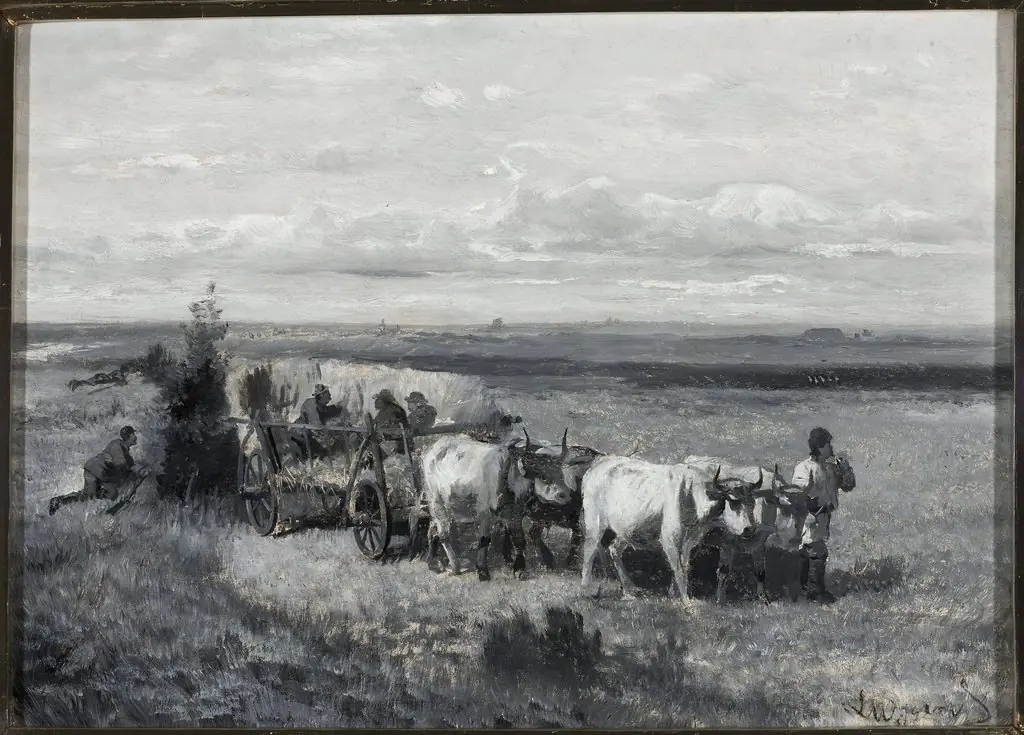
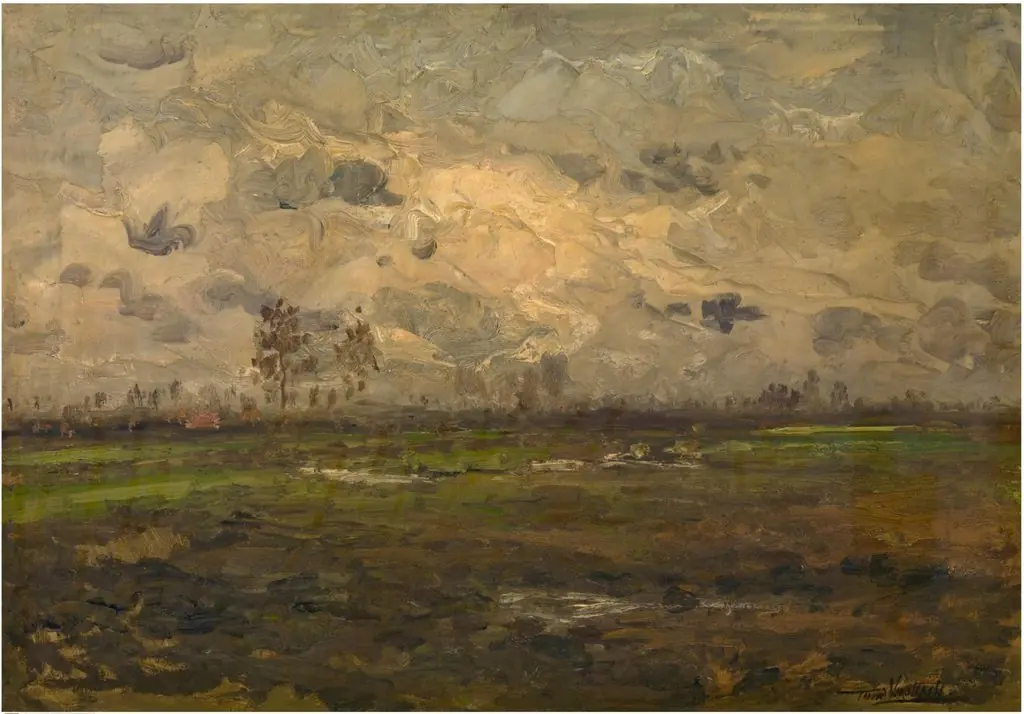
Created around 1916, Plain with a Working Farmer is an oil painting by Hungarian artist Károly Kotász. The work depicts a solitary agricultural laborer amid a modest landscape and is part of the collection of Sweden’s Nationalmuseum. Its modest dimensions and restrained composition convey a calm, everyday scene from the early twentieth century.
Subject & Meaning
The central figure is a farmer, dressed in a hat and long‑sleeved shirt, holding a simple tool as he tends a dry, brown field speckled with sparse green shoots. The muted sky, heavy with clouds, adds a sense of quiet endurance, suggesting the perseverance of rural life under modest conditions.
Technique & Style
Kotász employed oil on canvas with a visible brushwork that emphasizes texture. The palette is limited to earth tones—browns, muted greens, and grays—creating a subdued atmosphere. Subtle impasto in the field and sky gives the surface a tactile quality while maintaining the overall restraint of the composition.
History & Provenance
Since its creation, the painting has remained in public hands, eventually entering the Nationalmuseum’s holdings in Stockholm. The museum acquired the work as part of its early twentieth‑century European collection, where it is displayed among other works that document rural themes of the period.
Context
Kotász worked during a time when many Central European artists turned to everyday subjects, reflecting social changes and a growing interest in the lives of laborers. This painting aligns with that trend, offering a straightforward, unembellished view of agricultural work rather than a romanticized vision.
Artist & collection