Artwork
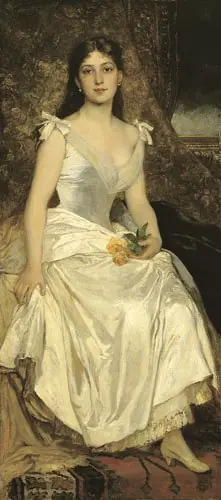
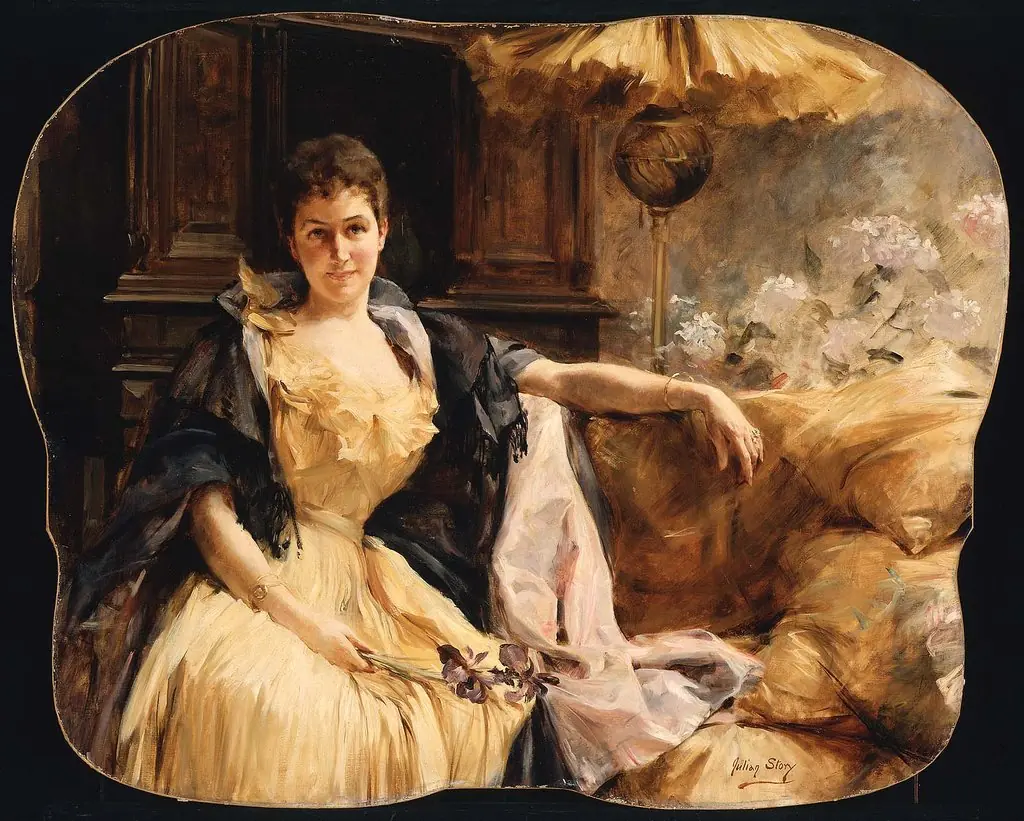
Cornelia Lotz in White Dress
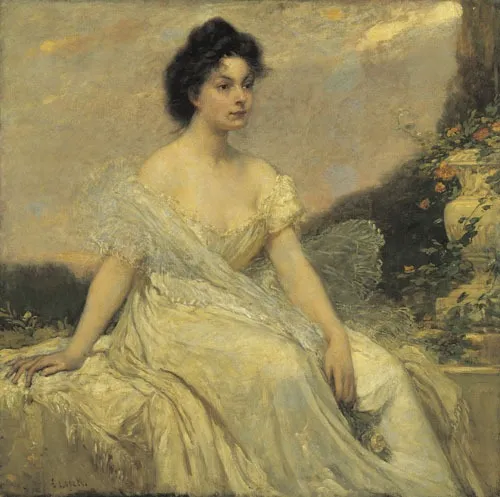
Cornelia Lotz in White Dress is an oil painting by the Impressionist artist Károly Lotz. It dates from 1900 and is held in the collection of the Hungarian National Gallery.
About this work
Overview
Painted in 1900 by Károly Lotz, this oil portrait captures his wife, Cornelia Lotz, seated in a white dress. The work resides in the Hungarian National Gallery and exemplifies the artist’s focus on intimate domestic scenes. Rendered with quiet precision, the painting avoids theatricality, instead emphasizing stillness and personal presence through restrained composition and tonal harmony.
Subject & Meaning
The absence of props or elaborate setting directs attention to her demeanor, framing the portrait as a study of inner stillness rather than social status.
Cornelia Lotz is depicted in a moment of calm repose, her posture relaxed yet composed. Her gaze is inward, suggesting contemplation rather than engagement with the viewer. The white dress, a symbol of purity and simplicity, enhances the sense of quiet dignity. The absence of props or elaborate setting directs attention to her demeanor, framing the portrait as a study of inner stillness rather than social status.
Technique & Style
Lotz employs subtle chiaroscuro to model the figure, using soft gradations of light to define the folds of the dress and the contours of the face. The brushwork is deliberate but unobtrusive, with fine attention to textile texture and the gentle transition of tones across skin and fabric. Background hues are muted and neutral, allowing the figure to emerge with quiet authority without distraction.
History & Provenance
The painting was completed in 1900 and remained within the Lotz family before entering the collection of the Hungarian National Gallery. Its preservation reflects its significance as a personal and artistic document of the artist’s domestic life. No major exhibitions or transfers are recorded prior to its institutional acquisition, underscoring its role as a private portrait later recognized for its cultural value.
Context
Created at the turn of the century, the portrait aligns with European trends favoring psychological depth over grand narrative. While academic traditions influenced Lotz’s training, this work leans toward intimate realism, echoing contemporaries who turned to private moments. In Hungary, such portraits contributed to a growing interest in individual identity amid national cultural revival.
Legacy
Cornelia Lotz in White Dress remains a key example of Károly Lotz’s portraiture, illustrating his ability to convey emotional nuance through understated means. It is frequently referenced in studies of Hungarian fin-de-siècle art for its sensitivity and technical restraint. Though not widely reproduced, it holds enduring value as a quiet testament to personal and artistic intimacy in a period of transition.
Artist & collection


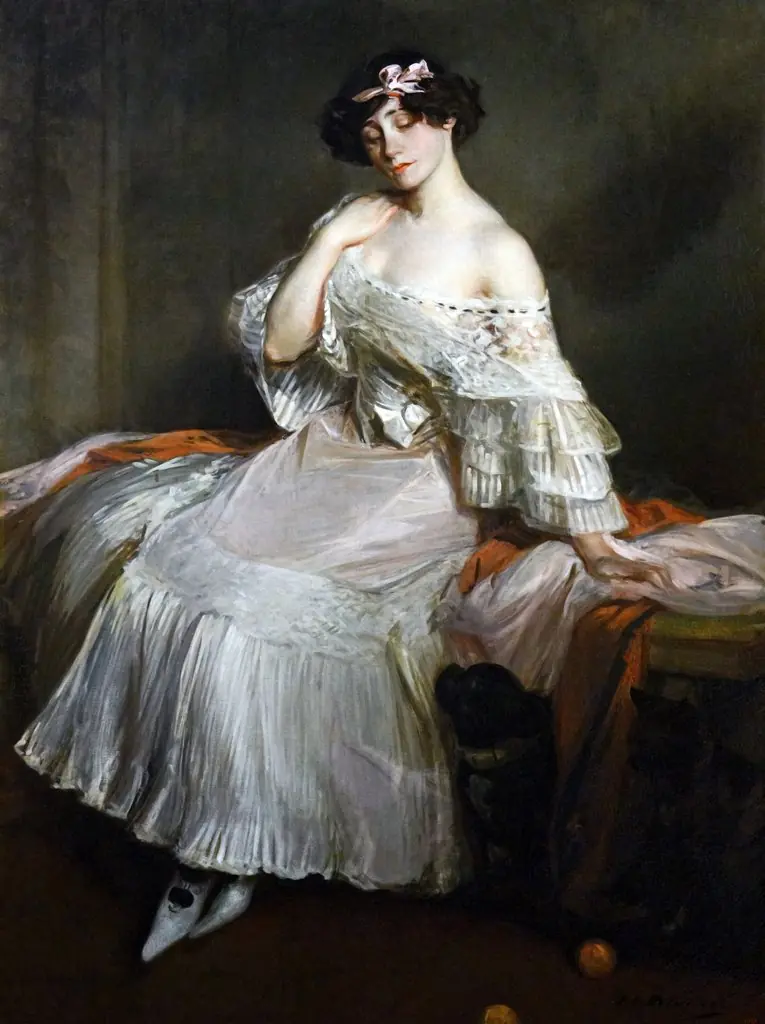 Portrait of the Novelist Colette
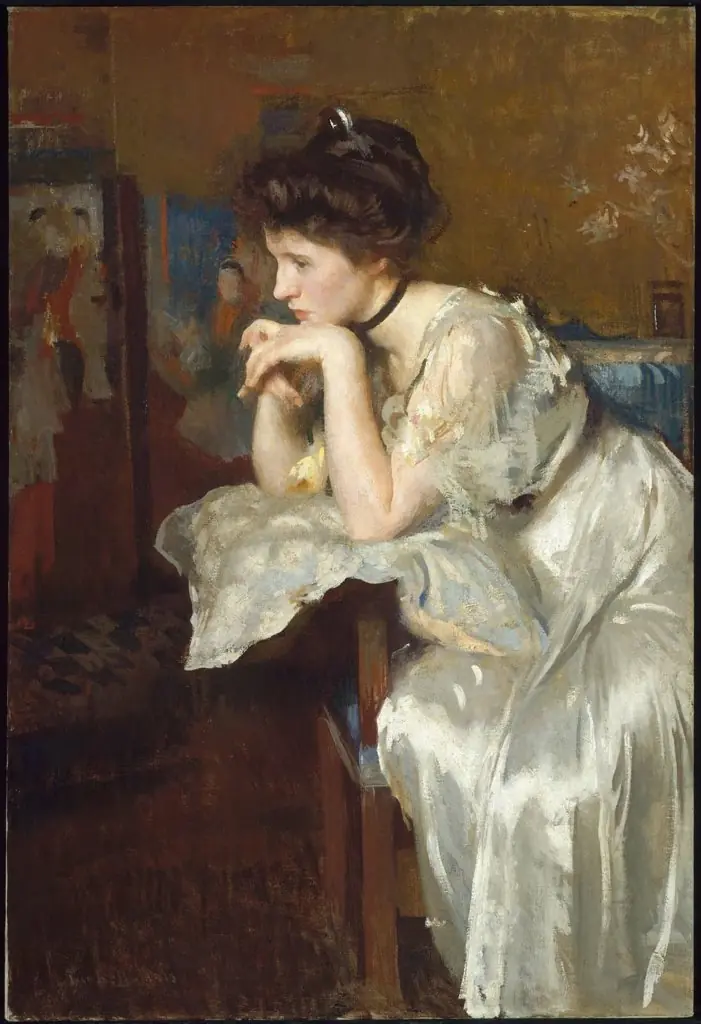 Reverie (Katharine Finn)
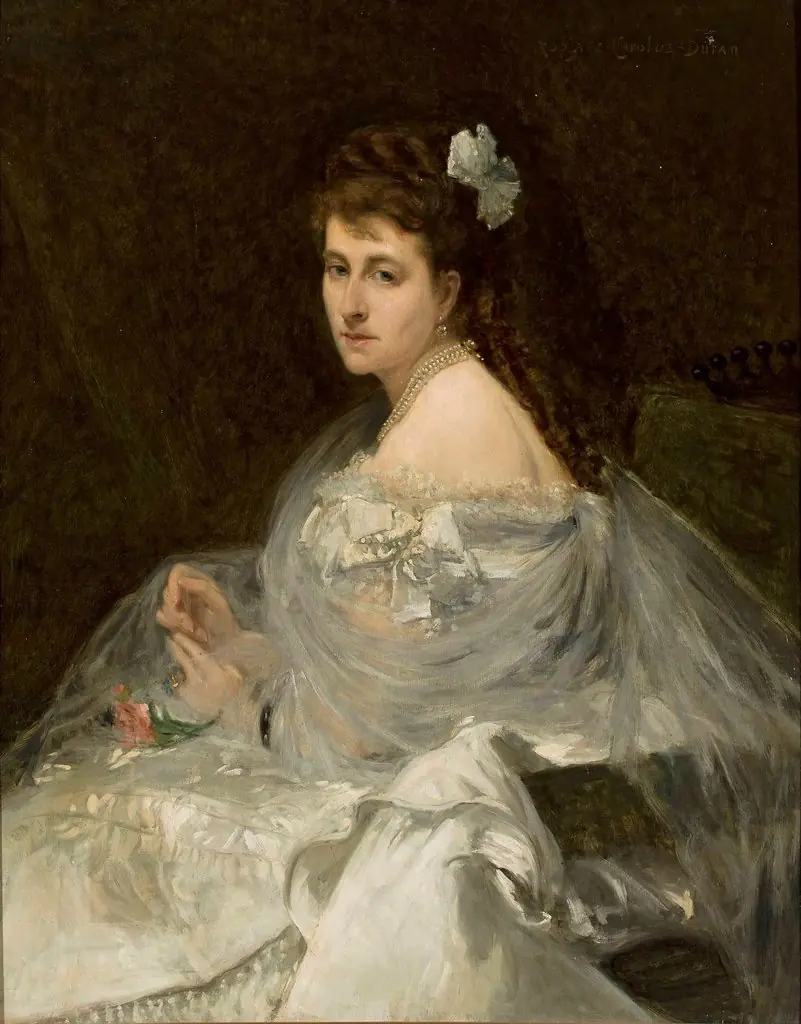 Portrait of Izabela Tyszkiewicz née Tyszkiewicz (1835–1907)
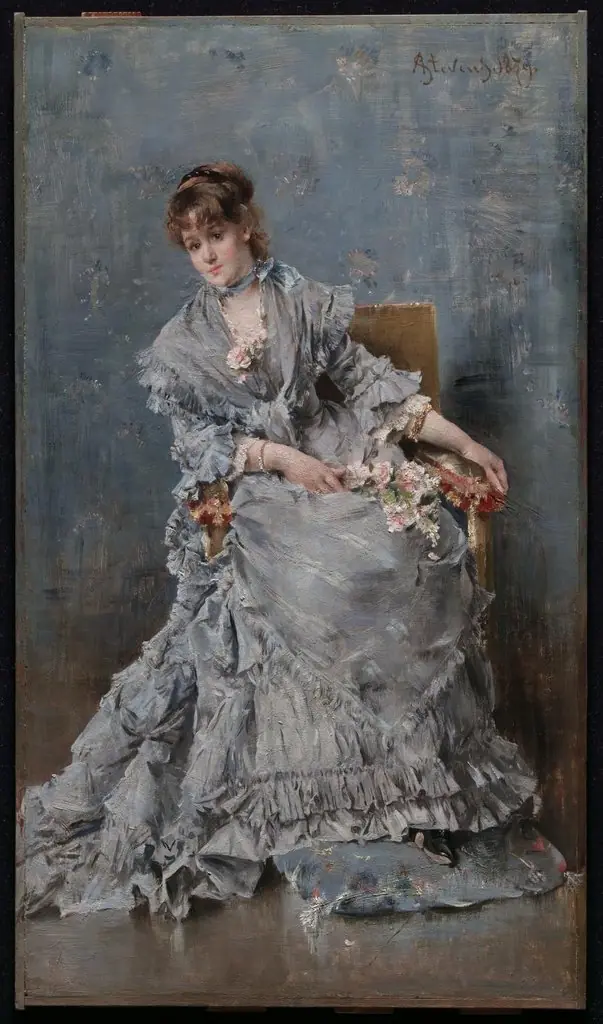 The Attentive Listener
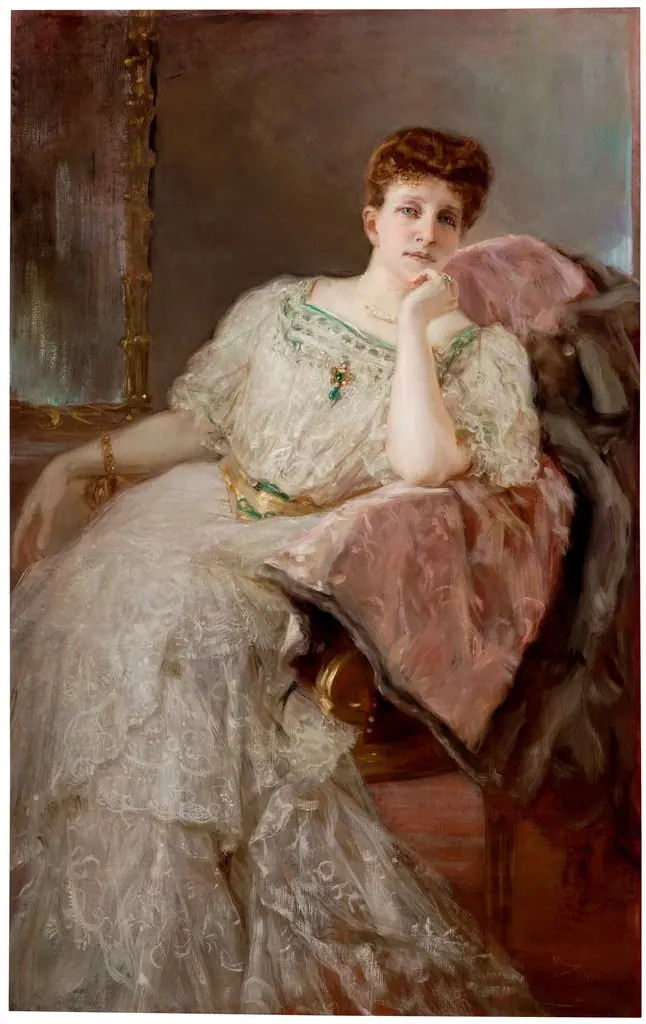 Matilde Noever de Vogel
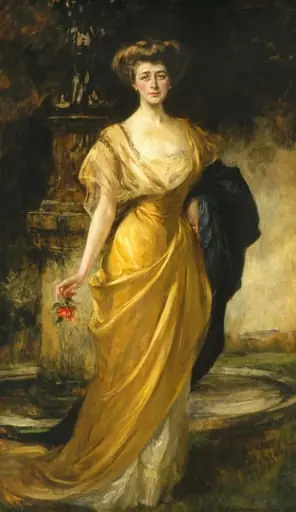 Nora McMullen Mellon (Mrs. Andrew W. Mellon)
 The Artist's Wife, Constance, Comtesse de Markievicz (1868-1927), Irish Painter and Revolutionary
 Emma Eames