Artwork
Self-Portrait
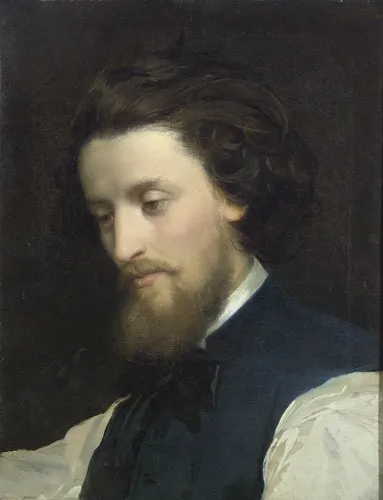
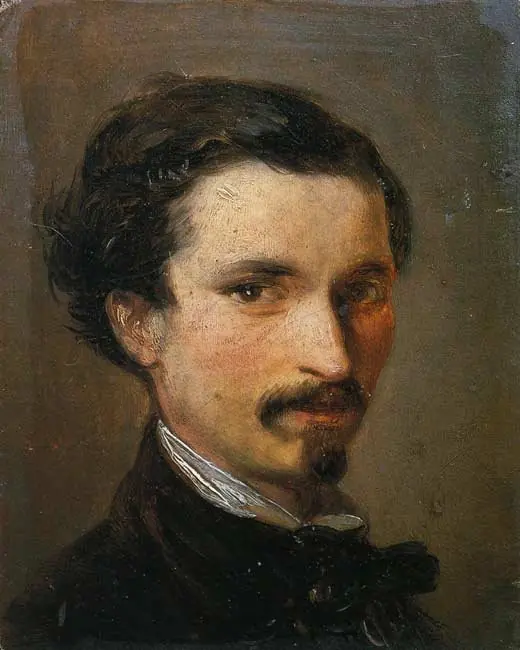
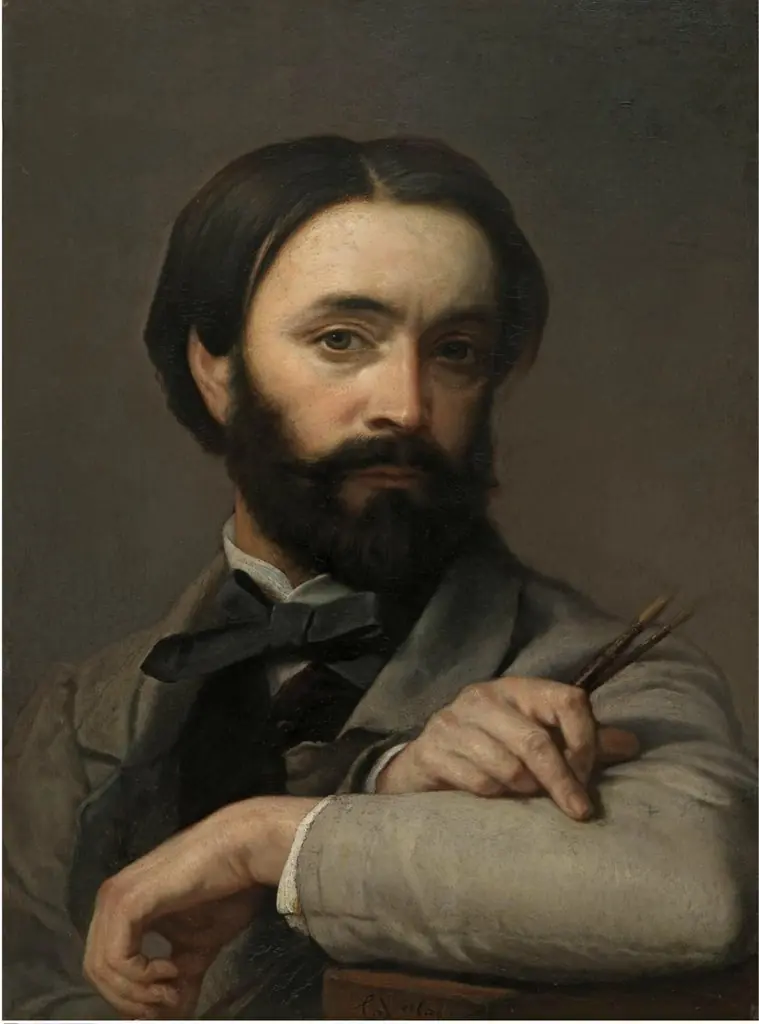
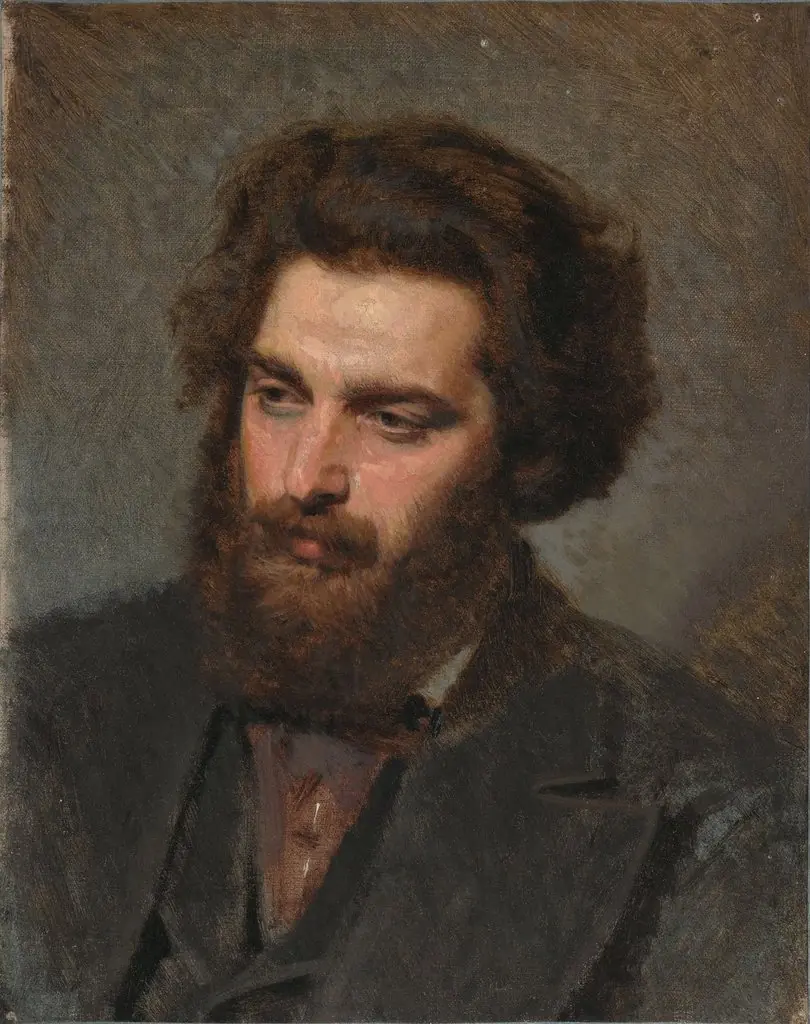
Self-Portrait is an oil painting by the Biedermeier artist Károly Telepy. It dates from 1850 and is held in the collection of the Hungarian National Gallery.
About this work
Overview
The work reflects the quiet introspection characteristic of the Biedermeier style, emphasizing personal presence over grand narrative.
Károly Telepy, a Hungarian painter active in the mid-19th century, created this oil self-portrait circa 1850. The work reflects the quiet introspection characteristic of the Biedermeier style, emphasizing personal presence over grand narrative. It is part of the permanent collection of the Hungarian National Gallery, where it stands as one of the few surviving personal images from the artist’s early career.
Subject & Meaning
The portrait presents Telepy as a composed, middle-aged man with dark hair and a full beard, dressed in a dark vest over a plain white shirt. His direct gaze and neutral expression convey a sense of quiet self-awareness rather than theatricality. The absence of symbolic objects or setting suggests an emphasis on identity itself — an unadorned assertion of the artist’s presence and professional dignity.
Technique & Style
Telepy employed chiaroscuro to model the face and torso with subtle gradations of light and shadow, lending volume and realism. The dark, unbroken background isolates the figure, focusing attention on the texture of skin, fabric, and hair. Brushwork is controlled and precise, typical of Biedermeier portraiture, prioritizing clarity and intimate detail over expressive flourish or dramatic contrast.
History & Provenance
Painted around 1850, the portrait likely served as a personal record or professional statement during Telepy’s formative years as an artist. It entered the Hungarian National Gallery’s collection in the late 19th or early 20th century, possibly through institutional acquisition or donation. Its survival is notable, as many works from this period were lost or dispersed during political upheavals.
Context
In mid-19th century Hungary, the Biedermeier aesthetic flourished amid a growing middle class seeking refined, domestic art. Telepy’s self-portrait aligns with this trend, favoring restraint and psychological depth over nationalistic or romantic themes. It reflects a broader European shift toward introspective portraiture, where the individual, not the elite, became the subject of quiet artistic attention.
Legacy
Though Telepy is not widely known outside Hungary, this self-portrait remains a significant example of domestic portraiture from the period. It offers insight into the self-perception of Hungarian artists during a time of cultural consolidation. The work continues to be studied for its technical discipline and its embodiment of Biedermeier values in a national context.
Artist & collection
Artist
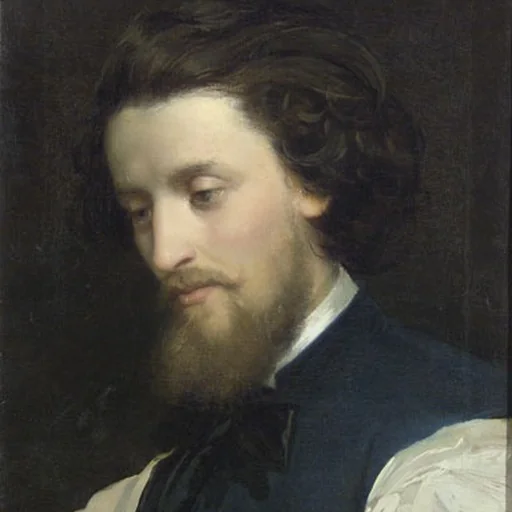
Károly Telepy (Debrecen 1828 - Budapest 1906) was a Hungarian artist with works in the collection of the Hungarian National Gallery.

 Jacomo of Cachiopin (1591 / 92-1659)
 Portrait of a Young Man
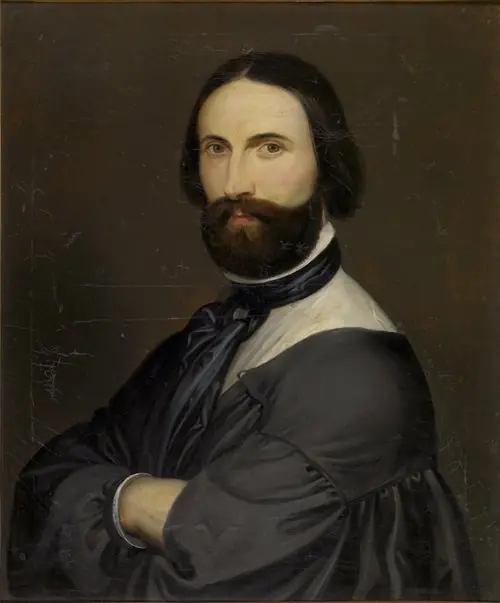 Self-portrait of the artist in his studio attire
 Self-portrait
 Portrait of Monsieur A. Koch
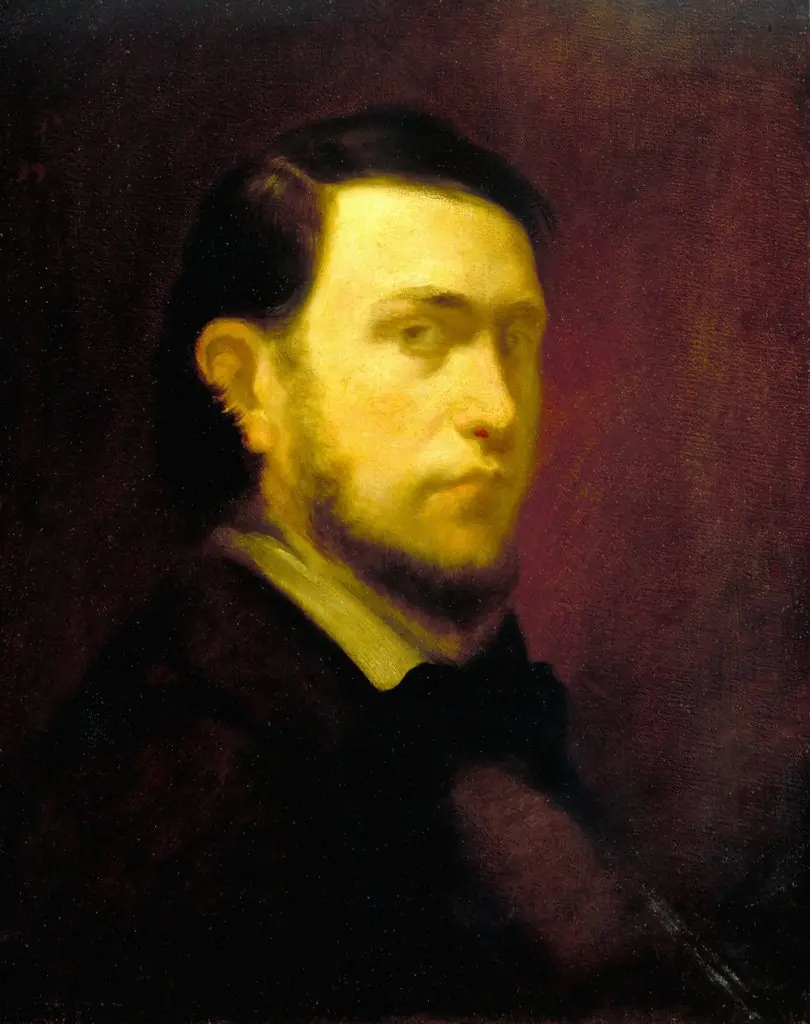 Self Portrait
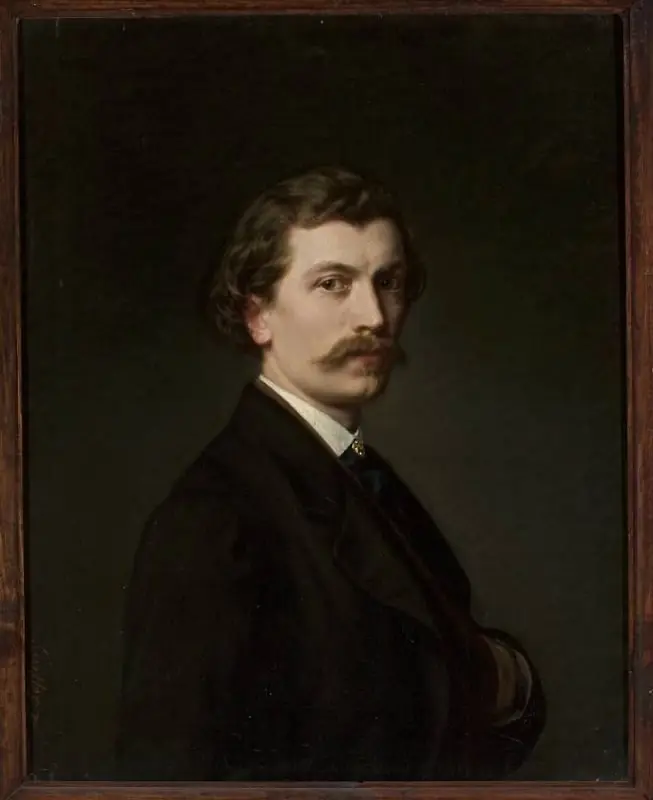 Self-portrait
 Alfred de Musset (1810-1857)
 Self Portrait
 Mathew B. Brady
 Portrait de Claude Monet
 Portrait of the Artist Arkhip Ivanovich Kuindzhi