Artwork
Flowers of a Hundred Worlds (Momoyogusa): Chrysanthemum and Paulownia (Kikukiri)
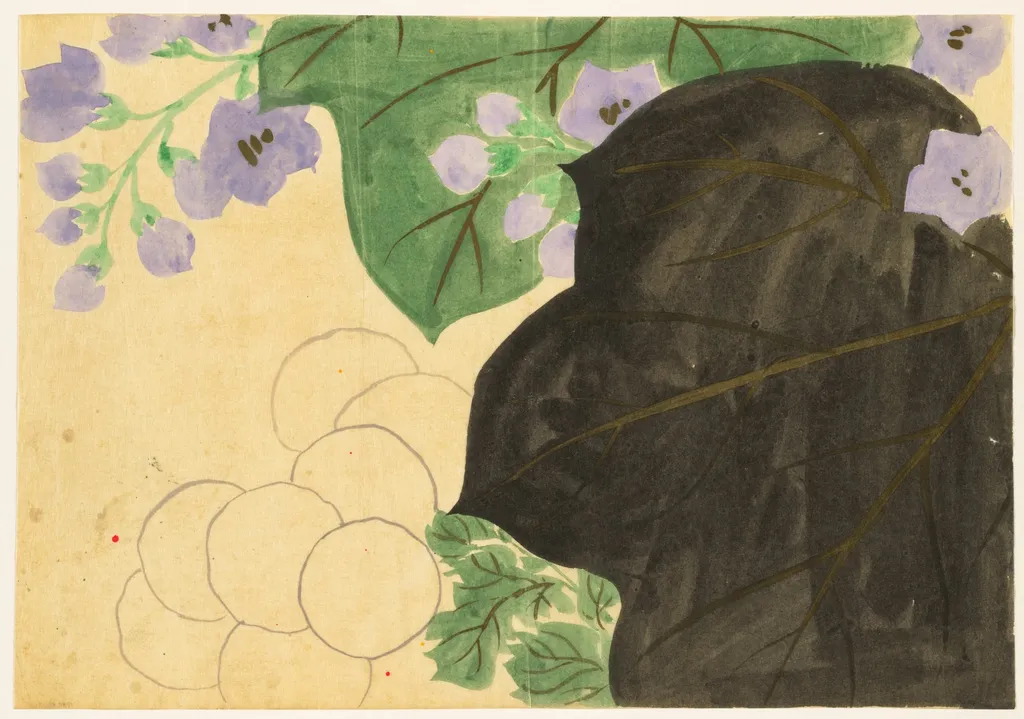
Flowers of a Hundred Worlds (Momoyogusa): Chrysanthemum and Paulownia (Kikukiri) is a drawing by Kamisaka Sekka. It dates from 1909 and is held in the collection of the Cleveland Museum of Art.
About this work
Overview
Unlike the refined printed versions that followed, this sketch reveals the artist’s early exploration of form and composition before final production.
This drawing is a preparatory study for Kamisaka Sekka’s Flowers of a Hundred Worlds series, created during Japan’s Meiji era. Executed in ink and light color on tracing paper, it captures a chrysanthemum and paulownia tree in a loose, spontaneous manner. Unlike the refined printed versions that followed, this sketch reveals the artist’s early exploration of form and composition before final production.
Subject & Meaning
The chrysanthemum and paulownia are traditional Japanese symbols: the former associated with the imperial family and autumn, the latter with nobility and growth. Their pairing here reflects a classical botanical dialogue, rooted in Japanese aesthetic traditions. Sekka’s choice of these motifs aligns with a broader cultural interest in reinterpreting natural forms through a modern lens during a period of rapid change.
Technique & Style
Sekka used tracing paper to experiment freely with ink and subtle washes of color, allowing for revisions and layering. The brushwork is fluid and unpolished, emphasizing movement over precision. This approach contrasts with the controlled lines of the final woodblock prints, showing how the artist refined his vision through iterative sketching, blending traditional ink techniques with modern studio practices.
History & Provenance
Created in the late 19th or early 20th century, this drawing belongs to a series Sekka developed as part of his engagement with both classical Japanese motifs and emerging commercial print culture. While the finished prints were widely distributed, these preparatory studies remained in the artist’s possession or among close associates, preserving a private record of his creative process.
Context
During the Meiji period, Japan underwent intense modernization, and traditional arts were reevaluated. Sekka, trained in classical Rinpa aesthetics, sought to revitalize them for contemporary audiences. His preparatory drawings reflect this tension—honoring historical forms while adapting them through new materials and methods, bridging Edo-era traditions with Meiji-era innovation.
Legacy
Sekka’s preparatory sketches, including this one, offer insight into the transition from hand-drawn art to mass-produced prints in early modern Japan. They influenced later designers interested in integrating traditional motifs into modern graphic design. These studies remain valuable for understanding how artists navigated cultural change without abandoning their heritage.
Artist & collection
Artist
Kamisaka Sekka (神坂 雪佳; 1866–1942) was an important artistic figure in early twentieth-century Japan.

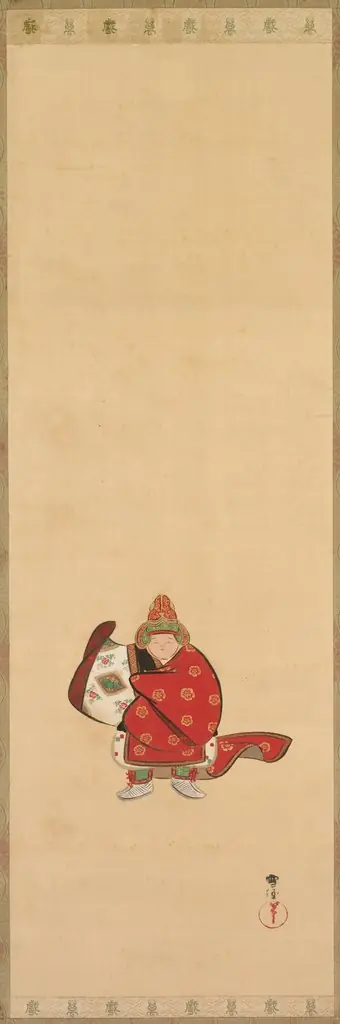 Bugaku Dancer
 Bugaku Dancer
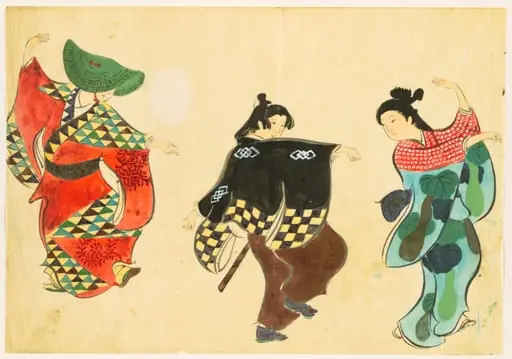 Flowers of a Hundred Worlds (Momoyogusa): Dancing (Odori)
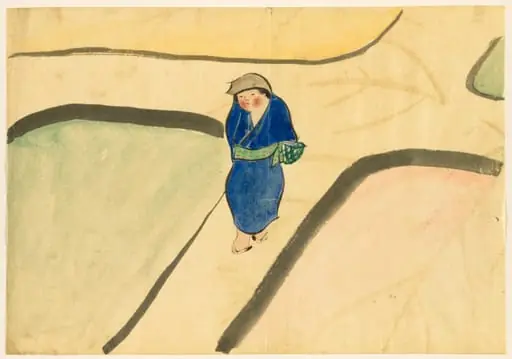 Flowers of a Hundred Worlds (Momoyogusa): Spring Field (Haru no tanomo)
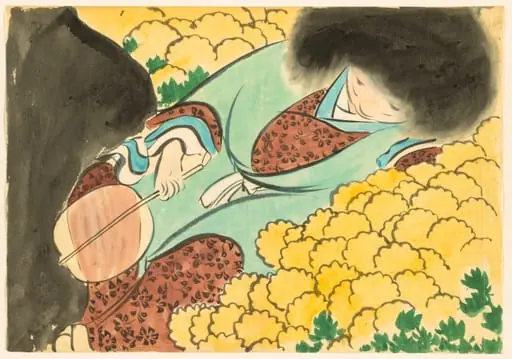 Flowers of a Hundred Worlds (Momoyogusa): Chrysanthemum Boy (Kikujidō)
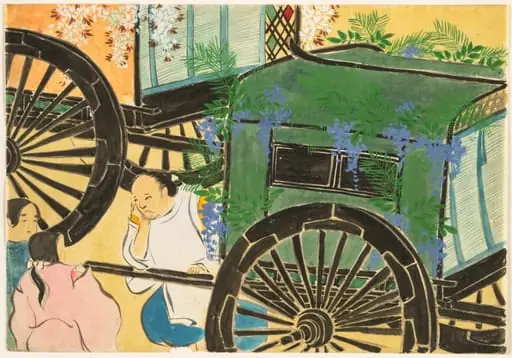 Flowers of a Hundred Worlds (Momoyogusa): Flower-draped Carts
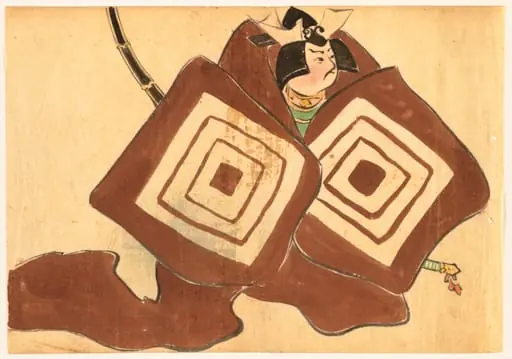 Flowers of a Hundred Worlds (Momoyogusa): Shibaraku (Shibaraku)
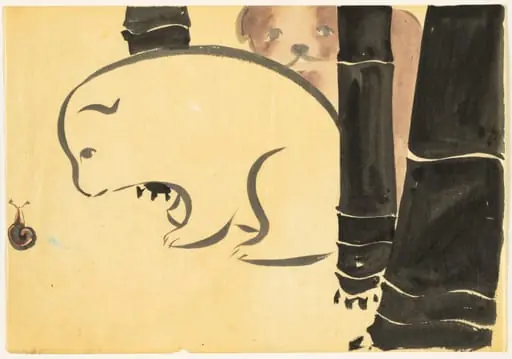 Flowers of a Hundred Worlds (Momoyogusa): Puppies (Enokoro)