Artwork
Flowers of a Hundred Worlds (Momoyogusa): Dancing (Odori)
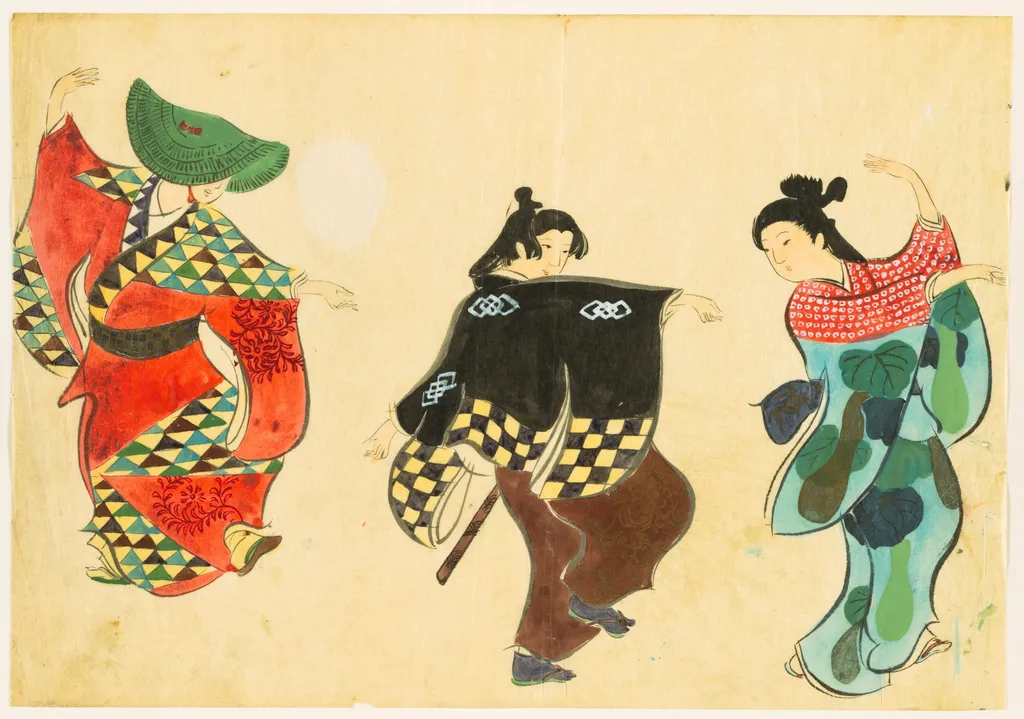
Flowers of a Hundred Worlds (Momoyogusa): Dancing (Odori) is a drawing by Kamisaka Sekka. It dates from 1909 and is held in the collection of the Cleveland Museum of Art.
About this work
Overview
Kamisaka Sekka created a series of preparatory drawings for his Flowers of a Hundred Worlds, using tracing paper and ink with subtle color washes. These sketches, including the one depicting a dancer, were studies for later woodblock prints. They reveal his process of refining composition and movement before transferring ideas to the final printed form.
Subject & Meaning
The drawing portrays a woman in motion, dressed in traditional attire, capturing a moment of dance. Rather than depicting a specific ritual or narrative, it evokes the elegance and rhythm of Japanese performance. The figure embodies grace and transience, themes central to Sekka’s broader exploration of cultural aesthetics in the early 20th century.
Technique & Style
Executed in ink and light color on tracing paper, the drawing features fluid, spontaneous lines that contrast with the precision of the final prints. Sekka used the transparency of the paper to layer and adjust forms, allowing for iterative development. The loose brushwork suggests immediacy, preserving the energy of the initial idea before formalization.
History & Provenance
These preparatory sketches were made in the early 1900s as part of Sekka’s effort to revive and reinterpret traditional Japanese decorative arts. They remained in the artist’s possession or within his circle until later acquired by institutions interested in Meiji and Taishō-era design. Their survival offers rare insight into his working method.
Context
Sekka worked during a period of intense cultural negotiation in Japan, balancing Western influences with a renewed interest in native traditions. His drawings reflect this duality—drawing from Edo-period motifs while embracing modern techniques. The Flowers of a Hundred Worlds series sought to reframe classical subjects for contemporary audiences.
Legacy
Sekka’s preparatory sketches are now valued as independent works that illuminate the transition from sketch to print in Japanese design. They demonstrate his commitment to craftsmanship and his role in bridging historical aesthetics with modern artistic practice, influencing later generations of designers and printmakers.
Own this work as a print
Artist & collection
Artist
Kamisaka Sekka (神坂 雪佳; 1866–1942) was an important artistic figure in early twentieth-century Japan.

 Bugaku Dancer
 Bugaku Dancer
 Flowers of a Hundred Worlds (Momoyogusa): Spring Field (Haru no tanomo)
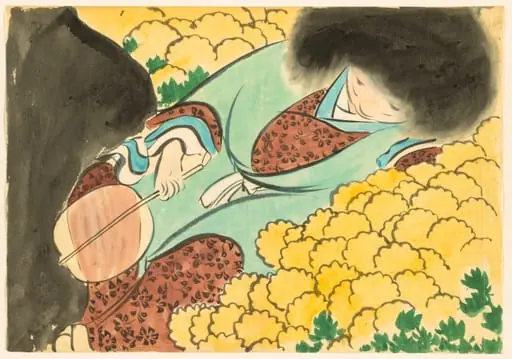 Flowers of a Hundred Worlds (Momoyogusa): Chrysanthemum Boy (Kikujidō)
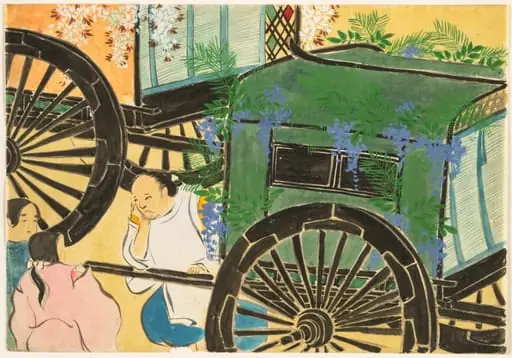 Flowers of a Hundred Worlds (Momoyogusa): Flower-draped Carts
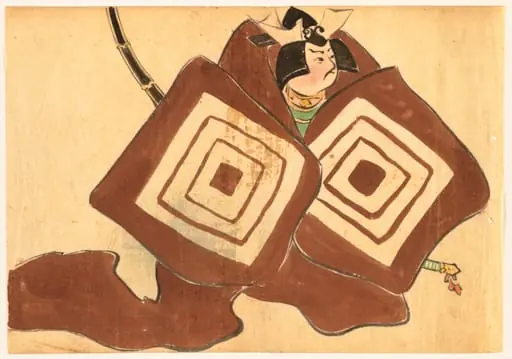 Flowers of a Hundred Worlds (Momoyogusa): Shibaraku (Shibaraku)
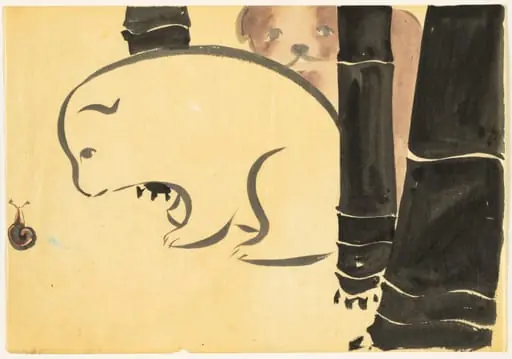 Flowers of a Hundred Worlds (Momoyogusa): Puppies (Enokoro)
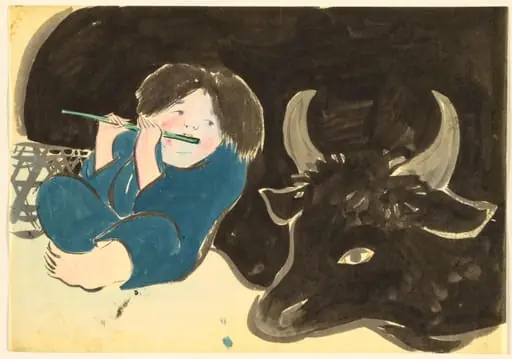 Flowers of a Hundred Worlds (Momoyogusa): Oxherd (Bokudo)
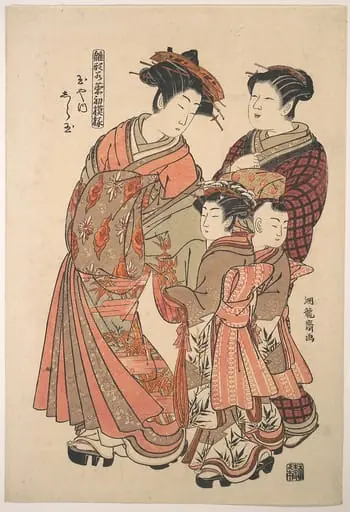 『雛形若菜初模様 玉や内 しら玉』|The Courtesan Shiratama of the Tamaya Brothel, from the series “A Pat-tern Book of the Year’s First Designs, Fresh as Spring Herbs” (“Hinagata wakana hatsu moyō”)
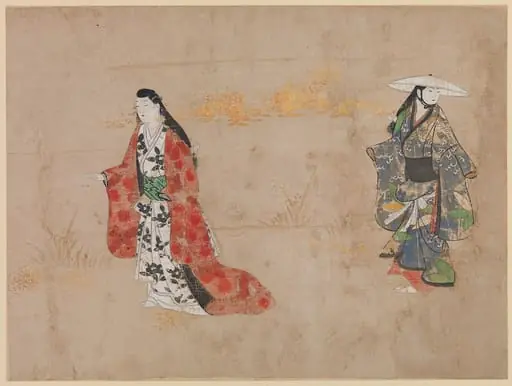 Untitled
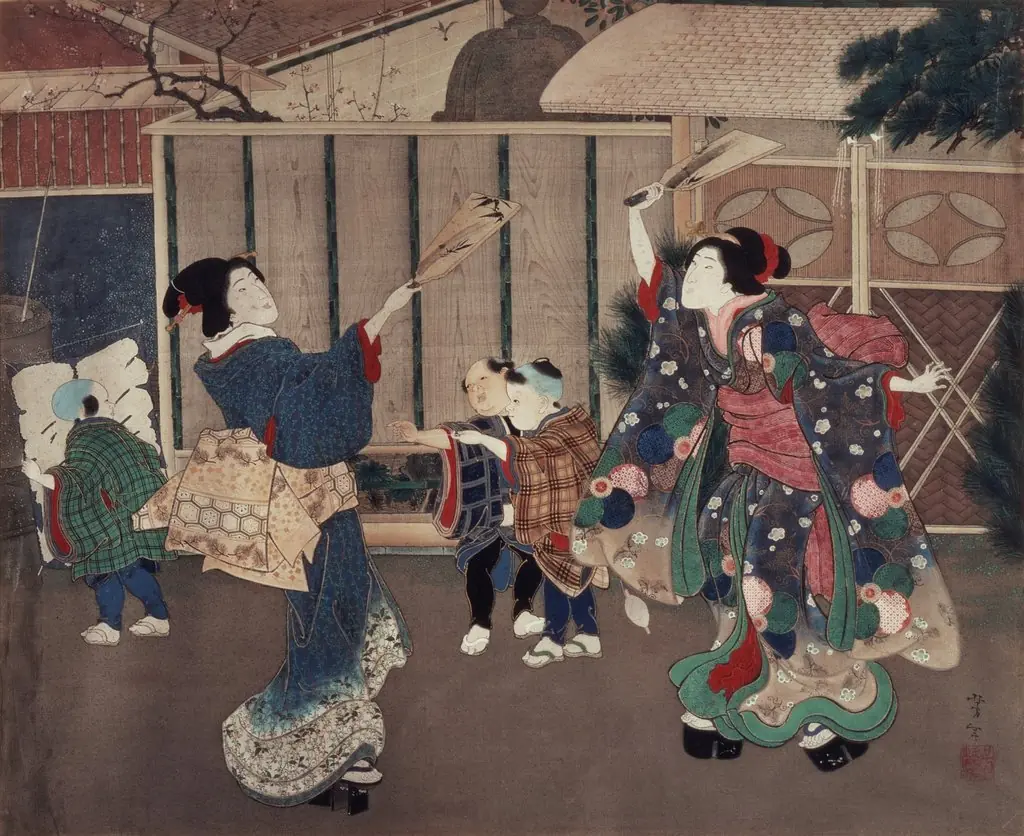 January: Celebrating the New Year
 Untitled
 Beauties at the Seashore
 遊君出そめ初衣裳 扇屋内花扇|The Oiran Hanaogi of Ogiya attended by Two Shinzo and Her Kamuro Yoshino
 Women Watching a Girl Dance on Shells (From the series Fashionable Presentations of Three Horses)
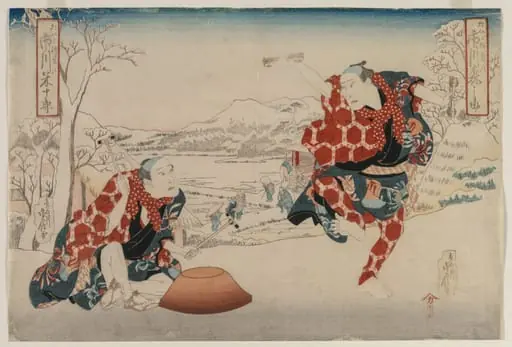 Ichikawa Norinosuke and Ichikawa Yonejuro as Morihachi and Yonehachi, Two Comedians
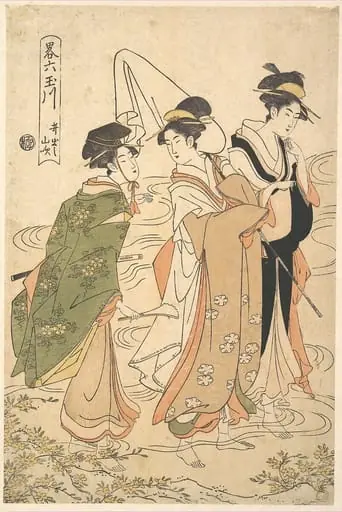 礫川亭永理 (鳥橋斎栄里)画 「畧六玉川 井出の山吹」|Mountain Roses of Ide (Ide no Yamabuki), from the series A Parodic Six Jewel Rivers (Yatsushi Mu-Tamagawa)
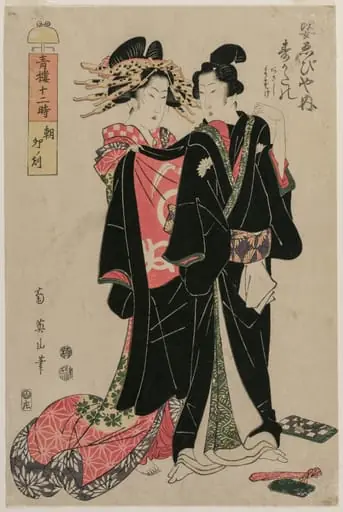 Sugatano of Sugata Ebisuya in the Morning, Hour of the Rabbit, from the series The Twelve Hours in the Pleasure Quarters
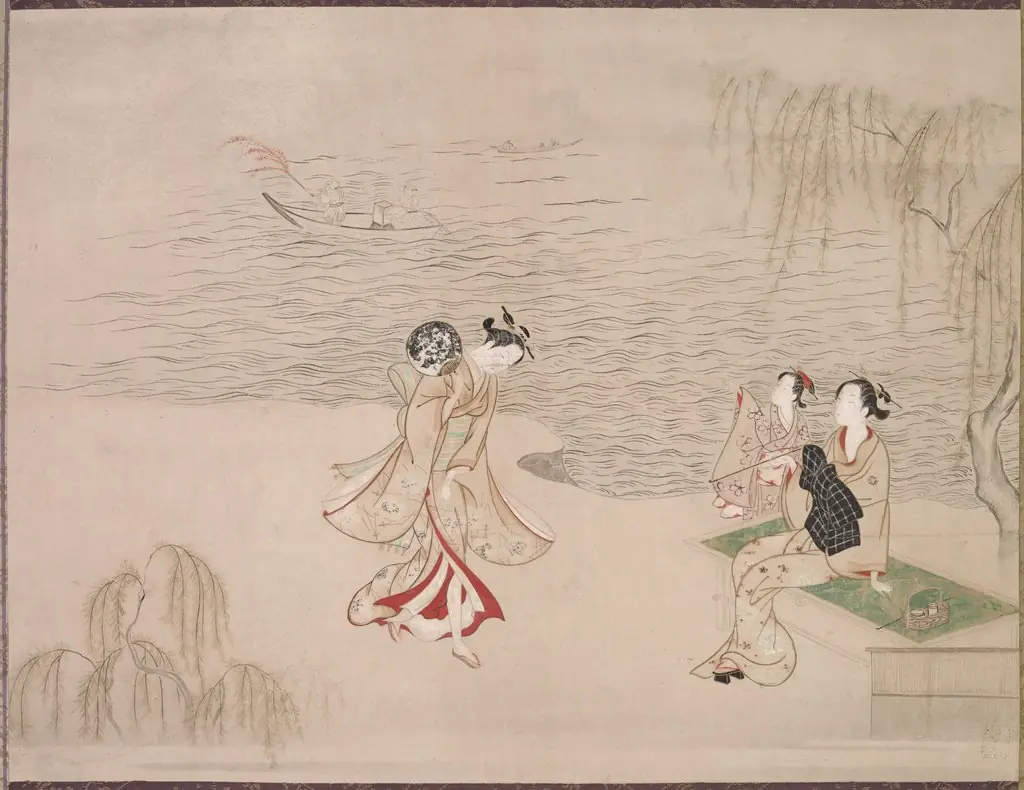 Beauties at the Seashore
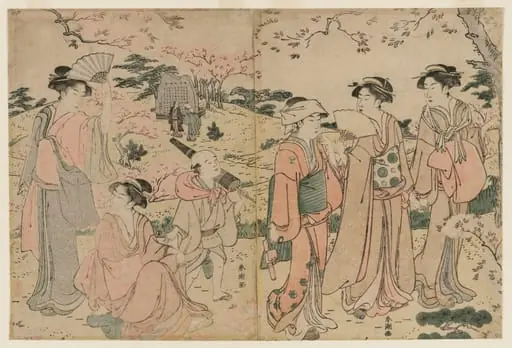 Women Viewing Cherry Blossoms at Asukayama