Artwork
Flowers of a Hundred Worlds (Momoyogusa): Flower-draped Carts
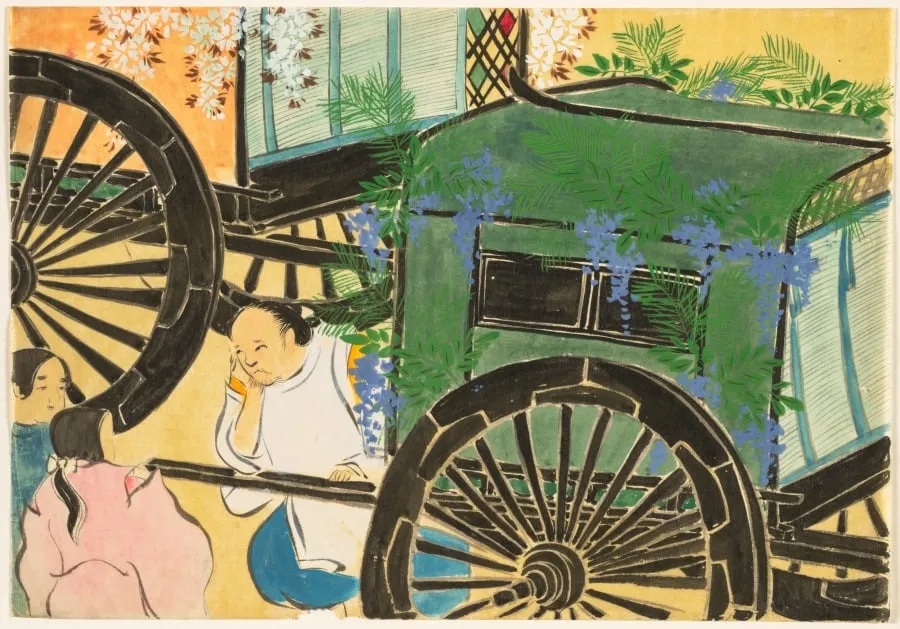
Flowers of a Hundred Worlds (Momoyogusa): Flower-draped Carts is a drawing by Kamisaka Sekka. It dates from 1909 and is held in the collection of the Cleveland Museum of Art.
About this work
You see two ox-drawn carts covered in vines and flowers, rolling down a gold-leaf road under a soft blue sky.
You see two ox-drawn carts covered in vines and flowers, rolling down a gold-leaf road under a soft blue sky.
Sekka painted this in 1909, when Japan was mixing old woodblock styles with new Western ideas. The flowers aren’t real—they’re symbols from old poems, each one standing for a season or a feeling. The gold background isn’t just pretty; it was a trick from Buddhist scrolls to make the scene feel timeless.
If you like this, look up *sfumato*—the way Sekka blurred petal edges to make them glow.
Overview
Kamisaka Sekka created preparatory drawings for his Flowers of a Hundred Worlds series in 1909 using ink and light color on tracing paper. These sketches, executed with fluid, spontaneous lines, differ markedly from the refined, printed final versions. The composition features two ox-drawn carts, entirely enveloped in stylized flora, moving along a gilded path beneath a pale blue sky, suggesting movement through an idealized, non-specific landscape.
Subject & Meaning
The flowers depicted are not botanical records but poetic symbols drawn from classical Japanese literature, each representing seasonal change or emotional nuance. The carts, draped in blossoms, evoke transience and renewal, central themes in traditional Japanese aesthetics. Their journey along a golden road implies a passage beyond the ordinary, aligning with literary traditions that link nature with spiritual contemplation.
Technique & Style
Sekka employed loose, expressive brushwork in these studies, allowing ink and watercolor to flow with minimal control. Petals and vines are softened at the edges, creating a subtle luminosity reminiscent of sfumato. The use of gold leaf, borrowed from Buddhist scroll painting, elevates the scene into a timeless realm, contrasting with the delicate, almost ephemeral quality of the painted flora.
History & Provenance
These drawings were made as preparatory studies for a larger printed series commissioned during Japan’s Meiji era, a time of intense cultural synthesis. Sekka, trained in traditional Rinpa aesthetics, was actively engaging with Western artistic concepts and modern printing technologies. The sketches survive as rare evidence of his process, bridging hand-drawn artistry and industrial reproduction.
Context
Created in 1909, the work reflects Japan’s broader artistic negotiation between heritage and modernity. While traditional motifs like gold backgrounds and poetic flora persisted, new techniques and materials—such as tracing paper and commercial printing—were being adopted. Sekka’s drawings embody this duality, honoring classical forms while experimenting with form and medium.
Legacy
These preparatory sketches reveal Sekka’s role in redefining Japanese decorative art for a modern age. By preserving the spontaneity of hand-drawn lines alongside inherited symbolism, he influenced later generations of designers and printmakers. The works stand as documents of transition, capturing a moment when tradition was not abandoned but reinterpreted through new tools and perspectives.
Artist & collection
Artist
Kamisaka Sekka (神坂 雪佳; 1866–1942) was an important artistic figure in early twentieth-century Japan.

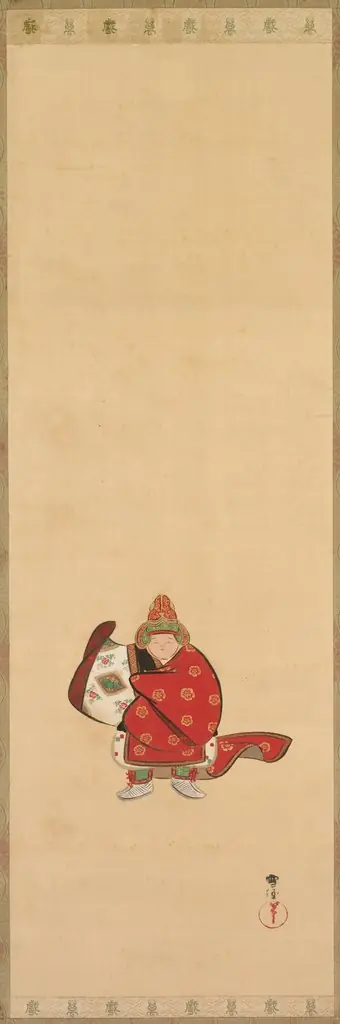 Bugaku Dancer
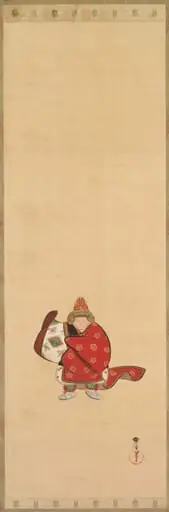 Bugaku Dancer
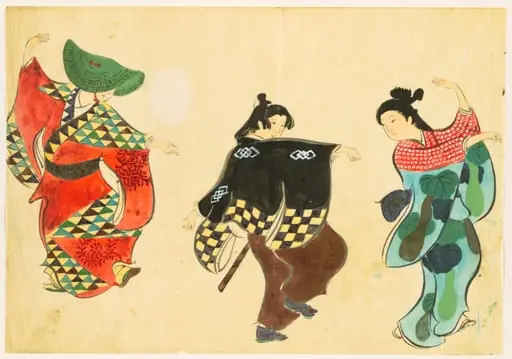 Flowers of a Hundred Worlds (Momoyogusa): Dancing (Odori)
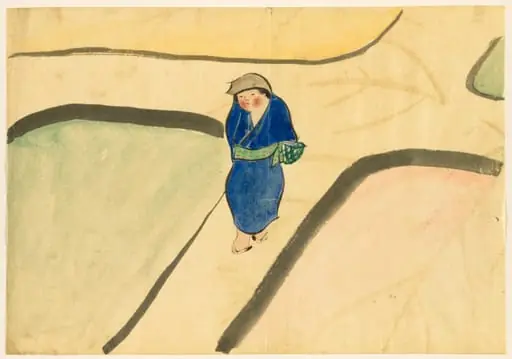 Flowers of a Hundred Worlds (Momoyogusa): Spring Field (Haru no tanomo)
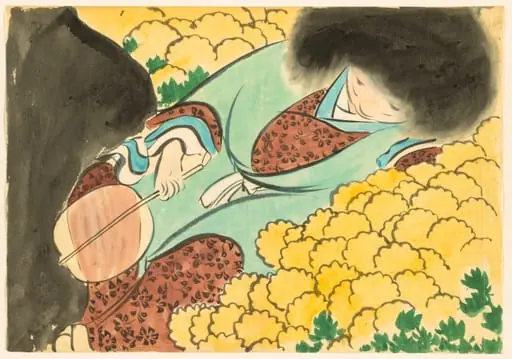 Flowers of a Hundred Worlds (Momoyogusa): Chrysanthemum Boy (Kikujidō)
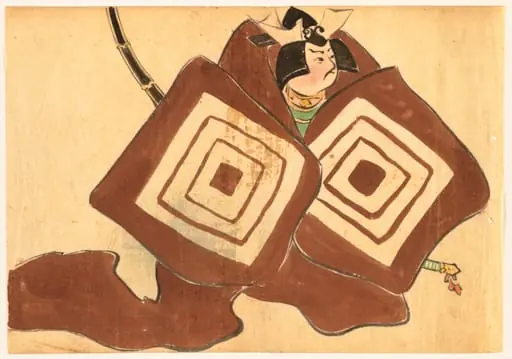 Flowers of a Hundred Worlds (Momoyogusa): Shibaraku (Shibaraku)
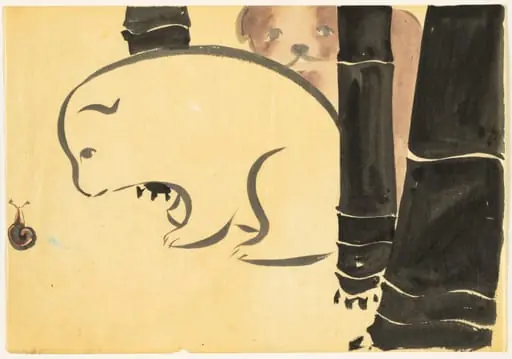 Flowers of a Hundred Worlds (Momoyogusa): Puppies (Enokoro)
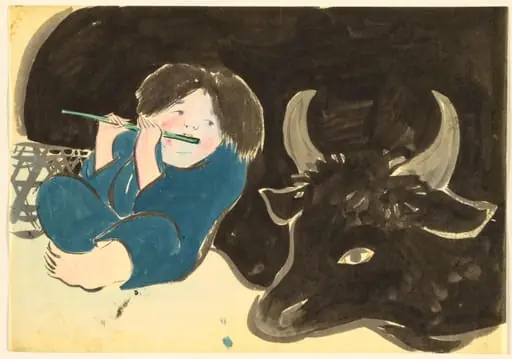 Flowers of a Hundred Worlds (Momoyogusa): Oxherd (Bokudo)