Artwork
Grindelwald and the Wetterhorn
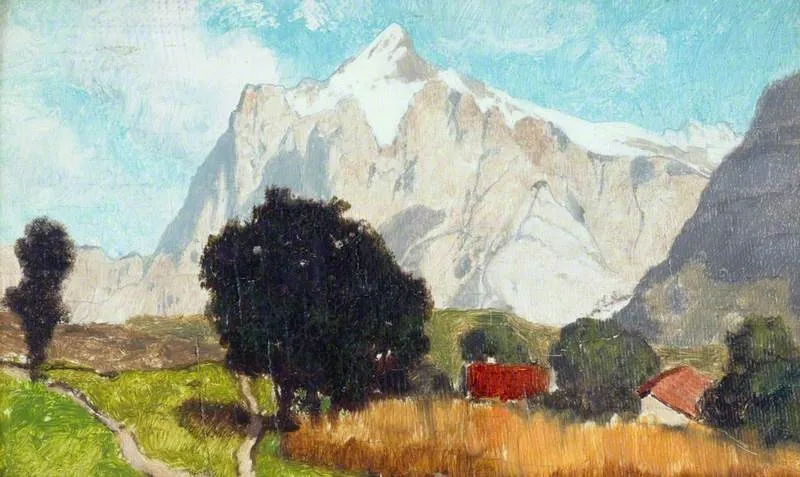
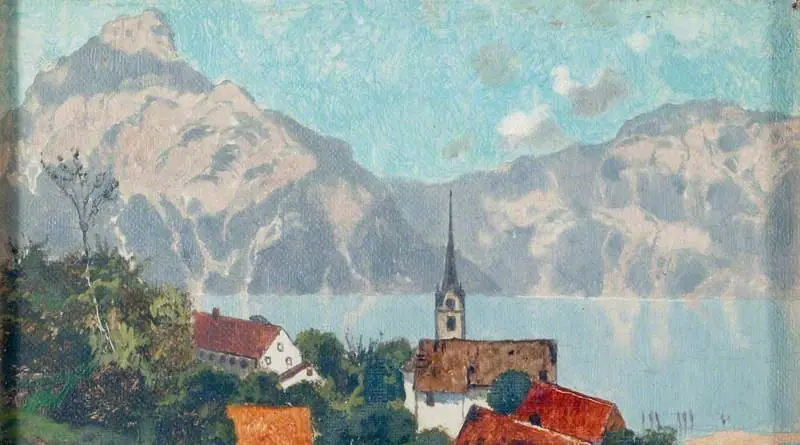
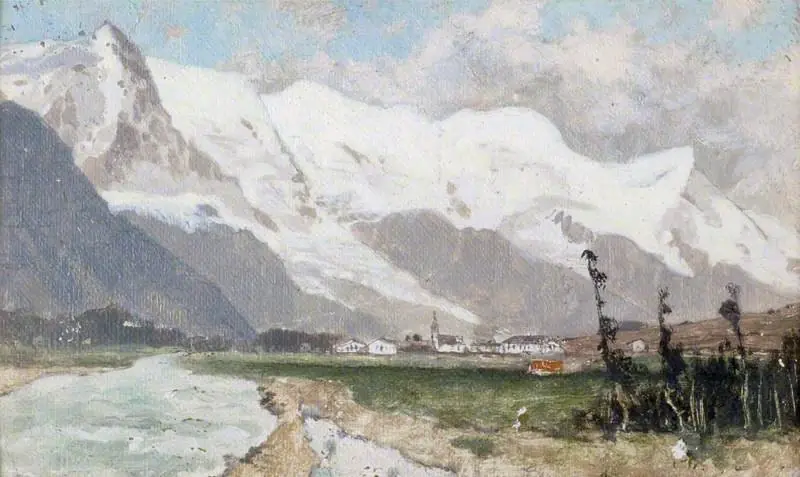
Grindelwald and the Wetterhorn is an oil painting by Karl Heffner. It dates from 1897 and is held in the collection of the Victoria and Albert Museum.
About this work
Overview
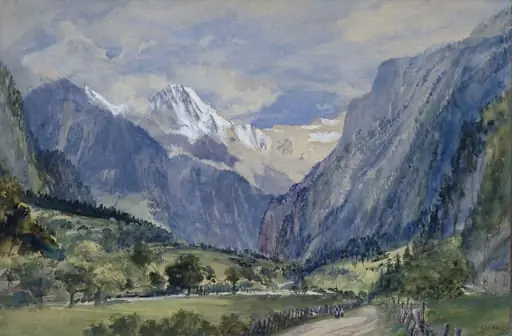
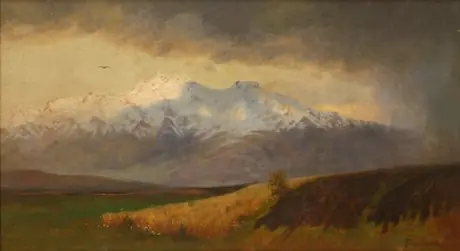
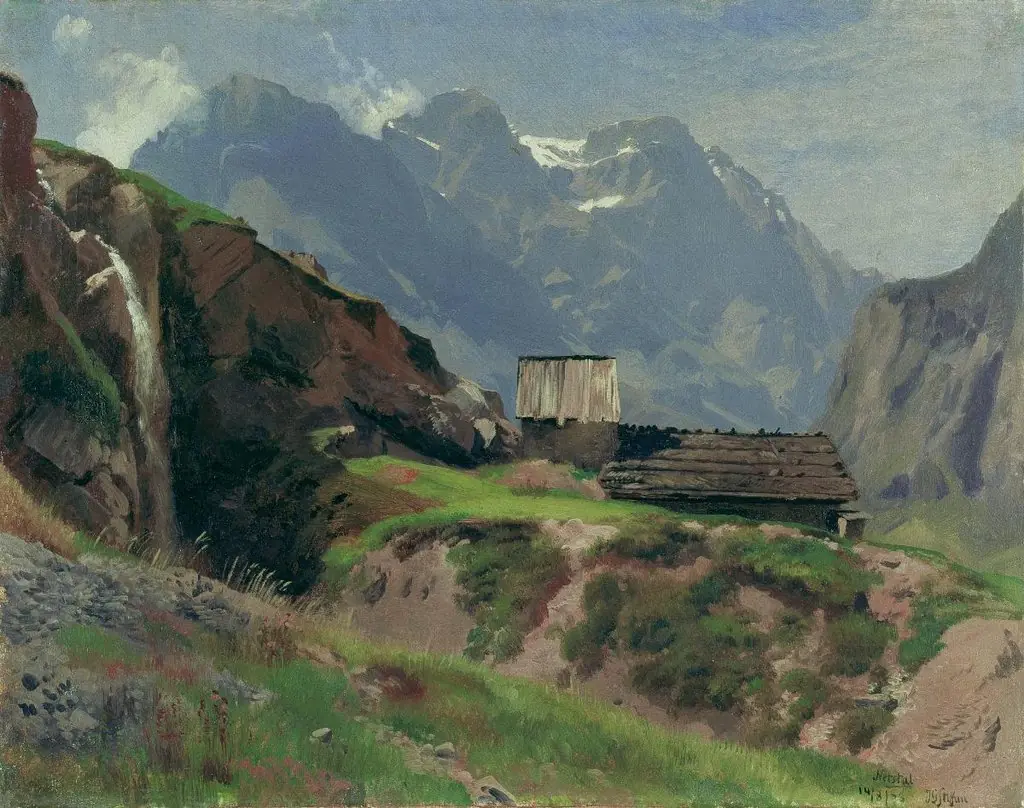
It captures a quiet alpine vista in the Bernese Oberland, featuring the prominent Wetterhorn peak rising behind a foreground of trees and a modest structure.
Created around 1897, Grindelwald and the Wetterhorn is an oil painting by German artist Karl Heffner. It captures a quiet alpine vista in the Bernese Oberland, featuring the prominent Wetterhorn peak rising behind a foreground of trees and a modest structure. The work is part of the Victoria and Albert Museum’s collection, where it is preserved as an example of late 19th-century landscape painting rooted in European Romantic traditions.
Subject & Meaning
The painting presents a tranquil, unpopulated mountain scene, emphasizing the scale and stillness of nature. The Wetterhorn, partially veiled in mist, conveys a sense of quiet grandeur, while the small red-roofed building suggests human presence without intrusion. The composition avoids drama or narrative, instead inviting contemplation of the landscape’s enduring calm and subtle beauty.
Technique & Style
Heffner employed oil paint to build layered textures, particularly in the foliage and rolling hills, where visible brushwork suggests movement and organic form. The sky, lightly stippled with clouds, contrasts with the muted tones of the mountains. The palette favors soft blues, greens, and earth tones, reinforcing the scene’s serenity. The technique reflects a deliberate, observational approach rather than idealized romanticism.
History & Provenance
The painting was completed in the late 1890s and entered the Victoria and Albert Museum’s collection at some point after its creation. No detailed record of its early ownership or exhibition history is publicly documented. Its inclusion in the museum suggests it was acquired as a representative work of German landscape painting from the period, though its specific acquisition context remains unclear.
Context
During the late 19th century, alpine landscapes gained popularity among European artists and tourists drawn to the region’s perceived purity and grandeur. Heffner’s work aligns with this trend, reflecting a broader cultural interest in nature as a site of quiet reflection. Unlike dramatic Romantic depictions, his approach is restrained, mirroring a shift toward observational realism in regional art practices.
Legacy
Grindelwald and the Wetterhorn remains a modest but representative example of German landscape painting from the fin de siècle. While Heffner is not widely known today, this work contributes to the understanding of how lesser-known artists engaged with alpine scenery during a period of growing environmental awareness and tourism. It endures as a quiet testament to the aesthetic values of its time.
Artist & collection