Artwork
Milliner
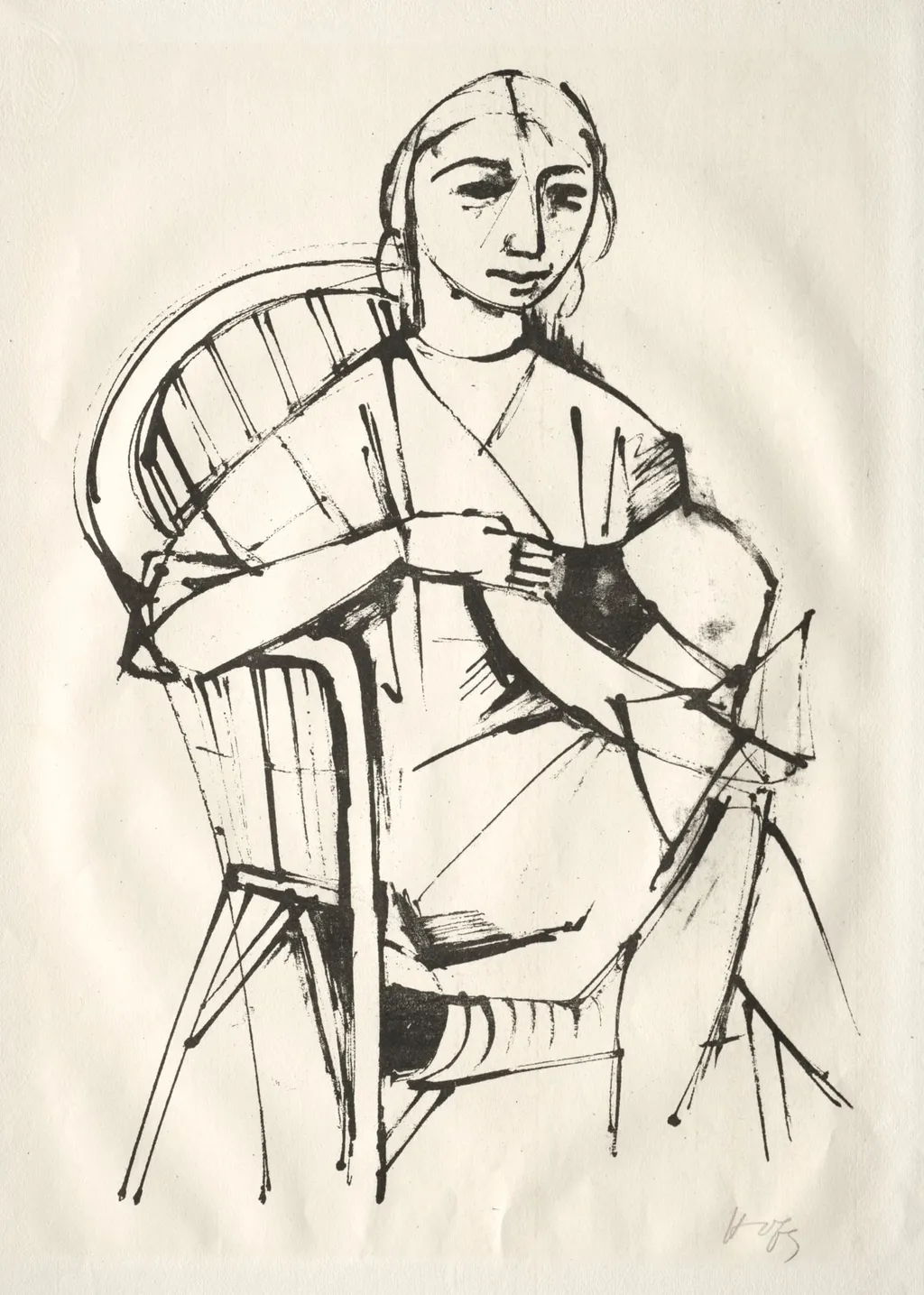
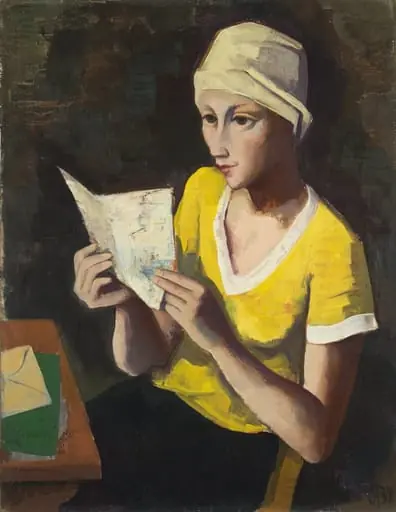
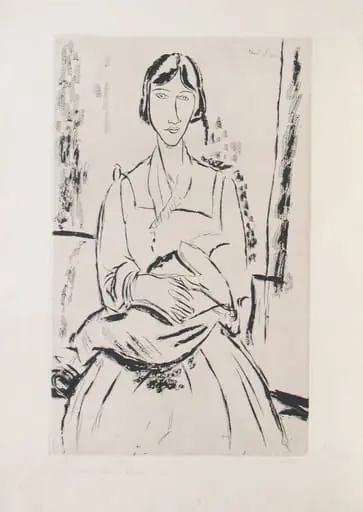
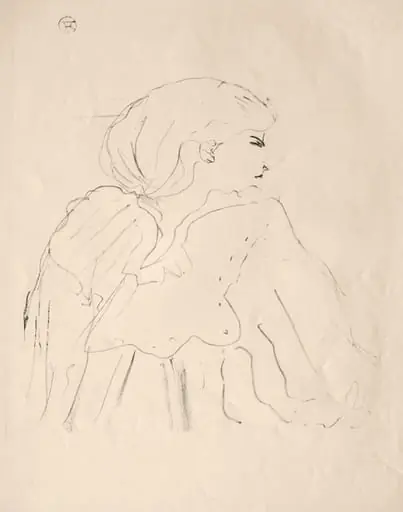
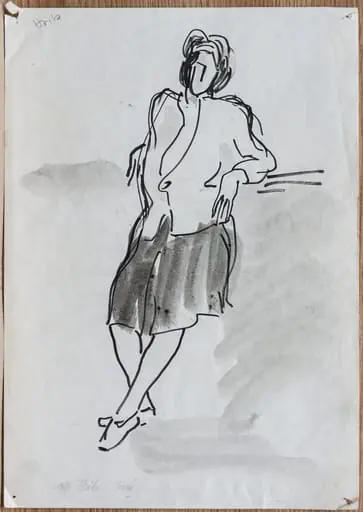
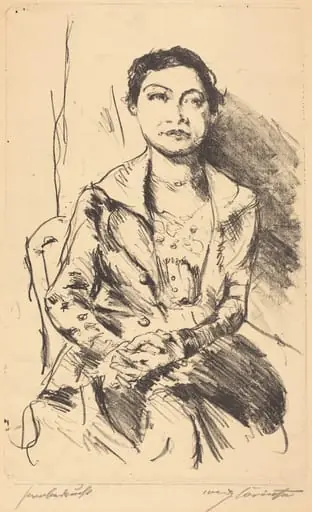
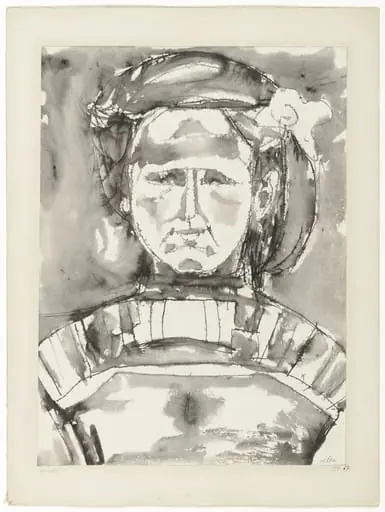
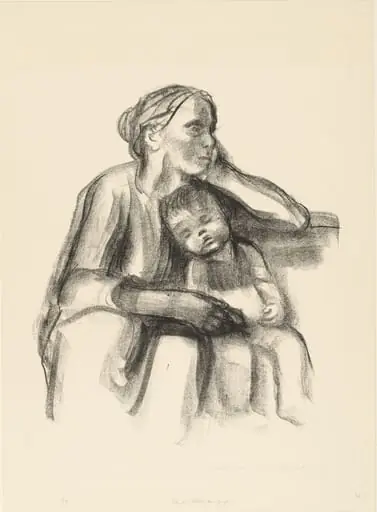
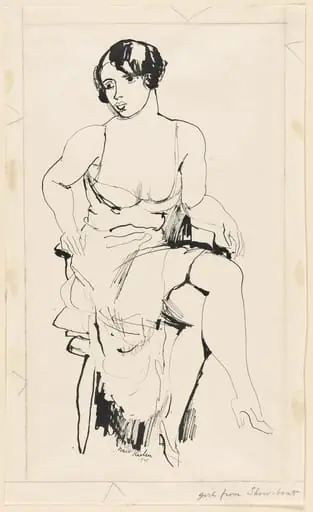
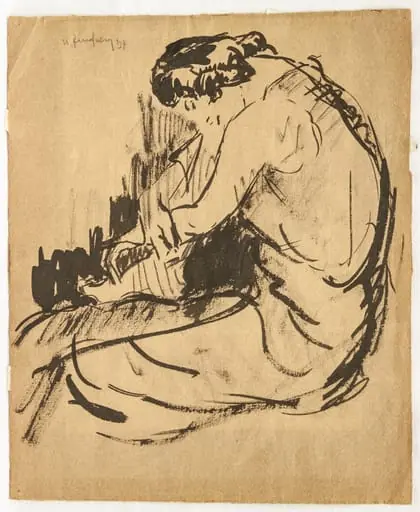
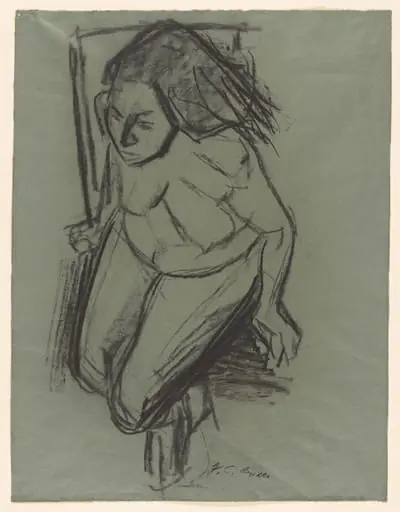
Milliner is a print by Karl Hofer. It dates from 1922 and is held in the collection of the Cleveland Museum of Art.
About this work
Overview
The chair’s clean lines and the absence of background elements focus attention on the subject’s inward posture, evoking a sense of meditative calm.
Karl Hofer's 1922 print titled Milliner depicts a seated woman in quiet repose. Rendered in a restrained palette and simplified forms, the image conveys stillness through minimal detail. The figure, dressed in a headscarf and dress, sits with hands folded, gazing downward. The chair’s clean lines and the absence of background elements focus attention on the subject’s inward posture, evoking a sense of meditative calm.
Subject & Meaning
The woman in Milliner is not identified by occupation or narrative, despite the title. Her neutral expression and closed posture suggest introspection rather than performance. The absence of facial detail invites viewers to project their own emotions onto her, transforming the image into a universal symbol of quiet contemplation. The work resists storytelling, instead emphasizing inner stillness over external circumstance.
Technique & Style
Hofer employs a reductive graphic style, using flat planes and sparse linework to define form. The limited color range—predominantly grayscale with subtle tonal shifts—enhances the print’s serene mood. Facial features are suggested rather than rendered, and the chair’s structure is simplified to essential geometry. This approach aligns with early 20th-century German New Objectivity, prioritizing clarity and emotional restraint over ornamentation.
History & Provenance
Created in 1922, Milliner emerged during Hofer’s period of engagement with postwar German art movements. The print entered The Cleveland Museum of Art’s collection through established acquisition channels, likely as part of broader efforts to document European modernist printmaking. Its presence in the museum reflects institutional interest in interwar German artists who explored psychological depth through formal economy.
Context
In the aftermath of World War I, many German artists turned inward, rejecting expressive excess in favor of clarity and restraint. Hofer’s work, including Milliner, responds to this cultural shift by focusing on solitary figures and quiet moments. The print resonates with contemporaneous trends in Neue Sachlichkeit, where everyday subjects were rendered with detached precision to reflect a society seeking stability after upheaval.
Legacy
Milliner endures as an example of Hofer’s ability to convey emotional resonance through minimal means. While not widely reproduced, it remains a key reference in studies of German printmaking between the wars. Its influence is seen in later artists who prioritized psychological subtlety over dramatic narrative, affirming the power of understatement in visual art.
Own this work as a print
Artist & collection

Artist
Karl Christian Ludwig Hofer or Carl Hofer was a German expressionist painter. He was director of the Berlin Academy of Fine Arts.