Artwork
Untitled
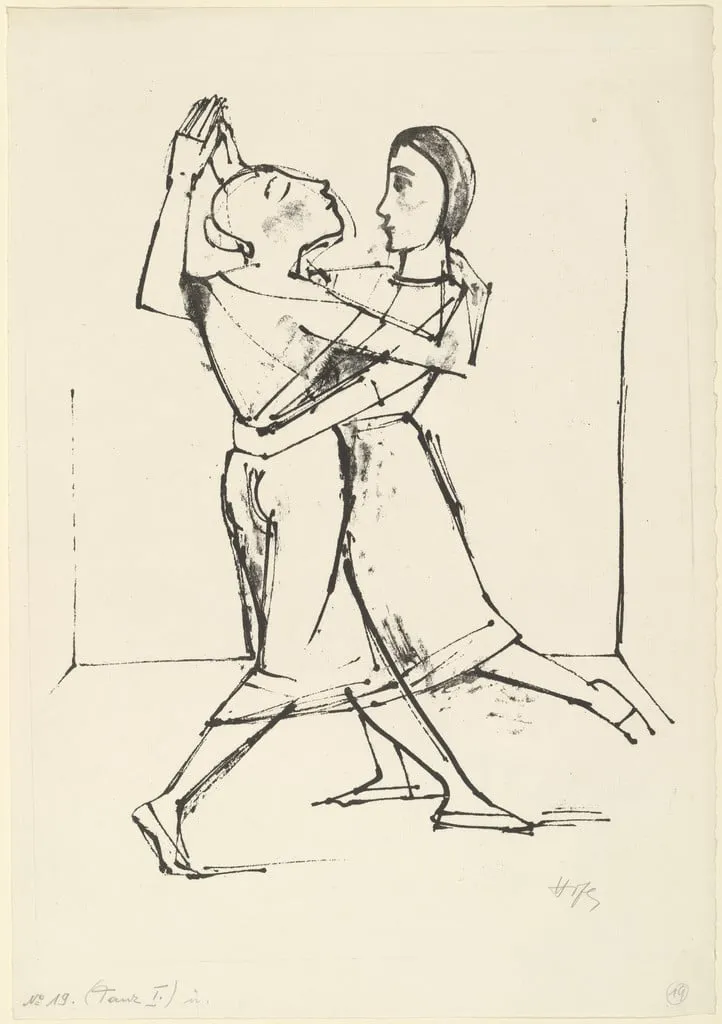
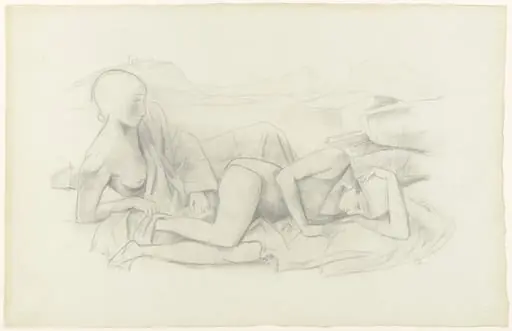
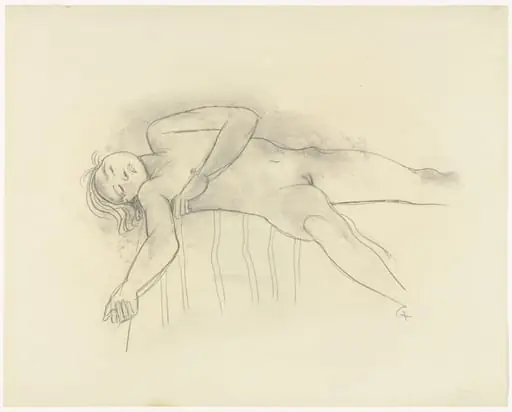
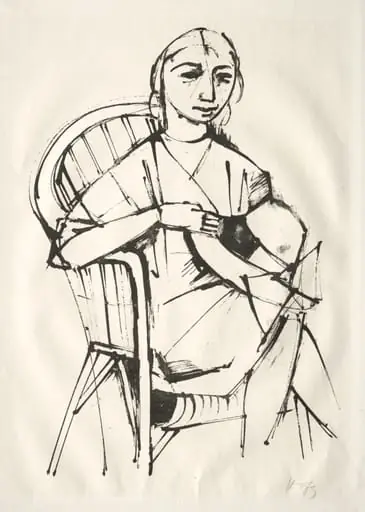
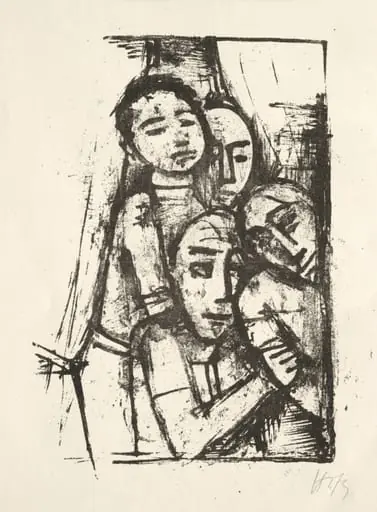
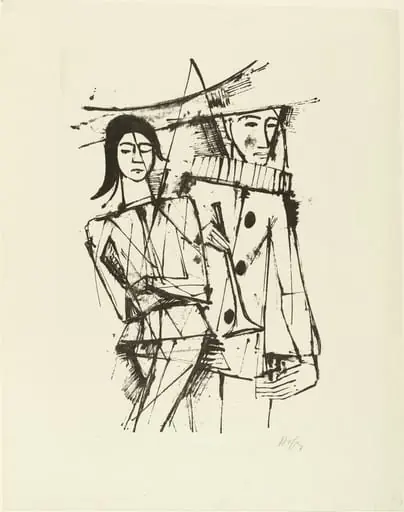
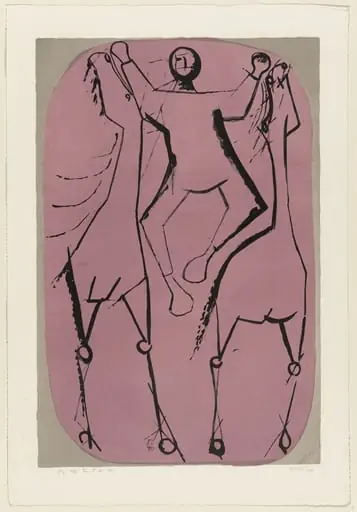
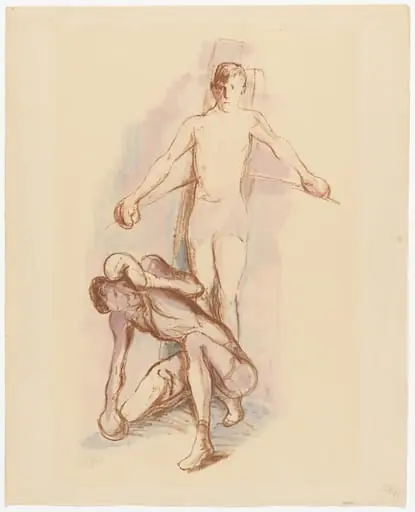
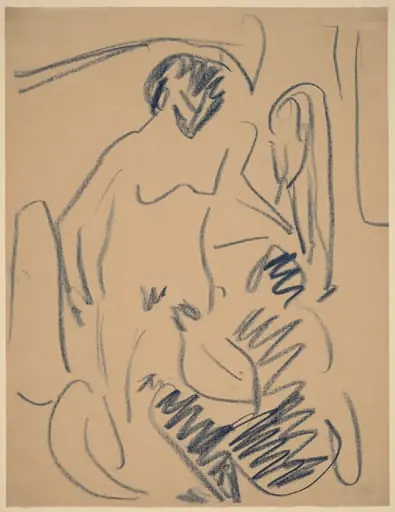
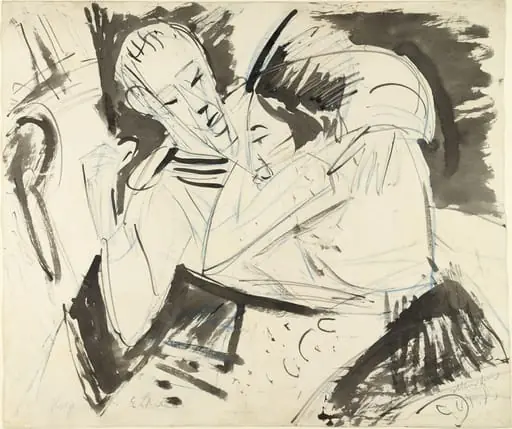
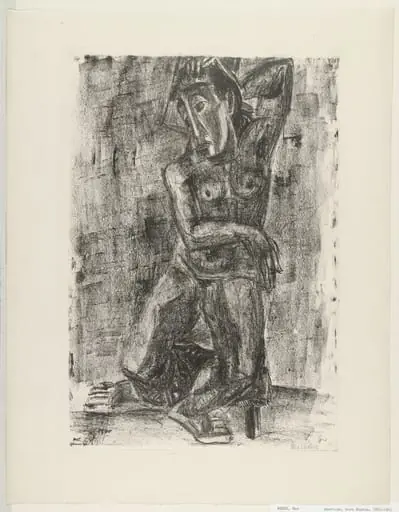
Untitled is an ink print by Karl Hofer. It dates from 1922 and is held in the collection of the Museum of Modern Art.
About this work
The lines are bold but simple—no faces, no background, just the sweep of arms and legs.
You see two dancers in mid-motion, their bodies twisted like ribbons. The lines are bold but simple—no faces, no background, just the sweep of arms and legs.
Hofer made this in 1922, right after World War I. Germany was raw, and art often felt jagged or uncertain. This print strips dance down to its bones, as if movement itself could heal.
Look up lithography to see how ink sticks to stone and paper picks up every mark.
Overview
Karl Hofer’s untitled lithograph, produced in 1922, presents a stark composition of two dancers captured in the midst of motion. Rendered in bold, unadorned lines, the figures lack facial detail and background, emphasizing the fluidity of their intertwined limbs. The work is part of the permanent collection of the Museum of Modern Art.
Subject & Meaning
The image isolates the act of dancing, reducing it to essential gestures that suggest both tension and release. By presenting the bodies as ribbon‑like forms, Hofer foregrounds the kinetic energy of movement, inviting viewers to contemplate the physicality of dance as a conduit for expression in a period marked by upheaval.
Technique & Style
Executed as a lithograph, the piece relies on the traditional process of drawing with greasy media on a limestone surface, then transferring ink onto paper. Hofer’s handling of the medium yields stark, continuous lines that convey motion without shading or texture, reflecting a modernist preference for simplification and graphic clarity.
History & Provenance
Created shortly after the First World War, the print entered the collection of the Museum of Modern Art, where it remains on view. Its acquisition reflects the museum’s early commitment to documenting the development of European printmaking in the interwar years.
Context
The early 1920s in Germany were characterized by social and economic turbulence, influencing artists to explore fragmented forms and ambiguous narratives. Hofer’s reduction of dance to its skeletal outlines aligns with contemporary tendencies toward abstraction and a search for stability through the universal language of movement.
Artist & collection

Artist
Karl Christian Ludwig Hofer or Carl Hofer was a German expressionist painter. He was director of the Berlin Academy of Fine Arts.