Artwork
Untitled
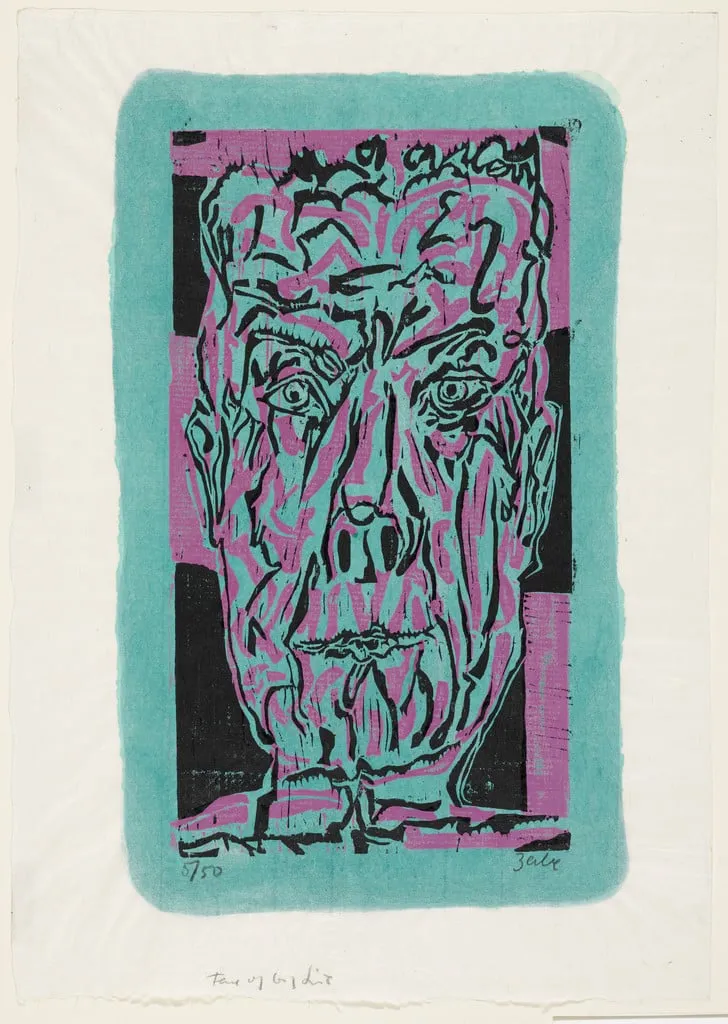
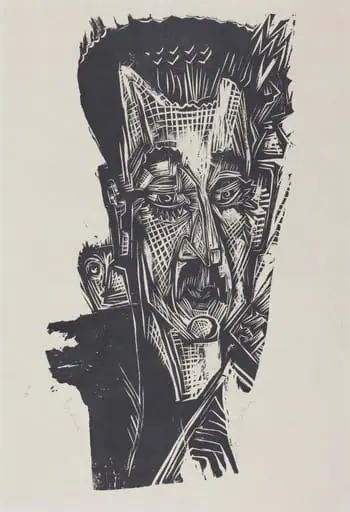
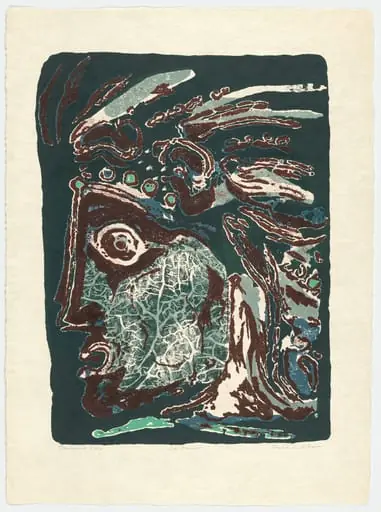
Untitled is an ink print by Karl Zerbe. It dates from 1951 and is held in the collection of the Museum of Modern Art.
About this work
Overview
It is a black-and-white print with selective color applied by hand, emphasizing contrast through bold, segmented forms.
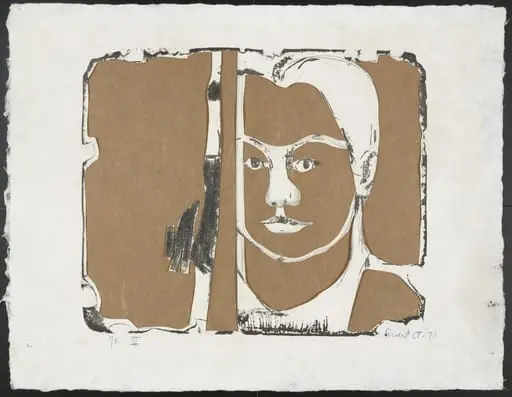
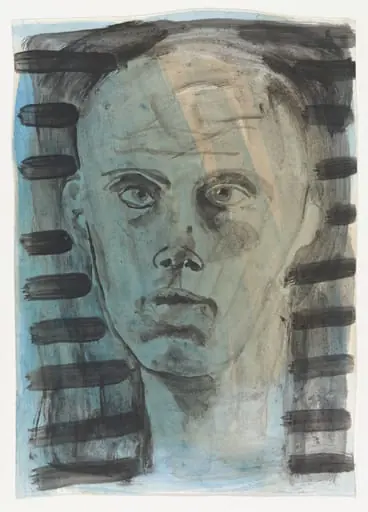
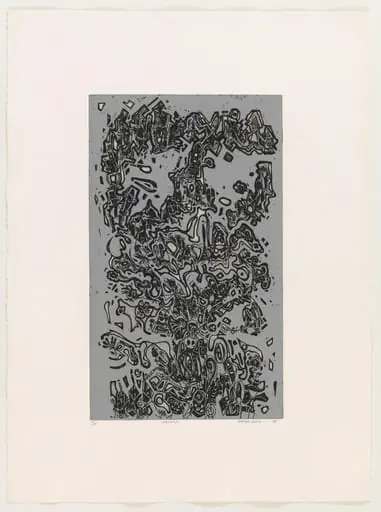
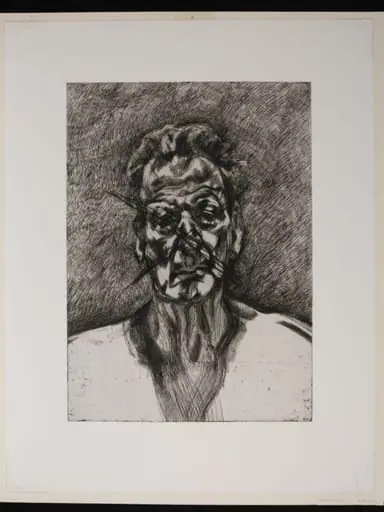
Created in 1951, this woodcut by Karl Zerbe is part of The Museum of Modern Art’s collection. It is a black-and-white print with selective color applied by hand, emphasizing contrast through bold, segmented forms. The composition centers on a fractured human face, rendered with stark divisions in texture and hue. The work exemplifies Zerbe’s engagement with expressive abstraction during the postwar period.
Subject & Meaning
The face is divided into two distinct halves: one rendered in rough, greenish tones with jagged contours, the other in smoother, swirling pink and black forms. The eyes remain fixed and direct, while the mouth opens in a silent, angular scream. This duality suggests internal conflict or psychological fragmentation, reflecting anxieties of the era without literal narrative.
Technique & Style
Zerbe employed traditional woodcut methods, carving into woodblocks to create sharp, incised lines. Color was applied selectively by hand after printing, enhancing emotional contrast. The use of abrupt edges and flat planes separates the two facial halves, while the soft teal border frames the image subtly, distancing it from the chaos within. The technique prioritizes expressive force over naturalism.
History & Provenance
The work was produced in 1951 during Zerbe’s time in the United States, following his emigration from Germany. It entered The Museum of Modern Art’s collection shortly after its creation, reflecting institutional interest in European émigré artists who brought expressionist traditions to American modernism. No earlier ownership records are publicly documented.
Context
Zerbe’s work emerged amid postwar artistic movements that prioritized emotional intensity over formal harmony. Influenced by German Expressionism and the existential mood of the time, this piece aligns with contemporaneous explorations of identity and trauma. Unlike abstract expressionists, Zerbe retained figuration to convey psychological states through distortion.
Legacy
Though not widely reproduced, this woodcut remains a key example of Zerbe’s mature style and his role in bridging European expressionism with American printmaking. It illustrates how traditional techniques could be adapted to convey modern psychological themes. The work continues to be referenced in studies of mid-century printmaking and diasporic artistic practice.
Artist & collection