Artwork
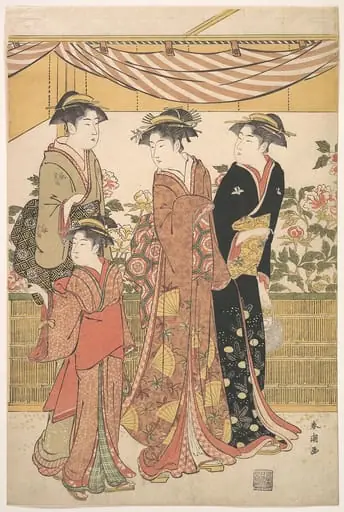
Women Accompanying a Girl to a Shrine
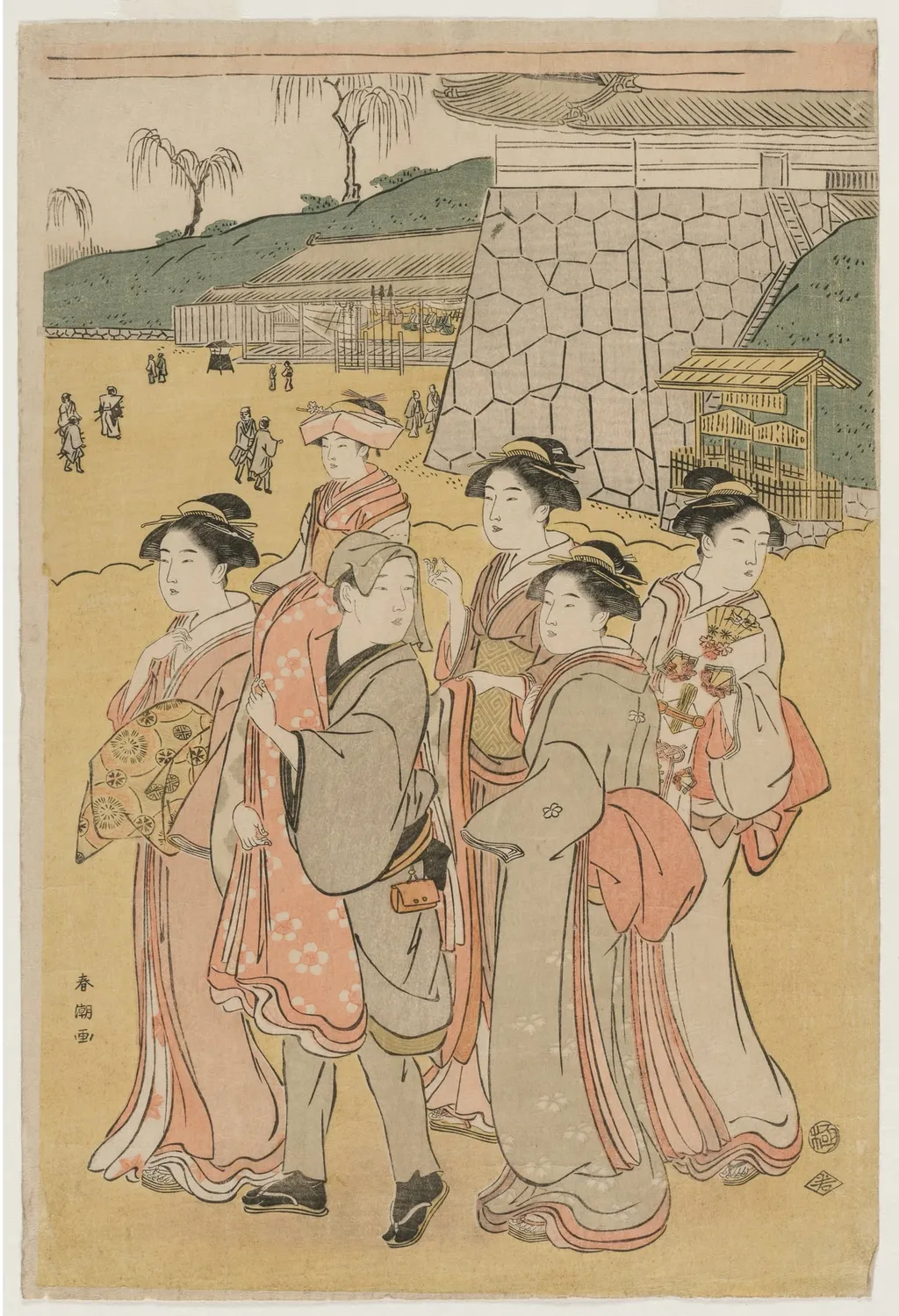
Women Accompanying a Girl to a Shrine is a print by the Romanticist artist Katsukawa Shunchō. It dates from 1794 and is held in the collection of the Cleveland Museum of Art.
About this work
Overview
Women Accompanying a Girl to a Shrine is a woodblock print by Katsukawa Shunchō, dated around 1794. It belongs to the ukiyo-e tradition and is part of the collection at The Cleveland Museum of Art. The work captures a moment of quiet movement through a domestic landscape, reflecting the everyday rituals of women in late Edo-period Japan.
Subject & Meaning
The print depicts a group of women escorting a young girl toward a shrine, likely for a religious or seasonal observance. The scene emphasizes communal responsibility and the transmission of cultural practice across generations. No grand narrative is present; instead, the focus lies in the subtle dignity of ordinary acts, revealing how spirituality was woven into daily life.
Technique & Style
Shunchō employed fine linework and muted, layered pigments typical of early ukiyo-e portraiture. Figures are rendered with delicate contours and soft shading, while the background suggests depth through minimal landscape elements—trees, distant buildings, and implied pathways. The composition avoids theatricality, favoring restrained realism and spatial harmony.
History & Provenance
The print entered the Cleveland Museum of Art’s collection through documented acquisitions of Edo-period prints. Its provenance traces back to private Japanese collections of the late 19th and early 20th centuries, where such scenes of daily life were valued for their cultural authenticity rather than artistic novelty.
Context
During the late 18th century, ukiyo-e artists increasingly turned to scenes of women’s lives, moving beyond courtesans and actors to depict mothers, servants, and pilgrims. Shunchō’s work aligns with this shift, offering a glimpse into the private sphere of Edo society, where religious observance and domestic roles intersected.
Legacy
Though less widely known than contemporaries like Utamaro or Hokusai, Shunchō’s prints contribute to a broader understanding of gender and ritual in Edo visual culture. His focus on unadorned, non-idealized figures helped expand the thematic range of woodblock printing beyond spectacle toward intimate observation.
Own this work as a print
Artist & collection
Artist
Katsukawa Shunchō lived in Edo (now Tokyo) during the late 1700s, a time when floating-world prints—colorful scenes of theater, courtesans, and everyday life—were all the rage.

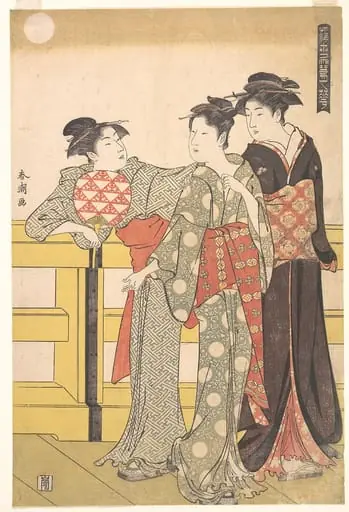
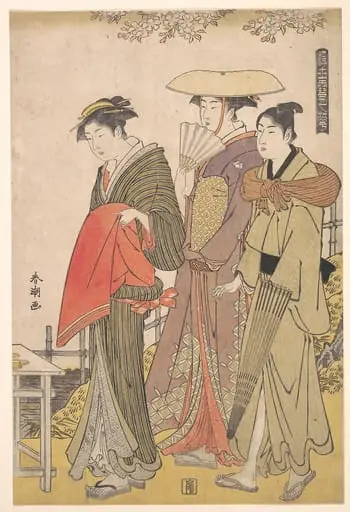
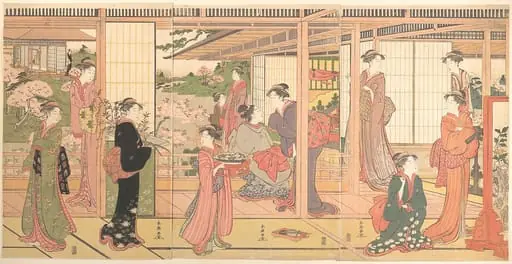
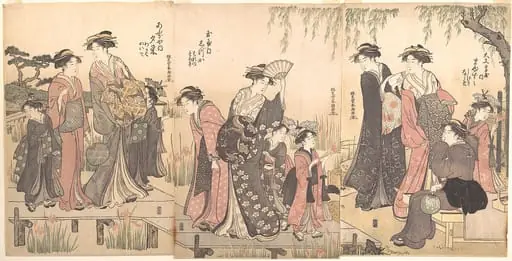
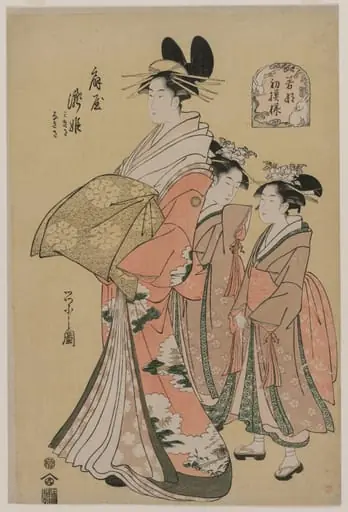 The Courtesan Takihime and Attendants (from the series New Patterns of Young Greens)
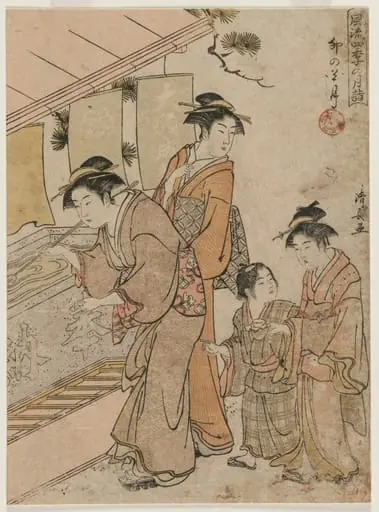 The Fourth Month (from the series Fashionable Monthly Visits to Temples in the Four Seasons)
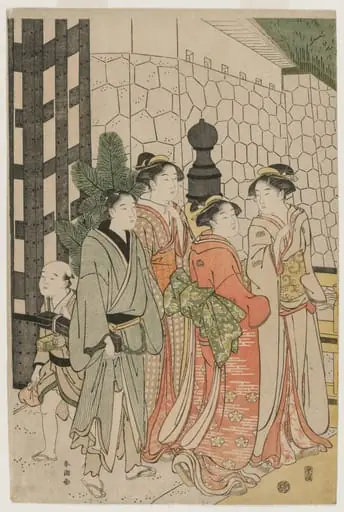 Young Man and Women on Tokiwa Bridge
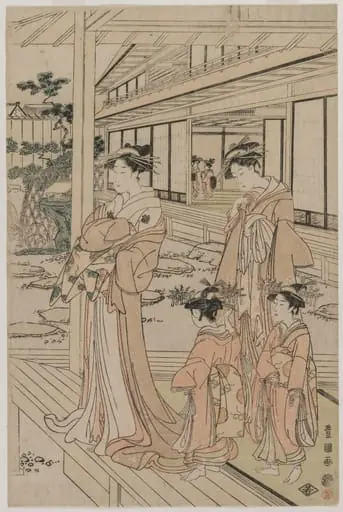 Courtesan Standing on a Veranda
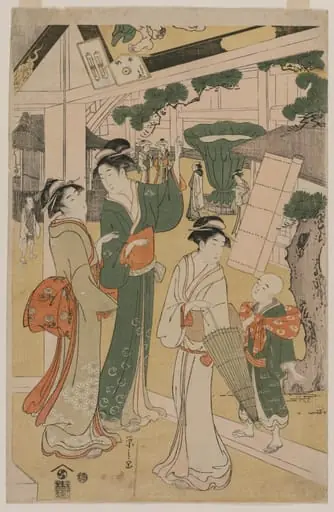 Print from Women Resting in the Votive Picture Hall at Asakusa
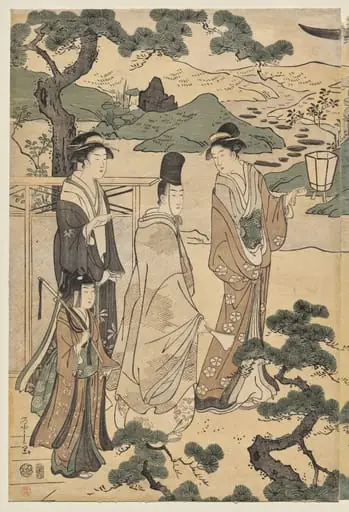 The Matsukaze Chapter of the Tale of Genji (from the series The Tale of Genji in Elegant Modern Dress)
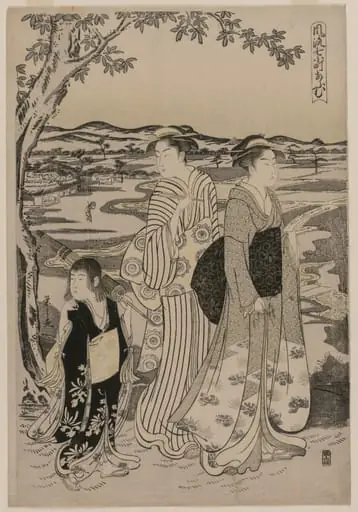 Omu the Parrot (from the series Seven Elegant Episodes from the Life of the Poetess Ono no Komachi)
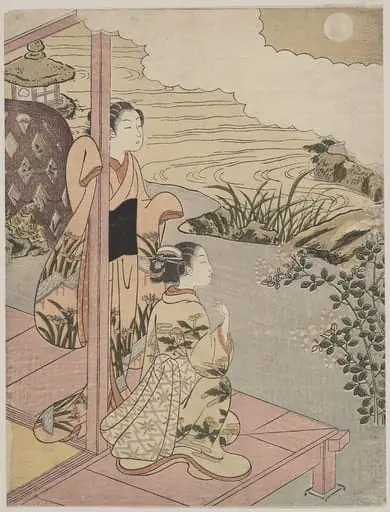 Untitled
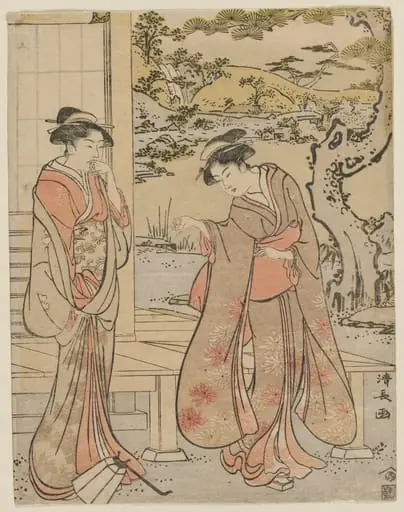 Woman Dropping a Lantern by a Porch
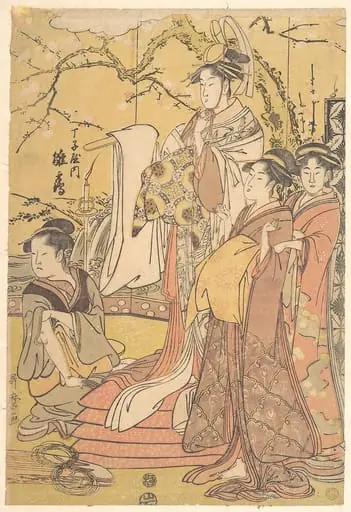 丁子屋内雛鶴|The Oiran Hinazuru of Chojiya Standing upon a Pile of Futon
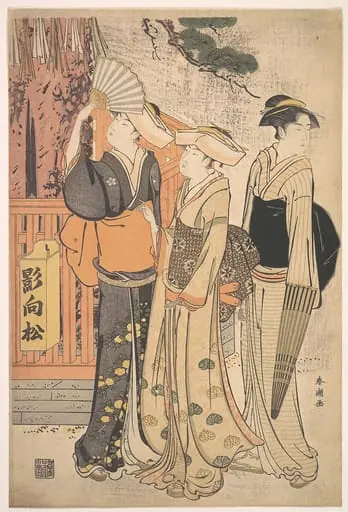 Untitled