Artwork
Sunset at Ryōgoku Bridge
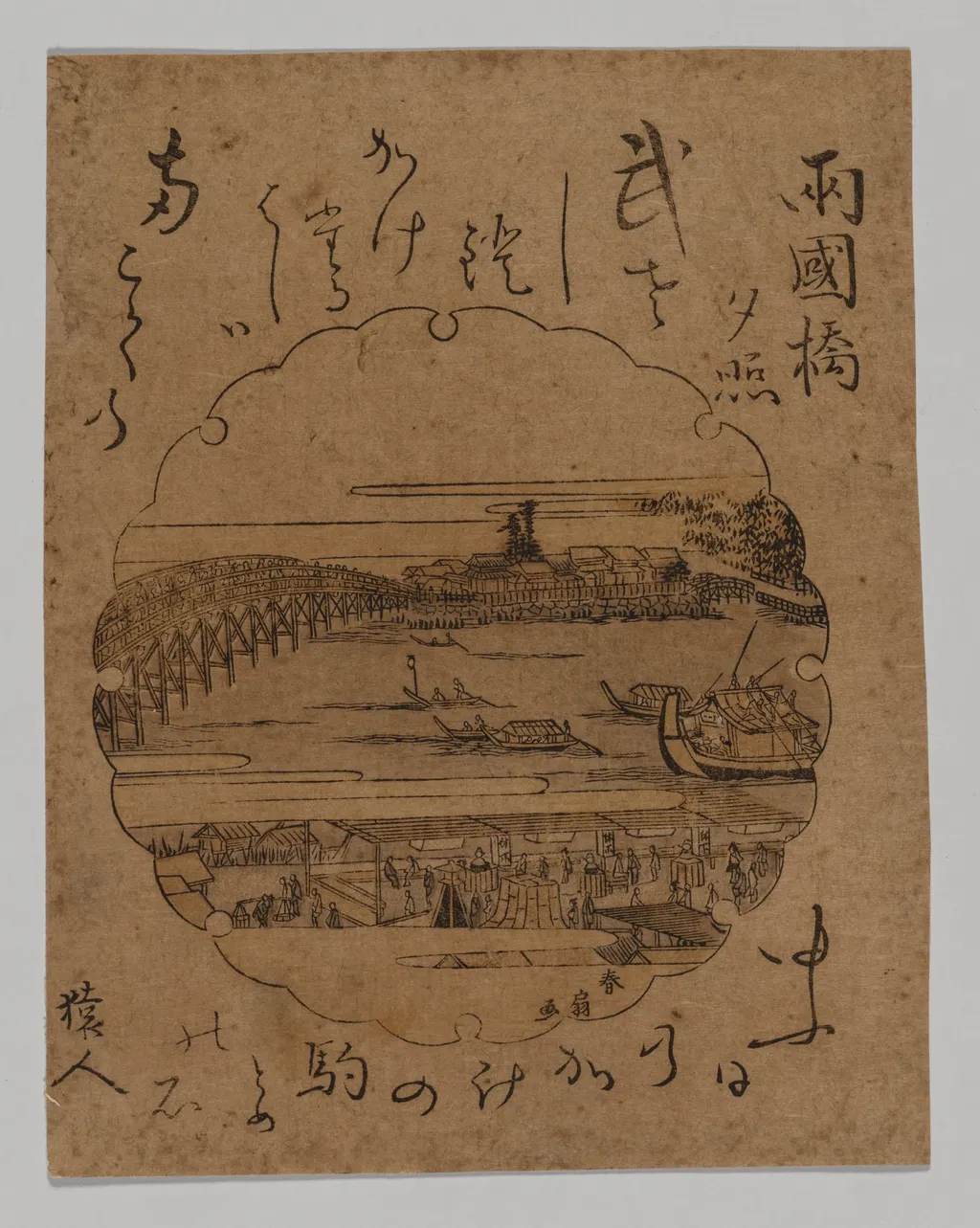
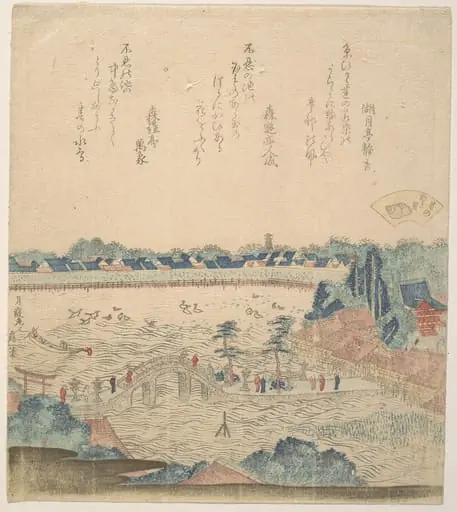
Sunset at Ryōgoku Bridge is a print by the Romanticist artist Katsukawa Shunsen. It dates from 1813 and is held in the collection of the Cleveland Museum of Art. This round woodblock print depicts the Ryōgoku Bridge at dusk, capturing the quiet activity along the riverbank.
About this work
You see a round picture of Ryōgoku Bridge at dusk: boats glide on dark water, stalls line the shore, and the sky glows faintly orange.
You see a round picture of Ryōgoku Bridge at dusk: boats glide on dark water, stalls line the shore, and the sky glows faintly orange.
The colors are so faded you can barely tell where the sun once set. A poem sits beside the scene, part of the print’s design. This kind of round print was meant to be pasted on a fan or a lantern.
If you like this quiet river view, look up Japan, Edo period (1615–1868)—it’s full of prints just like it.
Overview
This round woodblock print depicts the Ryōgoku Bridge at dusk, capturing the quiet activity along the riverbank. Boats drift on the water, and stalls line the shore, framed by a fading orange glow that once marked the setting sun. The composition was designed for attachment to folding fans or lanterns, reflecting its function as a portable, intimate image rather than a large-scale display. The artist signed it as Shunsen, a name adopted in 1806 after studying under Katsukawa Shun’ei.
Subject & Meaning
The scene presents a tranquil moment of daily life in Edo, emphasizing the rhythm of river commerce and leisure at twilight. The inclusion of a poetic inscription ties the visual to literary traditions, inviting contemplation of transience and beauty. The fading pigments, once vivid, now echo the ephemeral nature of the moment depicted—dusk, like the print’s colors, is fleeting. The bridge itself, a known public space, anchors the image in a recognizable urban landmark.
Technique & Style
Executed in the ukiyo-e tradition, the print uses a circular format uncommon in landscape prints, suggesting its use on personal objects like fans. The artist employed subtle gradations of color to suggest the sunset, now largely faded, with minimal detail to evoke atmosphere rather than realism. Lines are soft, forms simplified, and the composition balances negative space with delicate figures, characteristic of late Edo aesthetic sensibilities focused on mood over detail.
History & Provenance
The artist, known as Shunsen from 1806 onward, later adopted the name Shunkō II around 1820. He produced prints of beauties, actors, and landscapes during his career, transitioning to ceramic design in his later years. This print likely dates to the 1810s or early 1820s, a period when such poetic, atmospheric views were popular among urban patrons. Its survival in a faded state reflects common degradation from light exposure and handling, typical of prints mounted on frequently used items.
Context
During the Edo period, woodblock prints of riverside scenes were widely produced, catering to a growing urban middle class with an appetite for images of everyday beauty. The Ryōgoku Bridge, a major crossing over the Sumida River, was a favored subject for its blend of commerce and leisure. Round prints like this one were often part of seasonal or poetic series, designed to be collected and displayed in domestic settings, reinforcing cultural ties between visual art and literature.
Legacy
Though not among the most celebrated artists of his time, Shunsen’s work contributes to the broader record of Edo-period printmaking, particularly in its quiet, lyrical approach to landscape. His use of the round format and integration of poetry reflect a niche but persistent tradition within ukiyo-e. The faded state of this print now serves as a physical record of time’s effect on mass-produced art, preserving not just the image but its gradual decay as part of its history.
Artist & collection

 Title from "Reverberations of Taiga"
 Untitled
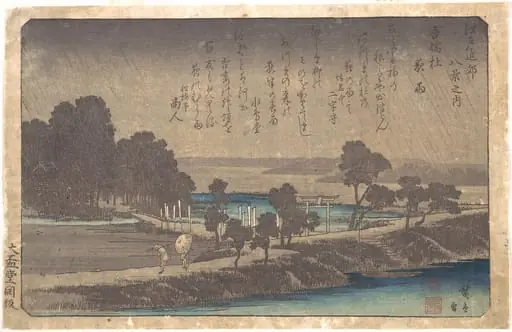 Azuma Mori Yau|江戸近郊八景之内 吾嬬杜夜雨|Evening Rain in Azuma Wood
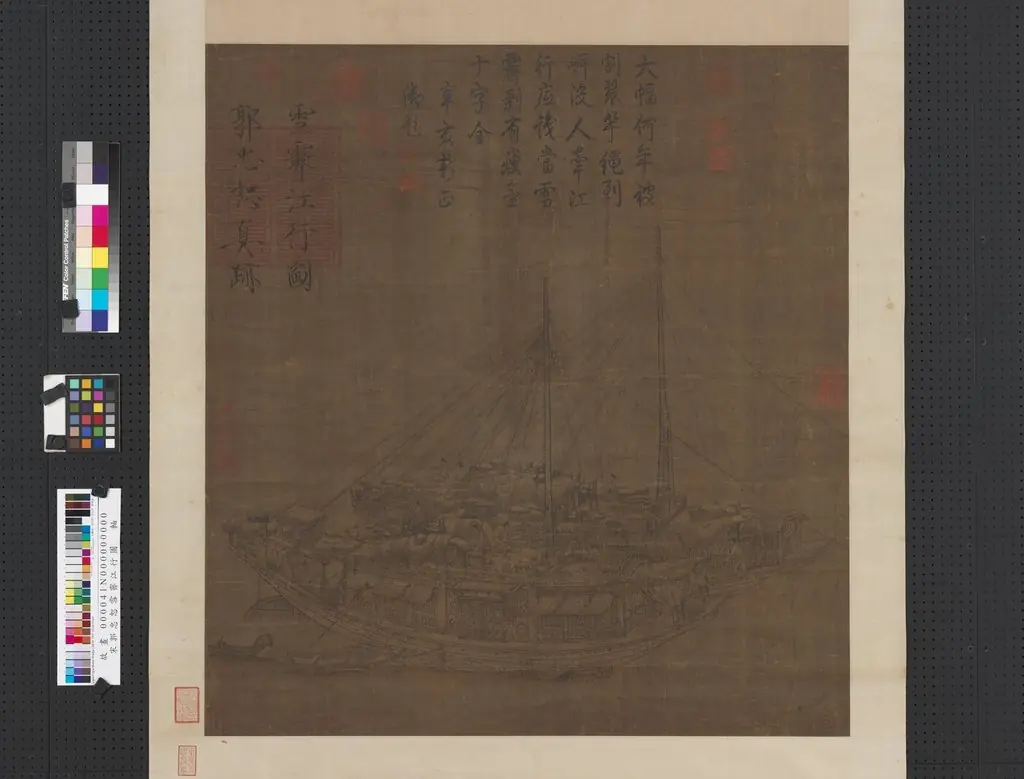 宋郭忠恕雪霽江行圖 軸
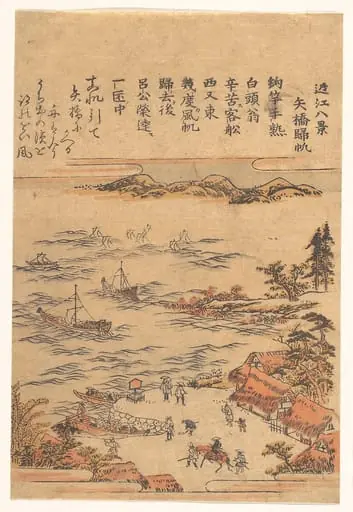 Yahashi Kiho|Sails Returning to Yahashi
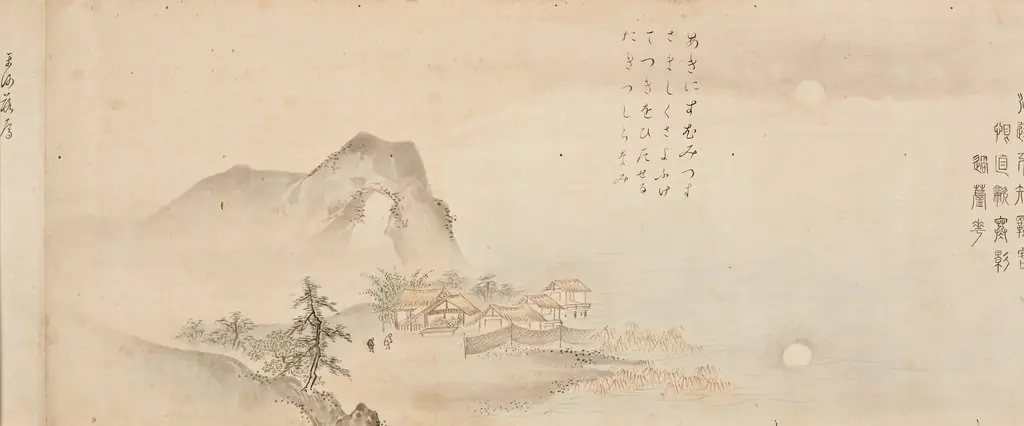 Eight Views of the Xiao and Xiang Rivers
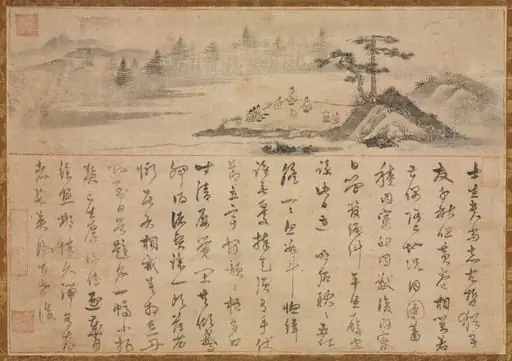 Gathering among the Members of Office Censor-General
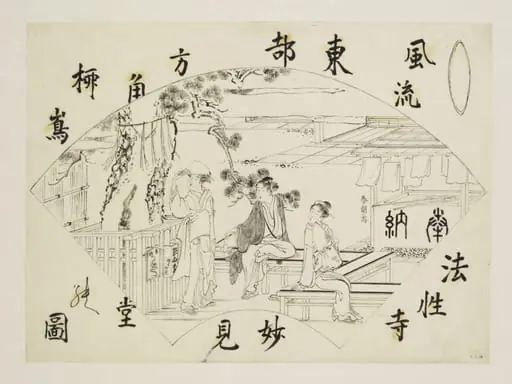 The Myoken Hall of the Hosshoji Temple at Yanagishima
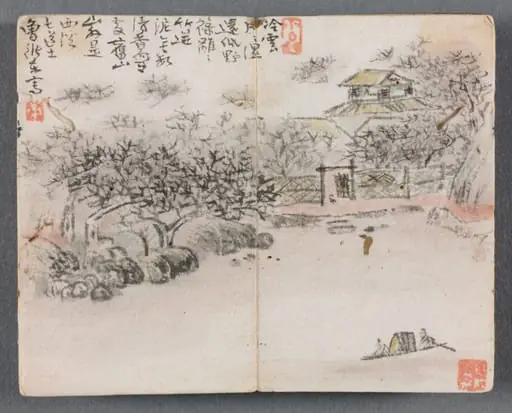 Miniature Album with Figures and Landscape (Landscape with Two Boatmen)