Artwork
Untitled
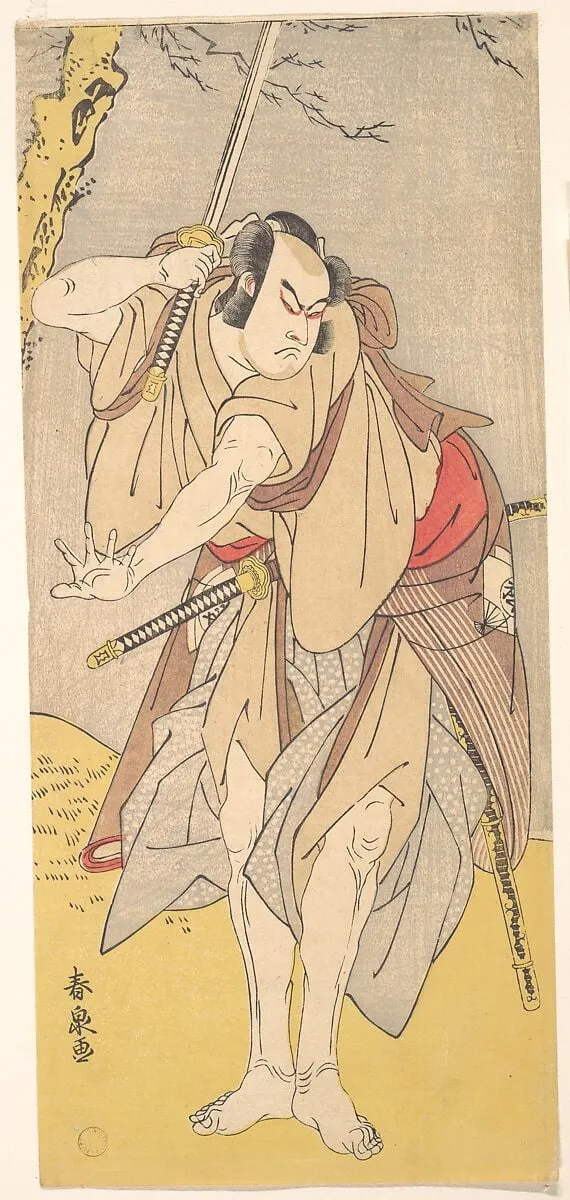
Untitled is an ink print by the Romanticist artist Katsukawa Shunsen. It dates from 1786 and is held in the collection of the Metropolitan Museum of Art.
About this work
Overview
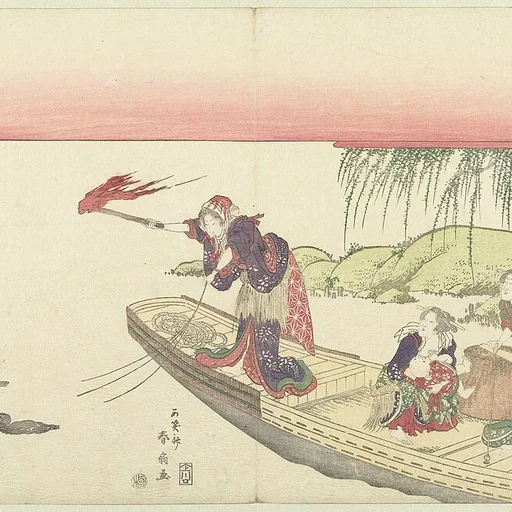
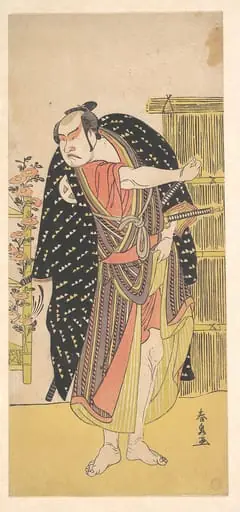
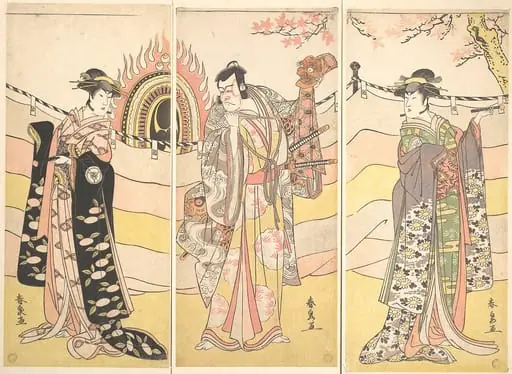
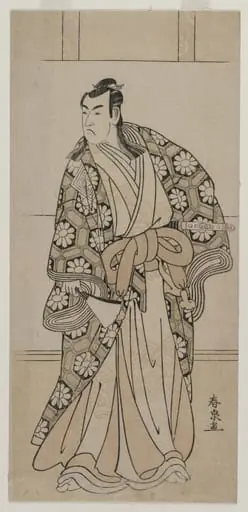
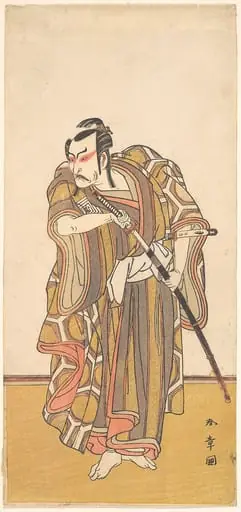
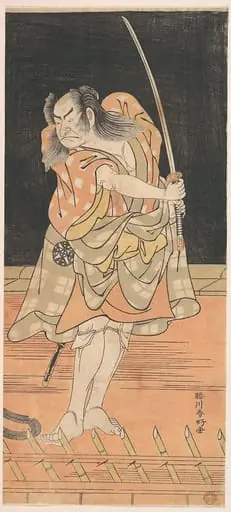
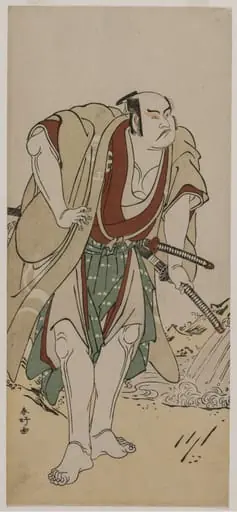
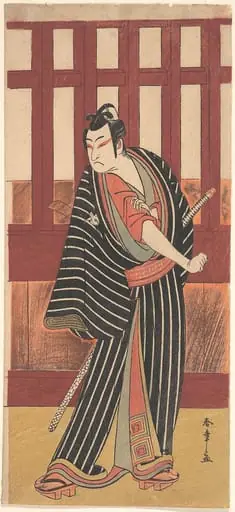
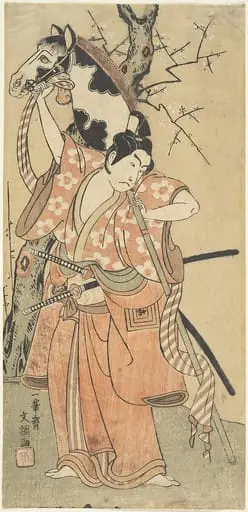
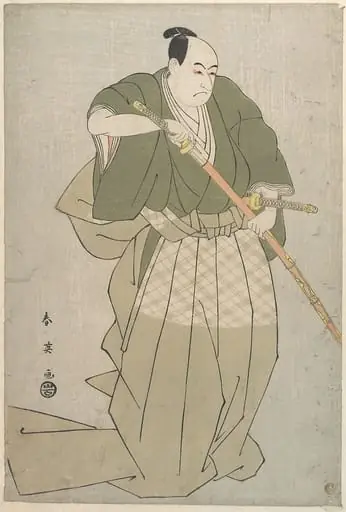
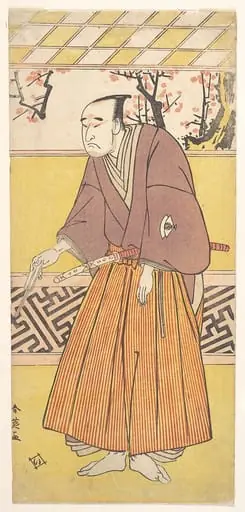
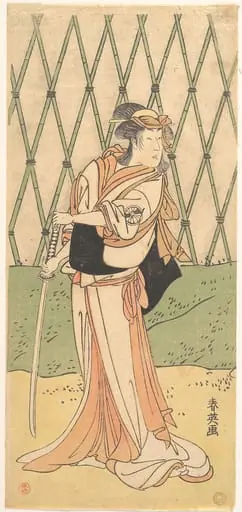
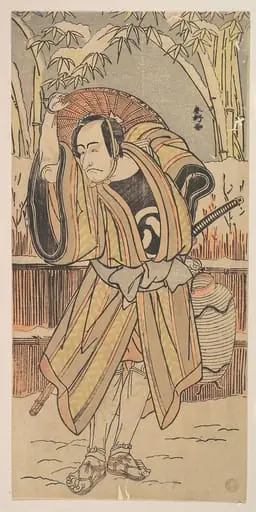
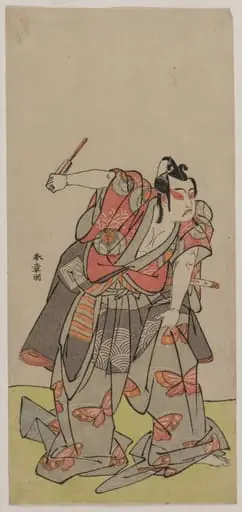
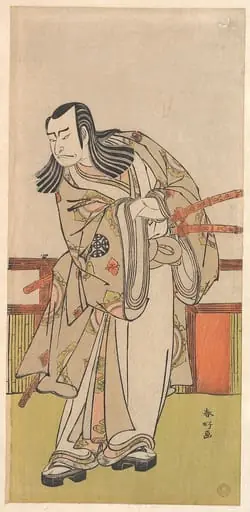
Created in 1786 by Katsukawa Shunsen, this woodblock print is rendered in ink and color on paper. It is part of the collection at The Metropolitan Museum of Art. The composition centers on a single figure in motion, rendered with strong contours and minimal background elements. The work exemplifies the ukiyo-e tradition of depicting theatrical and martial subjects through printed imagery.
Subject & Meaning
The print portrays a male figure in a forceful stance, gripping a sword above his head, suggesting a moment of dramatic tension. A secondary figure looms behind, partially obscured, implying a narrative of confrontation or intervention. The serious expression and muscular form evoke the physicality of kabuki actors portraying heroic roles, though no specific character is identified.
Technique & Style
Shunsen employed bold, clean lines and graded shading to emphasize the figure’s musculature and movement. The limited palette—dominated by muted tones—makes the crimson sash a focal point, enhancing the figure’s presence. The background is reduced to sparse trees and ground lines, directing attention to the central action and reinforcing the print’s theatrical character.
History & Provenance
The print dates to 1786, during a period when woodblock prints of kabuki actors were widely produced and collected. It entered the collection of The Metropolitan Museum of Art through documented acquisition, though its earlier ownership history remains unrecorded. As a work by Shunsen, it reflects the stylistic conventions of the Katsukawa school, known for its dynamic actor portraits.
Context
This print emerged in late 18th-century Edo, where ukiyo-e prints illustrated popular theater and celebrity culture. Actor portraits like this one were often commissioned to commemorate performances or promote upcoming plays. The emphasis on physicality and gesture aligns with kabuki’s exaggerated stage movements, bridging the visual and performative arts of the time.
Legacy
Shunsen’s work contributed to the evolution of actor portraiture in ukiyo-e, influencing later artists to prioritize expressive form over literal representation. While not as widely recognized as some contemporaries, his prints remain valued for their clarity of composition and emotional intensity, offering insight into the visual language of Edo-period theater culture.
Artist & collection