Artwork
Azuma Mori Yau|江戸近郊八景之内 吾嬬杜夜雨|Evening Rain in Azuma Wood
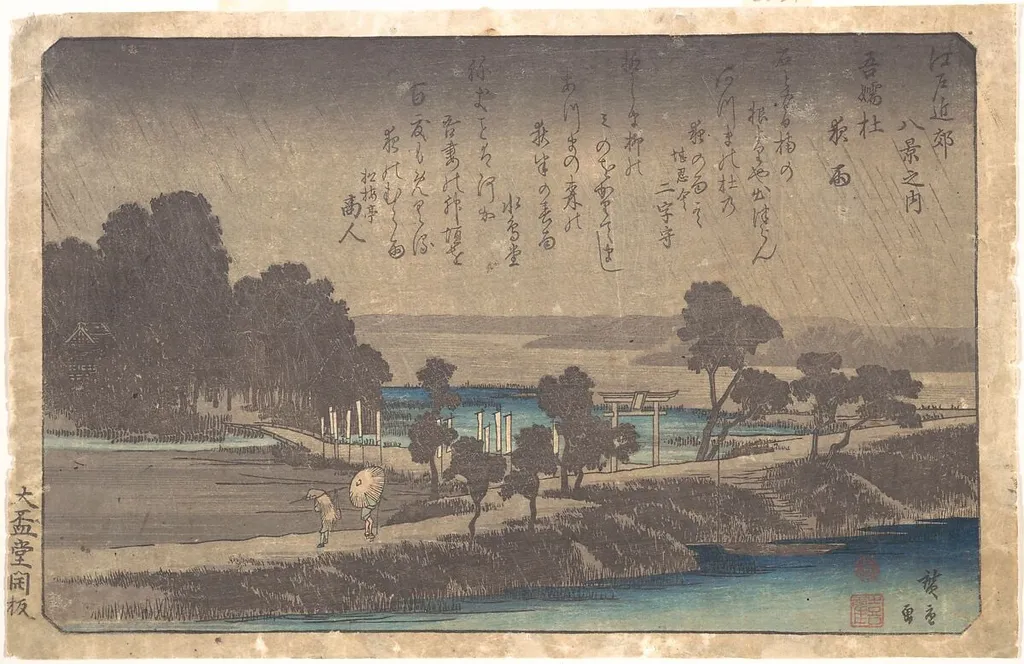
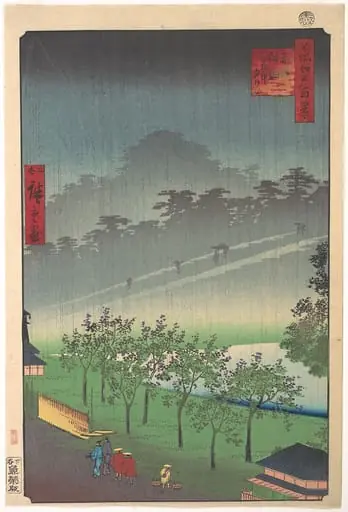
Azuma Mori Yau|江戸近郊八景之内 吾嬬杜夜雨|Evening Rain in Azuma Wood is an ink print by the Romanticist artist Utagawa Hiroshige. It dates from 1838 and is held in the collection of the Metropolitan Museum of Art.
About this work
Overview
Created around 1838 by Utagawa Hiroshige, this woodblock print is part of a landscape series depicting scenes near Edo. Titled *Evening Rain in Azuma Wood*, it belongs to the ukiyo-e tradition but diverges from urban themes to focus on a quiet rural setting. Rendered in ink and color on paper, the work captures a moment of stillness during a light rain, emphasizing atmosphere over narrative.
Subject & Meaning
The scene shows a riverside grove of sparse trees, with two travelers moving along a path beneath an umbrella. Distant hills and faint outlines of buildings suggest a modest settlement, reinforcing the sense of solitude. The rain, rendered in fine horizontal lines, unites the elements of land, water, and sky, evoking a contemplative mood tied to seasonal change and the transience of daily life.
Technique & Style
Rain is implied through sparse, parallel strokes, while the figures are minimized to emphasize scale and solitude.
Hiroshige employed subtle gradations of color and delicate linework to suggest moisture and soft light. The muted palette—soft grays, pale greens, and washed blues—enhances the quiet tone. Rain is implied through sparse, parallel strokes, while the figures are minimized to emphasize scale and solitude. The composition balances open space with restrained detail, characteristic of his poetic approach to nature.
History & Provenance
The print was produced during Hiroshige’s early mature period, when he was refining his landscape series. It was likely published by a commercial print house in Edo, intended for wide circulation among middle-class patrons. Original impressions are rare today, and surviving examples are held in major museum collections, reflecting its enduring status within the ukiyo-e canon.
Context
This work emerged during a time when travel literature and illustrated guides to scenic spots were popular in Edo. The 'Eight Views' theme, borrowed from Chinese tradition, was adapted by Japanese artists to celebrate local landscapes. Hiroshige’s focus on weather and seasonal shifts aligned with broader cultural interests in nature’s impermanence and quiet beauty.
Legacy
Hiroshige’s atmospheric landscapes influenced later generations of artists, both in Japan and abroad. His ability to convey mood through minimal means helped redefine ukiyo-e beyond portraiture and theater scenes. *Evening Rain in Azuma Wood* remains a quiet exemplar of how everyday natural phenomena could be rendered with emotional depth and technical precision.
Artist & collection
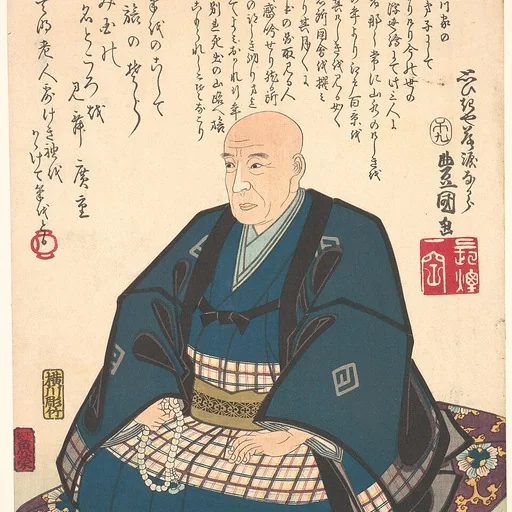
Artist
Utagawa Hiroshige (歌川 広重) or Andō Hiroshige (安藤 広重), born Andō Tokutarō (安藤 徳太郎; 1797 – 12 October 1858), was a Japanese ukiyo-e artist, considered the last great master of that tradition.

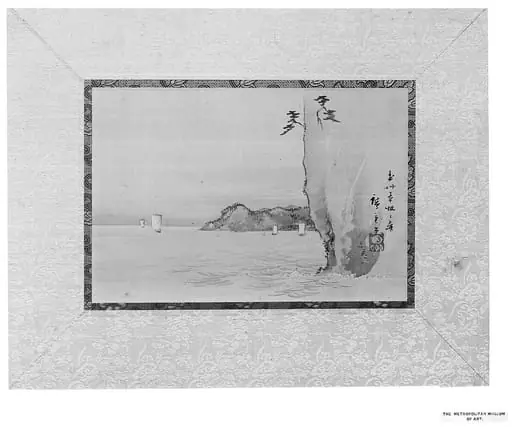
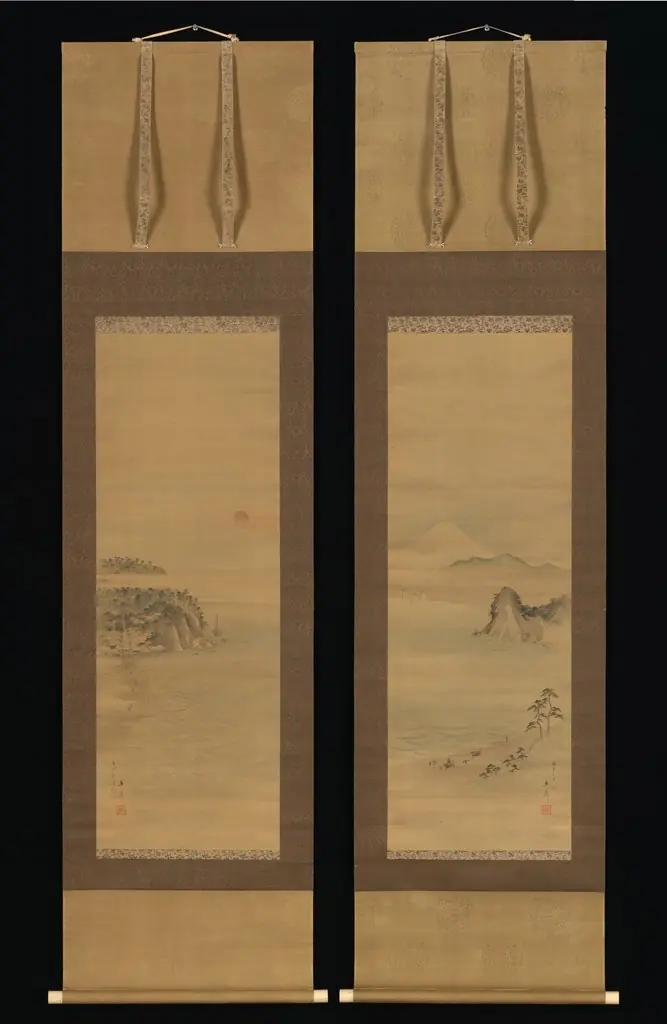
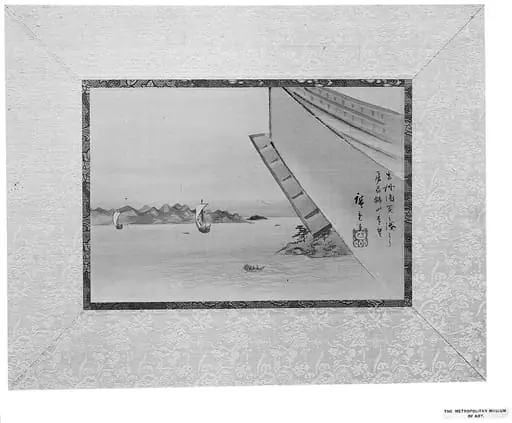
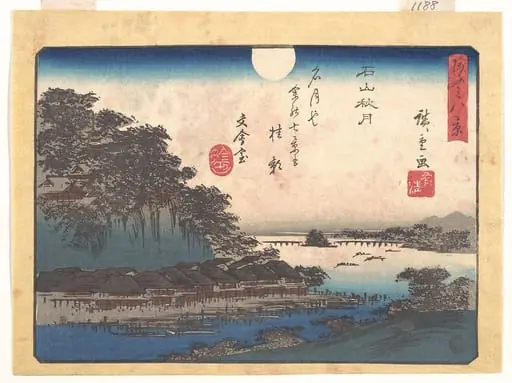 歌川広重画 「あふみ八景 石山秋月」|Autumn Moon at Ishiyama, from the series Eight Views of Ōmi (Ōmi hakkei)
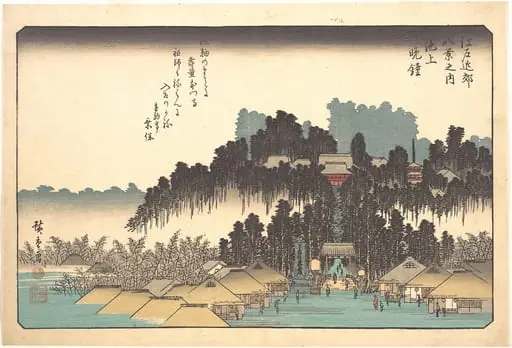 Ikegami Bansho|江戸近郊八景之内 池上晩鐘|Vesper Bells at Ikegami
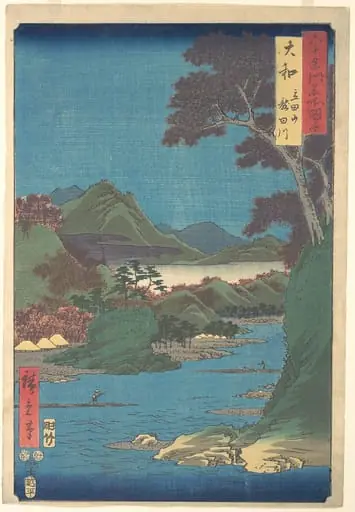 六十余州名所図会 大和 立田山 龍田川|Yamato, Tatsutayama, Tatsutagawa
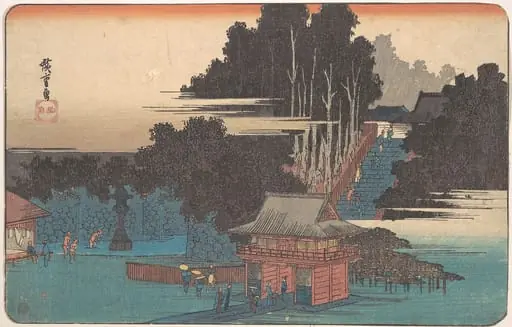 Untitled
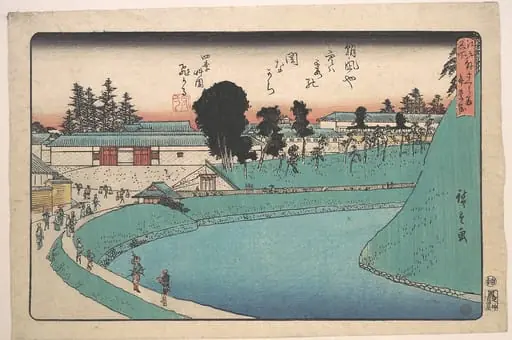 江戸名所 外桜田弁慶堀|Soto Sakurada Benkei Bori
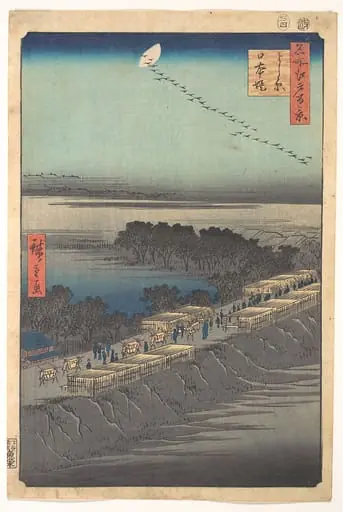 「名所江戸百景 よし原 日本堤」|“Nihon Embankment at Yoshiwara,” from the series One Hundred Famous Views of Edo (Meisho Edo hyakkei, Yoshiwara, Nihonzutsumi)
 Untitled
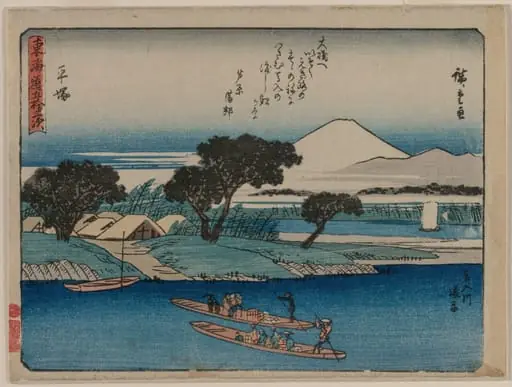 The Fifty-Three Stations of the Tokaido: Hiratsuka
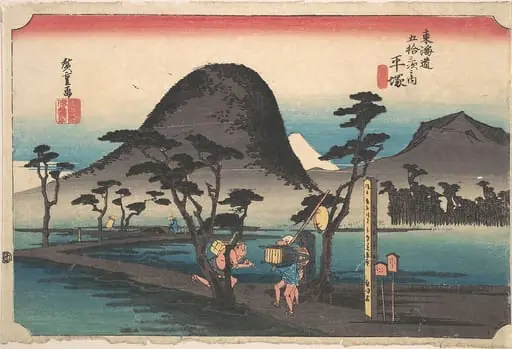 東海道五十三次之内 平塚 縄手道|Hiratsuka; Nawate Do