Artwork
Ichikawa Danjuro V as a Traveller Beside a Clump of Iris
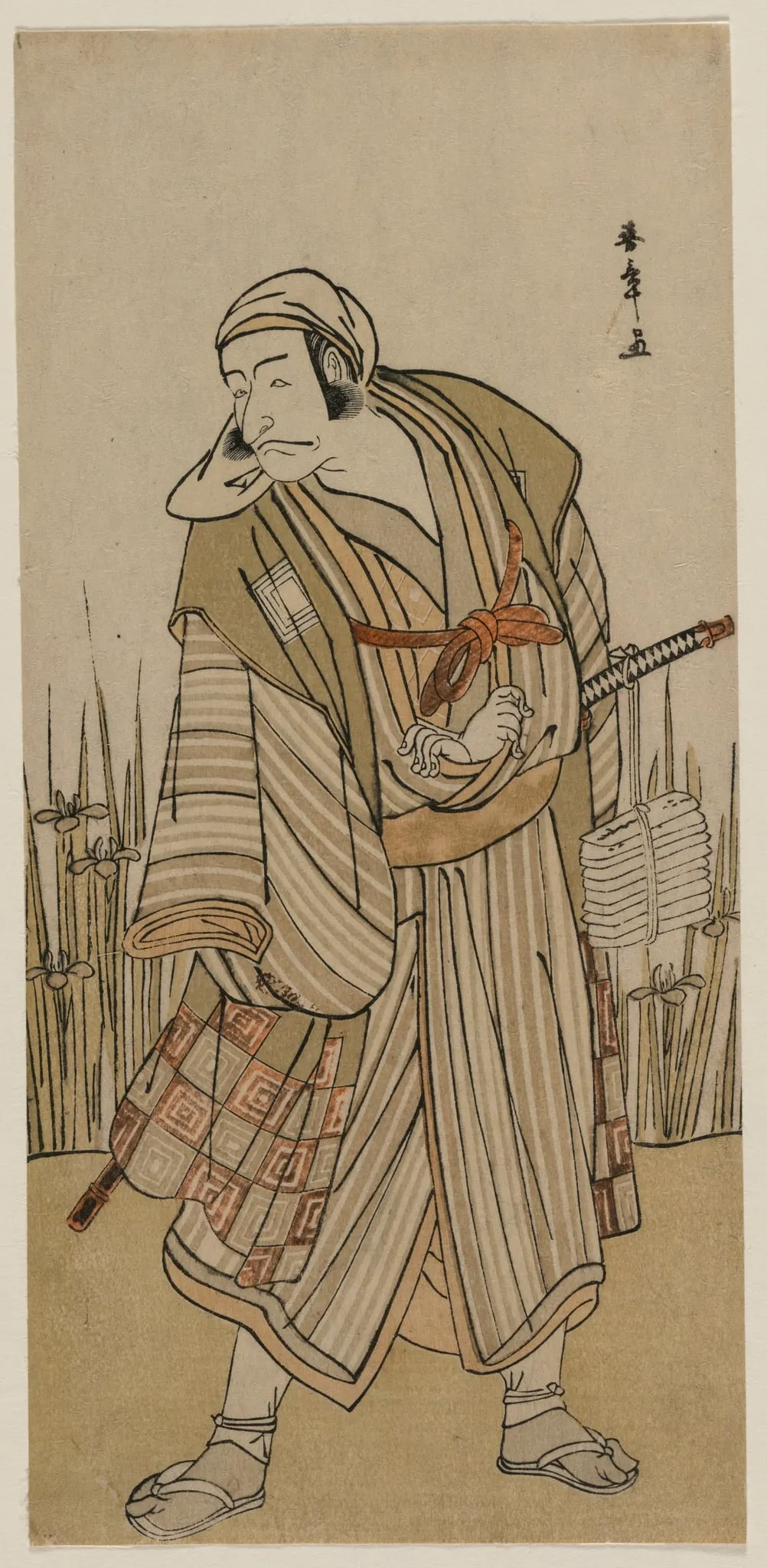
Ichikawa Danjuro V as a Traveller Beside a Clump of Iris is a print by the Romanticist artist Katsukawa Shunshō. It dates from 1780 and is held in the collection of the Cleveland Museum of Art.
About this work
Overview
This woodblock print depicts Ichikawa Danjuro V, a celebrated kabuki actor, portrayed not in performance but as a traveler beside a cluster of iris flowers.
This woodblock print depicts Ichikawa Danjuro V, a celebrated kabuki actor, portrayed not in performance but as a traveler beside a cluster of iris flowers. Created by Katsukawa Shunshō, a leading Edo-period artist known for actor portraits, the work belongs to the ukiyo-e tradition. It captures a private, contemplative moment, diverging from the theatrical energy typically associated with stage depictions.
Subject & Meaning
The actor is shown in travel attire, suggesting a moment away from the stage, perhaps between roles or during a journey. The iris, a symbol of elegance and transience in Japanese culture, subtly reinforces themes of impermanence and quiet dignity. This portrayal invites viewers to consider the actor as a person beyond his public persona, offering a rare glimpse into his private identity.
Technique & Style
Shunshō employed fine linework and restrained color to convey texture and mood. The actor’s robes are rendered with delicate patterns, while the iris leaves and petals are suggested with minimal, flowing strokes. Unlike dramatic stage prints, this composition emphasizes stillness and spatial balance, reflecting Shunshō’s skill in capturing nuanced expression and naturalistic posture within the constraints of woodblock printing.
History & Provenance
Produced in the late 18th century during the height of Shunshō’s career, the print was likely commissioned by a theater patron or publisher seeking to capitalize on Danjuro V’s popularity. While specific ownership records are sparse, such prints circulated widely among Edo’s urban middle class, serving as both collectibles and cultural artifacts of kabuki’s golden age.
Context
In Edo-period Japan, actor portraits were a dominant genre in ukiyo-e, reflecting the public’s fascination with kabuki stars. Shunshō helped shift the focus from idealized, exaggerated stage poses to more individualized, lifelike representations. This print exemplifies that transition, aligning with broader trends toward psychological depth and everyday realism in popular art.
Legacy
Shunshō’s approach influenced later generations of printmakers who sought to humanize kabuki performers. By depicting Danjuro V outside the theater, he expanded the narrative possibilities of actor prints, moving beyond spectacle to explore identity and presence. His work laid groundwork for the more introspective portraits that would emerge in the 19th century.
Artist & collection
Artist
Katsukawa Shunshō spent his life in Edo (now Tokyo), where the city’s teahouses and theaters buzzed with energy.

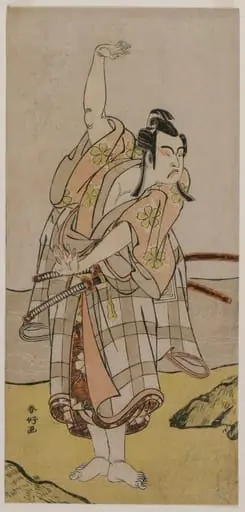 Actor Ichikawa Yaozō II as Sakuramaru
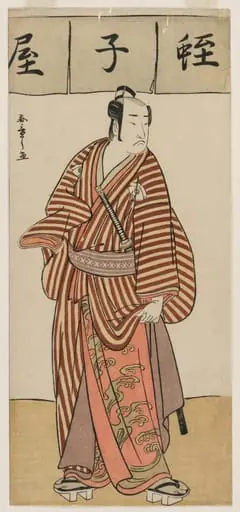 Onoe Matsusuke I as Ebisu, from The Stand-In Seven Gods of Good Fortune
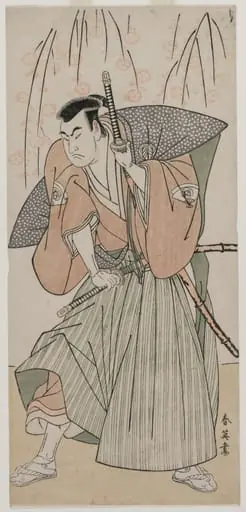 Onoe Matsusuke I as a Samurai Standing Beneath a Cherry Tree
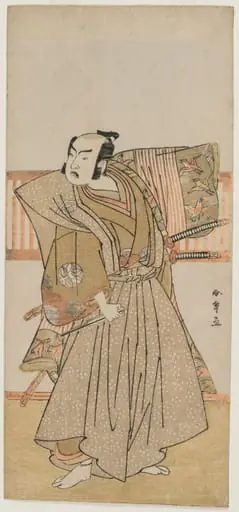 Ichimura Uzaemon IX as Soga no Juro
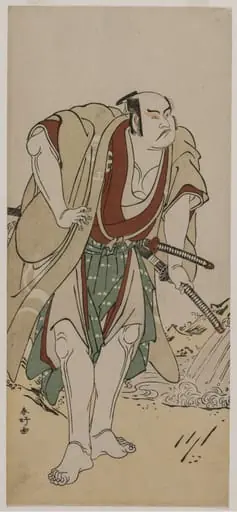 Otani Hiroji III as a Samurai Standing Beside a Stream
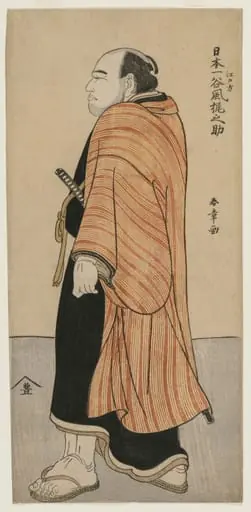 Tanikaze Kajinosuke
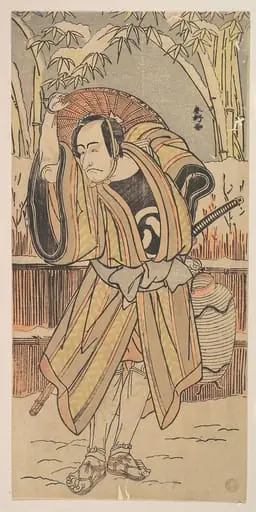 Untitled
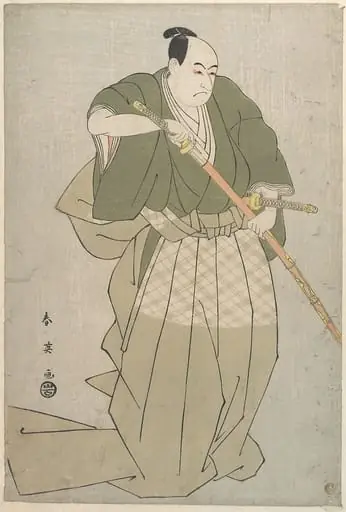 初代市川 男女蔵の桃井若狭之助|The Actor Ichikawa Omezō I as the Young Daimyo Momonoi Wakasanosuke
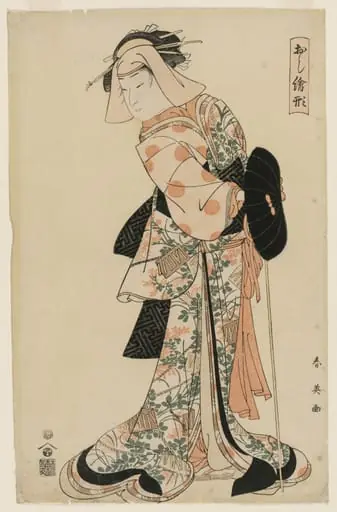 Dancer as Kuzunoha, Fox Spirit Disguised as a Woman
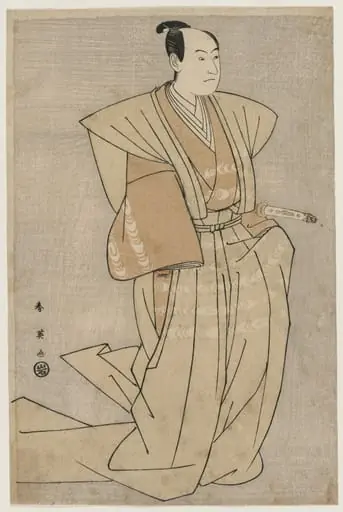 Sawamura Sojuro III as Enya Hangan in Kanadehon Chushingura