Artwork
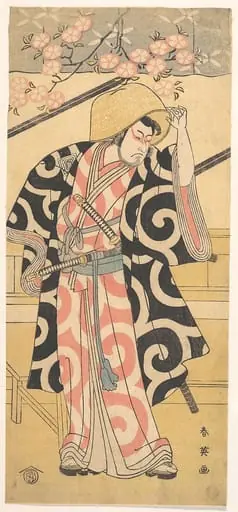
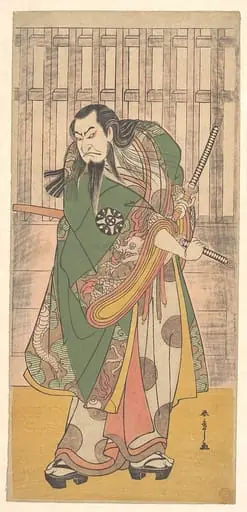
初代市川 男女蔵の桃井若狭之助|The Actor Ichikawa Omezō I as the Young Daimyo Momonoi Wakasanosuke
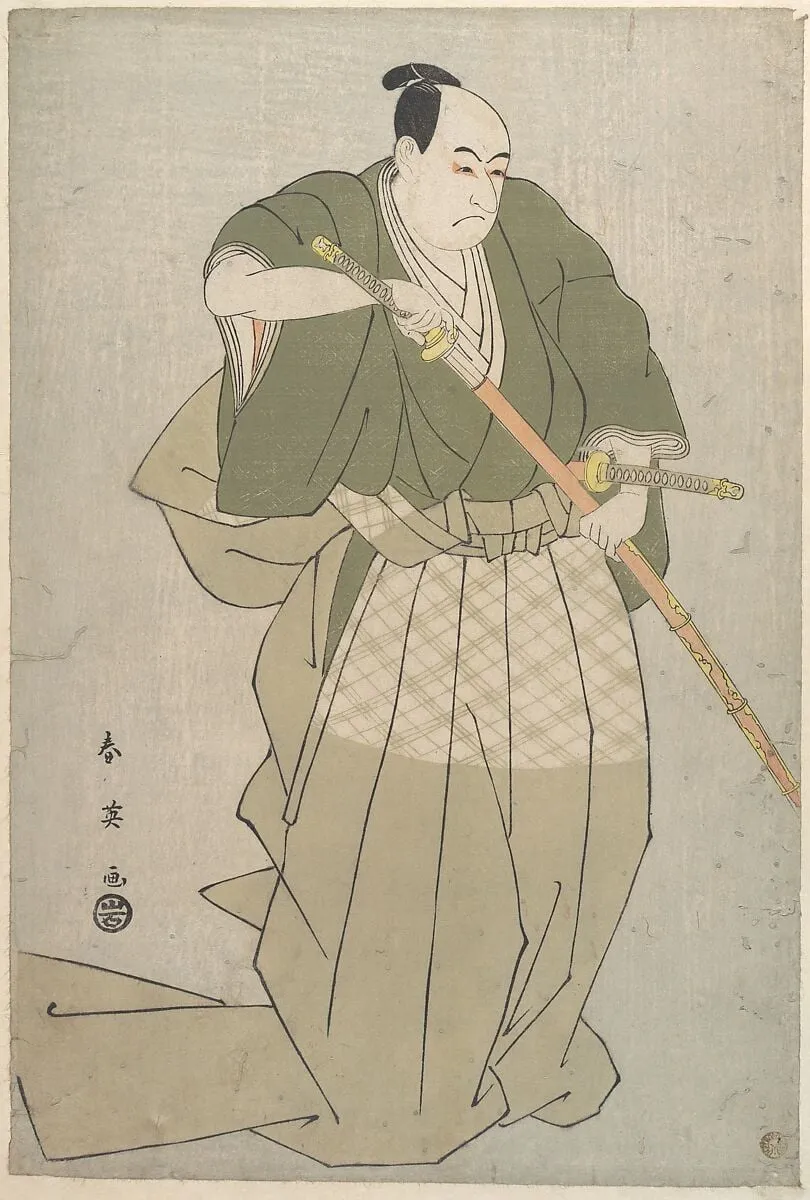
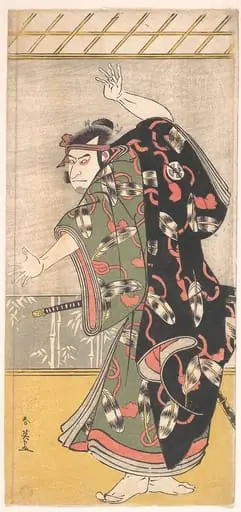
初代市川 男女蔵の桃井若狭之助|The Actor Ichikawa Omezō I as the Young Daimyo Momonoi Wakasanosuke is an ink print by the Romanticist artist Katsukawa Shun'ei 勝川春英. It dates from 1795 and is held in the collection of the Metropolitan Museum of Art. This woodblock print, dated 1795, depicts the kabuki actor Ichikawa Omezō I in the role of Momonoi Wakasanosuke, a young daimyo.
About this work
Overview
This woodblock print, dated 1795, depicts the kabuki actor Ichikawa Omezō I in the role of Momonoi Wakasanosuke, a young daimyo. Created by Katsukawa Shun'ei, it belongs to the nishiki-e tradition of full-color ukiyo-e prints. The work is part of the collection at The Metropolitan Museum of Art, where it exemplifies the genre of actor portraiture popular in late 18th-century Edo.
Subject & Meaning
The figure portrays a nobleman of high rank, captured mid-performance in a serious, composed stance. His attire—green robe and wide trousers—signals aristocratic status, while the long sword reinforces his warrior role. The absence of a detailed background directs attention to the actor’s expression and posture, emphasizing the theatricality of the character rather than a narrative setting.
Technique & Style
The print’s flat planes and minimal shading reflect the conventions of ukiyo-e portraiture, prioritizing recognition and dramatic presence over naturalism.
Shun'ei employed bold, clean outlines and restrained color palettes to define the figure with clarity. The print’s flat planes and minimal shading reflect the conventions of ukiyo-e portraiture, prioritizing recognition and dramatic presence over naturalism. Ink and color were applied through carved woodblocks, a method allowing for mass production while preserving the actor’s distinctive features.
History & Provenance
The print was produced during the height of kabuki’s popularity in Edo, when actor portraits were widely collected by theatergoers. It was likely part of a series depicting prominent performers in signature roles. The Metropolitan Museum of Art acquired the print as part of its broader collection of Japanese prints, preserving it as a record of Edo-period performance culture.
Context
Katsukawa Shun'ei was a student of Shunshō and part of a lineage known for actor portraits. His style emphasized individualized facial features and elegant postures, distinguishing his work from earlier, more stylized depictions. This print reflects the commercial demand for images of popular actors, who were cultural celebrities of their time, much like modern film stars.
Legacy
Works like this helped define the visual language of kabuki portraiture in the late Edo period. Shun'ei’s approach influenced later artists who continued to blend theatrical identity with printmaking precision. Today, such prints serve as primary sources for understanding the intersection of performance, fashion, and popular media in 18th-century Japan.
Artist & collection

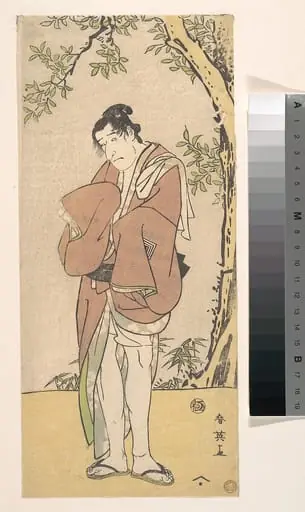
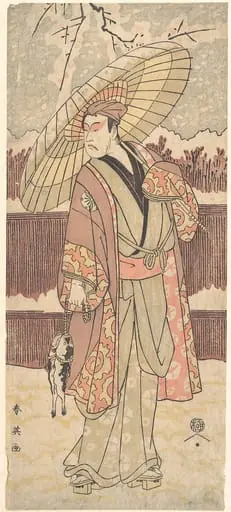
 Ichikawa Yaozo II as Soga no Goro
 The Actor Ichikawa Danjuro as a Samurai
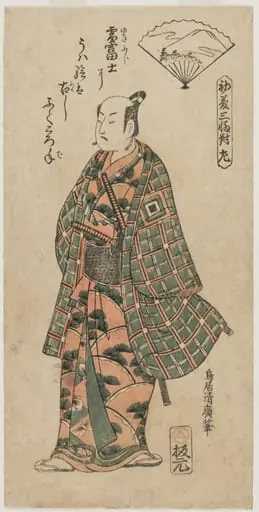 Ichikawa Danjuro II as a Young Samurai
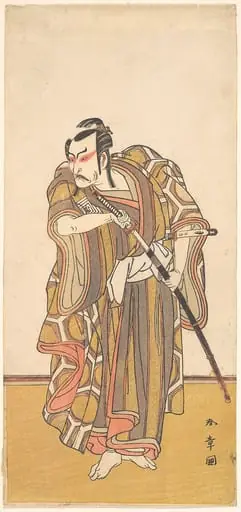 四代目市川團蔵|Kabuki Actor Ichikawa Danzō IV
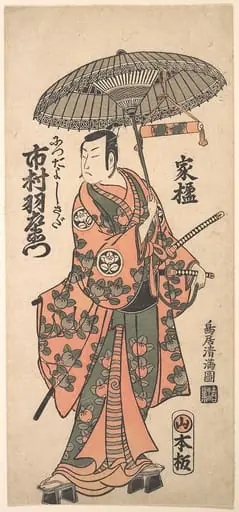 鳥居清満画 九代目市村羽左衛門|Kabuki Actor Ichimura Uzaemon IX
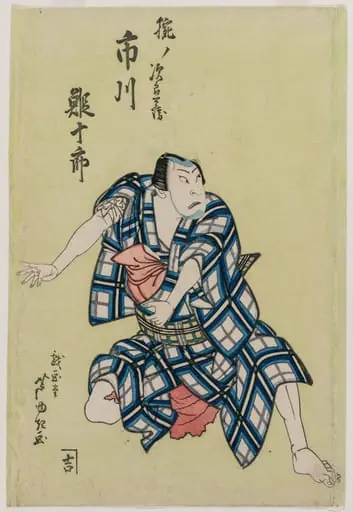 Ichikawa Ebijuro II as Ude no Jirobei
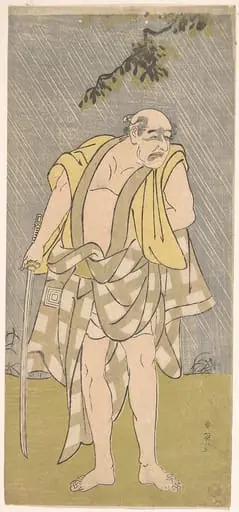
 初代中村中蔵の髭の伊久|The Actor Nakamura Nakazō I as the Elderly Samurai Hige no Ikyū